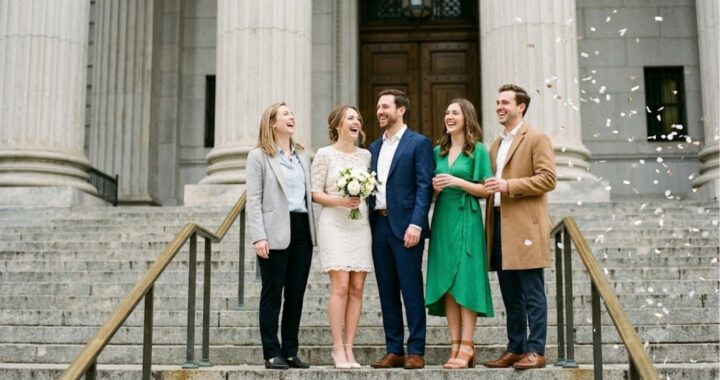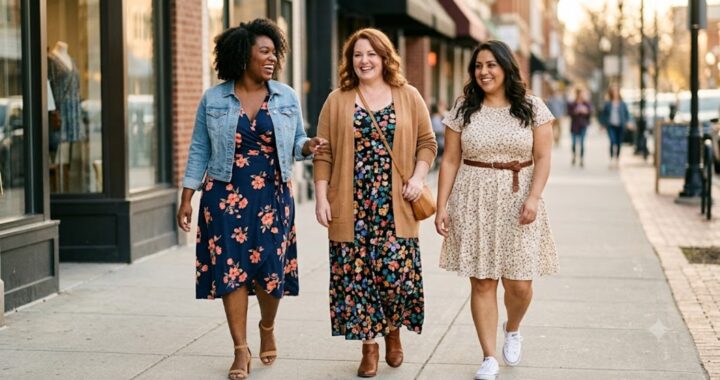
Here’s the situation: you’ve got a winter wedding on the calendar, the invitation says “festive attire” or just leaves the dress code vague, and you have absolutely no desire to show up in a floor-length gown. You want to look great. You want to look appropriate. You just don’t want to look like you’re trying too hard. Finding a winter wedding guest dress not too formal is more nuanced than people expect. Go too casual and you’ll feel underdressed the moment you walk in. Go too formal and you’ll spend the evening uncomfortable and overdone. The middle ground exists — and it’s actually one of the most flattering, most wearable places in occasion dressing.
This guide gives you everything you need to find it.
What “Not Too Formal” Actually Means at a Winter Wedding
Let’s define this before anything else, because “not too formal” means different things to different people.
At a winter wedding, the dress codes that sit in the sweet spot between casual and black tie are cocktail attire, semi-formal, and festive attire. All three allow for shorter hemlines, more relaxed fabrics, and a wider range of color than black tie does — but they still expect you to look polished and put-together.
“Not too formal” does not mean casual. A nice pair of trousers and a blouse still reads as underdressed at most winter weddings unless the couple has explicitly said so. You want to land at dressed-up-but-not-stiff.
The target: a dress that looks intentional, season-appropriate, and elegant without requiring a floor-length gown or a structured evening look.
Also check out: Floral Dress For Summer Wedding Guest
The Best Winter Wedding Guest Dress Styles That Aren’t Too Formal
Midi Dresses
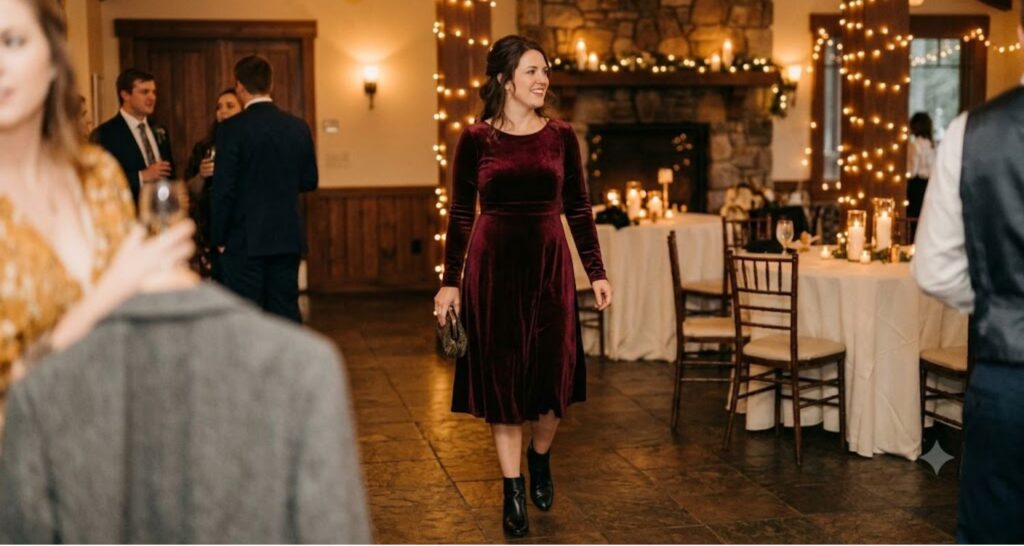
The midi length — hitting anywhere from just below the knee to mid-calf — is the single best length for a winter wedding guest dress that isn’t too formal. It reads as elegant without being ball-gown serious, works in a huge range of fabrics and silhouettes, and handles the layering demands of winter better than a mini or maxi.
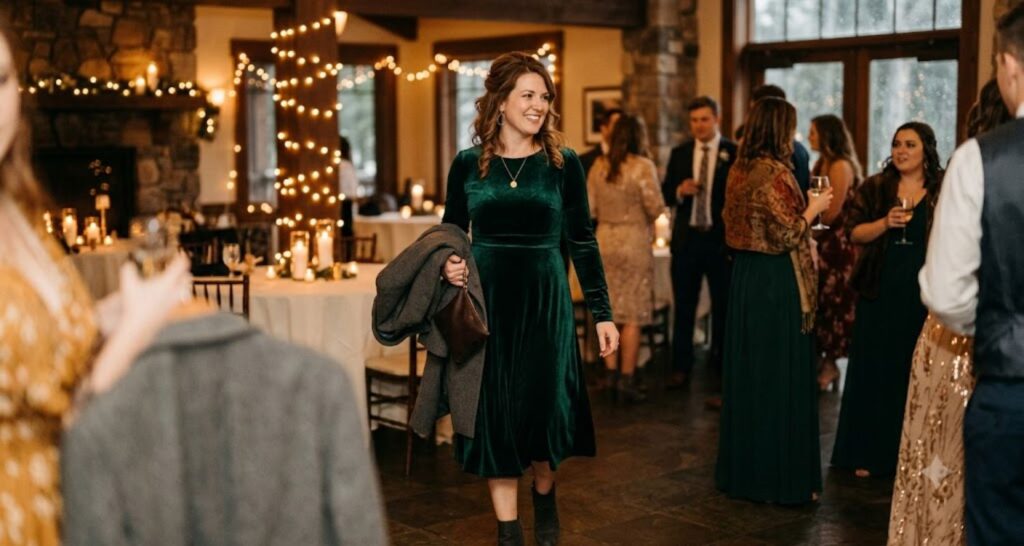
A midi wrap dress in a rich jewel tone, a midi A-line in velvet, or a simple midi slip dress in satin hits the exact right note for semi-formal winter weddings. It’s the length that photographs well, works across age ranges, and doesn’t require you to worry about whether it’s “too much.”
Fit-and-Flare Dresses
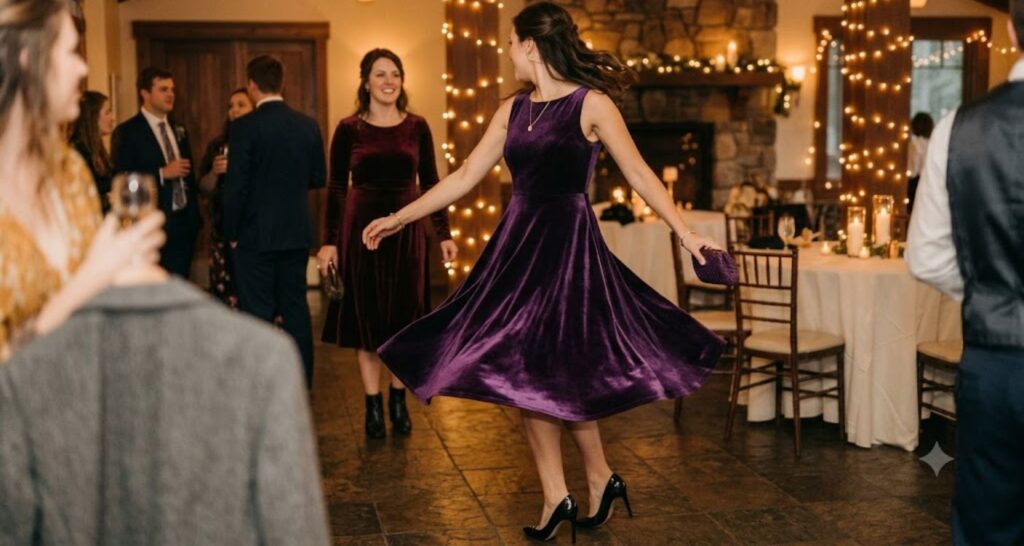
The fit-and-flare silhouette — fitted at the waist and bodice, flaring out from the hip — is inherently festive without being formal. It moves beautifully, flatters a wide range of body types, and looks celebratory rather than ceremonial.
In a heavier fabric like ponte, crepe, or brocade, a fit-and-flare reads as appropriately winter-appropriate. In a lighter fabric like chiffon, it softens toward the more romantic end of semi-formal. Either works for a not-too-formal winter wedding depending on the venue.
Wrap Dresses
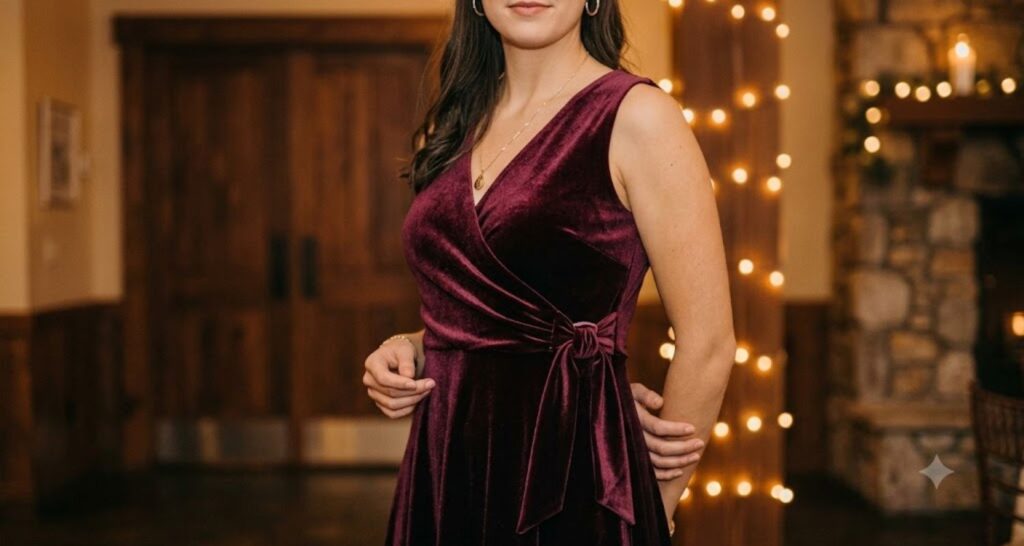
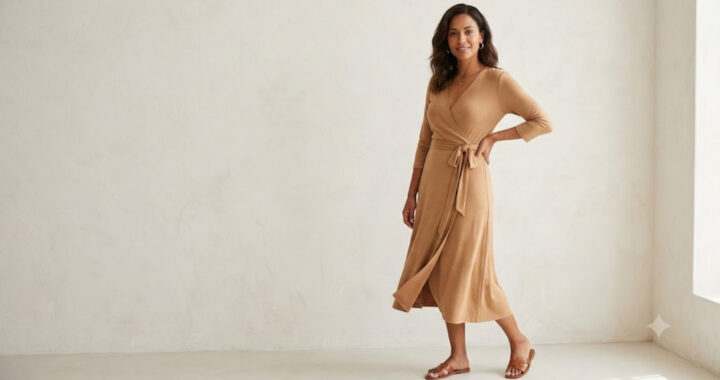
Wrap dresses belong on this list because they solve multiple problems at once. They’re adjustable (useful when you’re layering a coat or wrap on top), universally flattering, and available across every price point. A wrap dress in a rich burgundy, deep teal, or emerald velvet-effect fabric is one of the most effortlessly correct choices for a semi-formal winter wedding.
The key with wrap dresses for winter events is fabric. Avoid lightweight jersey or casual cotton prints. Look for heavier crepe, satin-finish fabrics, or velvet-look materials that feel rich and seasonal.
Knee-Length and Just-Below-Knee Dresses
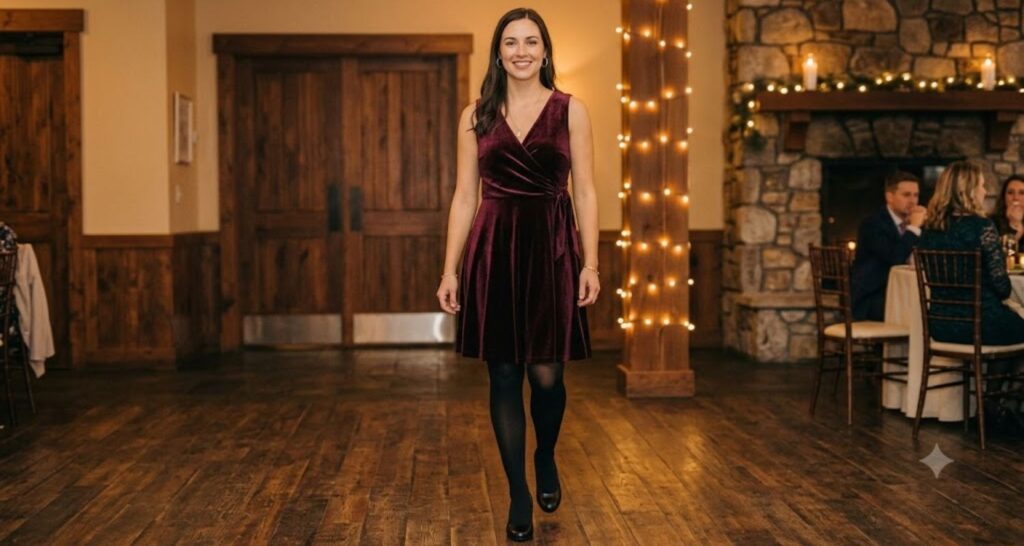
If you prefer something shorter than a midi, a knee-length or just-below-knee dress is perfectly appropriate for cocktail and semi-formal winter weddings. It’s festive, easy to wear, and gives you more shoe options than a longer length.
Pair with opaque tights in black or deep tones (sheer nude tights look wrong in winter, genuinely) and a heel or ankle boot and it reads as exactly right for the season.
Jumpsuits and Dressy Separates
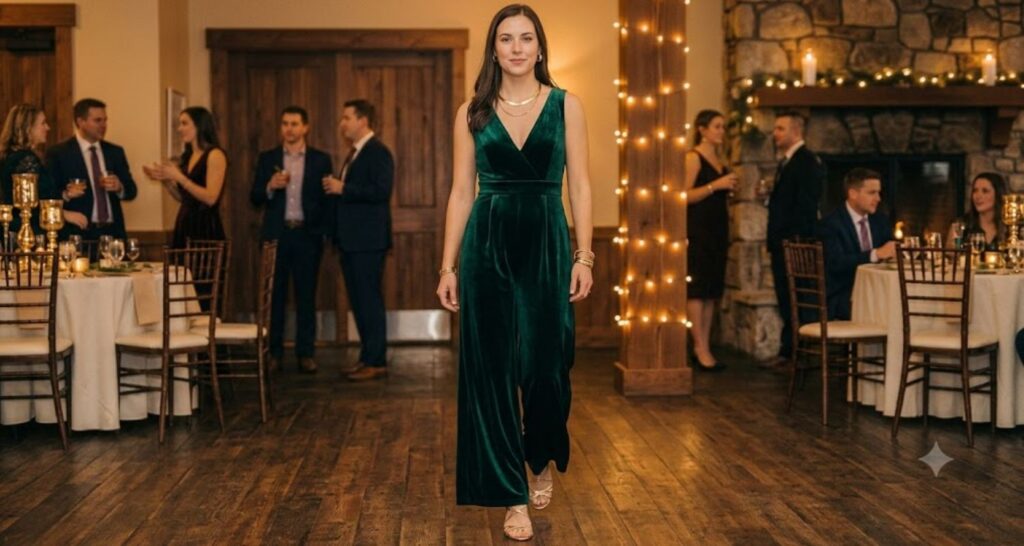
Worth mentioning: you don’t have to wear a dress at all. A well-cut velvet or crepe jumpsuit in a rich winter tone reads as polished and appropriately festive without veering into formal territory. Same goes for a silk blouse with wide-leg tailored trousers in a rich color.
These options are particularly good for guests who find dresses uncomfortable or impractical — especially in cold weather, where trousers offer obvious warmth advantages.
You can also check : What Color Dress to Wear to A Fall Wedding
Winter Wedding Guest Dress Not Too Formal: Colors That Work
Color is where winter wedding guest dressing gets genuinely fun. You have more range than most people think.
Deep Jewel Tones
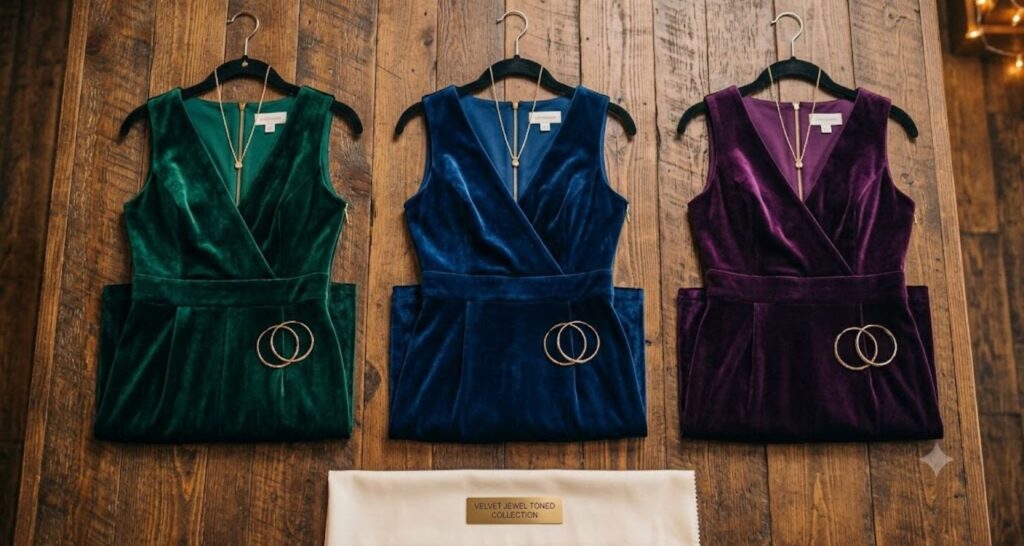
Emerald, sapphire, amethyst, deep teal, and rich burgundy are the gold standard for winter wedding guest colors at any formality level. They’re rich enough to feel seasonal and special, they photograph beautifully in indoor winter lighting, and they work on virtually every skin tone.
For a not-too-formal look, jewel tones in a slightly less structured fabric — crepe instead of structured taffeta, soft velvet instead of stiff brocade — hit the right register.
Burgundy and Wine
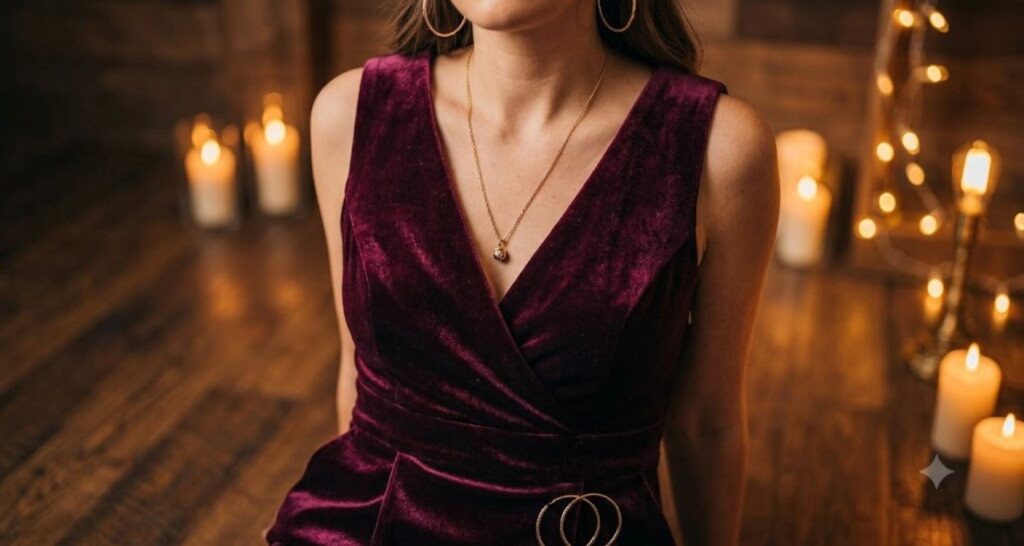
Burgundy deserves its own mention because it’s so consistently excellent for winter weddings across every style and formality level. It’s warm, rich, deeply flattering, and unmistakably seasonal. A burgundy midi wrap dress is one of the most reliably correct winter wedding guest outfits you can wear.
Navy and Midnight Blue
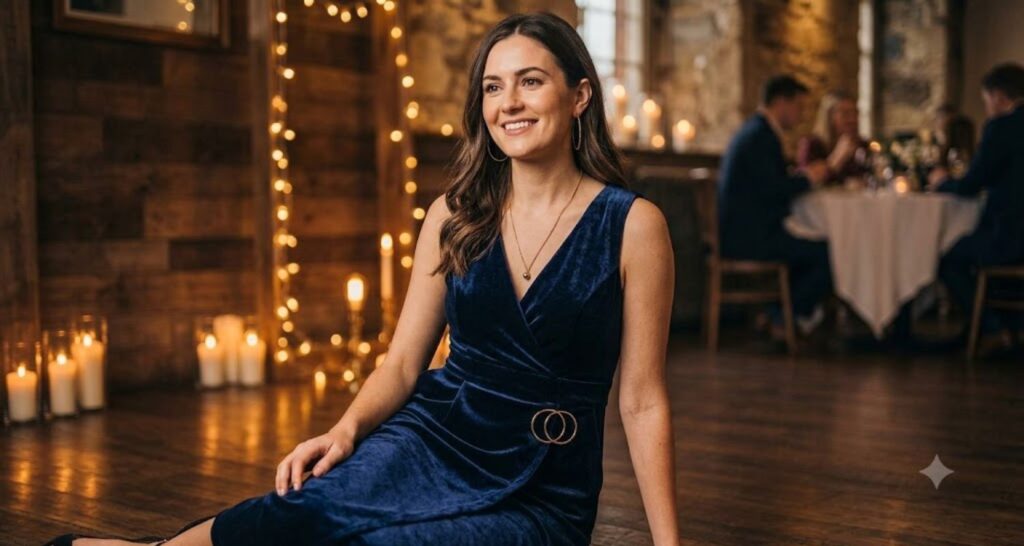
Navy reads as formal but not black-tie formal, which makes it ideal here. It’s an anchor color — sophisticated but not stiff, appropriate for virtually every venue type, and easy to accessorize. Midnight blue leans slightly more formal than standard navy, so the fabric choice matters more at that end of the spectrum.
Dusty Rose and Mauve
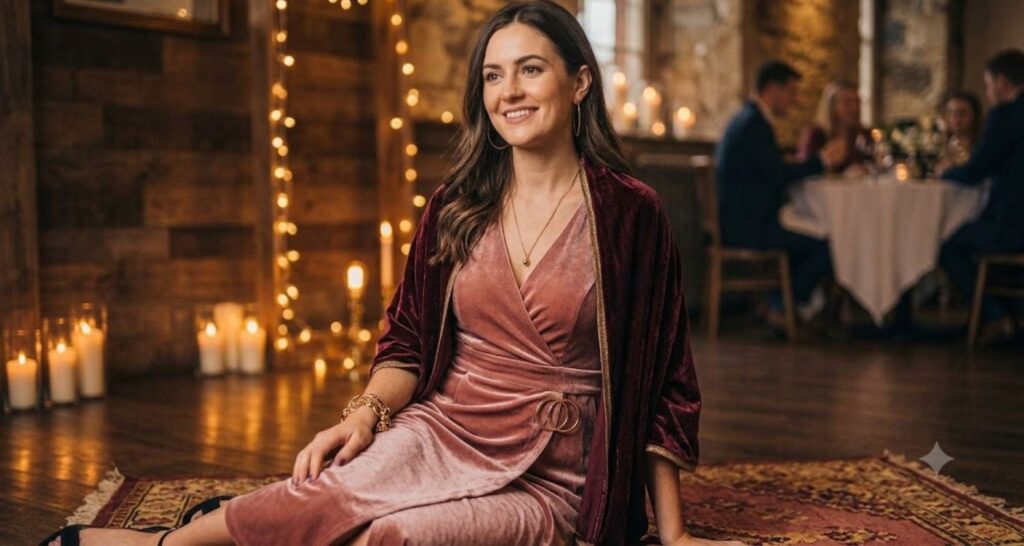
For guests who prefer softer, more romantic tones, dusty rose and mauve are excellent winter choices. They’re warmer and richer than the pastel versions, which suits the season, and they photograph beautifully in the warm indoor lighting of winter venues.
Black
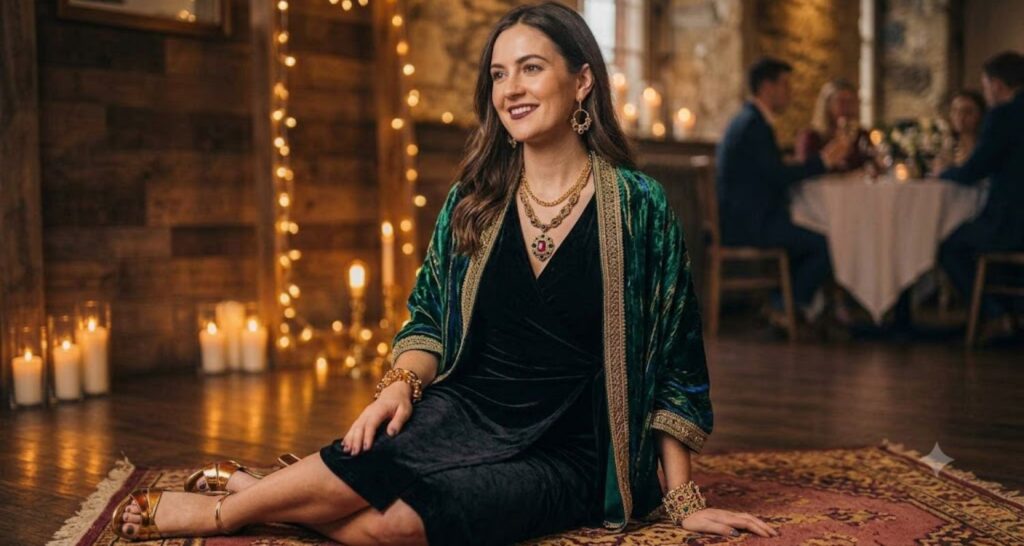
Black is always appropriate for winter semi-formal and cocktail weddings. It’s sophisticated, easy to accessorize, and genuinely never wrong at this formality level. For a not-too-formal winter wedding, add warmth through accessories — a rich-colored wrap, metallic shoes, or statement jewelry — to lift the overall look beyond plain.
What to Skip
Very light pastels (baby pink, mint, baby blue) look tonally out of place in winter. Solid white and ivory are still the bride’s territory. Very bright neons clash with the warm, candlelit atmosphere most winter wedding venues have. None of these are hard rules for every situation, but they’re worth avoiding unless you have a specific reason.
Check out : What to wear to A Beach Wedding As a Guest
Fabrics That Keep the Balance Right
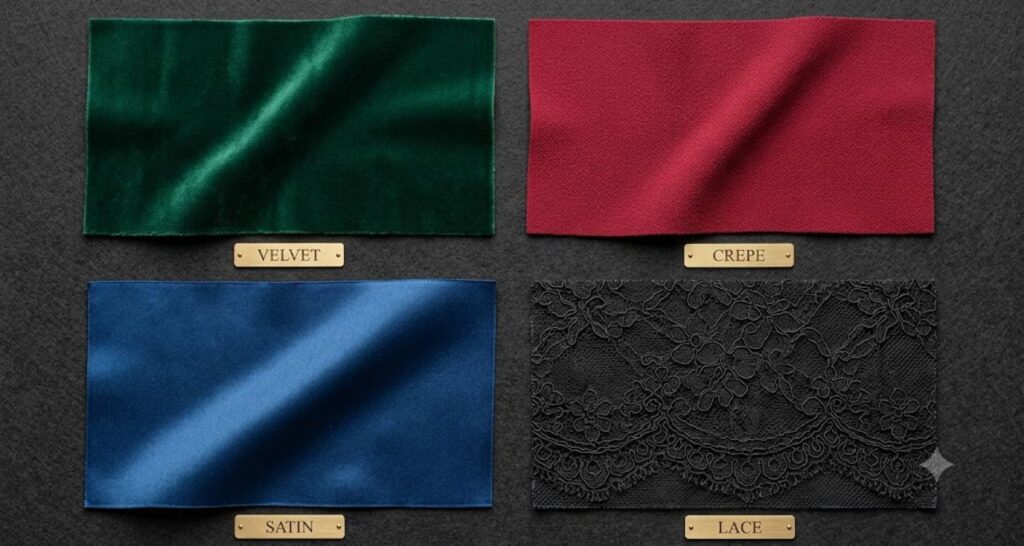
The fabric you choose does more than anything else to signal where your outfit sits on the formal-casual spectrum. Get this right and you’re most of the way there.
Velvet is the quintessential winter wedding fabric. It’s rich, it’s warm, and it reads as special without being ceremonial. Velvet midi dresses and wrap dresses in deep jewel tones are among the best not-too-formal winter wedding guest choices available. Crushed velvet is slightly more casual; smooth velvet is slightly more formal — both work depending on the venue.
Crepe is the most versatile fabric on this list. Slightly matte, beautifully draped, and available at every price point, crepe reads as polished and semi-formal in virtually any color. It also holds up well through a long event, which is not a small thing.
Satin-finish fabrics (including charmeuse and duchess satin) can work for not-too-formal winter weddings, but the key is the weight. Heavy, structured satin reads more formal. Lightweight, drapey satin reads more relaxed. A soft satin midi that drapes rather than stands out on its own hits the right register.
Lace is inherently romantic and slightly formal — but a lace midi or knee-length dress with a lining in a rich winter color is appropriately dressed-up without going over the top. Lace in deep tones (navy, burgundy, forest green) reads as more modern and less bridal than lace in white or ivory.
Chiffon is lighter and more delicate — more naturally suited to spring and summer events. For winter, it can work if the color is rich and the layering (a blazer, velvet jacket, or wrap) is considered. On its own, chiffon in winter can feel tonally mismatched.
How to Style a Not-Too-Formal Winter Wedding Guest Dress
Shoes
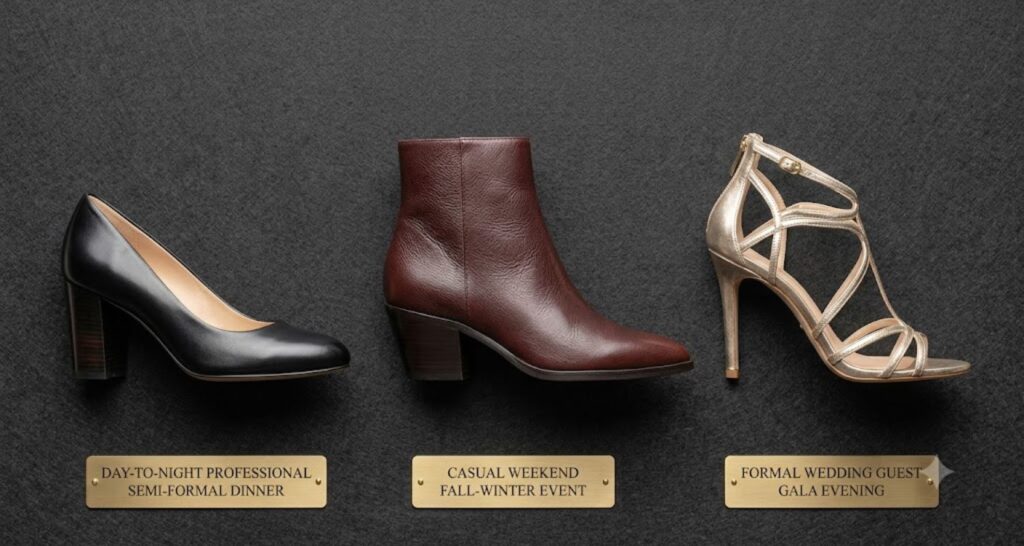
This is where you control a lot of the formality level. Your shoe choice can push the same dress up or down the spectrum.
Block-heeled sandals and pumps are the most reliable choice — polished without being painfully formal, easy to wear through a long event, and available in the metallic and jewel tones that work best with winter colors.
Ankle boots are genuinely appropriate for semi-formal and festive-attire winter weddings, especially with midi length dresses. A heel ankle boot in black, burgundy, or cognac with a velvet midi dress is one of the best winter wedding guest looks that genuinely doesn’t look like you tried too hard.
Strappy heeled sandals in gold, silver, or nude elevate any not-too-formal winter dress for evening receptions.
Opaque tights in black or a dark tone are appropriate and practical in cold weather — avoid sheer nude tights which look seasonally wrong.
Outerwear
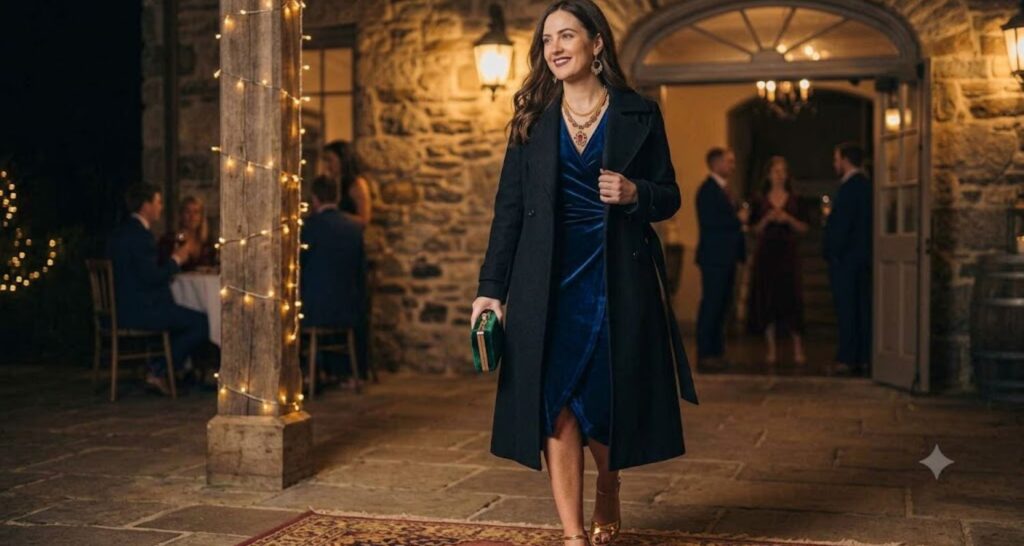
You need an outer layer for a winter wedding, and it becomes part of the look.
A tailored wool coat in camel, black, or a rich color over your dress looks intentional and elegant. It’s the most universally flattering winter wedding outerwear choice. A velvet blazer in a complementary color adds formality and warmth without a full coat. A faux fur wrap or stole adds glamour and is particularly well-suited to indoor receptions where you’ll remove your coat anyway.
Avoid parkas, oversized puffer coats, and casual hoodies as your arrival layer — they undercut even a very well-chosen dress.
Jewelry and Accessories
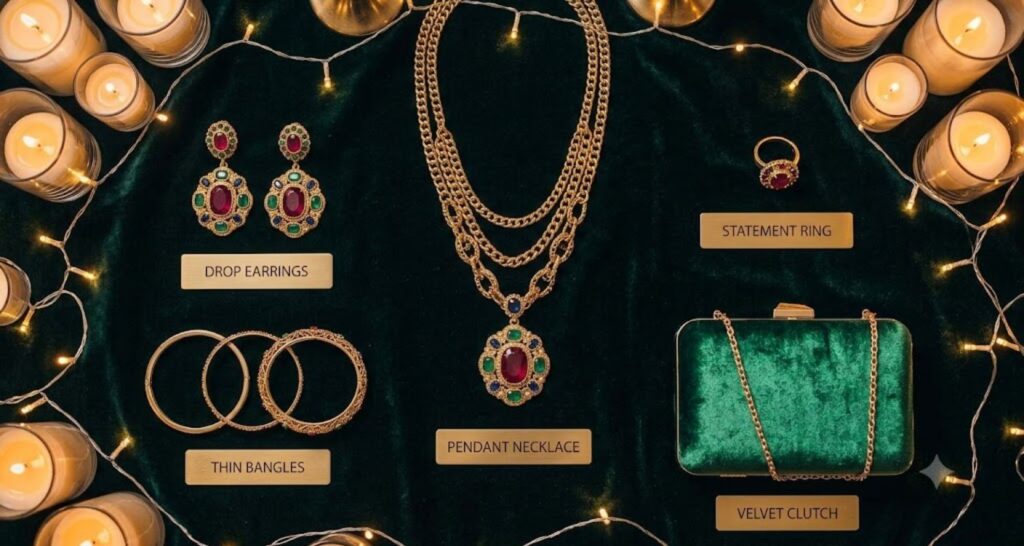
Winter’s warm indoor lighting is especially kind to gold jewelry and metallic accessories. Gold drop earrings, a simple pendant, or a statement ring in a warm metallic work beautifully with the rich tones of winter wedding guest dresses.
Keep your bag small — a clutch or mini crossbody in metallic or a complementary tone to your shoes. The less visual weight you add with accessories, the more the dress itself does the work.
Winter Wedding Guest Dress by Venue
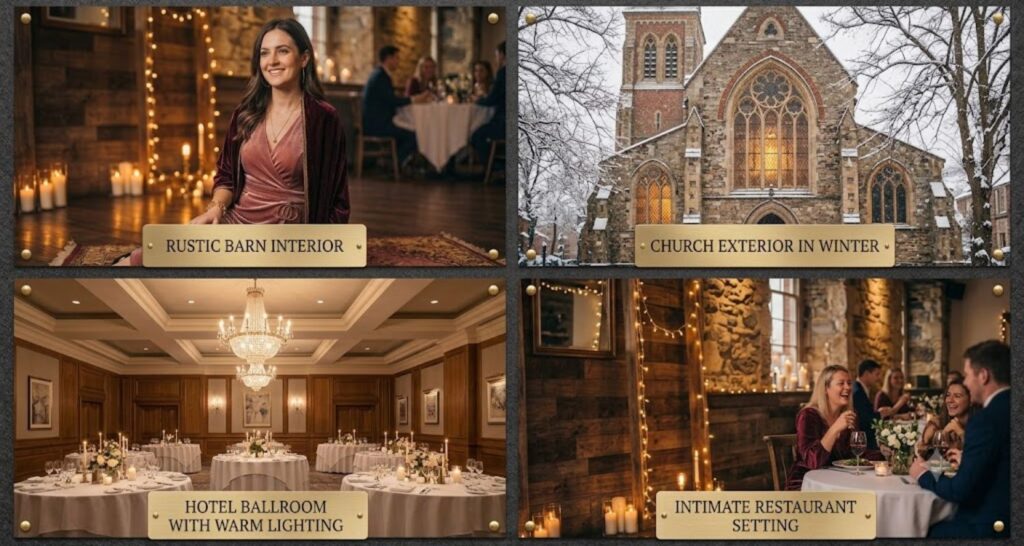
The venue shifts what “not too formal” means in practice.
Rustic barn or country estate: This setting gives you the most latitude. Velvet midi dresses, fit-and-flare in jewel tones, ankle boots — all read perfectly here. You can go slightly more relaxed without it looking underdressed.
Church ceremony: A knee-length or midi dress in a rich, modest color is exactly right. Nothing too low-cut or too short. A wrap or blazer for the ceremony itself if you prefer.
Hotel ballroom: The setting is more formal, so lean toward the more polished end of your not-too-formal options. A midi in a richer fabric (velvet, satin), a slightly more elevated shoe, more attention to accessories.
Restaurant or private venue: The most relaxed winter wedding setting. A knee-length dress, a dressy jumpsuit, or a well-styled wrap dress all read as appropriate. This is where ankle boots and crepe separates shine.
What to Avoid
A few specific things that pull a winter wedding guest outfit in the wrong direction:
Casual fabrics at semi-formal events. Thick cotton knit, jersey, and denim are not wedding guest fabrics regardless of the color or silhouette. If the fabric feels like everyday casual, it is.
Very short hemlines at church ceremonies. Even at a not-too-formal wedding, a micro-mini at a church ceremony reads as misjudged. Knee-length is the minimum for traditional religious ceremonies.
Bare legs in cold weather. Not a formality issue — just a practical one that also reads as under-thought. Opaque tights, thigh-highs, or simply a midi length that doesn’t require them all solve this.
Over-accessorizing. Rich winter fabrics in deep jewel tones don’t need heavy jewelry, bold bags, and statement shoes simultaneously. Pick one focal accessory point and keep the rest minimal.
Winter Wedding Guest Dress Not too Formal : FAQ
What is the best dress length for a not-too-formal winter wedding?
Midi length is the best choice. It sits below the knee and hits mid-calf, which reads as polished and seasonal without being overly formal. Knee-length works for cocktail settings. Maxi length starts to feel formal unless the fabric is light and the setting is relaxed.
Can I wear a short dress to a winter wedding?
Yes — a knee-length dress is fully appropriate for semi-formal and cocktail winter weddings. Style it with opaque tights and a heel or ankle boot to keep it seasonally correct. Micro-minis work at very casual winter weddings but may feel underdressed at anything more formal.
Is velvet too formal for a not-too-formal winter wedding?
No. Velvet reads as rich and seasonal rather than formally ceremonial. A velvet midi wrap dress or a fit-and-flare in velvet is one of the best not-too-formal winter wedding guest choices available. The silhouette and length control the formality level more than the fabric itself.
What color should I wear to a winter wedding as a guest?
Deep jewel tones — emerald, sapphire, amethyst, burgundy, teal — are the most versatile and flattering choices for winter weddings at any formality level. Navy and black are always appropriate. Avoid very light pastels, solid white or ivory, and neons.
Can I wear black to a winter wedding?
Absolutely. Black is appropriate at cocktail, semi-formal, and festive-attire winter weddings. Add warmth through accessories — a jewel-toned wrap, metallic shoes, rich jewelry — to lift it beyond plain. Black-tie and very formal events welcome black most obviously, but it works across formality levels.
What should I wear over my dress to a winter wedding?
A tailored wool coat in camel, black, or a rich color is the most elegant choice. A velvet blazer is warmer than it looks and adds polish without full outerwear. A faux fur wrap or stole is particularly well-suited to indoor receptions after you’ve removed your coat.
Your Winter Wedding Look Is Closer Than You Think
Getting your winter wedding guest dress not too formal right comes down to three decisions: the right length (midi or knee), the right fabric (velvet, crepe, or satin-weight), and the right color (jewel tones, burgundy, navy, or black). Everything else — shoes, accessories, outerwear — supports those three choices rather than making them.
You don’t need a floor-length gown to look amazing at a winter wedding. A well-chosen midi in velvet, styled with ankle boots or a block heel and a tailored coat, hits exactly the note you’re after — dressed up, seasonally right, and genuinely comfortable throughout the night. That’s the goal. And now you know exactly how to get there.