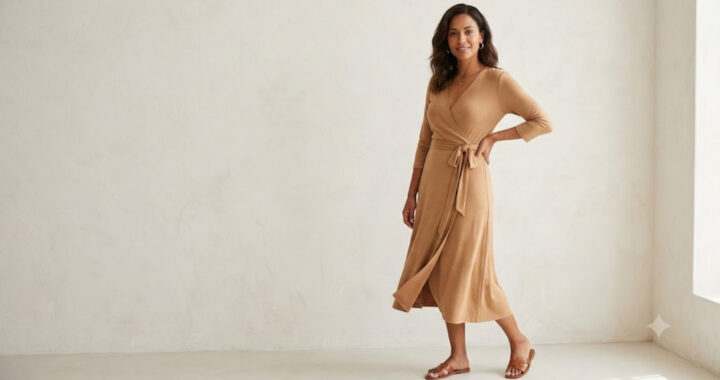
You know that moment. You step outside at 9 a.m., the air hits you like a warm, wet towel, and the dress you carefully picked out is clinging to your back before you reach the car. If that sounds familiar, you don’t need another “wear breathable clothes” tip — you need to know exactly what makes a lightweight dress for humid summer weather actually work when the air itself feels like soup.
Here’s the good news: humidity-proof dressing isn’t luck. It comes down to a handful of fabric and fit choices that you can learn once and use every summer for the rest of your life. This guide walks you through all of them — the fabrics that breathe, the ones that betray you, the silhouettes that let air move, and the small styling tricks that keep you looking put-together from your commute to your last errand of the day.
Why Humidity Is Harder on Clothes Than Heat

Dry heat is manageable. Your body sweats, the sweat evaporates, and that evaporation cools you down. It’s a system that has worked for humans for a very long time.
Humidity breaks the system. When the air is already saturated with moisture, your sweat has nowhere to go. It sits on your skin instead of evaporating, which means you feel hotter, stickier, and more uncomfortable at 88°F in New Orleans than you would at 100°F in Phoenix.
This is why weather nerds talk about the dew point rather than the temperature. Once the dew point climbs past 65°F, most people start feeling muggy. Past 70°F — a normal July day across the Southeast, the Gulf Coast, and much of the Midwest and East Coast — the air is doing you no favors at all.
So your dress has one job in humid weather: get out of the way. It needs to let whatever evaporation is still possible actually happen, and it needs to avoid trapping a layer of damp, warm air against your body. Every recommendation in this guide flows from that single idea.
What Makes a Dress “Lightweight” for Humid Weather?
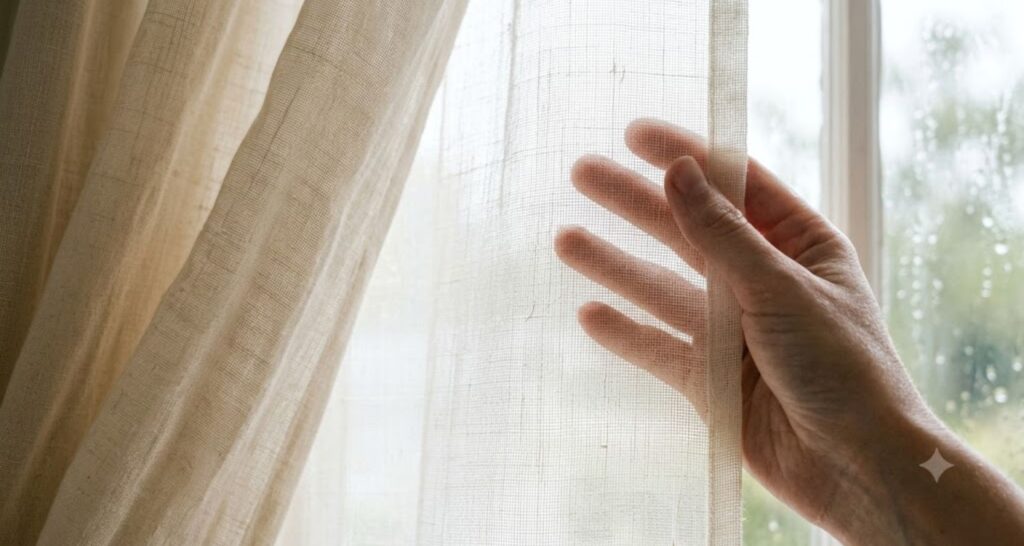
A lightweight dress for humid summer weather is one made from a low-weight, breathable, moisture-friendly fabric — typically under 150 GSM (grams per square meter) — cut in a loose silhouette that allows airflow between the fabric and your skin. Fiber, weave, weight, and fit all matter; no single factor works alone.
Let’s unpack that, because “lightweight” gets thrown around loosely in product descriptions.
Fabric Weight (GSM)
GSM measures how heavy a fabric is per square meter. Summer-appropriate dress fabrics generally fall between 70 and 150 GSM. Cotton voile might sit around 70–100 GSM, a midweight linen around 130–180. You’ll rarely see GSM listed on a retail tag, but you can judge it by feel: hold the fabric up to a light. If light passes through easily, it’s light enough for August in Houston.
Weave and Texture
An open, loose weave lets air pass through; a tight weave blocks it. This is why a gauzy cotton dress feels airy while a cotton twill dress — technically the same fiber — feels like a blanket. Texture helps too. Puckered fabrics like seersucker physically hold the cloth away from your skin, creating tiny air channels that make a real difference.
Fiber Content
This is the big one, and it deserves its own section.
Note : check out our complete guide about Cozy Sweater Dress Outfit Ideas for Winter.
Best Fabrics for a Lightweight Dress in Humid Summer
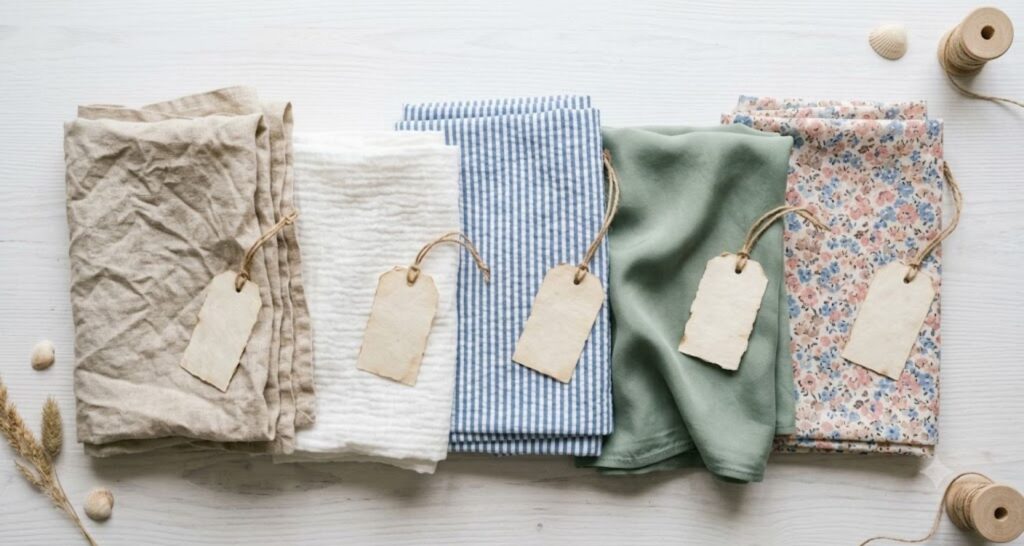
Not all natural fibers are equal, and not all synthetics are villains. Here’s how the main contenders actually behave when the dew point hits 72°F.
Linen: The Humidity Champion

Linen is the gold standard for muggy weather, and it earned the title. Flax fibers are hollow, so linen absorbs up to 20% of its weight in moisture before it even feels damp — then releases that moisture quickly. It’s also naturally stiff enough to stand slightly away from your body instead of clinging.
Yes, it wrinkles. Consider that a feature. A softly rumpled linen dress reads as intentional in a way a sweat-soaked polyester one never will. If wrinkles bother you, look for linen-viscose or linen-cotton blends, which soften the creasing while keeping most of the breathability.
Cotton: Choose the Right Weave
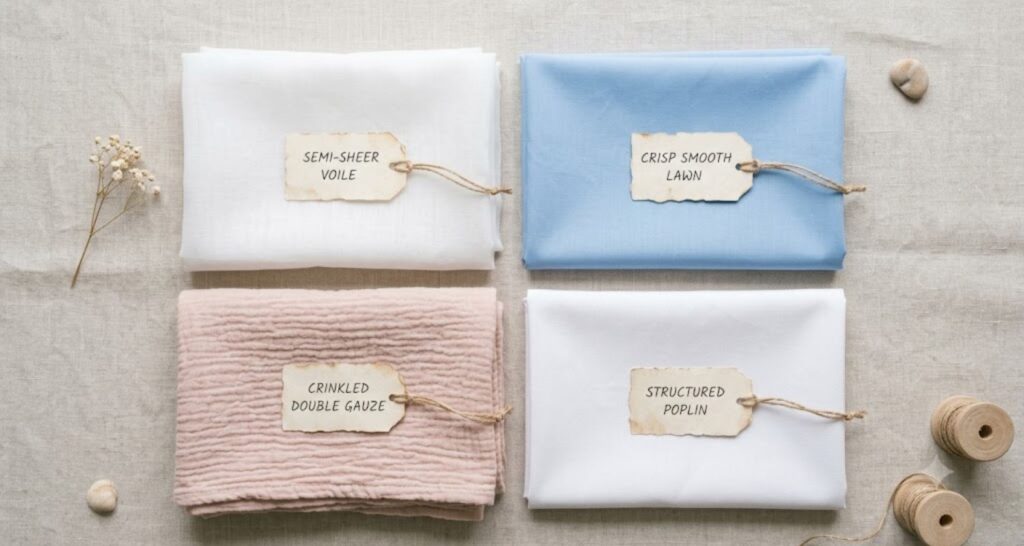
Cotton breathes well and feels familiar, but the weave makes or breaks it. Look for these specific types:
- Cotton voile — semi-sheer, featherweight, floats away from the skin. Often used in tiered summer dresses.
- Cotton lawn — slightly crisper than voile, smooth, holds a print beautifully.
- Cotton gauze (double gauze) — two whisper-thin layers tacked together, with a crinkled texture that keeps fabric off your skin.
- Cotton poplin — crisp and structured; fine for shirt dresses, though a bit less airy than the others.
One caveat: cotton holds onto moisture longer than linen. If you sweat heavily, a drenched cotton dress stays drenched for a while. That’s where the next options come in.
Seersucker: Engineered for Exactly This

Seersucker was practically designed for the American South. Its signature puckered stripes are woven so that part of the fabric never touches your skin, creating constant micro-ventilation. It also hides wrinkles and doesn’t need ironing. A seersucker shirt dress is one of the most practical things you can own between May and September.
Rayon, Modal, and TENCEL Lyocell

These are semi-synthetic fibers made from plant cellulose, and they’re seriously underrated for humid climates. They drape like silk, absorb moisture well, and feel cool to the touch. TENCEL (lyocell) in particular wicks moisture efficiently and resists that clammy feeling.
The watch-out: rayon can cling when it’s very soft and cut close to the body. Pick rayon dresses with a loose, flowy cut and you’ll get the cooling benefits without the cling.
What About Silk and Bamboo?
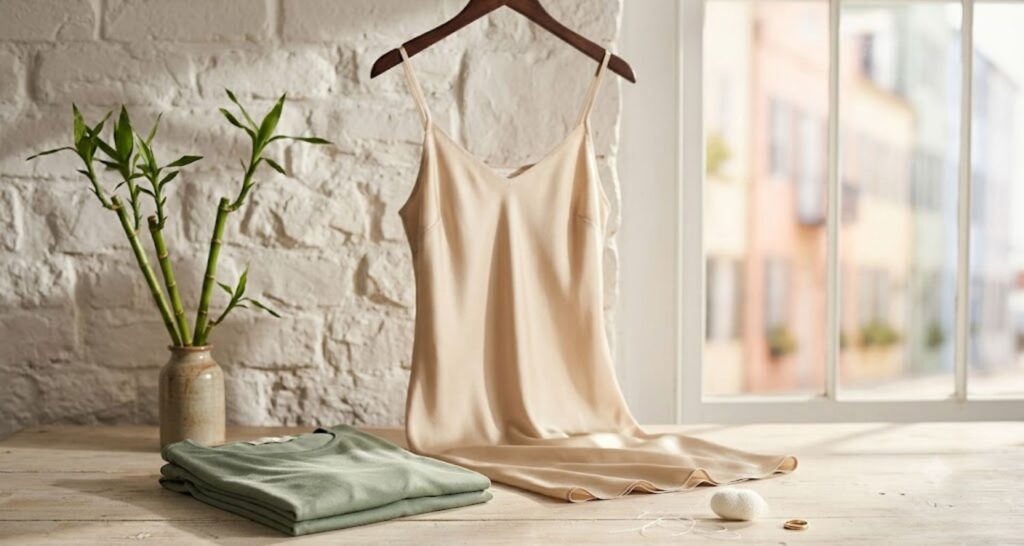
Lightweight silk (like habotai) breathes and feels luxurious, but it shows sweat marks dramatically and often requires delicate care — a risky bet for a 95% humidity day. Bamboo-derived viscose is soft and moisture-wicking, and it works well, though it behaves more like rayon than like a miracle fiber, despite the marketing.
Fabrics to Avoid When It’s Muggy
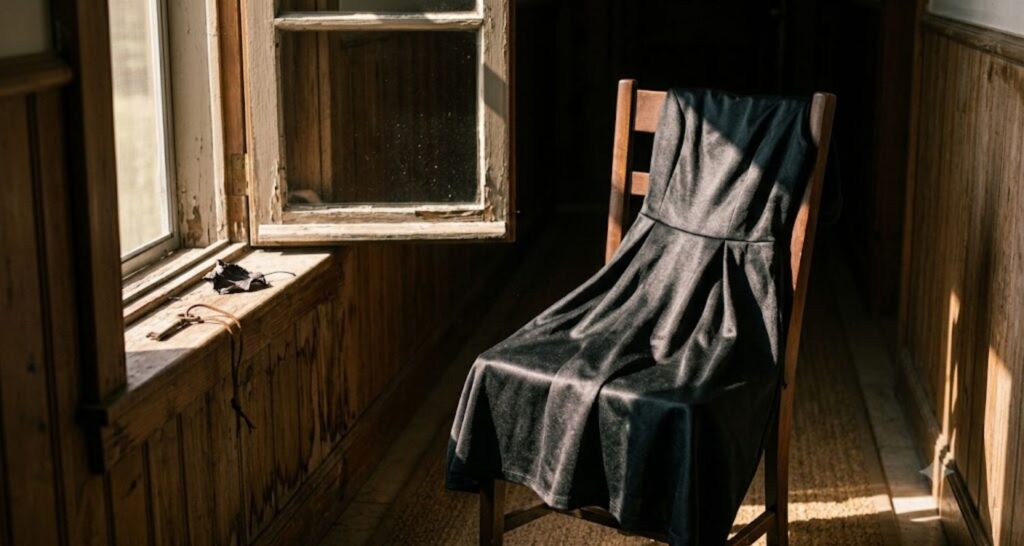
Steer clear of 100% polyester (except purpose-built athletic knits), nylon, and anything labeled “scuba,” “ponte,” or “liverpool” fabric. These are tightly constructed synthetics that trap heat and moisture against your skin. That cute polyester wrap dress might look breezy on the hanger; by noon, it’s a personal sauna.
Quick Fabric Comparison
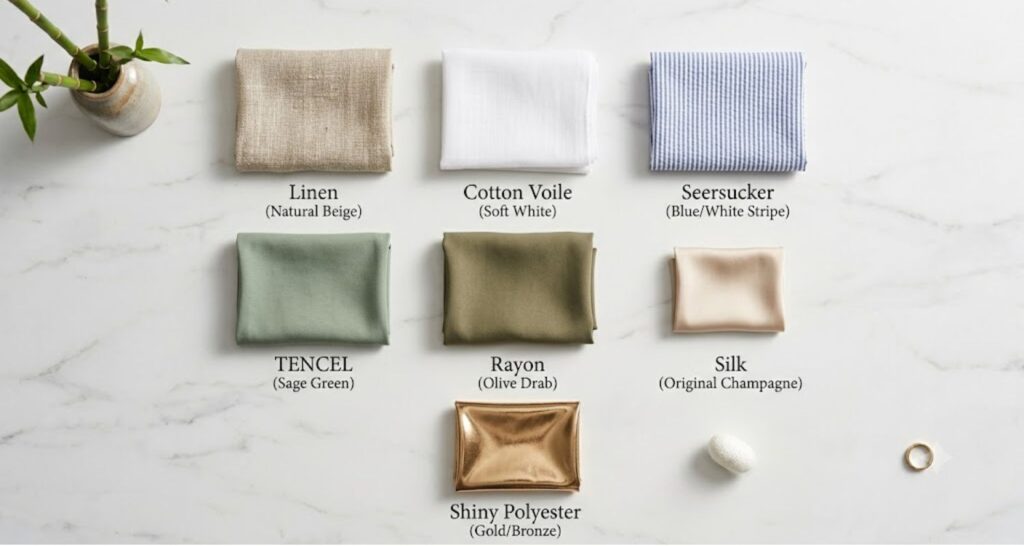
| Fabric | Breathability | Moisture Handling | Cling Risk | Wrinkle Factor |
|---|---|---|---|---|
| Linen | Excellent | Excellent | Very low | High (embrace it) |
| Cotton voile/gauze | Excellent | Good | Low | Moderate |
| Seersucker | Excellent | Good | Very low | Very low |
| TENCEL/lyocell | Very good | Excellent | Moderate | Low |
| Rayon/viscose | Good | Good | Moderate–high | Low |
| Lightweight silk | Good | Fair (shows sweat) | Moderate | Moderate |
| Polyester | Poor | Poor | High | Very low |
Dress Silhouettes That Beat the Humidity
Fabric is half the battle. The other half is airflow, and airflow comes from shape. A skin-tight linen dress will still feel sticky; a flowy polyester one will still steam you. You want both pieces right.
A-Line and Swing Dresses
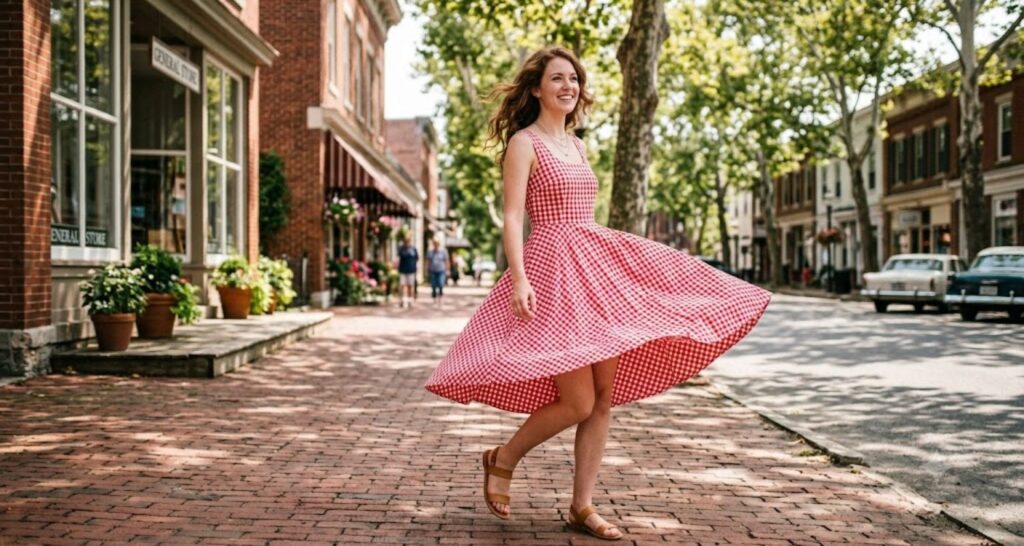
These flare out from the bust or waist, so the fabric barely touches your torso and legs. Every step you take pushes air up under the skirt — free ventilation. This is the single most forgiving silhouette for sticky weather.
Shift and Trapeze Dresses

A shift hangs straight from the shoulders with no waist seam. Less structure means less fabric contact, fewer seams to trap sweat, and nothing cinching your waist where heat builds up. Throw one on, add sandals, done.
Tiered Maxi and Midi Dresses

Counterintuitive but true: a long dress can be cooler than a short one, as long as it’s loose and made of gauze, voile, or crinkled rayon. The tiers create volume that moves air with you, and the coverage protects your skin from direct sun. Southerners and desert dwellers alike have known this for generations.
Shirt Dresses

A cotton or seersucker shirt dress gives you structure without cling, plus built-in adjustability — roll the sleeves, pop an extra button, skip the belt on the worst days. It’s also the easiest silhouette to make office-appropriate.
Wrap Dresses (With One Caveat)

Wrap dresses flatter nearly everyone and allow decent airflow at the skirt. Just mind the fabric: a rayon-spandex jersey wrap will cling and show every drop of sweat, while a crisp cotton or linen-blend wrap stays comfortable. Also check that the overlap is generous — humidity and a surprise gust of wind are a bad combination.
How to Choose a Lightweight Dress for Humid Summer Weather

Standing in a fitting room (or scrolling a product page), here’s the exact checklist to run through. It takes about thirty seconds once it becomes habit.
- Read the fabric tag first. Look for linen, cotton, TENCEL, lyocell, modal, or rayon as the main fiber. Put back anything that’s mostly polyester or nylon, no matter how cute.
- Do the light test. Hold the fabric up to a light source. If some light filters through, it’s light enough. If it’s opaque and dense, it’ll be hot.
- Do the scrunch test. Crush a handful of fabric and release. Natural crinkle (gauze, seersucker, linen) is your friend — those textures stand off your skin.
- Check the fit at your torso. The dress should skim, not hug. If you can’t pinch an inch of loose fabric at your waist and back, it will cling by lunchtime.
- Look at the neckline and armholes. Wider necklines, sleeveless cuts, or loose flutter sleeves release body heat. Tight, high crew necks trap it.
- Check the lining. A breathable dress with a slippery polyester lining is a polyester dress in disguise. Look for cotton linings, partial linings, or none at all.
- Think about care. If it’s dry-clean-only, you’ll hesitate to wear it on the sweatiest days — which defeats the purpose. Machine-washable wins in a humid climate.
Follow those seven steps and you’ll almost never bring home a dress you regret in August.
Note : Check out best guide about Linen Dress Outfit Ideas for Hot Summer.
Colors, Prints, and Details That Work With You

Ever noticed how a light gray t-shirt broadcasts sweat while a busy floral hides everything? The same physics applies to dresses, and you can use it deliberately.
The Sweat-Mark Hierarchy
True white and true black hide moisture best — dampness barely changes how they look. The danger zone is everything in between: heather gray, light blue, dusty rose, and pale sage all darken dramatically when wet. If you love those shades, choose them in prints rather than solids.
Prints Are Camouflage
Florals, ditsy prints, gingham, stripes, and tie-dye all break up the visual field so damp patches disappear. A busy print on cotton voile is arguably the most practical humid-weather uniform in existence.
Small Details, Big Difference
Look for back yokes with gathering (extra air behind you), side slits (airflow with each step), adjustable straps, and pockets that are set into seams rather than patched on with extra fabric layers. Skip heavy embellishment, sequins, and fused appliqués — anything glued or backed adds a non-breathing layer.
Real-World Outfits: Three Humid-Day Scenarios

Theory is nice; here’s how it plays out on actual sticky days.
The Office Day
A seersucker or cotton poplin shirt dress in a stripe, knee-length or midi, with leather slide sandals or loafers. Keep a lightweight linen blazer at your desk for aggressive air conditioning — the indoor-outdoor temperature swing is its own summer problem. Anti-chafe balm on your thighs before you leave home. You’ll walk into your 2 p.m. meeting looking crisp while everyone in blended suiting quietly suffers.
The Weekend Errand Run
A tiered cotton gauze midi in a busy floral, sneakers or flat sandals, crossbody bag so nothing sits against your back. This is maximum airflow with zero effort, and the print forgives everything — the iced coffee drip included.
The Outdoor Event
Wedding, graduation, backyard party — the events where you must look polished while standing on a lawn in 90% humidity. Go for a linen-blend or TENCEL A-line midi in a rich print, block heels that won’t sink into grass, and hair up off your neck. Blot papers in your bag beat powder, which cakes in humidity.
Caring for Summer Dresses So They Keep Performing

A few habits keep your humid-weather rotation working all season.
Wash breathable dresses after every wear or two. Sweat and body oils clog the very fibers that make these fabrics breathe, and in a humid climate, a dress tossed damp into a hamper can mildew shockingly fast. Wash cool, and hang or lay flat to dry — dryer heat is what shrinks cotton and roughs up linen.
For wrinkles, skip the ironing board. Hang the dress in the bathroom during a hot shower, or use a $30 handheld steamer for two minutes. Linen and gauze aren’t supposed to look pressed anyway.
Store dresses fully dry, with breathing room in the closet. If you live somewhere seriously humid — Florida, the Gulf Coast, Hawaii — a moisture absorber in the closet is cheap insurance against musty fabric.
Mistakes That Make Humid Days Worse
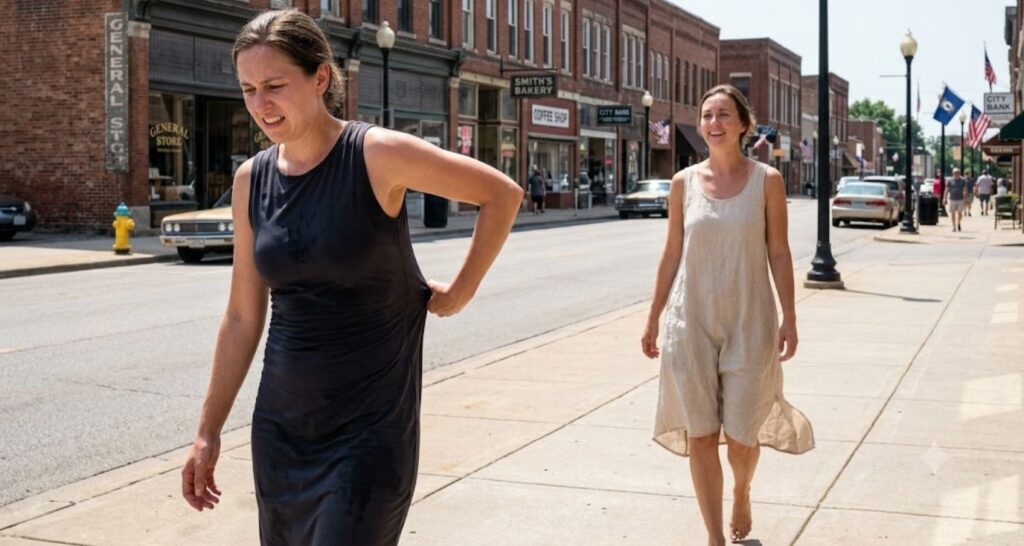
A few traps catch even experienced summer dressers:
- Trusting the word “flowy” in a product description. Flowy polyester is still polyester. Fiber content beats marketing language every time.
- Sizing down for a “cleaner” look. In humidity, close-fitting means clinging. When in doubt between two sizes, take the roomier one.
- Ignoring the lining. That breezy cotton sundress with a full polyester slip lining will cook you. Always check.
- Wearing shapewear underneath. Compression layers trap heat and moisture exactly where you don’t want it. If you want a smoothing layer, choose a loose cotton or bamboo slip instead.
- Forgetting the chafe factor. Bare thighs plus humidity plus a dress equals misery by mid-afternoon. Anti-chafe balm or lightweight cotton shorts underneath solve it completely.
Frequently Asked Questions
What is the best fabric for a dress in humid weather?
Linen is the best overall fabric for humid weather because its hollow flax fibers absorb moisture quickly and release it fast, while its natural stiffness keeps the fabric off your skin. Cotton voile, cotton gauze, seersucker, and TENCEL lyocell are close runners-up, all offering excellent breathability with slightly different feels.
Is linen or cotton better for humidity?
Linen edges out cotton in serious humidity. Both breathe well, but linen absorbs more moisture, dries faster, and resists clinging, while cotton can stay damp once it’s soaked through. Cotton wins on softness, price, and wrinkle resistance, so lightweight weaves like voile and gauze remain excellent second choices.
What should you not wear in humid weather?
Avoid 100% polyester, nylon, and dense knits like scuba or ponte, which trap heat and sweat against your skin. Skip tight-fitting silhouettes, high crew necklines, polyester-lined dresses, and compression shapewear. Solid mid-tone colors like heather gray and light blue are risky too, since they show sweat marks most visibly.
How do I stop sweating through my dress?
You can’t stop sweating, but you can manage it: choose absorbent fabrics like linen that pull moisture off your skin, pick loose silhouettes that allow evaporation, and wear prints or true white or black to hide dampness. Applying antiperspirant the night before and using dress shields also help on high-stakes days.
Are maxi dresses too hot for humid summer weather?
No — a loose, tiered maxi in cotton gauze, voile, or crinkled rayon is often cooler than a short dress because the volume channels moving air across your skin while shielding it from direct sun. The trap is fabric, not length: a fitted polyester maxi absolutely will overheat you.
How should a summer dress fit in humid climates?
It should skim your body, not hug it. You want at least an inch of loose fabric at the waist and back so air can circulate and sweat can evaporate. Loose armholes, wider necklines, and flared or tiered skirts all increase airflow. If you’re between sizes, size up.
The Bottom Line: Dress for the Dew Point
Here’s everything in one breath: pick a breathable natural or cellulose fiber, in a light open weave, cut loose enough to let air move, in a print or a true white or black — and you’ve built a lightweight dress for humid summer weather that works with your body instead of against it.
You can’t change the dew point in Atlanta in July. But you can walk out the door in a gauzy tiered midi or a crisp seersucker shirt dress and feel the difference within a block — less cling, less steam, fewer glances at your reflection to check for sweat marks. That’s the whole goal: a summer where you think about your plans, not your clothes. Now go check your closet for polyester impostors. You know what to look for.