A friend of mine once spent $600 on a “quiet luxury” dress and still looked like she was cosplaying wealth. Two weeks later she wore a $48 navy linen midi from a department store sale rack with flat leather sandals and a gold signet ring, and three people asked where she summers. That gap right there is the whole secret, and it’s why most old money aesthetic dress outfit ideas floating around Pinterest miss the point entirely.
The look isn’t about spending. It’s about restraint, fit, and fabric — in that order. Old money style whispers because it assumes nobody needs convincing.
So let’s break down exactly how to build these outfits, piece by piece, with real combinations you can copy this weekend.
What Is the Old Money Aesthetic in Fashion?
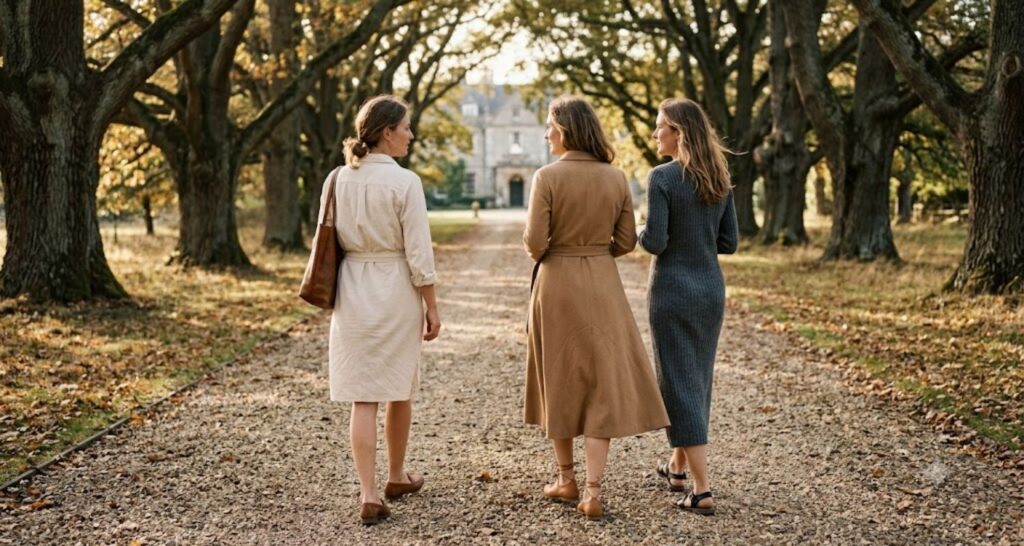
The old money aesthetic is a style rooted in generational wealth signaling through understatement rather than logos, trends, or visible price tags. Think tailored silhouettes, natural fabrics, muted colors, and accessories that look inherited rather than purchased.
Picture the wardrobes of Carolyn Bessette-Kennedy, Grace Kelly, or the Hamptons crowd in a Nancy Meyers film. Nothing shouts. Everything fits.
Here’s the mental test I use: would this outfit look strange in a photograph from 1994? Would it look strange in one from 2044? If the answer to both is no, you’re on track.
The Five Rules That Govern Everything
- Fit beats price. A tailored $40 dress outranks an unhemmed $400 one every single time.
- Natural fabrics only, when you can swing it. Cotton, linen, silk, wool, cashmere.
- Muted over bright. Navy, cream, camel, olive, burgundy, charcoal, white.
- No visible logos. Ever. That’s the fastest way to break the illusion.
- One point of interest, maximum. Pearls or a statement belt. Not both.
Memorize those five and you can improvise the rest.
Old Money Aesthetic Colors: The Palette That Does Most of the Work
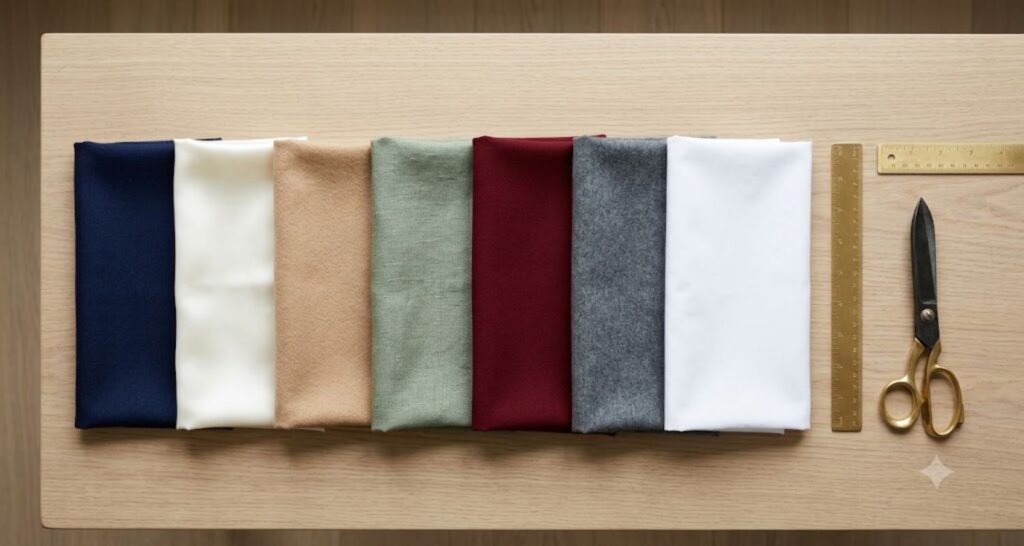
You could own ten dresses in these shades and never repeat an outfit that feels wrong. Color discipline is genuinely half the battle.
| Color | Why It Works | Best Paired With |
|---|---|---|
| Navy | Reads formal without trying; flatters nearly everyone | Cream, gold, tan leather |
| Cream / Ivory | Softer and richer than stark white | Camel, navy, brown |
| Camel | The single most “expensive-looking” neutral | White, chocolate, black |
| Olive / Sage | Quietly outdoorsy, very country-house | Cream, brown, brass |
| Burgundy | Autumn’s answer to navy | Camel, charcoal, gold |
| Charcoal Gray | Softer and less severe than black | White, silver, burgundy |
| Crisp White | Perfect for summer; demands good fabric | Navy, tan, straw |
Notice what’s missing? Neon. Hot pink. Anything that photographs loud. Trendy seasonal colors date an outfit fast, and dating is the enemy here.
Black is allowed, but it’s not the anchor most people assume. Old money leans navy and cream far more heavily than black, especially during daylight hours.
Best Fabrics for an Old Money Aesthetic Dress
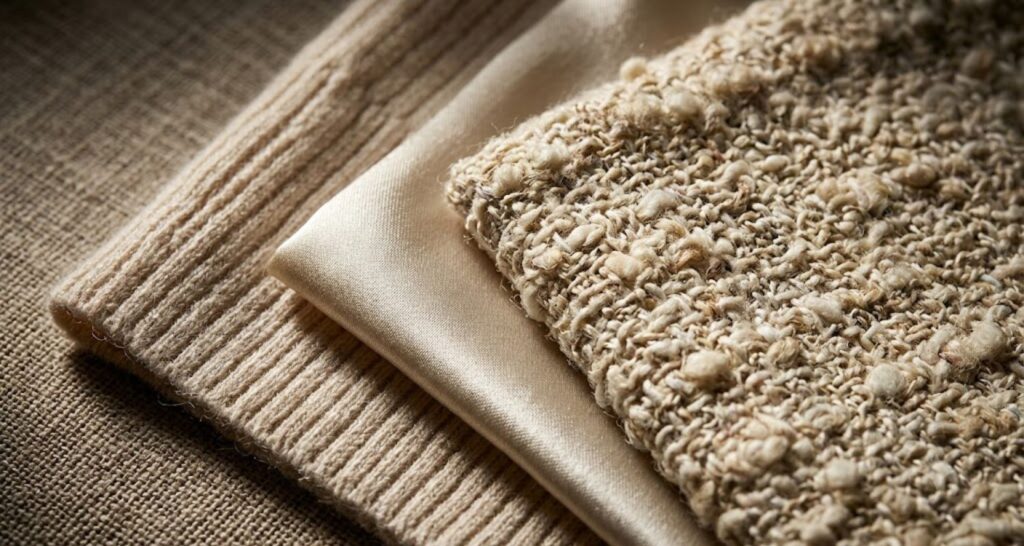
You can nail the color and the cut and still look off if the material is wrong. Shiny polyester catches light in a way that reads cheap from twenty feet away.
| Fabric | Season | Why It Reads Expensive |
|---|---|---|
| Linen | Spring / Summer | Wrinkles look relaxed, not sloppy |
| Cotton poplin | Spring / Summer | Structure and crispness without stiffness |
| Silk / silk blend | Year-round | Drapes instead of clinging |
| Merino wool | Fall / Winter | Holds shape, no pilling |
| Cashmere | Fall / Winter | Softness you can see in photos |
| Tweed | Fall / Winter | Texture that reads heritage |
Run your hand over a dress before you buy it. If it feels slick and plasticky, put it back. Your eye may not catch it on the hanger, but a camera will.
Note: please check out the best details about Coquette Style Dress Outfit Ideas here.
12 Old Money Aesthetic Dress Outfit Ideas for Real Life
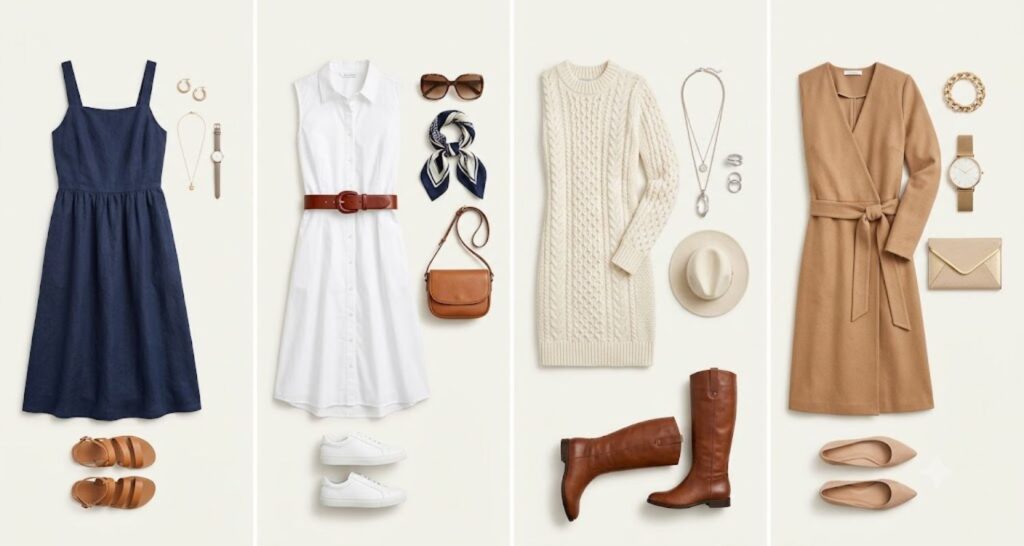
Here’s the practical part. Each of these is a complete outfit — dress, shoes, layer, accessories — so you can copy it directly or swap one element to fit what’s already in your closet.
1. Navy Linen Midi Dress for Weekend Errands

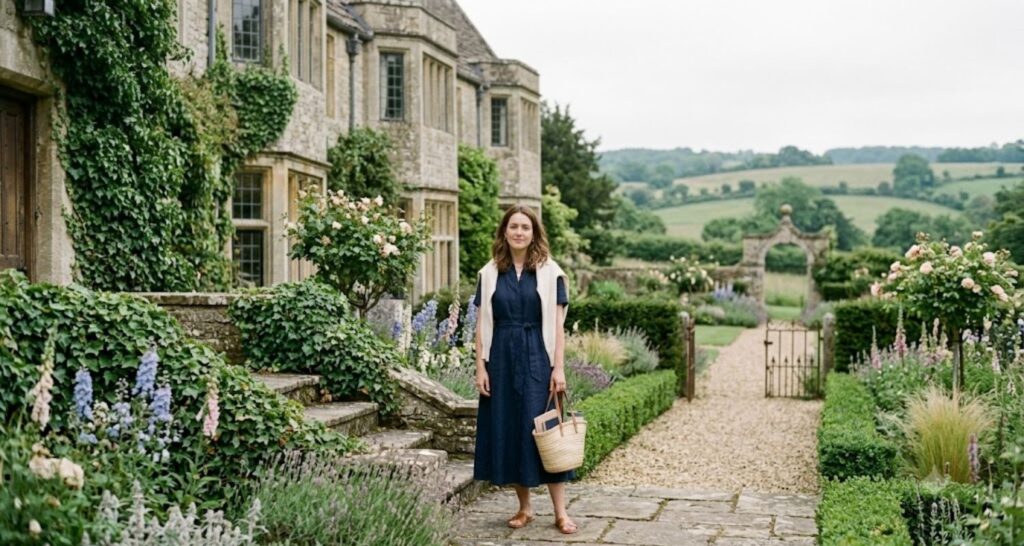
A navy linen midi with a relaxed waist, worn with flat tan leather sandals and a small woven tote. Add small gold hoops and nothing else.
This is the outfit I’d recommend to anyone starting from scratch. It works for a farmers market, a lunch, a casual gallery visit. The wrinkles in the linen aren’t a flaw — they’re the point.
2. White Cotton Shirt Dress for Summer
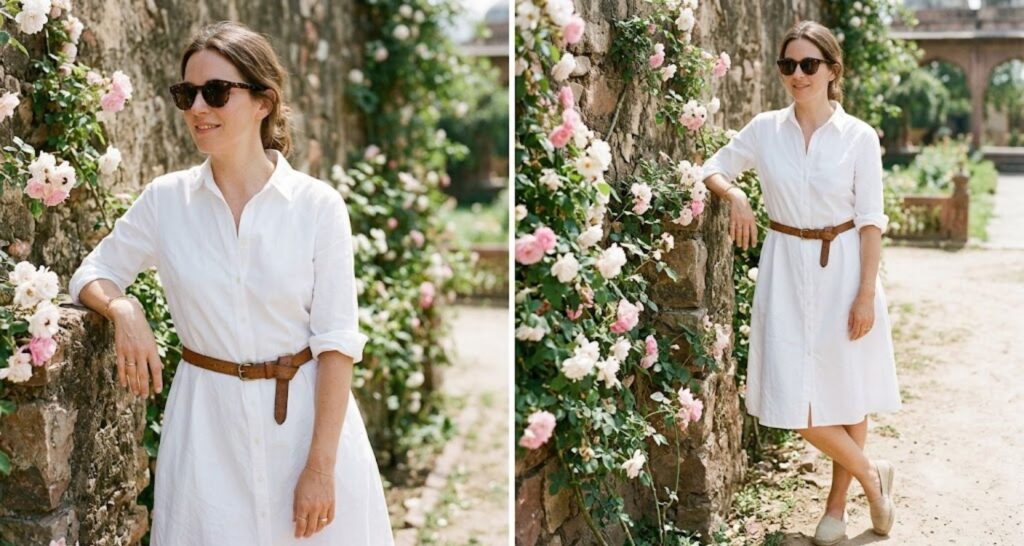
A crisp white cotton shirt dress, sleeves rolled to the elbow, cinched with a thin brown leather belt. Finish with flat espadrilles and dark sunglasses.
Roll the sleeves unevenly on purpose. Perfectly symmetrical styling looks costumey, and slight imperfection is what makes an old money aesthetic dress look lived-in rather than staged.
3. Black Knit Dress With a Trench Coat for Fall
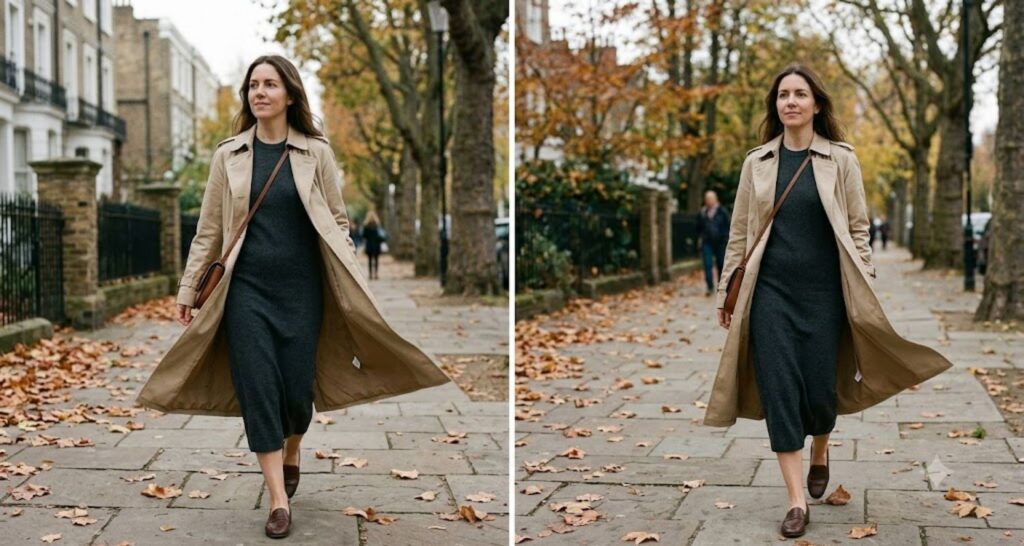
A fitted black or charcoal merino knit midi, layered under an unbelted beige trench coat. Pair with brown leather loafers or ankle boots.
The trench is doing enormous work here. If you buy one investment layer this year, make it a well-cut trench in stone or khaki — it upgrades literally every dress you own.
4. Silk Slip Dress With a Cardigan for Dinner
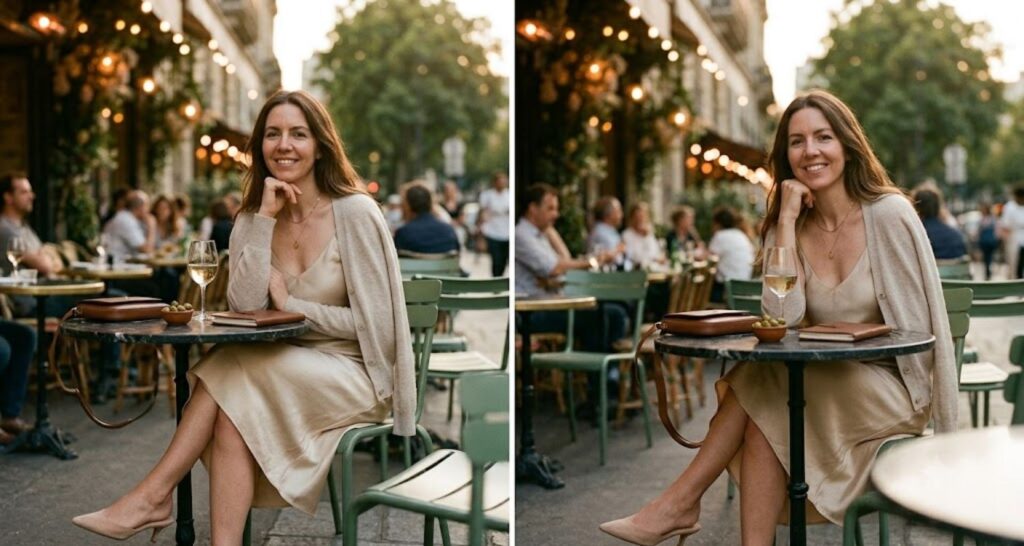
A champagne or navy bias-cut silk slip dress with a fine-gauge cashmere cardigan thrown over the shoulders — buttoned at the top two, never worn properly.
Add kitten heels and a delicate gold chain. The cardigan-over-shoulders move is almost a cliché of the aesthetic at this point, but it endures because it genuinely softens a slip dress into daytime territory.
5. Cream Cable Knit Sweater Dress for Cold Weather

A cream cable knit sweater dress with knee-high brown riding boots and opaque tights. Add a camel wool coat and a leather crossbody with brass hardware.
This is the New England autumn uniform. It photographs beautifully, and it’s warm enough for actual weather — which matters more than most style guides admit.
6. Camel Wrap Dress From Office to Evening
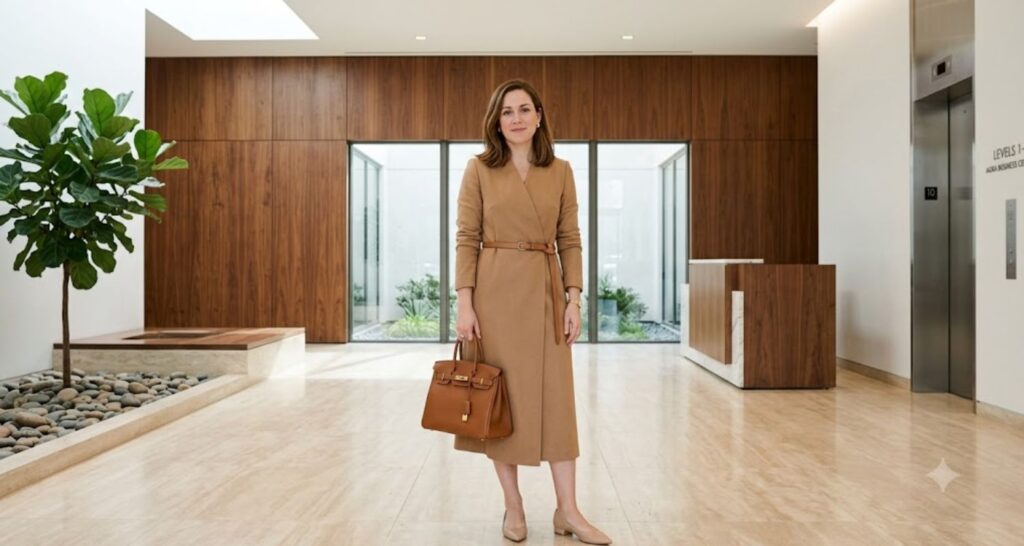
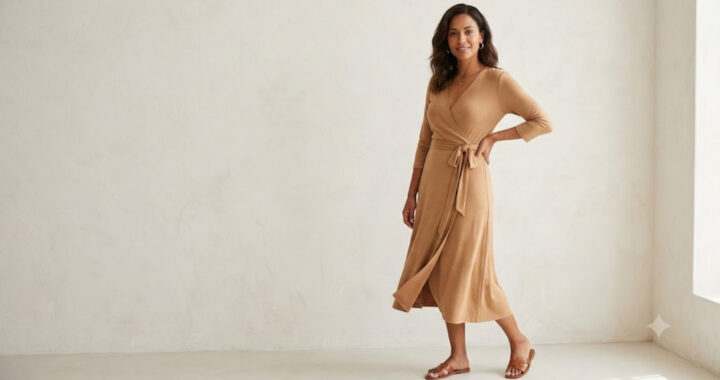
A camel or chocolate wrap dress in a matte jersey or light wool, worn with pointed-toe flats and a slim leather belt in a coordinating tone.
Wrap dresses do something rare: they flatter almost every body type while staying completely unfussy. Keep the jewelry to studs and one bracelet.
7. Striped Breton Dress for Coastal Casual Days
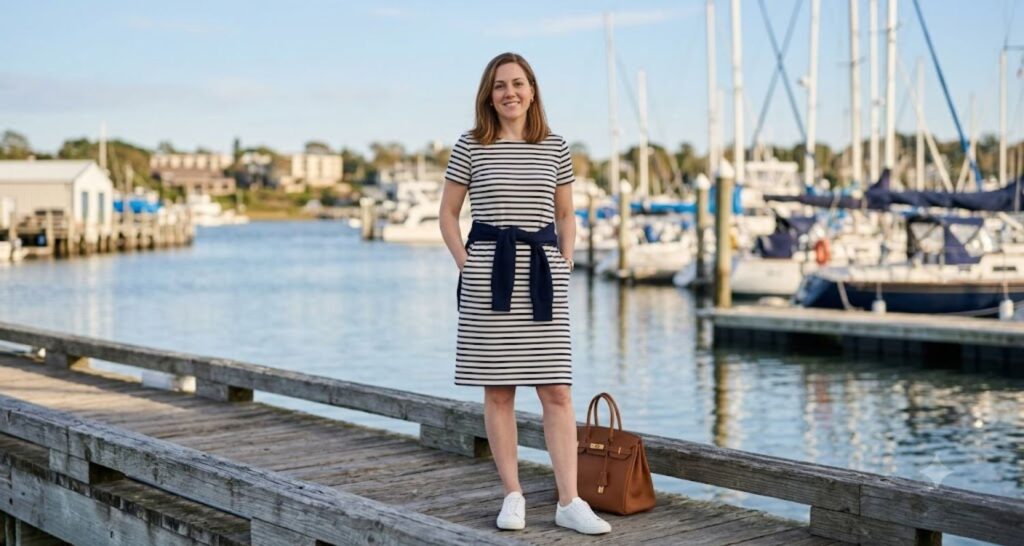
A navy-and-cream horizontal striped cotton dress with white leather sneakers and a navy sweater tied at the waist.
Yes, tied at the waist. It sounds dated. It looks fantastic. This one leans nautical without slipping into costume, as long as you skip anchor prints and rope-detail anything.
8. White Eyelet Sundress for Garden Parties
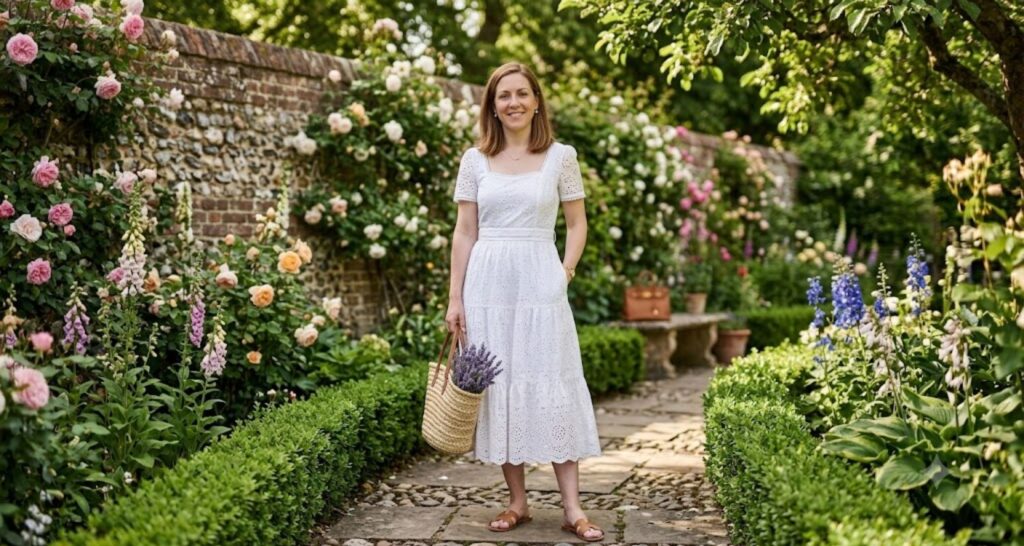
A white or pale blue cotton eyelet sundress with flat tan sandals, a straw tote, and pearl studs.
Eyelet fabric has an old-fashioned quality that does half your work. Keep the hem at or below the knee — micro-lengths break the whole illusion instantly.
9. Tweed Sheath Dress for Work and Formal Settings
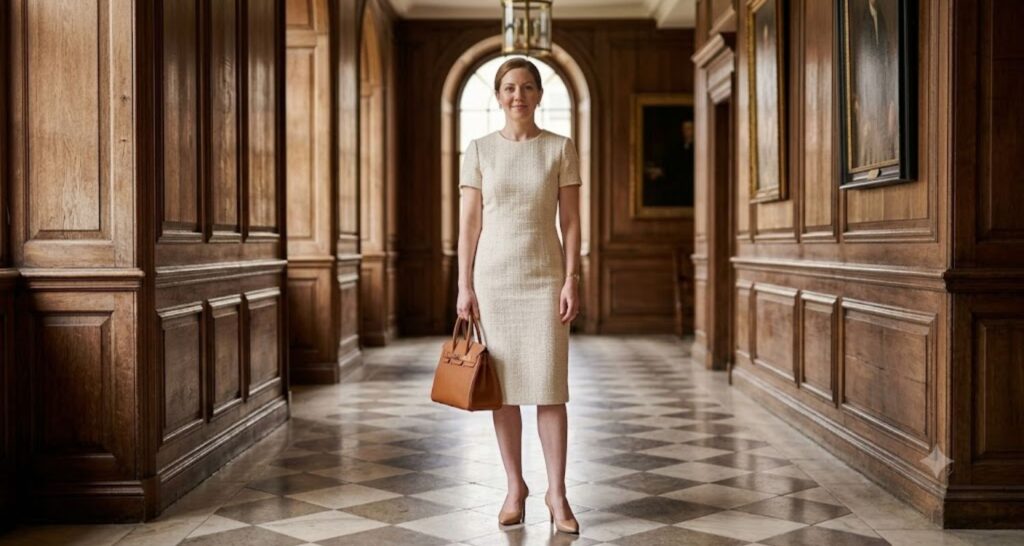
A cream or gray tweed sheath dress, hitting just below the knee, with nude or black pumps and a structured top-handle bag.
This is the boardroom version of the aesthetic. Skip the matching jacket unless you want full Chanel-adjacent formality — a plain wool coat over it reads more modern.
10. White Tennis Dress for Elevated Athleisure

A white collared knit tennis dress with clean white leather sneakers and a cable knit sweater over the shoulders.
Country club energy without the membership. Make sure the dress has no visible athletic branding — that’s the single detail that determines whether this reads polished or gym-adjacent.
11. Floral Prairie Dress for Spring Weekends
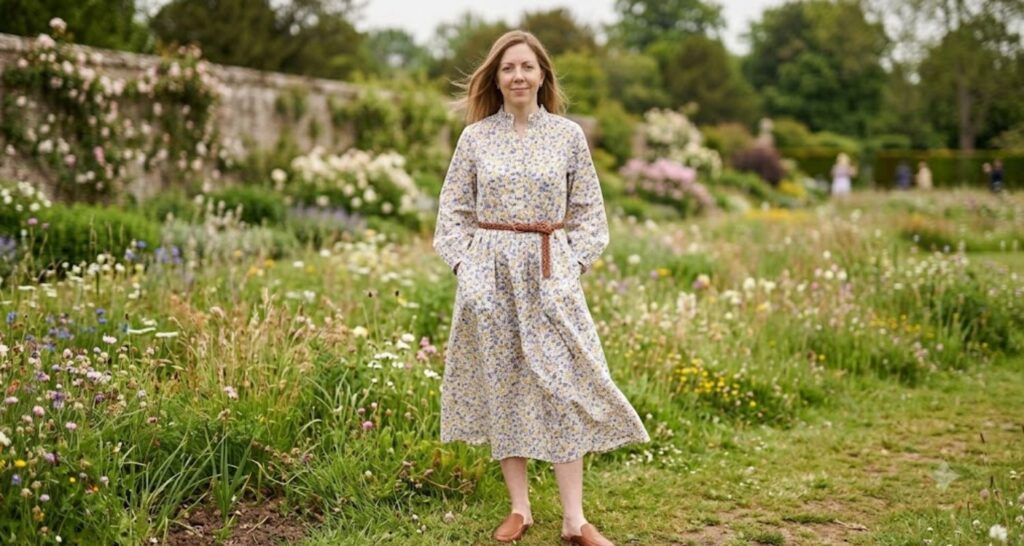
A small-scale floral print midi in cotton, with a high neck and long sleeves, worn with flat leather mules.
Keep the print tiny and the background neutral. Large tropical florals read resort-wear; ditsy florals on cream read heirloom.
12. Little Black Dress With Pearls for Evening
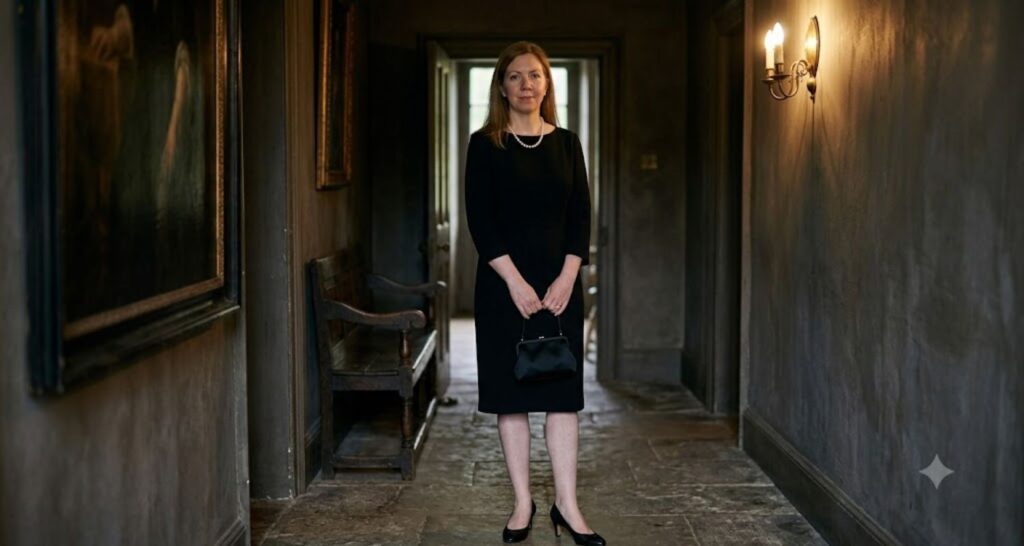
A simple black sheath or A-line dress with no embellishment, a single strand of pearls, black pumps, and a small clutch.
Nothing here is original — and that’s exactly why it works. This outfit has been quietly correct for seventy years and will be for seventy more.
Check out the best tips about Sneakers With Dress Outfit Ideas Women Love here.
How to Style an Old Money Aesthetic Dress in 5 Steps
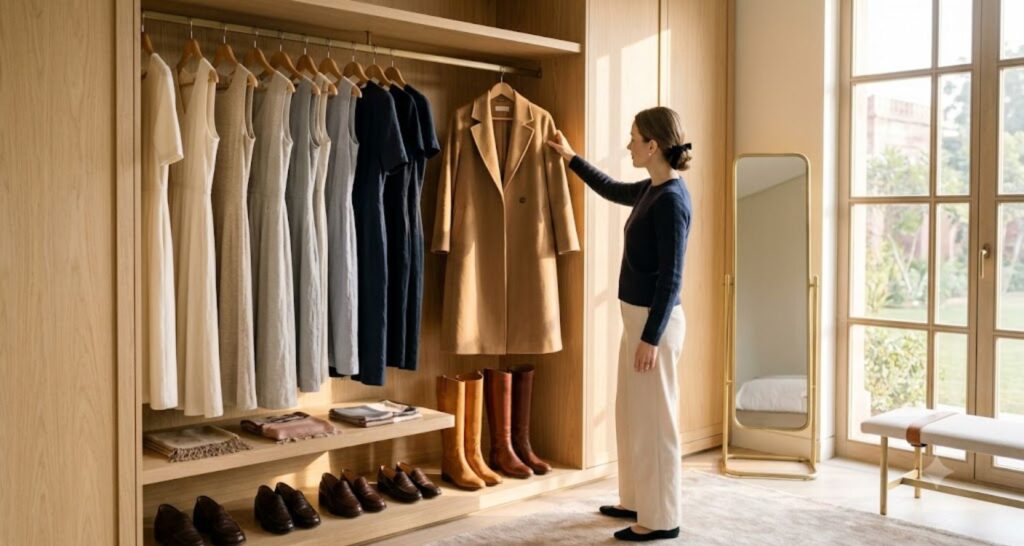
Not sure where to begin with your own closet? Work through this order.
- Start with the dress. Choose a neutral color in a natural fabric with a hem at or below the knee.
- Add a layer. Trench, blazer, cardigan, or wool coat — whichever suits the temperature.
- Pick leather shoes. Loafers, ballet flats, riding boots, or low heels in brown, black, or tan.
- Choose one bag. Structured, unbranded, in leather or straw. Match the leather tone to your shoes.
- Add exactly two pieces of jewelry. A watch and studs. Pearls and a ring. Stop there.
If you catch yourself adding a sixth element, remove something instead. Subtraction is the skill most people never develop.
Seasonal Guide: What to Wear and When
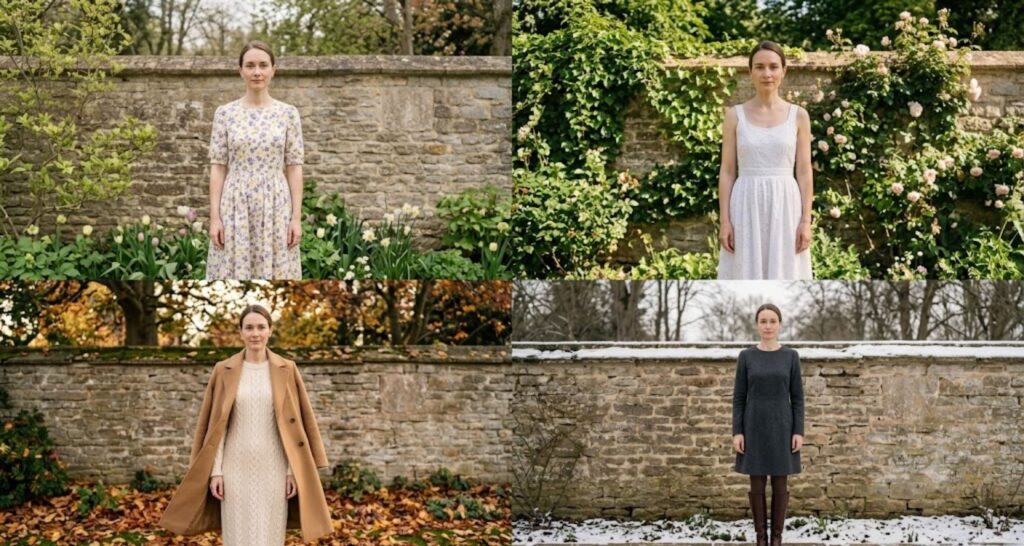
| Season | Dress Style | Layer | Shoes |
|---|---|---|---|
| Spring | Cotton poplin, small florals | Light trench | Ballet flats, loafers |
| Summer | Linen midi, eyelet, shirt dress | Cardigan over shoulders | Flat sandals, espadrilles |
| Fall | Knit midi, tweed sheath | Wool coat, blazer | Riding boots, loafers |
| Winter | Cable knit, wool sheath | Camel overcoat | Knee-high boots, pumps |
Print this out, honestly. Half of dressing well is removing decisions.
How to Accessorize an Old Money Aesthetic Dress
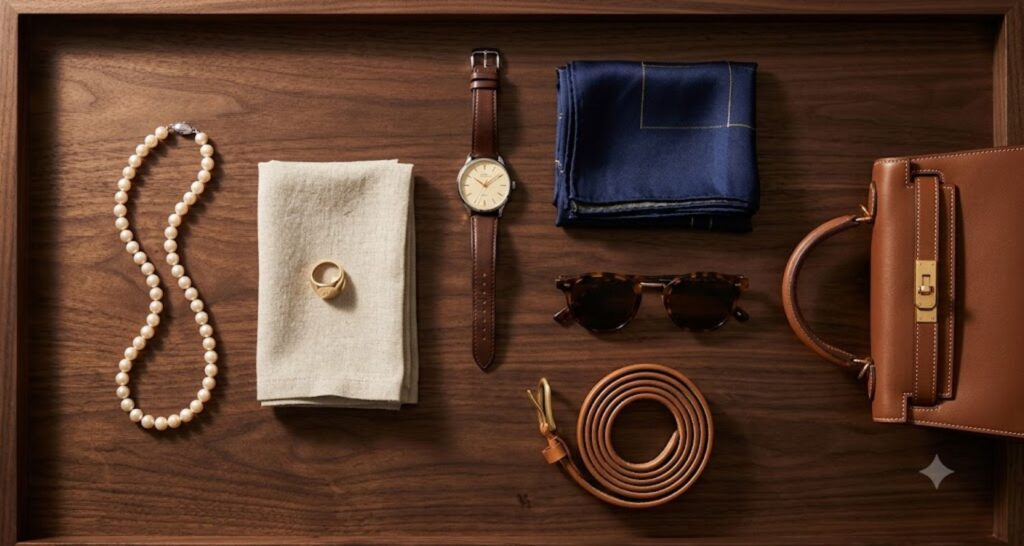
Old money accessorizing follows one principle — everything should look like it’s been owned a long time.
Jewelry. Gold over silver, generally. Pearl studs, a thin chain, a signet ring, a leather-strap watch. Avoid anything that jangles or catches light aggressively.
Bags. Structured leather in tan, brown, black, or burgundy. No logos, no charms, no hardware that announces itself. A woven straw tote for summer is the one exception to the leather rule.
Belts. Thin, leather, matching your shoes. A belt is a good way to define the waist of an otherwise shapeless linen dress.
Scarves. A silk scarf tied at the neck or knotted on a bag handle is the highest-leverage accessory in the entire aesthetic. It costs little and reads like a lot.
Sunglasses. Tortoiseshell or plain black. Classic shapes — wayfarer, round, cat-eye. Nothing mirrored.
Check out the best tips about How to Dress Up a Simple Black Dress here.
Hair and Makeup Notes

Hair should look intentional but not styled to death — a low bun, a half-up ribbon, loose waves, or a simple blowout. A navy or black velvet ribbon costs almost nothing and instantly shifts a look older-money.
Makeup stays minimal: groomed brows, clean skin, a little mascara, and either a nude or true-red lip. Heavy contouring and glossy highlighter fight the aesthetic directly, because they read as effortful, and effort is the thing you’re hiding.
Six Mistakes That Break the Illusion
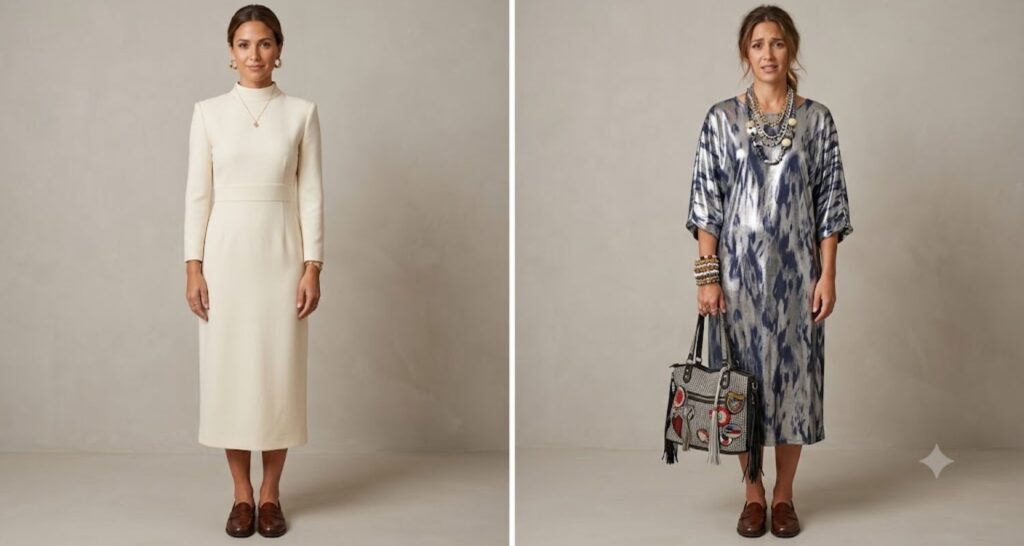
I’ve watched all of these sink otherwise good outfits.
Visible logos. Even subtle ones. A monogram print undoes everything else you did right.
Fast-fashion fabric. Shiny polyester in a beautiful cut still looks like shiny polyester.
Skipping tailoring. A $30 hem adjustment does more for your look than a $300 upgrade in brand.
Too many trends at once. One current element is fine. Three makes it a costume.
Over-accessorizing. Layered necklaces, stacked bracelets, and a statement bag simultaneously? Pick one.
Wrong hemlines. Mini-lengths and extreme maxis both sit outside the aesthetic. Knee to mid-calf is home base.
Getting the Look on a Realistic Budget
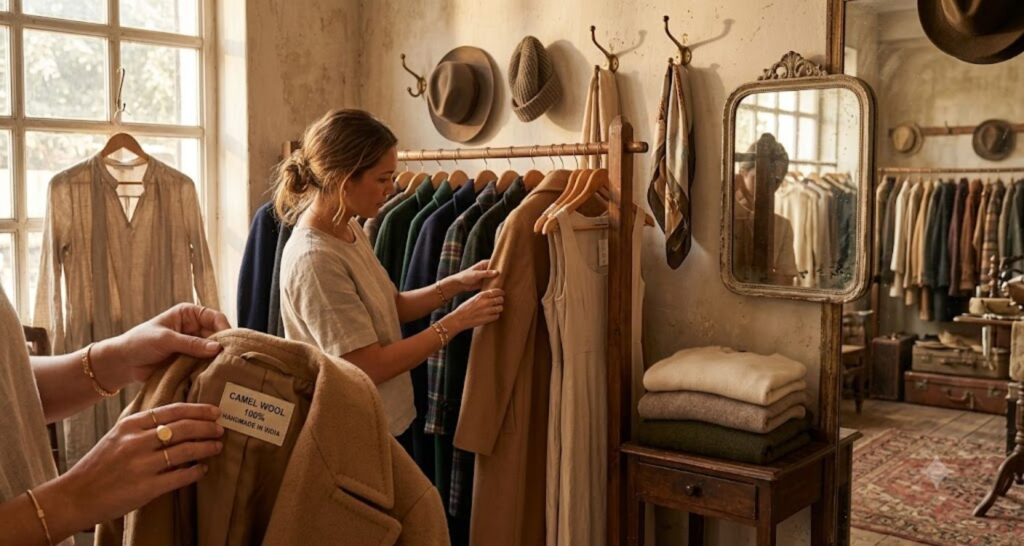
Here’s the thing nobody selling you clothes wants to say: this aesthetic is unusually cheap to fake well, because it’s built on plain garments in plain colors.
Thrift and consignment first. Wool coats, cashmere sweaters, silk scarves, and leather bags from twenty years ago are frequently better made than new ones at triple the price. Search secondhand sites for “wool coat camel” or “silk scarf” and sort by condition.
Budget for tailoring, not brands. Take $200 you’d spend on one designer piece and spend it altering six cheaper ones instead. The return is dramatically better.
Buy fabric, not labels. Check the composition tag before the price tag. A 100% cotton dress from a mass retailer beats a poly-blend from a mid-tier designer.
Invest in three things only. A trench coat, one pair of leather loafers, and a structured leather bag. These three carry every cheap dress you own.
Care for what you have. Steam your linen instead of ironing it flat. Brush your wool. Polish your leather. Well-maintained inexpensive clothing outperforms neglected expensive clothing.
Old Money vs. Quiet Luxury vs. Preppy
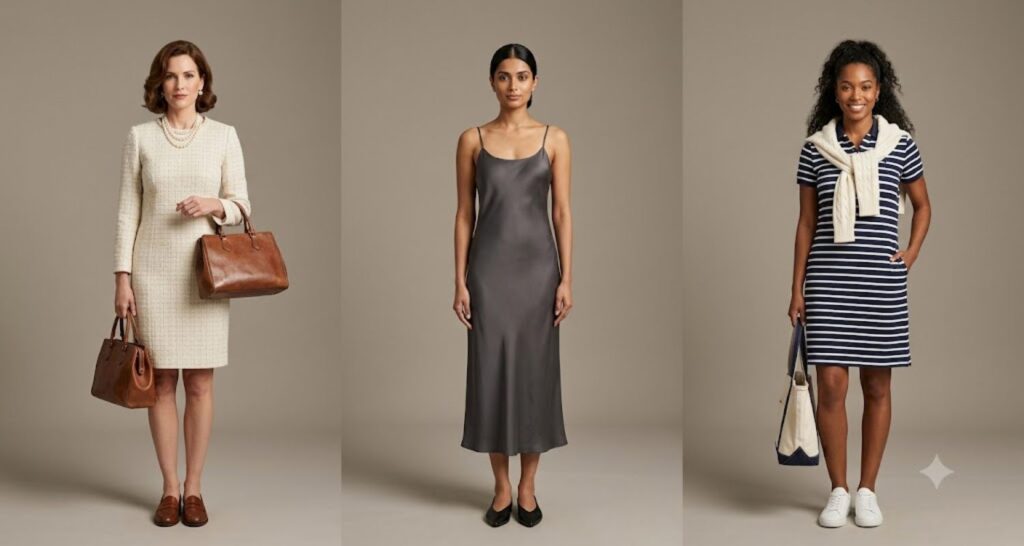
These terms get used interchangeably online, and they shouldn’t be. The distinctions matter when you’re shopping.
| Style | Core Idea | Typical Dress | Vibe |
|---|---|---|---|
| Old Money | Inherited, timeless, understated | Linen midi, tweed sheath | Country house, heritage |
| Quiet Luxury | Expensive materials, no branding | Minimal silk slip, cashmere knit | Modern, urban, minimal |
| Preppy | Collegiate, sporty, more color | Polo dress, striped knit | Youthful, energetic |
Quiet luxury is the modern, city-dwelling cousin — colder, more minimal, more expensive by definition. Preppy shares the DNA but allows brighter colors and more playfulness. Old money sits between them, warmer than quiet luxury and more restrained than preppy.
Most people searching for old money aesthetic dress outfit ideas actually want that middle ground: classic without being stuffy, refined without looking cold.
Best Old Money Dresses for Your Body Type
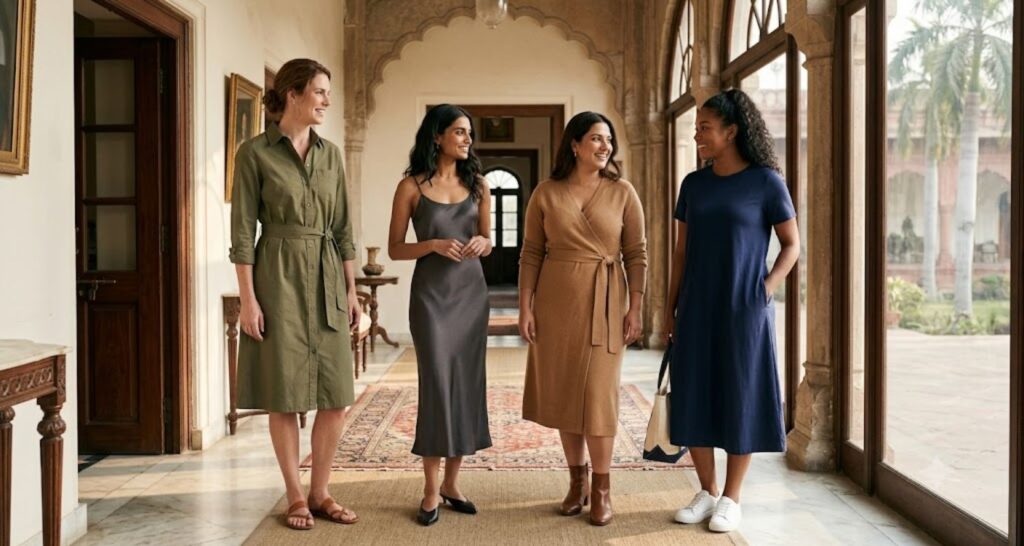
The aesthetic is flexible, despite what the very specific Pinterest boards suggest.
Petite frames. Choose midi lengths that hit at mid-calf rather than ankle, and define the waist. Vertical elements — a shirt dress placket, a long cardigan — help.
Tall frames. You can carry maxi lengths and oversized coats that swallow shorter frames. Lean into the long trench.
Curvier builds. Wrap dresses and belted shirt dresses are your strongest options. Avoid shapeless linen sacks, which read frumpy rather than relaxed.
Athletic builds. A-line and fit-and-flare shapes create the softness the aesthetic likes. Bias-cut silk works beautifully here too.
Whatever your shape, the same rule applies: get it tailored. There is no substitute.
A Two-Week Plan to Build Your Capsule
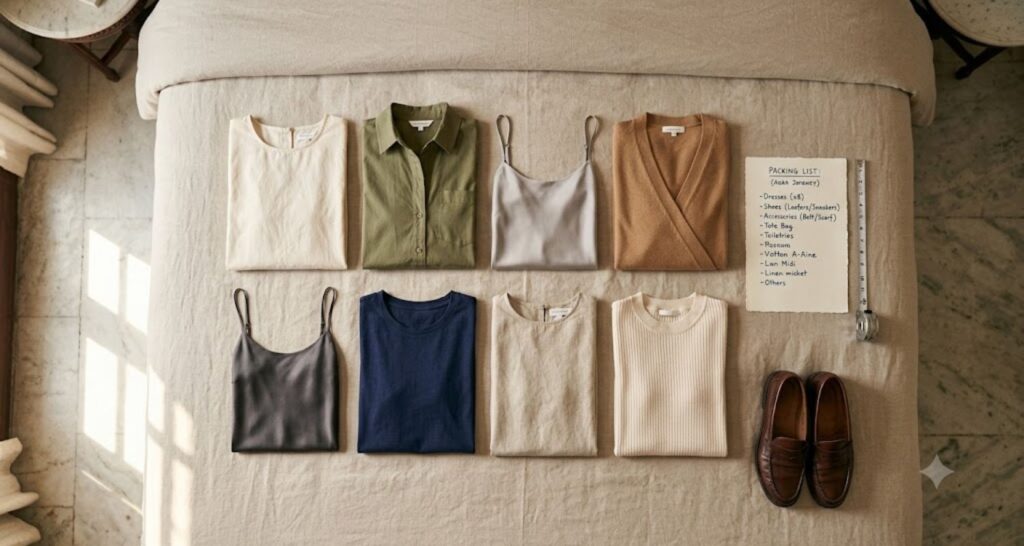
Want a concrete starting point? Here’s how I’d sequence it.
Days 1–3. Audit what you own. Pull every dress in a neutral, natural fabric. You probably have three you forgot about.
Days 4–7. Take everything that almost fits to a tailor. Hems, waists, sleeve lengths.
Days 8–10. Shop secondhand for one trench or wool coat and one silk scarf.
Days 11–14. Fill gaps with new basics — a white shirt dress, a navy midi, a pair of leather loafers.
Two weeks and maybe a few hundred dollars, and you’ll have a rotation of eight to ten complete outfits. That’s the entire aesthetic, sorted.
Frequently Asked Questions
What is the old money aesthetic in fashion?
The old money aesthetic is a style built on understated, timeless clothing that signals wealth through quality rather than branding. It favors tailored silhouettes, natural fabrics like linen and cashmere, and muted colors including navy, cream, and camel. Logos and trend-driven pieces are deliberately avoided in favor of classic, long-lasting garments.
What colors are considered old money?
Navy, cream, camel, charcoal, olive, burgundy, and crisp white form the core old money palette. These muted, natural-looking tones photograph well, coordinate easily with each other, and never date. Bright neons, hot pinks, and heavily saturated seasonal trend colors fall outside the aesthetic because they draw attention rather than deflect it.
Can you achieve the old money look on a budget?
Absolutely. The aesthetic relies on plain garments in neutral colors, which are inexpensive and widely available. Shop secondhand for wool coats, cashmere, and leather bags, then spend your money on tailoring instead of labels. A well-fitted $40 dress consistently looks better than an ill-fitting designer one.
What shoes go with an old money aesthetic dress?
Leather is the common thread. Choose loafers, ballet flats, knee-high riding boots, low block heels, pointed-toe flats, or simple espadrilles in tan, brown, black, or cream. Avoid platforms, chunky sneakers with visible branding, and anything with excessive hardware or embellishment that competes with the dress.
What dress length works best for old money style?
Midi lengths — hitting anywhere from just below the knee to mid-calf — are the safest and most authentic choice. Knee-length sheaths work well for formal and professional settings. Mini lengths and floor-sweeping maxis generally sit outside the aesthetic, since both draw more attention than the style’s restraint allows.
Is old money style the same as quiet luxury?
They overlap but differ in tone. Quiet luxury emphasizes genuinely expensive, minimal, logo-free materials in a modern urban context. Old money leans warmer and more traditional, drawing on heritage references like tweed, pearls, riding boots, and country-house dressing. Old money can be replicated affordably; quiet luxury largely can’t.
Start With One Outfit, Not a Wardrobe
Here’s what I’d actually do if I were you: pick one of the old money aesthetic dress outfit ideas above — probably the navy linen midi or the white shirt dress — and build just that. One dress, one layer, one pair of leather shoes, two pieces of jewelry.
Wear it three times. Notice how differently people respond to you in something that fits properly in a color that doesn’t shout.
Then build the next one. This aesthetic rewards patience, which is fitting, because that’s more or less what it’s about in the first place. You’re not chasing a trend that expires in six months — you’re assembling clothes you’ll still be wearing when your current favorites have fallen apart.
Start with the tailor. Everything else follows.