
Your favorite midi dress doesn’t need to hibernate until April. I used to pack mine away every November, convinced that dresses and freezing temperatures couldn’t coexist. Then one brutal Chicago January, a friend showed up to brunch in a floral midi, chunky knee-high boots, and an oversized cardigan — and she looked warmer than I did in jeans. That’s when I learned how to style a midi dress in winter, and it changed the way I dress from December through March.
Here’s the truth: a midi dress might be the most winter-friendly piece in your closet. The length already covers most of your leg, which gives you a head start on warmth. All you need is the right mix of layers, boots, and outerwear.
In this guide, you’ll get practical, tested outfit formulas — plus the mistakes to skip, the fabrics that actually keep you warm, and answers to the questions everyone asks.
Why a Midi Dress Works So Well in Winter
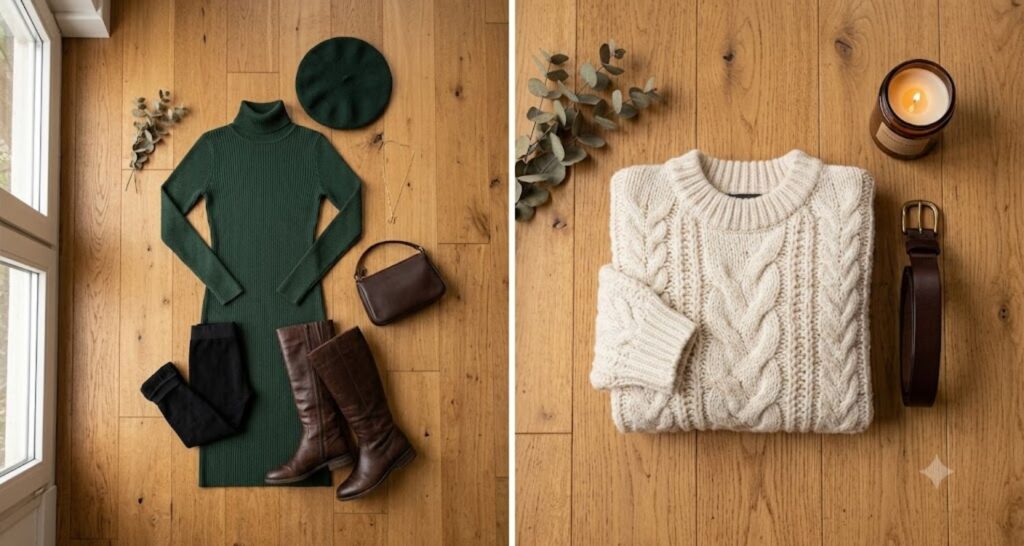
Think about it. A mini dress leaves your legs exposed. A maxi dress drags through slush and gets soaked at the hem. A midi dress — which hits anywhere between mid-calf and just below the knee — sits in the sweet spot.
That length does three things for you in cold weather. It pairs perfectly with tall boots, leaving little or no skin exposed. It leaves room for tights or leggings underneath without looking bulky. And it works with almost every coat length, from cropped puffers to long wool overcoats.
There’s a style bonus, too. Midi dresses read as polished without trying hard. You can wear the same dress to the office on Tuesday and to a holiday dinner on Saturday just by swapping your boots and jewelry. In a season when most of us default to the same jeans-and-sweater routine, that versatility is a gift.
How to Style a Midi Dress in Winter: The Quick Answer
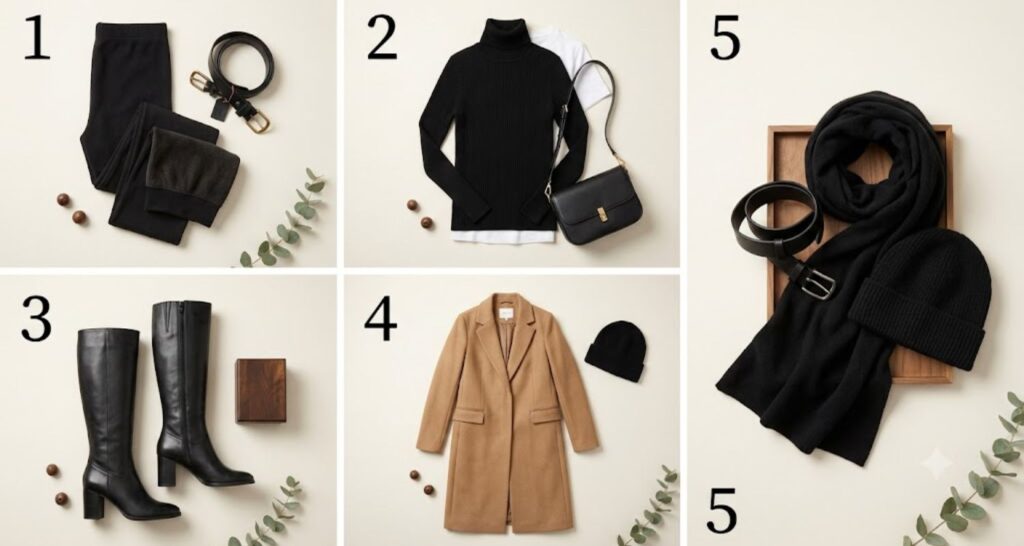
Short on time? Here’s the basic formula in five steps:
- Start with a warm base. Add fleece-lined tights, thermal leggings, or a slip layer under the dress.
- Layer on top. Wear a fitted turtleneck underneath the dress, or a sweater or cardigan over it.
- Choose boots that meet the hem. Knee-high or tall boots close the gap between dress and shoe.
- Add structured outerwear. A long wool coat, teddy coat, or leather jacket finishes the outfit.
- Accessorize for warmth and shape. A belt defines your waist over layers; a scarf, beanie, and gloves handle the rest.
Each step has tricks worth knowing, though. Let’s break them down.
Step 1: Build a Warm Base Layer
Warmth starts with what nobody sees. Get the base right, and even a lightweight satin midi becomes wearable in 25-degree weather.
Fleece-Lined Tights Are Non-Negotiable

If you buy one thing for winter dress-wearing, make it fleece-lined tights. From the outside, they look like regular opaque black tights. Inside, they’re brushed fleece — and the difference on a windy day is dramatic.
Look for a pair with at least 200 denier if you want full opacity. Sheer-look fleece tights exist too, and they’re great for dressier occasions when black opaques feel too heavy. Keep an extra pair in your desk drawer or car. Trust me on that one.
Don’t Sleep on Slips and Thermal Layers
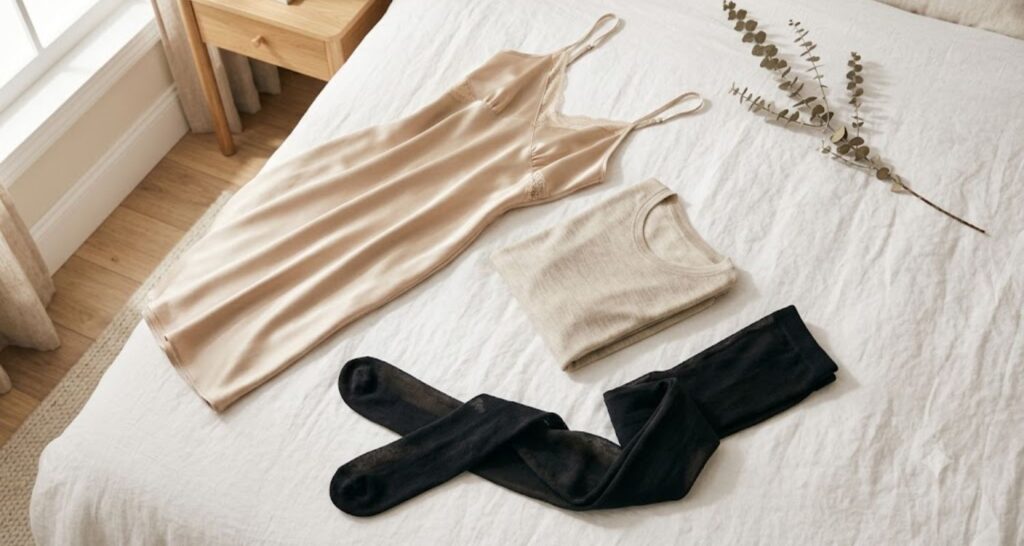
A simple slip dress worn underneath adds a surprising amount of warmth by trapping a layer of air between fabrics. It also stops clingy winter static, which anyone who’s had a dress stick to their tights knows is worth the price alone.
For truly cold days, a thin merino wool or heat-tech base layer top works under almost any dress. Merino regulates temperature without bulk, so you stay warm on the walk to work and don’t overheat once you’re inside.
Step 2: Master the Art of Layering on Top
This is where midi dress styling gets fun. You have two main plays: layer under the dress or layer over it.
The Turtleneck Under the Dress

A slim turtleneck worn underneath instantly winterizes a sleeveless or short-sleeved midi. Black turtleneck under a floral midi? That’s a whole outfit. White turtleneck under a slip dress? Effortless and warm.
Stick with thin, fitted knits for this move. A chunky turtleneck under a dress adds lumps in all the wrong places. Ribbed cotton or fine merino lies flat and keeps the dress’s shape intact.
The Sweater Over the Dress

Flip the formula and wear a sweater over your midi, letting the skirt portion show underneath. Suddenly your dress functions as a skirt, and you’ve doubled your outfit options.
Two ways to nail this look. First, choose a cropped or waist-length sweater so you keep some shape. Second, if your sweater is longer, add a belt over it at your natural waist. The belt is doing real work here — without it, oversized knit plus flowy dress can swallow your frame.
A long duster cardigan is the third option, and it’s the most forgiving. Leave it open over the dress, add tall boots, and you’ve got a look that works for errands, casual Fridays, and everything between.
Step 3: Pick Boots That Close the Gap
Footwear makes or breaks a winter midi outfit. The goal is simple: minimize the gap between your hem and your boot shaft. Here’s how each style plays out.
Knee-High Boots

The classic pairing for a reason. Knee-high boots meet or nearly meet a midi hem, so almost no leg shows — which means warmth and a long, streamlined silhouette. Black leather knee-highs with a block heel go with nearly every midi dress you own. Suede versions feel softer and dressier, but skip them on slushy days.
Ankle Boots
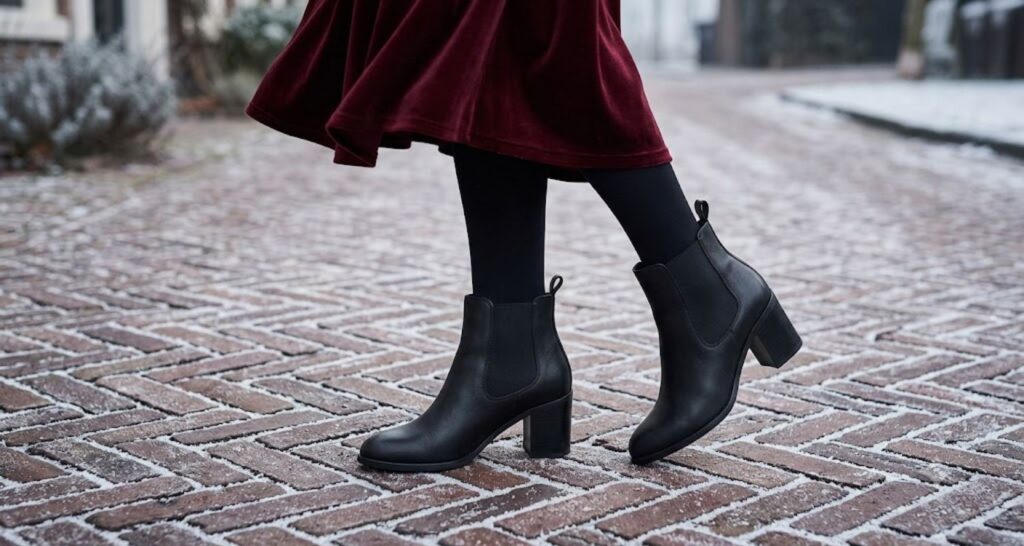
Ankle boots work, but they demand tights. The few inches of leg between bootie and hem will be visible, so opaque tights in a color that matches your boots create an unbroken line. Heeled ankle boots dress a midi up; flat Chelsea boots dress it down.
Combat and Lug-Sole Boots

Want to toughen up a feminine dress? Chunky lug-sole or combat boots add contrast that feels current and — bonus — they actually grip icy sidewalks. This pairing shines with floral and slip midis, where the sweet-meets-tough tension does the styling for you.
Western Boots

Cowboy boots with a midi dress lean effortlessly cool, especially with knit or denim-friendly casual dresses. They’re not the warmest option, so save them for milder winter days or add thick socks.
Whichever style you choose, weatherproof it. A spray-on protector costs a few dollars and saves suede and leather from salt stains — the true villain of American winters.
Step 4: Choose Outerwear That Flatters the Length

Ever thrown a coat over a dress and felt like a walking fabric pile? That’s a proportion problem, not a you problem.
The safest bet is a coat that’s either clearly longer or clearly shorter than your dress. A long wool coat that falls past the midi hem looks intentional and elegant. A cropped puffer or waist-length leather jacket creates contrast that shows off the dress. What rarely works is a coat that ends at almost the same point as the hem — the two lengths compete and chop your silhouette in half.
A few winners for midi lengths:
- Long wool or wool-blend coat: The most polished option. Camel, gray, or black works over everything.
- Teddy or sherpa coat: Adds cozy texture; keep the dress underneath sleek so the outfit doesn’t feel heavy.
- Belted trench or wrap coat: The belt gives you a waist even in deep layers.
- Cropped puffer: Casual, practical, and surprisingly cute with a flowy midi and combat boots.
- Leather or shearling-trimmed jacket: Best for milder days; instantly edges up a soft dress.
If your coat has no waist definition, remember the belt trick. Belting your outermost layer keeps you from disappearing inside your outerwear.
Step 5: Accessorize for Warmth and Polish
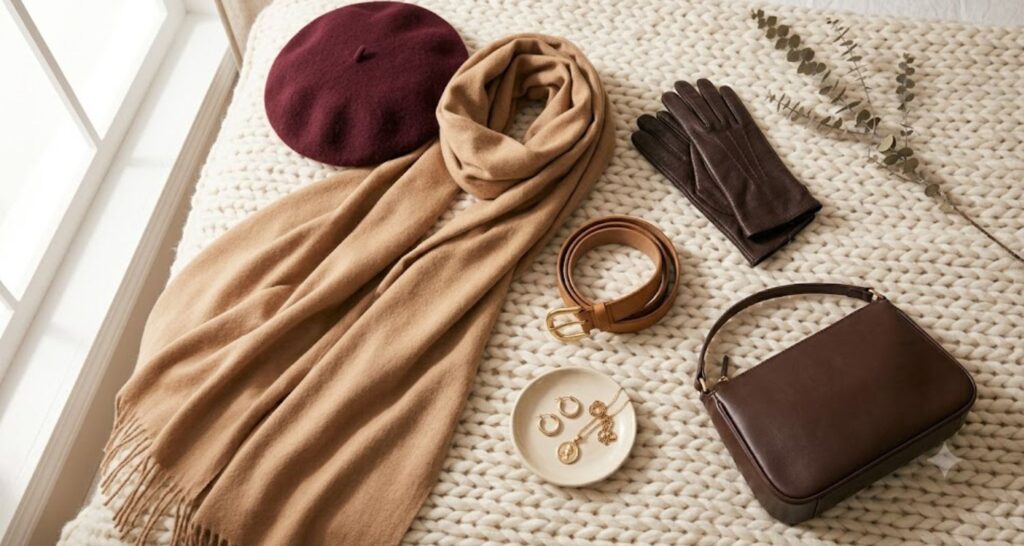
Accessories in winter pull double duty. They finish the look and they keep you comfortable — and the outfit only works if you’re not shivering.
Start with a scarf. An oversized wool or cashmere-blend scarf adds color near your face and seals the neckline gap that lets cold air in. A beanie or wool beret handles your head; leather gloves feel more pulled-together than knit ones with a dressy midi.
Then think shape and shine. A belt at the waist — over a dress, sweater, or coat — is the single most useful styling tool in winter layering. Gold hoops or a pendant necklace peek out from a turtleneck and stop the outfit from feeling utilitarian. A structured shoulder bag or tote in a rich tone like burgundy or chocolate brown grounds the whole thing.
One small anecdote here: I once wore the exact same black knit midi two days in a row (travel, long story). Day one: sneakers, denim jacket, crossbody bag. Day two: knee-high boots, belted wool coat, gold jewelry. A coworker complimented my “new dress.” Accessories are the outfit.
Styling Different Types of Midi Dresses
Not all midis behave the same in the cold. Here’s a cheat sheet for the most common types:
| Dress Type | Best Winter Pairing | Warmth Level | Best For |
|---|---|---|---|
| Knit/sweater midi | Knee-high boots + long coat | High | Office, everyday |
| Slip dress (satin) | Turtleneck under + combat boots | Low–medium | Date night, parties |
| Floral midi | Fleece tights + cardigan + lug boots | Medium | Weekends, brunch |
| Shirt dress | Sweater over + ankle boots | Medium | Work, casual Friday |
| Wrap dress | Thermal layer + tall boots | Medium–high | Office, dinners |
| Ribbed bodycon midi | Duster cardigan + heeled boots | Medium | Evenings out |
A knit midi dress is the winter MVP — it’s essentially a full-length sweater, so it needs the least help. A satin slip midi needs the most support, but it also delivers the biggest style payoff when you layer it right. Don’t write off summer florals, either; dark tights and a chunky knit reframe them completely for the season.
Best Fabrics and Colors for Winter Midi Dresses
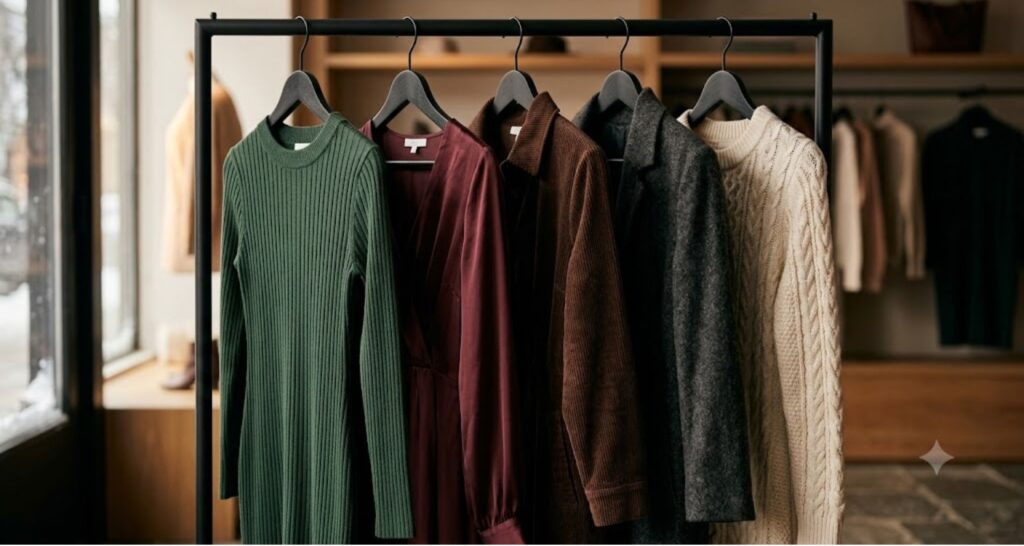
If you’re shopping for a new midi this season, fabric matters more than print. The right material does half the styling work before you add a single layer.
Knit fabrics top the list. A ribbed or cable-knit midi holds heat, resists wrinkles, and looks intentional with everything from sneakers to heeled boots. Ponte and heavier jersey come next — they drape well, don’t cling as badly as thin jersey, and survive being stuffed under a coat. Wool blends and corduroy midis are less common but wonderful when you find them.
Satin and silk sit at the other end. They’re cold on their own, but they layer beautifully and elevate an evening look, so keep one in rotation for events. What to skip for daily winter wear: linen, seersucker, and anything gauzy. Those fabrics fight the season no matter how cleverly you layer.
Color-wise, winter rewards depth. Black is the obvious workhorse, but don’t stop there. Chocolate brown, forest green, burgundy, and charcoal all pair effortlessly with black tights and boots while feeling richer than head-to-toe black. Cream and oatmeal knits look gorgeous against dark outerwear — just maybe not on slush-puddle days.
One practical tip from experience: hold the fabric up to light before buying. If you can see your hand through it, plan on a slip underneath or save it for spring. Thicker fabric means fewer layers, and fewer layers mean faster mornings.
Winter Midi Dress Outfits for Real-Life Occasions
Formulas are helpful, but let’s make this concrete. Here’s how the pieces come together for the situations you actually dress for.
For the Office

Take a wrap or shirt midi in a solid color. Add fleece-lined tights, black knee-high boots with a modest block heel, and a fitted turtleneck underneath if the dress is short-sleeved. Top with a long camel coat and a leather tote. You’ll look more put-together than half the office and feel like you’re wearing pajamas. That’s the win condition.
For Weekend Errands and Brunch

Grab a floral or casual knit midi. Layer a chunky cardigan or crewneck sweater over it, belt it if the knit runs long, and step into combat boots with thick socks peeking out the top. A beanie and crossbody bag finish it. This is the outfit that gets “you always look so put together” comments while requiring roughly four minutes of effort.
For Date Night or a Holiday Party

This is the slip dress’s moment. Wear a satin midi over sheer-look fleece tights, add heeled ankle boots or tall stiletto boots, and layer a fine-knit turtleneck underneath if the venue skews casual — or skip it and rely on a warm coat if it’s dressy. A tailored long coat, small shoulder bag, and statement earrings complete it. You’re warm in transit and glamorous on arrival.
For Snow-Day Casual

Yes, you can wear a dress in the snow. Knit midi, thermal leggings instead of tights, waterproof lug-sole boots, puffer coat, beanie. The leggings-under-dress move feels almost like cheating — nobody can tell, and you’re as warm as you’d be in sweatpants.
5 Winter Midi Dress Mistakes to Avoid
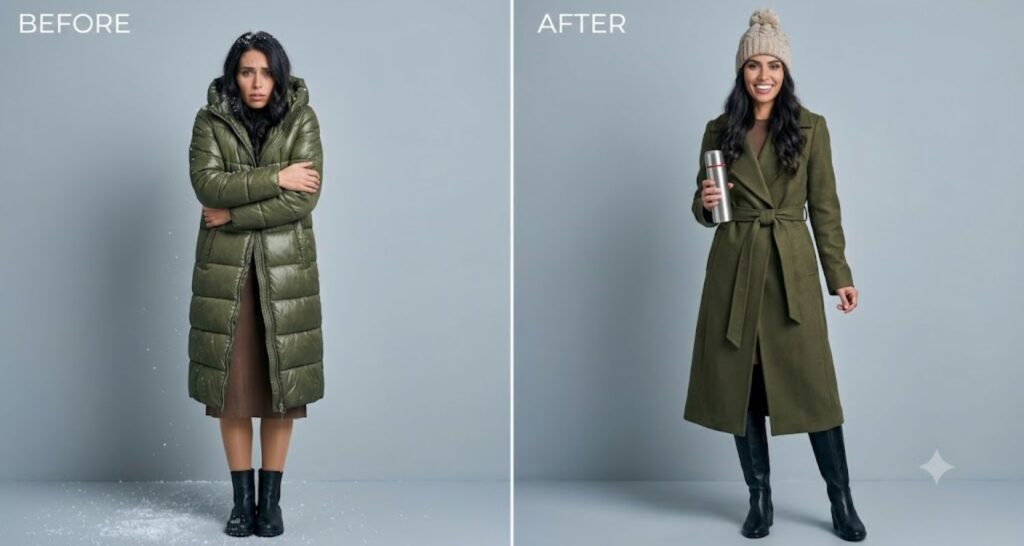
Even good outfits fall apart on small details. Watch for these:
- Bare legs in freezing temps. It reads unseasonal and you’ll be miserable. Tights exist for a reason.
- Sheer summer tights instead of winter-weight. Ten-denier nude tights do nothing in January. Go opaque or fleece-lined.
- A coat that hits at the exact hem length. It cuts you in half visually. Go noticeably longer or shorter.
- Bulky layers with no waist definition. Layering without a belt or fitted piece somewhere turns cozy into shapeless fast.
- Ignoring fabric weight. A linen or crepe summer midi will always fight you in winter. Save the lightest fabrics for indoor events and lean on knits, ponte, and heavier wovens for daily wear.
Frequently Asked Questions
Can you wear a midi dress in the winter?
Absolutely. A midi dress is one of the most practical dress lengths for winter because it covers most of your leg and pairs naturally with tall boots. Add fleece-lined tights, a base or top layer like a turtleneck or sweater, and a long coat, and you’ll stay warm in genuinely cold temperatures.
What shoes should you wear with a midi dress in winter?
Knee-high boots are the best choice because they close the gap between your hem and shoe, keeping you warm and elongating your silhouette. Ankle boots work with opaque tights in a matching color, while lug-sole or combat boots add grip on ice and a modern contrast to feminine dresses.
How do you wear a summer midi dress in winter?
Winterize a summer midi with three moves: put a fitted turtleneck or thermal layer underneath, add fleece-lined tights, and layer a chunky cardigan or structured coat on top. Swap sandals for boots and choose darker accessories. Even lightweight florals and slip dresses work when every exposed area is covered.
What do you wear under a midi dress when it’s cold?
Start with fleece-lined tights or thermal leggings for your legs. Up top, a thin merino wool or heat-tech base layer adds warmth without bulk, and a slip worn underneath traps heat while preventing static cling. Fitted layers matter — thin and snug beats thick and lumpy under a dress.
Are midi dresses still in style for winter 2026?
Yes — midi dresses remain a wardrobe staple rather than a passing trend. Current winter styling leans on knit and sweater midis, slip dresses layered over turtlenecks, and pairings with lug-sole or knee-high boots. Because the length flatters most body types and layers easily, midis have serious staying power.
How do you keep a midi dress from clinging to tights?
Static cling comes from friction between synthetic fabrics. Wear a slip between your tights and dress, use an anti-static spray, or rub a dryer sheet along your tights before dressing. Choosing natural-fiber dresses like cotton or wool blends also reduces cling compared to polyester.
The Bottom Line
Learning how to style a midi dress in winter comes down to one shift in thinking: treat the dress as the middle of your outfit, not the whole thing. Warm base underneath, smart layer on top, boots that meet the hem, a coat with intentional proportions, and a belt to bring back your shape.
Start with the easiest version tonight — pull out one midi dress for spring, add fleece-lined tights and your tallest boots, and throw on your longest coat. That’s it. You’ve just unlocked a whole category of your closet you thought was off-limits until spring, and you did it without sacrificing a single degree of warmth.
Your midi dresses were never just for summer. They were waiting for you to figure this out.