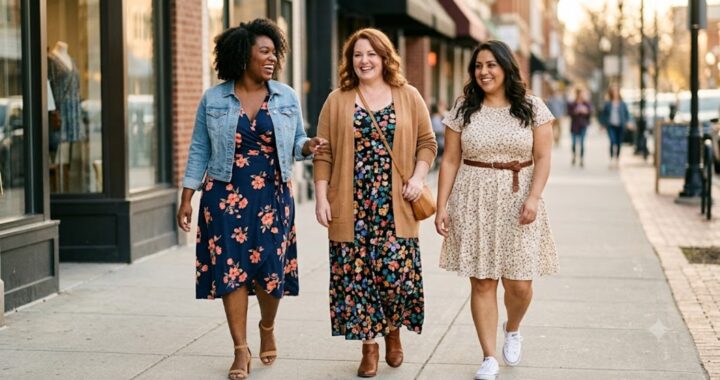
Peeling sweaty denim off your legs after a 95-degree afternoon is a special kind of misery. If you’ve been there — stuck to a car seat in July, wondering why you did this to yourself again — you’re exactly who this guide is for. Figuring out what to wear instead of jeans, summer dress options included, isn’t about abandoning your personal style. It’s about staying cool, looking put-together, and never fighting with a waistband in a heatwave again.
Here’s the short version: a well-chosen summer dress replaces jeans in almost every situation — errands, work, dates, travel — while feeling roughly ten degrees cooler. And if dresses aren’t your thing every single day, there’s a whole lineup of other jeans alternatives worth knowing about.
Let’s break down all of it.
Why Jeans and Summer Heat Don’t Mix
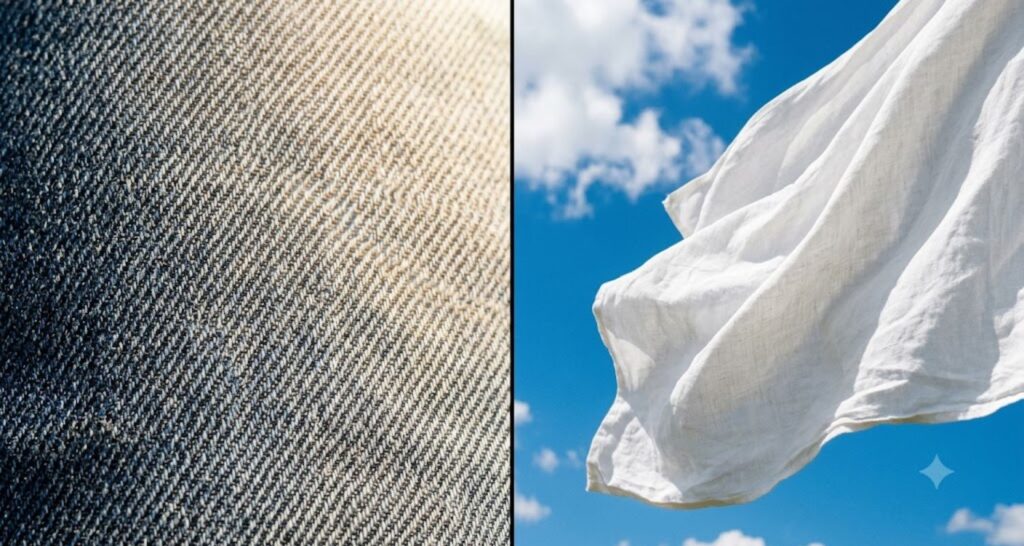
Denim is heavy cotton twill, usually 12 to 16 ounces per square yard. That density is great in October. In August? It traps heat against your skin and holds onto sweat instead of letting it evaporate.
There’s a reason denim was invented for miners and ranchers, not beachgoers. It’s workwear. Durable, structured, and thick — three qualities that work against you when the heat index climbs past 90.
Compare that to a lightweight cotton or linen dress. Air flows underneath. Sweat evaporates. Nothing clings to the back of your knees. Your body’s natural cooling system actually gets to do its job.
Quick gut check: if you’ve ever chosen jeans on a hot day and regretted it by noon, that’s not a willpower problem. It’s a fabric problem. Let’s fix it.
What to Wear Instead of Jeans: Summer Dress Styles That Work
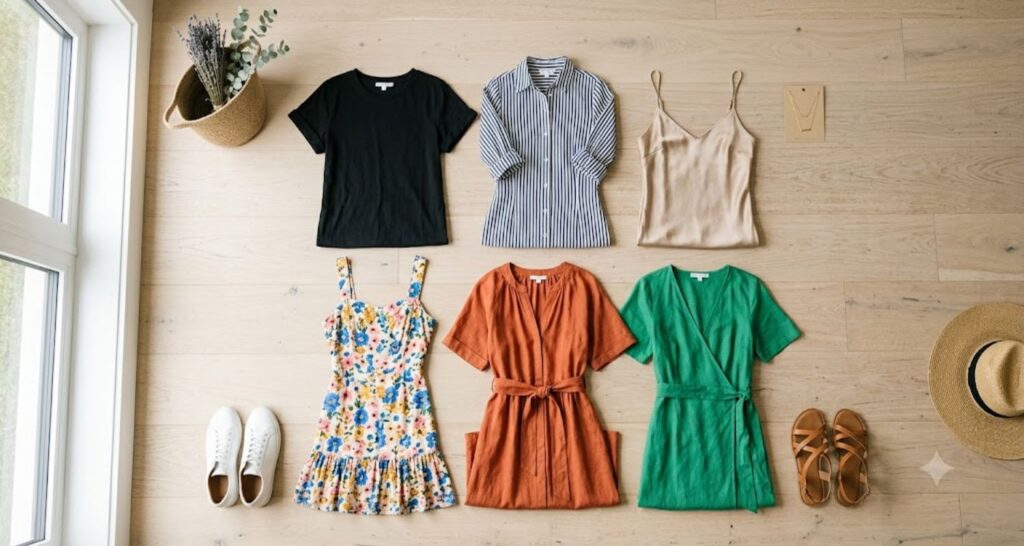
Not all dresses are created equal in the heat. Some styles breathe beautifully; others cling in all the wrong places. If you’re deciding what to wear instead of jeans, summer dress silhouettes like the six below give you the most comfort per dollar — and they each replace a specific jeans outfit you probably already wear.
1. The T-Shirt Dress (Your “Jeans and a Tee” Replacement)

This is the easiest swap you’ll ever make. A t-shirt dress delivers the exact same casual energy as jeans and a t-shirt, minus the waistband, the belt, and the heat.
Throw it on with white sneakers and you’re done. That’s the entire outfit. Cotton jersey versions from brands like Old Navy or Gap run $20 to $40, so you’re not making a risky investment either.
One tip from experience: size up if you’re between sizes. A t-shirt dress that skims your body stays breezy. One that hugs it turns into a heat trap by mid-afternoon.
2. The Shirt Dress (Your “Jeans and a Button-Down” Replacement)

If your usual uniform is jeans with a tucked-in button-down, the shirt dress is your one-piece upgrade. It reads polished enough for a casual office, a lunch meeting, or a school event, but it’s secretly as comfortable as a nightshirt.
Look for cotton poplin or linen blends. Both hold a crisp shape without weight.
Add a thin belt if you want waist definition, or wear it loose with sandals when the humidity is doing its worst. Either way, you look intentional — like you planned the outfit rather than surrendered to the weather.
3. The Slip Dress (Your “Date Night Jeans” Replacement)

Remember scrambling to find jeans that looked good enough for dinner out? A slip dress solves that in one piece. The silky drape does the dressing up for you.
Satin-finish slip dresses look expensive even when they aren’t. Pair one with flat sandals for casual evenings or heeled mules when you want a little more. Toss a lightweight denim jacket over it and you’ve kept a nod to your jeans habit — without actually wearing them.
4. The Sundress (Your Weekend Default)

The classic sundress — fitted bodice, flowy skirt, thin straps — exists for exactly one purpose: keeping you comfortable when it’s hot. Farmers market, backyard barbecue, kid’s soccer game, beach trip. It handles all of them.
Cotton and seersucker are your friends here. Seersucker especially, because its puckered texture holds the fabric slightly off your skin, creating airflow. That’s not marketing talk; it’s the actual reason Southerners have worn it for over a century.
5. The Maxi Dress (Coverage Without the Heat)

Prefer more coverage? A maxi dress gives you full-length protection from sun and air-conditioning alike, yet it’s dramatically cooler than pants. The loose column of fabric lets air circulate from ankle to shoulder.
Maxis also travel brilliantly. One rolled-up jersey maxi takes less suitcase space than a single pair of jeans and covers dinner, sightseeing, and the flight home.
Petite? Look for petite-specific cuts or a side slit so the length doesn’t swallow you.
6. The Wrap Dress (The Most Flattering Option in the Room)

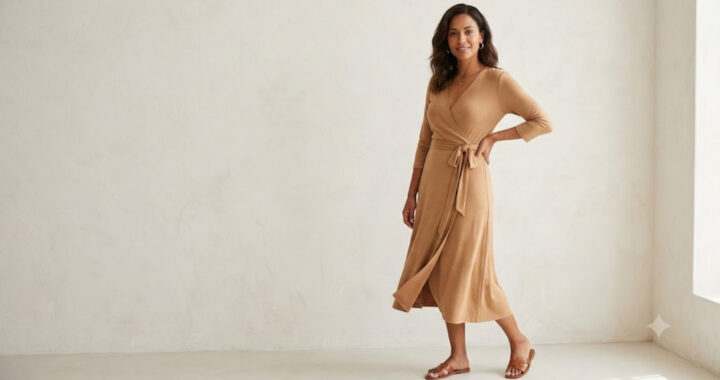
Diane von Furstenberg built an empire on this silhouette for a reason. The wrap dress adjusts to your body — literally, you tie it to fit — which makes it one of the rare styles that flatters nearly every shape.
The V-neckline elongates, the tie waist defines, and the skirt skims rather than clings. In a breathable viscose or cotton blend, it’s a summer workhorse that goes from office to dinner without a costume change.
Note : check out the complete guide about Linen Dress Outfit Ideas for Hot Summer here.
Other Jeans Alternatives for Summer (When You Don’t Want a Dress)

Maybe dresses aren’t your everyday answer. Fair enough. You still don’t have to default back to denim. These alternatives keep the coverage and structure of jeans while dropping the heat.
Linen Pants
Linen is the gold standard of hot-weather fabric. Its hollow fibers wick moisture and release heat faster than cotton, which is why it’s been the fabric of choice in hot climates for about 5,000 years.
Wide-leg linen pants in white, beige, or olive give you the “real pants” feeling with none of the weight. Yes, linen wrinkles. Consider that part of its relaxed charm rather than a flaw.
Flowy Skirts
A midi skirt with a t-shirt tucked in scratches the same itch as jeans-and-a-tee, but with airflow. Pleated, tiered, or A-line — anything that moves when you walk will feel cooler than anything that grips.
Tailored Shorts
Not the denim cutoffs you’ve had since college — tailored shorts in chino, linen, or ponte. A 5-to-7-inch inseam with a structured waist looks pulled-together enough for most casual workplaces and every weekend plan.
Jumpsuits and Rompers
One piece, zero decisions. A linen or soft woven jumpsuit gives you the coverage of pants and the ease of a dress. The only honest downside: bathroom logistics. You’ll learn to plan ahead.
Bike Shorts and an Oversized Shirt
The most casual option on this list, and the most comfortable. Soft bike shorts under a big linen button-down or oversized tee is basically the summer uniform of anyone running errands in Austin or Phoenix by 8 a.m. — before the pavement starts radiating.
Note : Best Flowy Summer Dress Outfit Ideas for Women, check out the complete guide.
How to Choose the Right Summer Dress: 5 Simple Steps
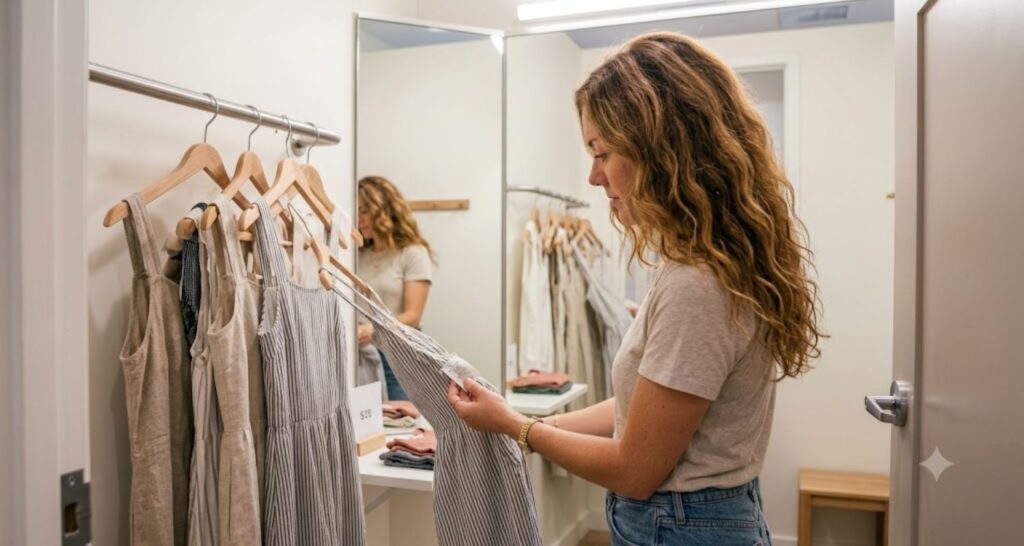
Standing in a fitting room (or scrolling endless product pages) with no strategy is how you end up with dresses you never wear. Use this process instead:
- Start with fabric, not style. Check the tag first. Cotton, linen, rayon, seersucker, or bamboo — yes. Polyester above 50%, thick knits, or anything labeled “scuba” — put it back.
- Match the dress to your most common week. If you’re in an office four days a week, buy shirt dresses and wraps before sundresses. Buy for the life you have.
- Do the sit test. Sit down in it. If it rides up past mid-thigh or gapes at the chest, you’ll fuss with it all day and eventually stop wearing it.
- Check the lining. An unlined pale dress in bright sun can be see-through. A full polyester lining defeats the breathable fabric you just chose. Aim for cotton-lined or opaque single-layer fabrics.
- Buy one, wear it for a week, then repeat. Don’t overhaul your closet in one order. Find the silhouette that earns repeat wears, then buy a second color.
That’s it. Five steps, and you’ll skip about 90% of the bad purchases.
Summer Dress Fabrics Compared
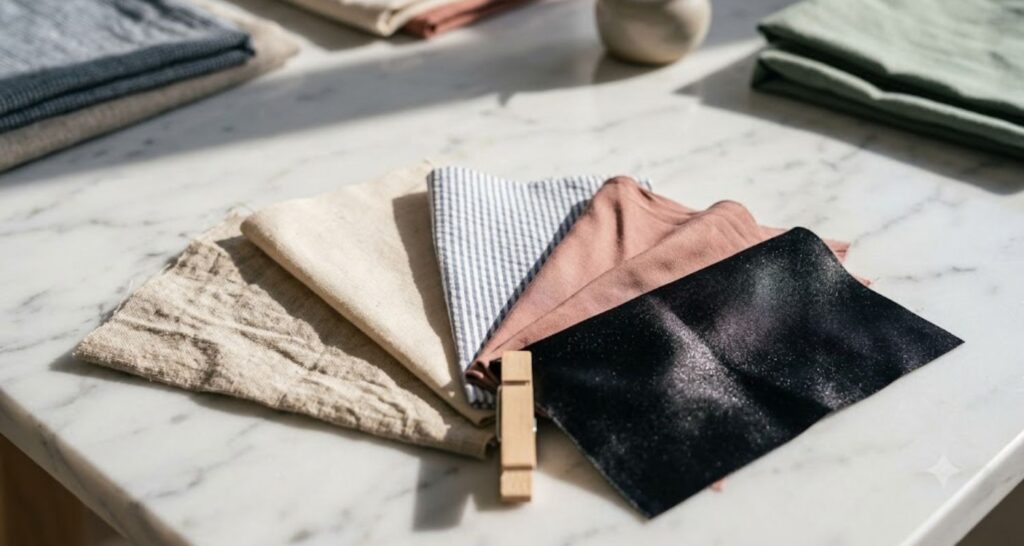
Fabric makes or breaks a hot-weather outfit, so here’s the honest rundown:
| Fabric | Breathability | Wrinkles? | Best For | Watch Out For |
|---|---|---|---|---|
| Linen | Excellent | A lot | Extreme heat, travel | Can feel rough at cheap price points |
| Cotton | Very good | Some | Everyday wear | Holds sweat longer than linen |
| Seersucker | Very good | Barely | Humid climates | Limited color/pattern options |
| Rayon/Viscose | Good | Some | Drapey, dressy looks | Weakens when wet; check care label |
| Jersey knit | Good | Almost none | Travel, t-shirt dresses | Clings if cut too tight |
| Polyester | Poor | None | Almost nothing in summer | Traps heat and odor |
If you remember only one thing from this table, make it this: natural fibers breathe, most synthetics don’t. A $25 cotton dress will feel better in July than a $150 polyester one. Price doesn’t cool you down. Fiber content does.
How to Style Summer Dresses for Every Occasion

The number one worry people have about ditching jeans is losing versatility. Jeans go everywhere, right? Here’s the thing — so does the right dress. It just needs the right supporting cast.
For Work
A shirt dress or wrap dress in a solid color does the heavy lifting. Add loafers or low block heels, simple gold jewelry, and a structured tote.
Freezing office AC is real, so keep a lightweight blazer or cotton cardigan at your desk. You’ll get the best of both worlds: cool commute, warm meeting.
For Casual Weekends
T-shirt dress or sundress, white sneakers or flat sandals, crossbody bag, sunglasses. Done in ninety seconds.
Want more shape? Knot a chambray shirt at your waist. It adds structure and doubles as sun protection for your shoulders.
For Date Nights
Slip dress or wrap dress, plus one “elevated” element — heeled sandals, a bold earring, or a swipe of lipstick. The dress itself carries the effort, so you don’t have to pile on accessories.
For Travel
Jersey maxi or t-shirt dress, because they survive a suitcase without ironing. Wear sneakers on the plane, pack one pair of sandals, and you’ve covered a week of outfits in less space than two pairs of jeans.
A quick real-world example: on a five-day trip to Charleston last summer — a city where the humidity feels like a wet blanket by 9 a.m. — three dresses and one pair of shorts covered every restaurant, walking tour, and church visit. The jeans that made it into the suitcase “just in case”? Never left it.
Note : Checkout best guide about Linen Dress for Work Summer Outfit here.
Jeans vs. Summer Dress: The Honest Comparison

Still on the fence? Here’s how the matchup actually shakes out:
| Factor | Jeans | Summer Dress |
|---|---|---|
| Comfort above 85°F | Poor | Excellent |
| Time to get dressed | Requires a top, belt, shoes | One piece, add shoes |
| Breathability | Low | High |
| Works for office | Depends on dress code | Usually yes |
| Pockets | Yes, reliably | Sometimes (and it’s glorious when yes) |
| Durability | Excellent | Moderate |
| Bike riding / climbing with kids | Easier | Needs shorts underneath |
Jeans win on pockets and durability. Dresses win on everything heat-related. That’s why the smartest approach isn’t jeans or dresses — it’s dresses June through September, jeans the rest of the year.
And about that pocket problem: it’s increasingly solved. Brands like Universal Standard, Lands’ End, and even Target’s A New Day line now put real, functional pockets in dresses. Read the product details before you buy and you’ll never mourn your back pocket again.
Building a No-Jeans Summer Capsule (7 Pieces)
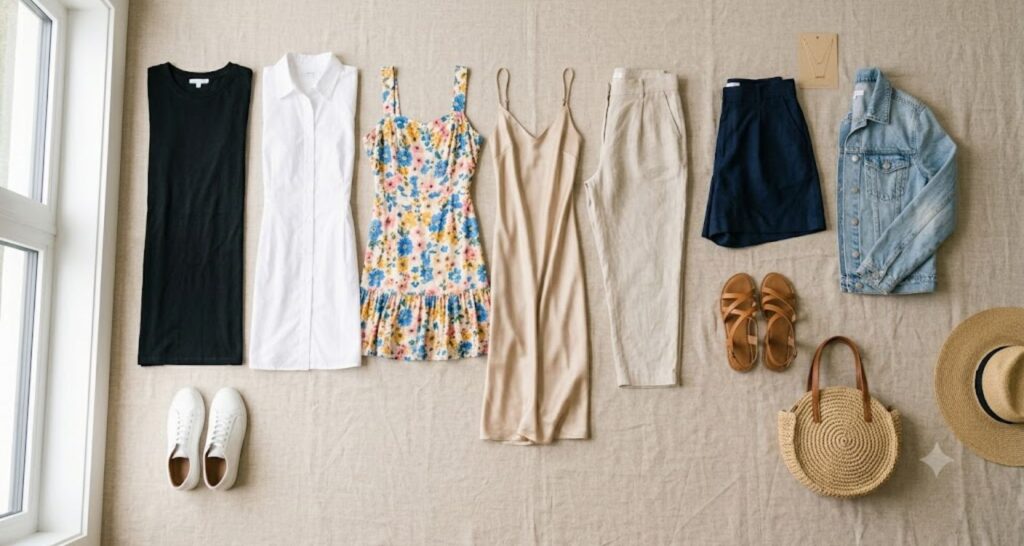
You don’t need twenty new items. Seven will genuinely cover an entire American summer:
- One t-shirt dress in black or navy
- One shirt dress in white, stripe, or chambray
- One sundress in a print you love
- One wrap or slip dress for evenings
- One pair of wide-leg linen pants
- One pair of tailored shorts
- One lightweight layer — denim jacket or linen shirt — for AC and cool nights
Mix those seven pieces and you’ve got weeks of outfits without repeating a look. Total cost can land under $250 if you shop Old Navy, Target, Quince, and Amazon Essentials — or you can build it slowly with higher-end pieces from Madewell, J.Crew, or Reformation.
Start with number one. The t-shirt dress converts jeans loyalists faster than anything else on this list.
Common Mistakes When Switching From Jeans to Dresses

A few missteps trip up almost everyone making this switch. Dodge these and the transition gets a lot smoother.
Buying the wrong size out of habit. Jeans stretch and forgive; woven dresses don’t. If a dress pulls across the chest or hips in the fitting room, it will only bother you more by hour six. Trust the fit, not the number on the tag.
Ignoring the underlayer question. Chafing is the silent dealbreaker. A $15 pair of slip shorts fixes it permanently, and most people who “can’t wear dresses” simply never tried them. Bonus: many slip shorts have pockets, which solves two problems at once.
Wearing your fall shoes. Ankle boots and heavy sneakers can drag down a breezy dress and cook your feet. Swap in sandals, canvas sneakers, or espadrilles and the whole outfit clicks.
Forgetting sun exposure. More skin showing means more sunscreen. Shoulders, chest, and the back of your neck burn fast in a sundress. Keep an SPF stick in your bag — it takes ten seconds to apply.
Going all-in on one silhouette. Five identical t-shirt dresses feel repetitive by mid-July. Vary your silhouettes — one fitted, one flowy, one structured — and your week’s outfits will feel distinct even with a small wardrobe.
None of these are reasons to stick with hot denim. They’re just the small adjustments that make the dress habit stick.
Frequently Asked Questions
What can I wear instead of jeans in the summer?
Swap jeans for lightweight, breathable pieces: t-shirt dresses, sundresses, shirt dresses, linen pants, flowy midi skirts, tailored shorts, or soft jumpsuits. Prioritize natural fabrics like cotton, linen, and seersucker. These options give you the same coverage and versatility as jeans while letting air circulate, which keeps you noticeably cooler in hot weather.
Are dresses actually cooler than jeans?
Yes, significantly. Denim is a dense, heavy fabric that traps heat and holds sweat against your skin. A loose cotton or linen dress allows airflow around your legs and lets sweat evaporate, which is how your body naturally cools itself. Most people feel the difference immediately on days above 85 degrees Fahrenheit.
What is the coolest fabric to wear in hot weather?
Linen is the coolest widely available fabric, thanks to hollow fibers that wick moisture and release heat quickly. Cotton, seersucker, and bamboo rayon are close behind. Avoid polyester-heavy fabrics, which trap heat and odor. Check the fiber content tag before buying — aim for at least 50% natural fibers for summer.
Can I wear a summer dress to work instead of jeans?
Usually, yes. In most business-casual American workplaces, a knee-length shirt dress or wrap dress reads more professional than jeans, not less. Stick to solid colors or subtle prints, keep hemlines around the knee, and add a blazer or cardigan for meetings and aggressive air conditioning. When in doubt, check your office dress code.
How do I stop thigh chafing when wearing dresses?
Wear slip shorts or anti-chafing bands under your dress — brands like Jockey and Thigh Society make breathable versions designed for heat. Anti-chafe balm sticks (such as Body Glide) also work well for shorter wear. This one fix removes the biggest barrier most people have to replacing jeans with dresses.
What shoes go with summer dresses?
White sneakers work with nearly every casual dress style, from t-shirt dresses to sundresses. Flat sandals suit hot days and relaxed plans, while loafers or low block heels dress up shirt dresses for work. For evenings, heeled mules or strappy sandals elevate slip and wrap dresses without much effort.
The Bottom Line: Retire Your Jeans Until Fall
So, what to wear instead of jeans? Summer dress options — t-shirt dresses, shirt dresses, sundresses, wraps, slips, and maxis — cover every situation your denim used to handle, and they do it without the heat, the clinging, or the peeling-off-sweaty-fabric ritual. Round out the rotation with linen pants, flowy skirts, and tailored shorts, and you’ve got a full warm-weather wardrobe that never leaves you sticking to a car seat.
Start small. Buy one t-shirt dress this week and wear it on your next hot day. Notice how much faster you get dressed and how much better you feel at 3 p.m. Your jeans aren’t going anywhere — they’ll be right there in the drawer, ready for the first crisp morning of October. Until then? Let them rest. You’ve got cooler options now, in every sense of the word.