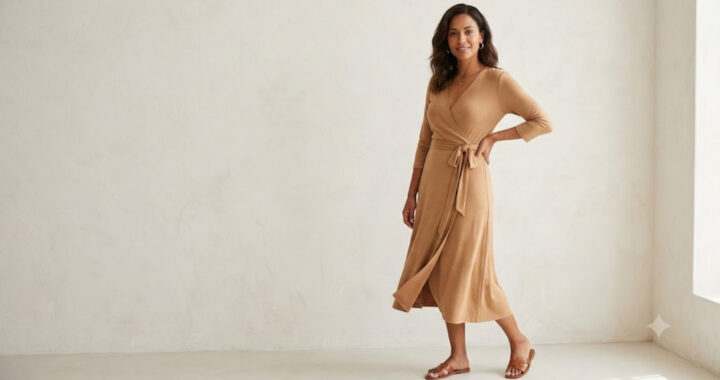
Your office is 68 degrees. The sidewalk outside is 94. And somehow you’re supposed to look polished through both. That’s the real reason the linen dress for work summer outfit has become the unofficial uniform of professional women across the USA every June through September. It solves a problem no blazer-and-trousers combo ever could: how to look put-together when the weather is actively working against you.
I learned this the hard way during a July client presentation in Atlanta. I wore a polyester sheath dress, walked three blocks from the parking garage, and arrived looking like I’d run a 5K. The colleague who greeted me? Crisp navy linen shirtdress, leather slides, completely unbothered. I ordered my first work linen dress that night.
This guide covers everything you need to build that same effortless look — which linen dresses actually read as professional, how to style them for different office dress codes, what to wear underneath and over top, and how to keep wrinkles from sabotaging your credibility.
What Makes a Linen Dress Work-Appropriate?
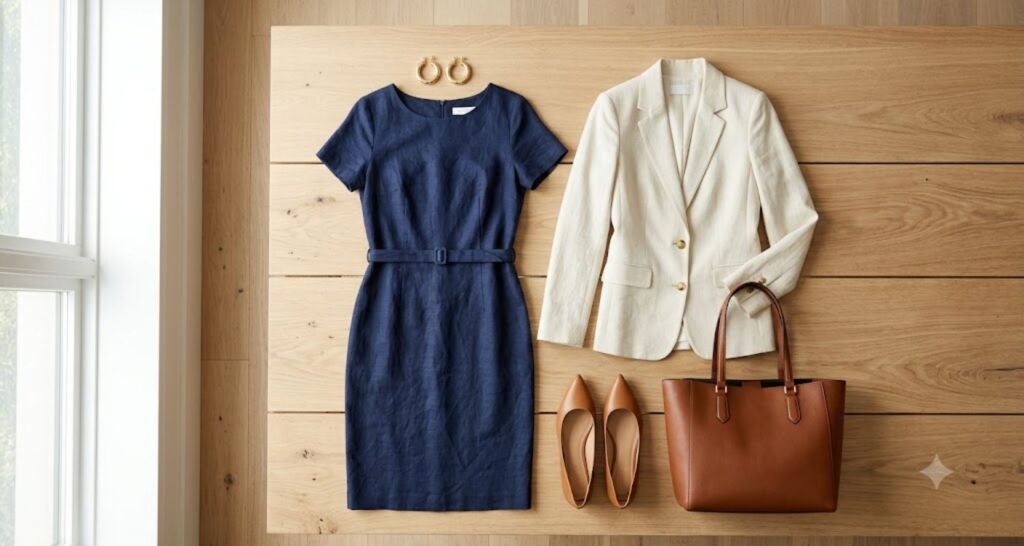
A work-appropriate linen dress is one with structure, coverage, and a mid-weight fabric (around 5.5 oz or heavier) that skims the body rather than clinging or billowing. Think knee-length or midi hemlines, defined waists or clean shift silhouettes, and sleeves or shoulder coverage that holds up under office scrutiny.
That’s the short answer. But the difference between “beach coverup” and “boardroom ready” comes down to a few specific details, so let’s break them down.
Fabric Weight Matters More Than You Think
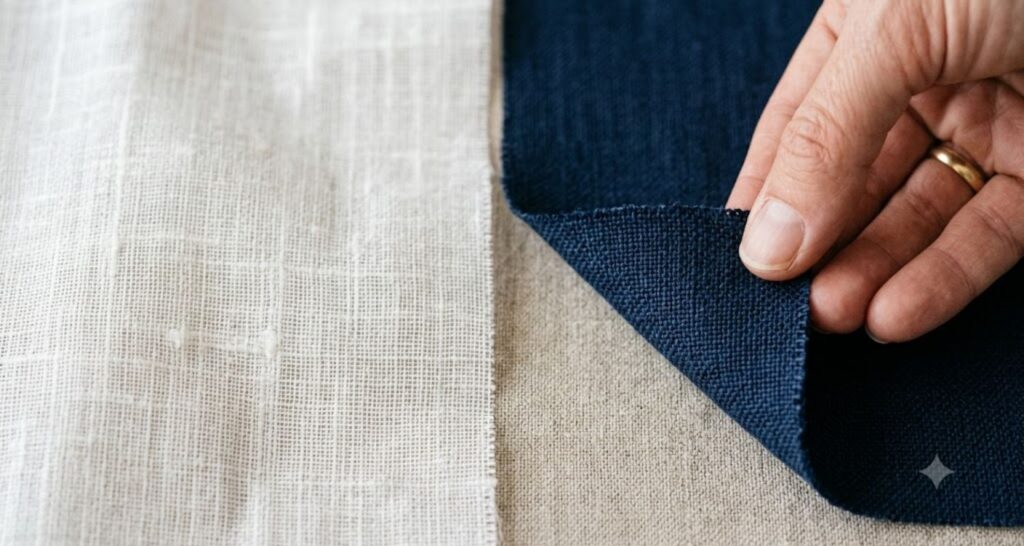
Lightweight linen (under 4 oz per square yard) is gauzy and semi-sheer. Gorgeous for vacation. Risky for the office.
Mid-weight linen, roughly 5.5 to 8 oz, has enough body to hold a silhouette and hide undergarment lines. It also wrinkles less dramatically. When you’re shopping online, look for terms like “midweight,” “suiting linen,” or “linen twill” in the product description.
Linen blends deserve a mention here too. A linen-viscose or linen-cotton blend keeps the breathability you want while cutting the wrinkle factor almost in half. Purists may scoff. Purists also iron more than you do.
Silhouettes That Read as Professional
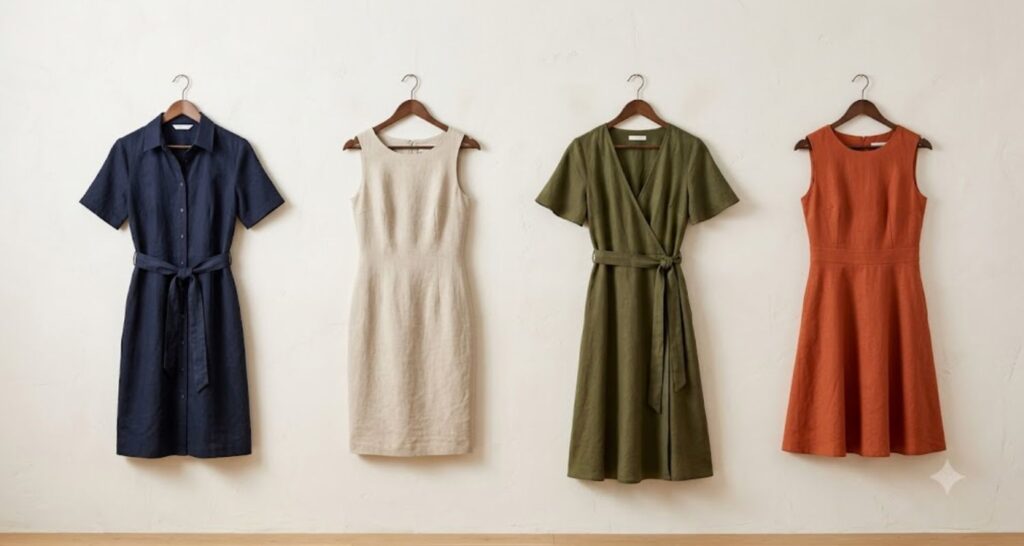
Not every linen dress belongs in a conference room. These shapes consistently do:
- The shirtdress. Collar, buttons, structured shoulders — it borrows menswear credibility and works in almost every office. Add a belt and it’s meeting-ready.
- The sheath or shift. Clean lines, minimal fuss. This is the closest linen gets to a classic corporate silhouette, and it layers beautifully under a blazer.
- The wrap or faux-wrap midi. Flattering, forgiving on hot commutes, and polished as long as the neckline behaves. A quick safety pin solves that.
- The tailored A-line. Fitted through the bodice, gently flared below. It moves air around your legs (a real gift in August) while staying office-appropriate.
Skip anything with spaghetti straps, dramatic ruffles, or a hem above mid-thigh — at least without serious layering. We’ll get to layering.
Colors That Say “I Have a 401(k)”
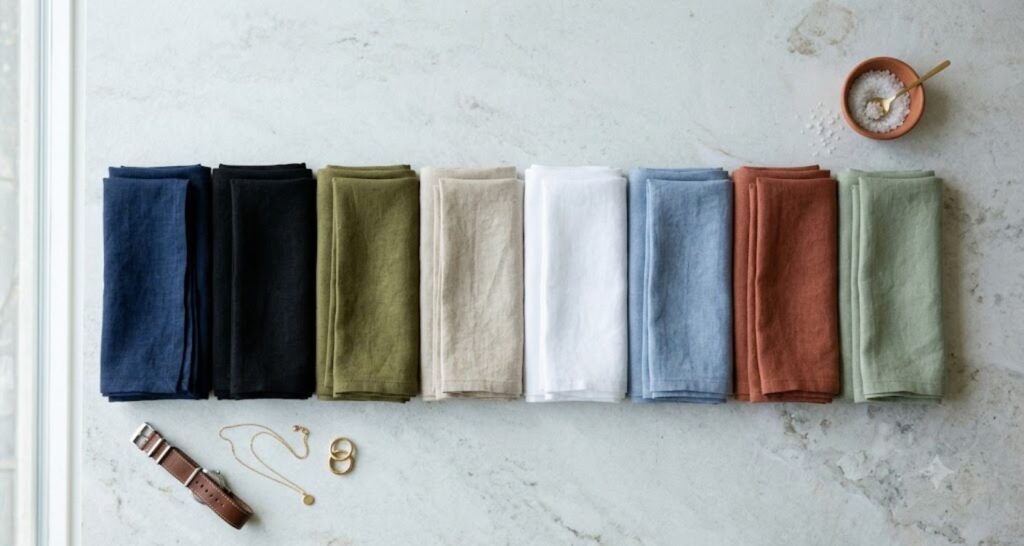
Neutrals do the heavy lifting: navy, black, olive, sand, white, and chambray blue all read as intentional. Linen’s natural texture adds visual interest, so you don’t need loud prints to avoid looking boring.
Want color? Muted tones work better than brights in most offices — think terracotta instead of orange, sage instead of kelly green, dusty rose instead of hot pink. One anchor piece in a saturated shade, like a cobalt shirtdress, can work if the rest of your look stays quiet.
Check out the complete guide about: Teacher Outfit Dress Ideas for Fall
How to Style a Linen Dress for Work Summer Outfit Success
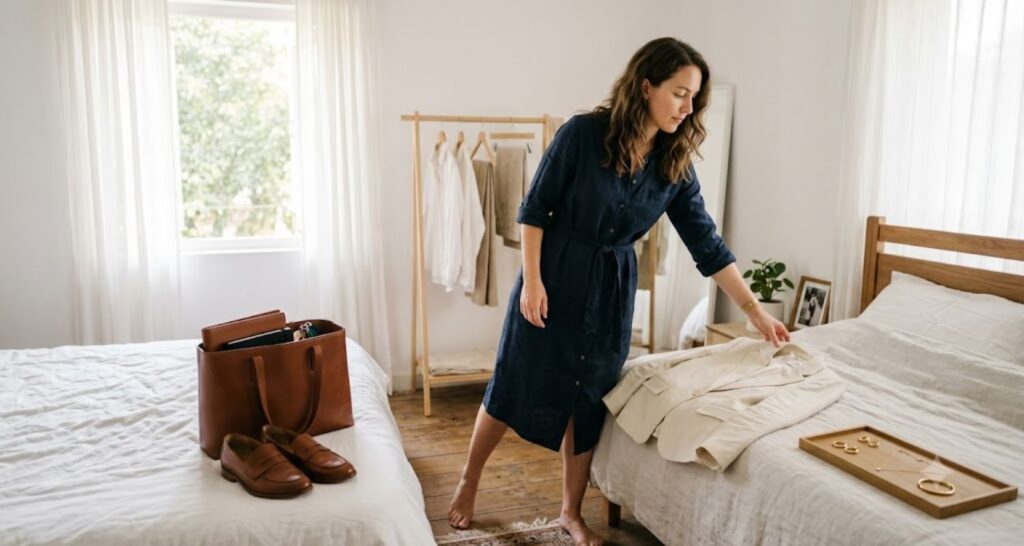
Here’s where most people overthink it. You don’t need twelve accessories. You need a repeatable formula that matches your office’s dress code, and then you need to stop fiddling with it.
Follow these five steps and you’ll have a complete look in under ten minutes.
- Start with the dress and check the fit standing AND sitting. Linen doesn’t stretch. Sit down in it before you commit — if it pulls across the hips or the hem rides too high at your desk, size up or choose a different cut.
- Add a structured layer. A cropped blazer, a fine-knit cardigan, or a sleeveless longline vest instantly formalizes the look. This layer also handles the arctic office AC problem.
- Choose closed-toe or refined open shoes. Pointed flats, low block heels, loafers, or sleek leather slides all work. Save flip-flops and strappy sandals for the weekend.
- Pick one metal and stick to it. Gold hoops and a watch. Silver studs and a thin chain. One cohesive metal choice makes even a $60 dress look considered.
- Finish with a structured bag. A slouchy canvas tote drags the whole outfit toward “farmers market.” A structured leather or leather-look tote keeps it at “office.”
That’s it. That’s the whole system.
Business Casual: The Sweet Spot

Business casual offices are where linen dresses shine brightest. A navy linen shirtdress with cognac loafers and a simple pendant necklace hits the mark without a single layer needed.
On cooler mornings, throw a lightweight cream cardigan over your shoulders. When someone inevitably schedules a 4 p.m. meeting with the VP, you slide your arms in and instantly look 15% more formal. Strategic, right?
Business Formal: Yes, You Can Still Wear Linen

Stricter dress codes demand more structure, not a different fabric. The move here is a dark, mid-weight linen sheath — black, navy, or charcoal — under a matching or complementary blazer.
Keep the accessories minimal and the shoes classic: a low pump or pointed flat. From across the room, the outfit reads as a suit. Up close, you’re the only person in the building who isn’t sweating.
Creative and Casual Offices: Have Some Fun

If your workplace runs relaxed, you’ve got room to play. A terracotta linen midi with white sneakers works. So does an oversized olive shirtdress, sleeves rolled, with flat sandals and a canvas crossbody.
The one rule that still applies? Fit. Even the most casual office notices the difference between “relaxed” and “rumpled.” Which brings us to the elephant in the room.
Check out latest post about : Dress Code Business Casual What to Wear
The Wrinkle Question, Answered Honestly

Let’s not pretend. Linen wrinkles. It wrinkled on Egyptian royalty 4,000 years ago and it’ll wrinkle on you by lunch.
But here’s the reframe that changed how I think about it: light, soft creasing is part of linen’s texture, and most style editors — and most bosses — read it as intentional. What you want to avoid is the deep, slept-in-it crease. Those are preventable.
5 Ways to Keep Wrinkles Under Control
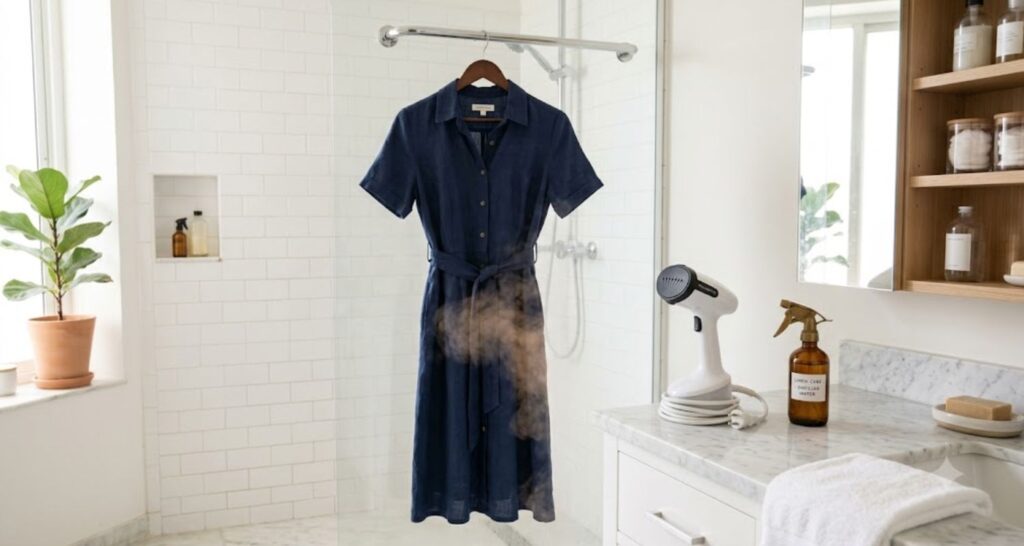
- Hang your dress in the bathroom while you shower. Ten minutes of steam relaxes most overnight creases. Zero effort.
- Use a handheld steamer instead of an iron. Steamers smooth linen without crushing its texture, and a decent one costs about $30. It’s the single best investment for a linen-heavy wardrobe.
- Spritz with wrinkle-release spray at your desk. Keep a travel bottle in your drawer. Smooth the fabric with your hands and the worst creases fade in minutes.
- Choose blends for high-crease days. Long commute? Back-to-back meetings? Reach for the linen-viscose blend and save the pure linen for lighter days.
- Hang, don’t fold. Folded linen develops sharp crease lines that steam struggles to remove. Give your dresses hanger space and they’ll repay you.
One more habit worth building: when you sit for long stretches, smooth the dress under you as you sit down. It sounds fussy. It takes two seconds. It prevents the dreaded lap-crease grid.
Choosing the Right Linen Dress: A Comparison

Not sure which style suits your work life? This table matches the most common linen dress silhouettes to the situations where they perform best.
| Dress Style | Best For | Formality Level | Wrinkle Visibility |
|---|---|---|---|
| Shirtdress | Client meetings, business casual | Medium-High | Low (structure hides creases) |
| Sheath/Shift | Corporate offices, presentations | High | Medium |
| Wrap Midi | Warm commutes, all-day comfort | Medium | Medium |
| Tailored A-line | Long days, desk-to-dinner | Medium | Low |
| Relaxed Maxi | Creative offices, casual Fridays | Low | High |
If you’re buying just one, the shirtdress is the safest bet. It flexes across the widest range of dress codes and its collar-and-button structure disguises wrinkles better than any other cut.
Check out our detailed post about : Midi Dress for Business Casual Women
What to Wear Under (and Over) Your Linen Dress
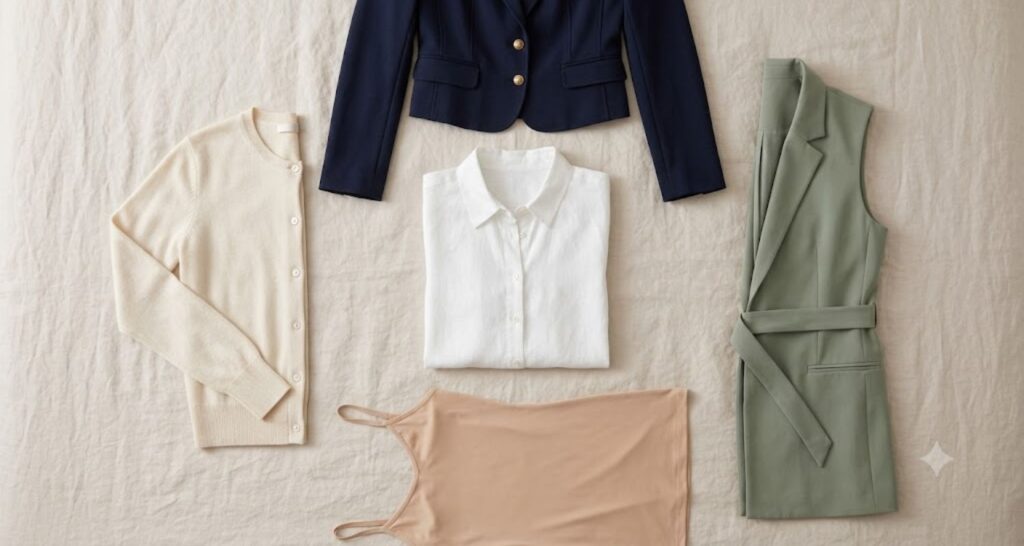
Nobody talks about this part, and it matters. Linen’s breathability is its superpower, but lighter weaves need backup.
For anything white, sand, or pale, wear a seamless slip or shapewear short in a shade close to your skin tone — not white, which shows more, counterintuitively. A slip also stops linen from sticking on humid days and adds an opacity layer for office lighting, which is less forgiving than your bedroom mirror.
On top, your three best layering options each solve a different problem. The blazer adds formality for meetings. The fine-gauge cardigan handles aggressive air conditioning without bulk. The longline sleeveless vest — a more recent addition to workwear — adds polish while keeping your arms cool. Pick based on your day, not on habit.
Shoes: The Detail That Makes or Breaks It
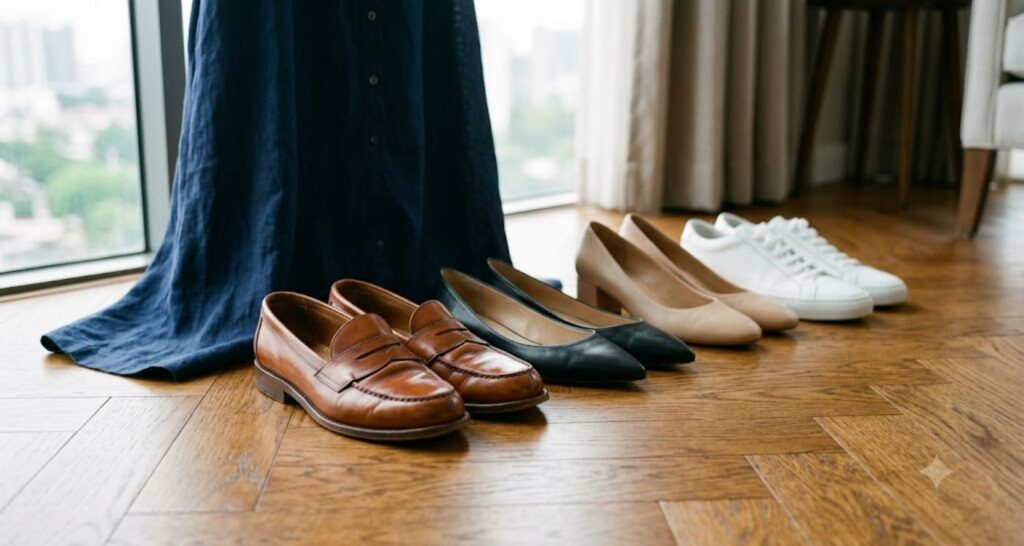
Ever seen a beautiful linen dress ruined by beat-up sneakers? The shoe carries a disproportionate share of the “is this professional?” verdict.
Safe picks for most offices include leather loafers, pointed-toe flats, low block heels, and clean minimalist sneakers where dress codes allow. In hotter climates, a structured leather slide with a closed or nearly-closed toe splits the difference between polish and survival.
Whatever you choose, condition matters more than category. Clean, well-kept simple shoes outrank scuffed expensive ones every time.
Building a Week of Outfits From Two Dresses
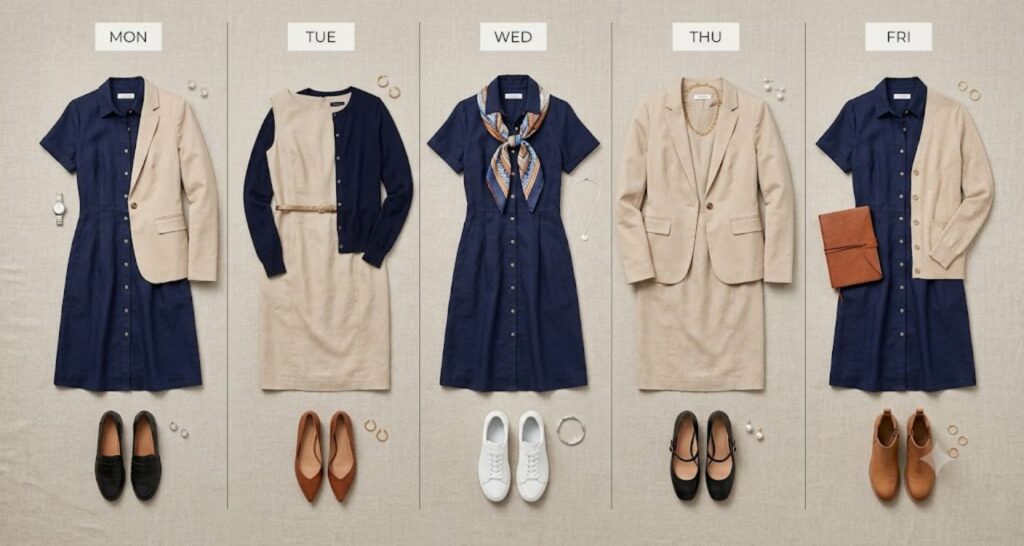
Want proof that linen dresses are a workwear cheat code? Here’s a full week from just two dresses — a navy shirtdress and a sand-colored sheath — plus layers you likely already own.
- Monday: the navy shirtdress, belted, with loafers and gold hoops.
- Tuesday: the sand sheath under a navy blazer with pointed flats.
- Wednesday: the shirtdress again, unbelted and open over a white tank and you’ve turned it into a duster — different dress, same hanger.
- Thursday: the sheath with a sage cardigan and a silk scarf.
- Friday: the shirtdress, sleeves rolled, with clean white sneakers.
Five outfits. Two dresses. Nobody notices, because the styling changes the story each day. This is also why linen dresses earn their price per wear faster than almost anything else in a summer work wardrobe.
Caring for Linen So It Lasts for Years

A good linen dress genuinely improves with age — it softens with every wash while staying strong. Linen fiber is actually about 30% stronger than cotton, which is why vintage linen still turns up in estate sales looking remarkable.
Machine wash cold on gentle, use mild detergent, and skip the dryer. High heat is what shrinks linen and sets permanent wrinkles. Hang it to dry, and it’ll be ready to steam by morning.
Two more quick tips: wash dark linen inside out to slow fading, and don’t dry-clean unless the label demands it. Dry-cleaning chemicals stiffen linen fibers over time, which defeats the entire point of the fabric.
Read about : Casual Dress for Work in a Hot Office
Frequently Asked Questions
Is a linen dress professional enough for the office?
Yes — when you choose the right one. A mid-weight linen dress in a structured silhouette like a shirtdress or sheath, in a neutral color, at knee or midi length, is appropriate for most American offices. Pair it with polished shoes and a blazer for more formal settings, and it easily holds its own.
How do I keep a linen dress from wrinkling at work?
Choose mid-weight linen or a linen-viscose blend, steam the dress before wearing, and keep wrinkle-release spray at your desk for touch-ups. Smooth the fabric under you when sitting, and hang the dress rather than folding it. Light creasing is normal and generally reads as intentional texture, not sloppiness.
What shoes go with a linen dress for work?
Loafers, pointed-toe flats, low block heels, and structured leather slides all pair well with a work linen dress. In casual offices, clean minimalist white sneakers also work. Avoid flip-flops, strappy evening sandals, and worn-out athletic shoes, which pull the outfit out of professional territory regardless of the dress.
Are linen blends better than 100% linen for work?
For many people, yes. Linen-viscose and linen-cotton blends wrinkle noticeably less while keeping most of linen’s breathability, which makes them more practical for long commutes and meeting-heavy days. Pure linen breathes slightly better and develops a softer feel over time, so ideally keep both in rotation.
Can I wear a white linen dress to the office?
You can, with the right preparation. Choose a mid-weight or lined white linen dress to avoid sheerness, and wear a skin-tone slip underneath — not a white one, which shows through more. White linen photographs and presents beautifully, but check opacity in bright light before an important meeting.
What color linen dress is best for work?
Navy is the most versatile choice for work — it’s formal enough for client meetings, hides light creasing well, and pairs with nearly every shoe and layer. Black, olive, sand, and chambray blue are strong alternatives. Muted tones like terracotta and sage work well in business casual and creative offices.
Your Summer Work Wardrobe, Solved
Here’s what it comes down to: the linen dress for work summer outfit isn’t a trend you’re chasing. It’s a practical answer to a real problem — staying credible, comfortable, and cool from a sweltering commute through a freezing conference room.
Start with one mid-weight dress in a structured silhouette. Navy shirtdress if you’re unsure. Add a blazer you already own, shoes you can walk in, and a steamer for your closet. That single purchase, styled three or four different ways, will carry you through more summer workdays than half the clothes currently hanging in your closet.
The colleague who looks effortlessly polished in July heat? She’s not working harder at it than you are. She just figured out the fabric first. Now you have too.