You got the job offer. You read the welcome email twice. Then you hit the phrase that stops everyone cold: “Our dress code is business casual.” Great — but what does that actually mean when you’re standing in front of your closet at 7 a.m.? If you’ve ever googled “dress code business casual what to wear women” the night before a first day or a big interview, you’re in good company. It’s one of the most searched style questions in the U.S., and for good reason — business casual is famously vague. One office means blazers and loafers. Another means dark jeans and a nice top. Get it wrong in either direction and you feel it all day.
Here’s the good news: business casual follows a logic. Once you understand it, you can build a week of outfits from about a dozen pieces and never second-guess yourself again. This guide breaks down exactly what to wear, what to skip, and how to adjust for your specific workplace.
What Is Business Casual for Women? (Quick Definition)
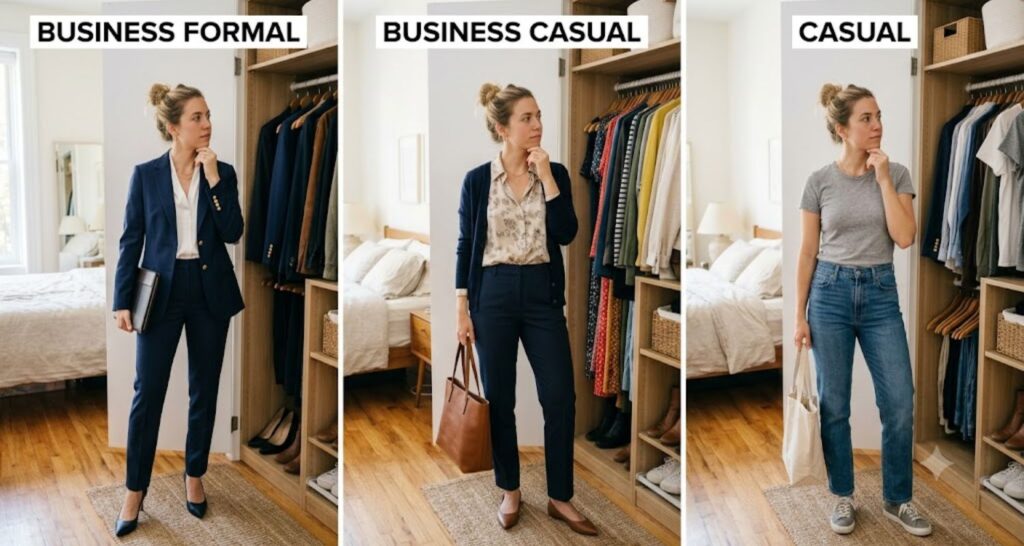
Business casual for women is a dress code that blends professional polish with everyday comfort — think tailored separates like slacks, blouses, blazers, knee-length skirts, and dresses, without requiring a full suit. It’s more relaxed than business formal but more polished than jeans-and-sneakers casual.
That’s the textbook answer. The practical answer is simpler: look like you could meet a client without apologizing, but skip the suit.
Business casual sits in the middle of the workplace dress spectrum:
| Dress Code | What It Looks Like | Typical Settings |
|---|---|---|
| Business formal | Matched suit, closed-toe heels, conservative colors | Law, finance, executive meetings |
| Business professional | Suit or blazer with dress pants/skirt, structured pieces | Corporate offices, client-facing roles |
| Business casual | Slacks or chinos, blouses, dresses, blazers optional, loafers or flats | Most U.S. offices, hybrid workplaces |
| Smart casual | Dark jeans, polished tops, stylish sneakers allowed | Startups, creative agencies |
| Casual | Jeans, tees, sneakers | Tech, remote-first companies |
Notice where business casual falls. The blazer becomes optional. Jeans usually stay home — unless your office says otherwise, which we’ll get to.
Dress Code Business Casual: What to Wear for Women — The Essentials
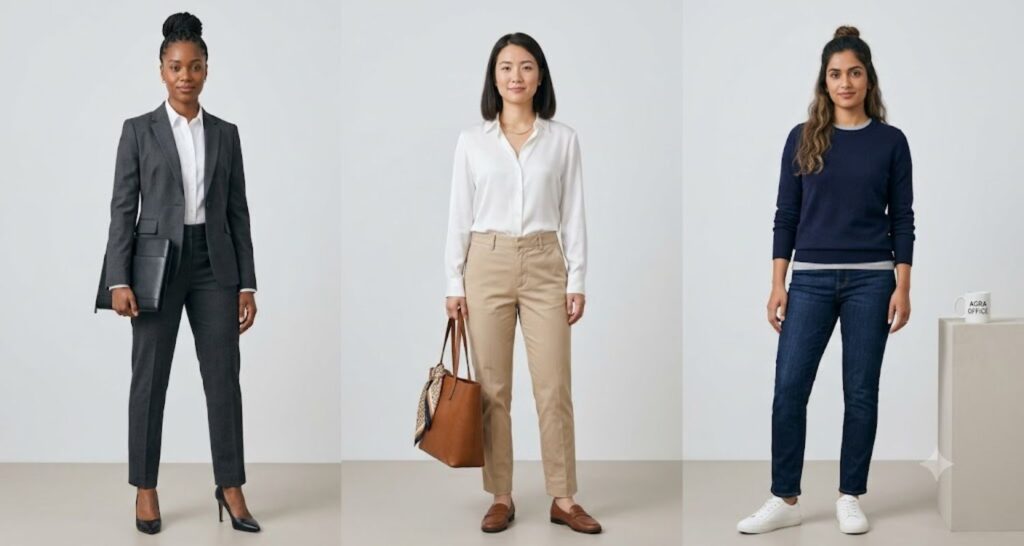
Let’s get specific. These are the pieces that work in virtually any American office that calls itself business casual.
Tops That Always Work
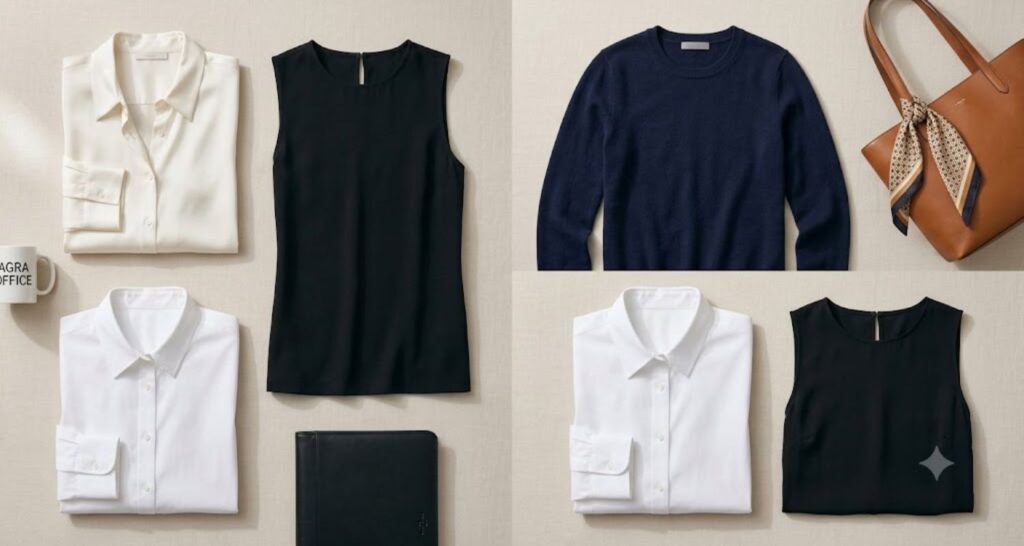
Your top does most of the talking in a business casual outfit, so start here.
Safe bets include blouses (silk, satin, or crepe), fitted knit sweaters, button-down shirts, sleeveless shells worn under a cardigan or blazer, and elevated tees in structured fabrics — not the soft cotton kind you’d wear to the gym.
A quick fabric rule: if it wrinkles like a bedsheet or clings like activewear, save it for the weekend. Polished fabric is what separates “business casual” from just “casual.”
Bottoms: Pants, Skirts, and the Jeans Question
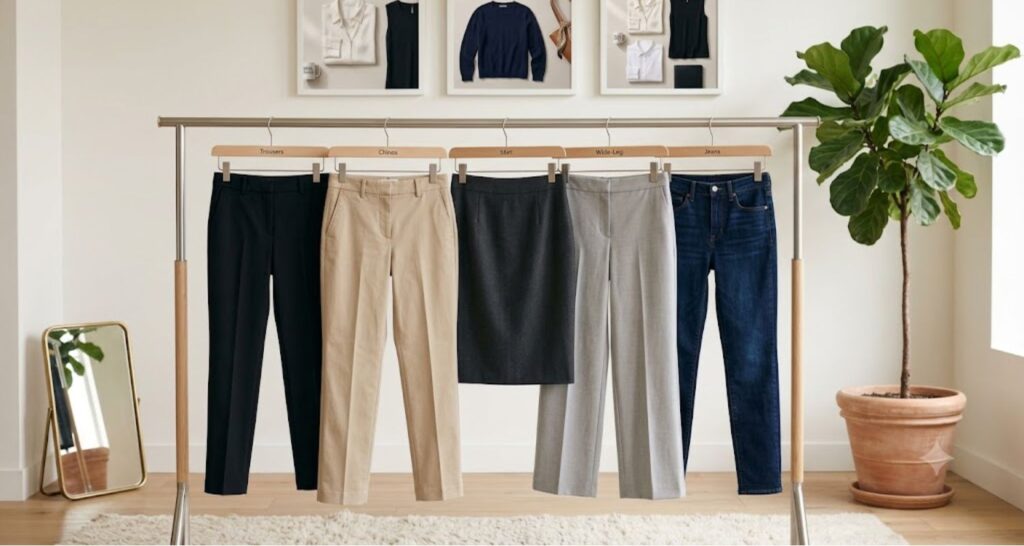
Tailored slacks are the backbone of business casual. Straight-leg, wide-leg, or slim ankle pants all work — pick whichever fits your body and your sitting-at-a-desk reality best.
Beyond slacks, you’ve got options: chinos in neutral colors, pencil or A-line skirts that hit at or just above the knee, ponte knit pants (secretly as comfortable as leggings, but structured), and culottes or cropped trousers in warmer months.
Now, jeans. Can you wear them? Honest answer: it depends on your office, not on the internet. In many U.S. workplaces — especially post-2020 — dark-wash, non-distressed jeans have quietly joined the business casual family, particularly on Fridays. But at a bank, a law firm, or an interview? Skip them. When in doubt, wear slacks the first week and watch what senior women in your office wear.
Dresses: The One-and-Done Option

Here’s a secret from anyone who’s ever overslept before a Monday meeting: a dress is the fastest professional outfit that exists. One piece, zero decisions.
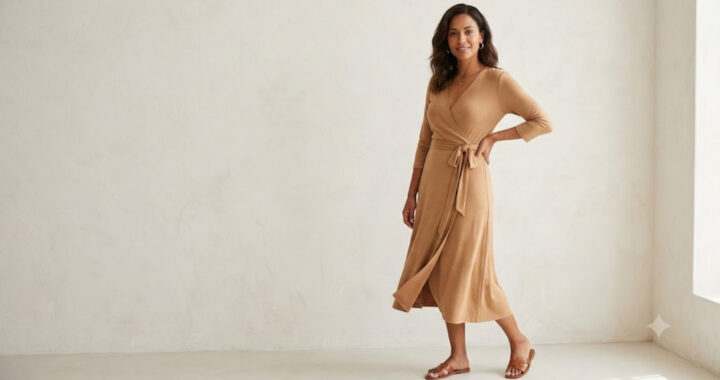
Look for sheath dresses, wrap dresses, shirt dresses, or A-line styles in solid colors or subtle prints. Aim for knee-length or slightly above, with sleeves or an easy layer on top. A structured dress with flats says “I have my life together” even when you absolutely do not.
Shoes That Say “Professional” Without Saying “Ouch”
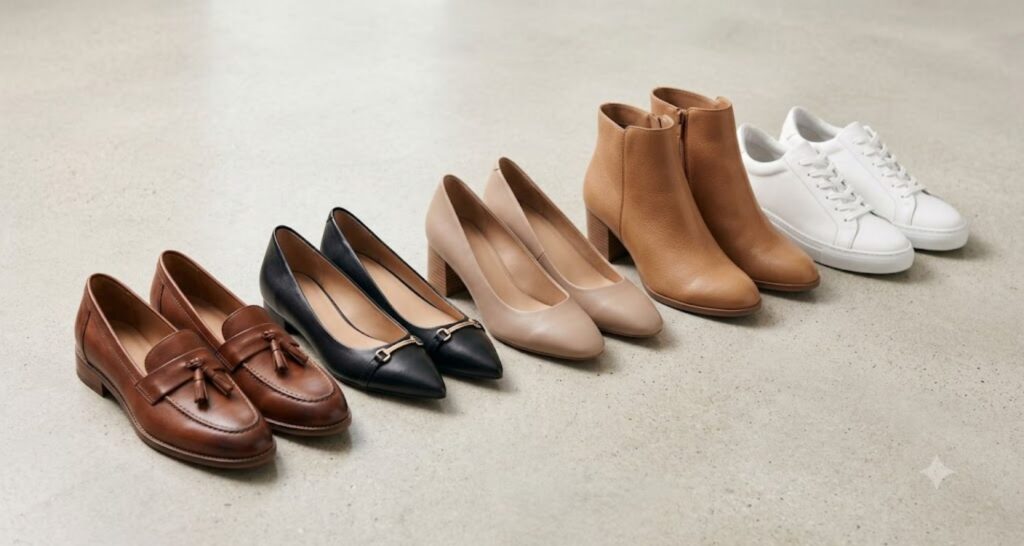
You don’t need heels. Read that again if you need to.
Business casual footwear includes loafers, ballet flats, pointed-toe flats, low block heels, ankle boots, and — in many modern offices — clean, minimal leather sneakers in white or neutral tones. The sneaker question works like the jeans question: watch your office culture before committing.
Skip flip-flops, beat-up running shoes, and anything you’d wear to a beach or a nightclub. Open-toe shoes live in a gray zone; polished sandals pass in some offices and fail in others.
Layers and Outerwear
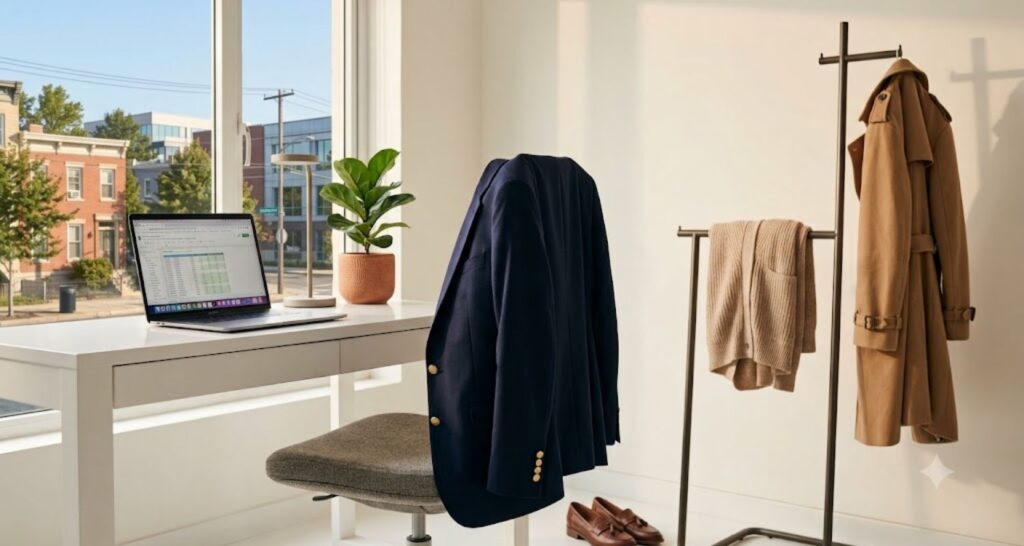
A blazer instantly upgrades everything underneath it. Keep one in black, navy, or a neutral check at your desk and you’re prepared for surprise meetings forever.
Cardigans, structured knit jackets, and trench coats round out the category. In an over-air-conditioned American office in July, a good layer isn’t a style choice — it’s survival gear.
Checkout Complete Guide about : Midi Dress for Business Casual Women
Build a Business Casual Capsule Wardrobe in 5 Steps
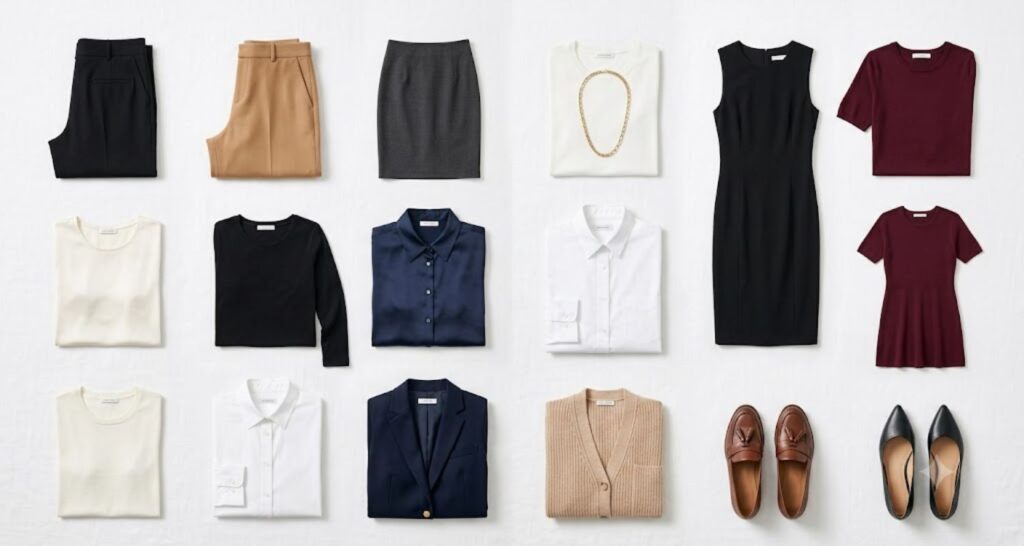
Want the whole problem solved in one shopping trip? Here’s a step-by-step approach that gets you two-plus weeks of outfits from a dozen pieces.
- Pick a base color palette. Choose two neutrals (like black and camel, or navy and gray) plus one or two accent colors. Everything you buy should mix with everything else.
- Buy three bottoms. Two pairs of tailored pants and one skirt — or swap the skirt for a third pant if that’s more you.
- Add five or six tops. Mix blouses, knits, and one crisp button-down. Vary sleeve lengths so you’re covered across seasons.
- Choose two dresses. One solid, one subtle print. These are your no-brainer days.
- Finish with two layers and two pairs of shoes. A blazer plus a cardigan; flats plus loafers or low block heels.
That’s roughly 14 pieces and well over 20 outfit combinations. Do the math on your cost-per-wear and suddenly the tailored slacks look like a bargain.
What NOT to Wear in a Business Casual Office
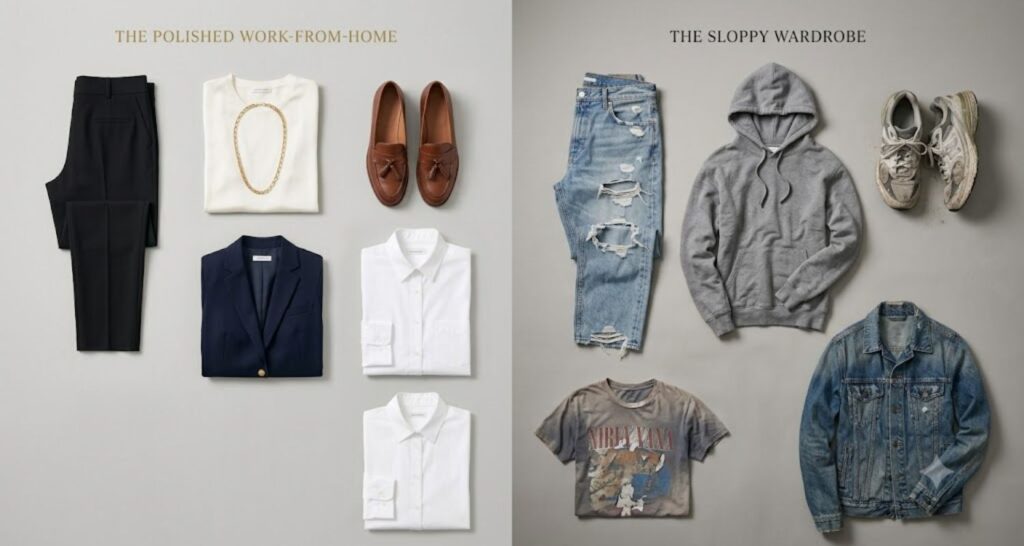
Sometimes knowing what to avoid clears things up faster than any packing list. Steer clear of these in almost every business casual workplace:
- Ripped, distressed, or light-wash jeans. Even in jean-friendly offices, distressing reads weekend, not workday.
- Leggings as pants. Under a tunic or dress, maybe. On their own, no — ponte pants give you the same comfort with actual structure.
- Athletic wear and athleisure. Hoodies, joggers, gym sneakers, and workout tops don’t cross over, no matter how expensive the brand.
- Anything revealing. Very short hemlines, low necklines, exposed midriffs, and sheer fabrics without proper layers all undercut your credibility before you say a word.
- Flip-flops and slides. The sound alone announces “casual” down every hallway.
- Wrinkled or stained anything. The most expensive blouse in the world fails the test if it looks slept-in. A $20 steamer is the best career investment under $50.
One more subtle offender: clothes that don’t fit. Too tight looks unprofessional; too baggy looks careless. Tailoring a $40 pair of pants for $15 beats buying a $120 pair that almost fits.
How to Decode YOUR Office’s Version of Business Casual

Here’s the thing nobody tells you: business casual isn’t one dress code. It’s a hundred dress codes wearing the same name tag.
A friend of mine started a marketing job in Chicago wearing full blazer-and-slacks armor — and found her entire team in dark jeans and sweaters. She adjusted by Wednesday. Meanwhile, her sister joined a financial services firm where “business casual” still meant sheath dresses and closed-toe shoes daily. Same phrase, completely different closets.
So how do you figure out where your office lands?
Watch the Leaders, Not the Interns
Look at what women one or two levels above you wear on a normal Tuesday. Not the CEO at the all-hands — the managers in the elevator. That’s your real dress code, printed nowhere but visible everywhere.
Ask Before Your First Day
There’s zero shame in emailing HR or your recruiter: “Could you tell me a bit more about the day-to-day dress code?” Hiring teams answer this question constantly. Thirty seconds of asking beats a week of guessing.
Start One Notch Dressier, Then Relax
For your first week — or any interview — dress slightly above what you think the standard is. It’s much easier to leave the blazer home next Monday than to un-ring the bell of showing up underdressed on day one.
Factor in Your Industry and Region
Industry moves the needle more than anything else. Finance, law, and consulting sit at the dressy end of business casual; tech, media, and creative fields sit at the relaxed end. Geography plays a role too — offices in New York and D.C. generally run more formal than those in Austin, Denver, or Portland.
Business Casual Outfit Ideas for Real Situations
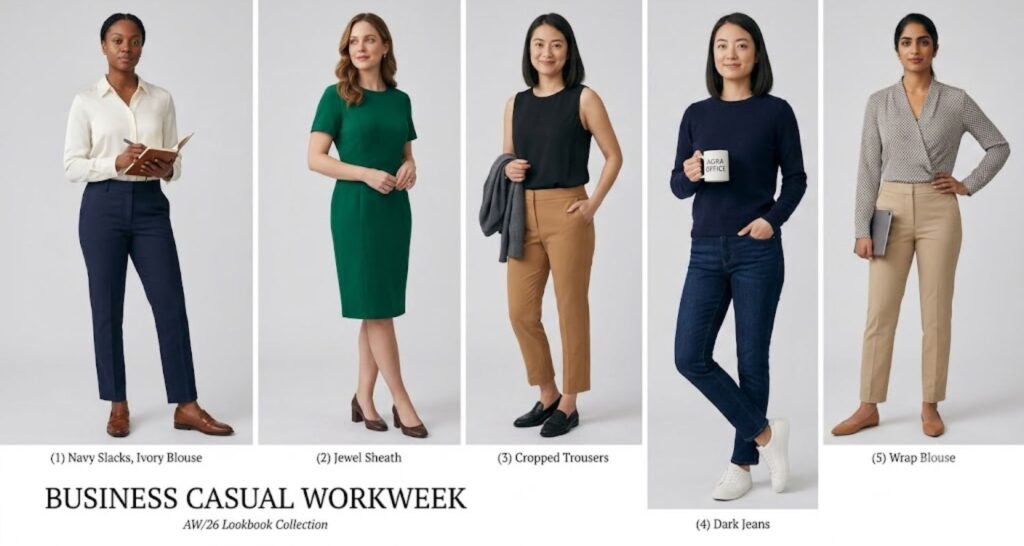
Theory is nice. Outfits are better. Here are five combinations you can copy directly.
The first-day outfit. Navy tailored slacks, a silk-blend blouse in ivory, black loafers, and a blazer over your arm just in case. Safe in every industry, sharp in most.
The big-presentation outfit. A sheath dress in a solid jewel tone with a low block heel. Structured, memorable, and zero risk of a wardrobe malfunction while you point at slides.
The summer heat outfit. Cropped wide-leg trousers, a sleeveless shell, polished flat sandals (office permitting), and a light cardigan for the arctic conference room.
The casual-Friday outfit. Dark-wash straight-leg jeans, a fine-gauge crewneck sweater, and clean white leather sneakers. Elevated enough that a surprise client visit wouldn’t ruin your day.
The video-call-heavy hybrid day. A structured knit top or wrap blouse in a solid color that reads well on camera, paired with whatever tailored bottom you’ll actually wear to the 3 p.m. in-person meeting. Solid colors beat busy prints on webcams every time.
Shopping Smart: Where Your Money Matters Most
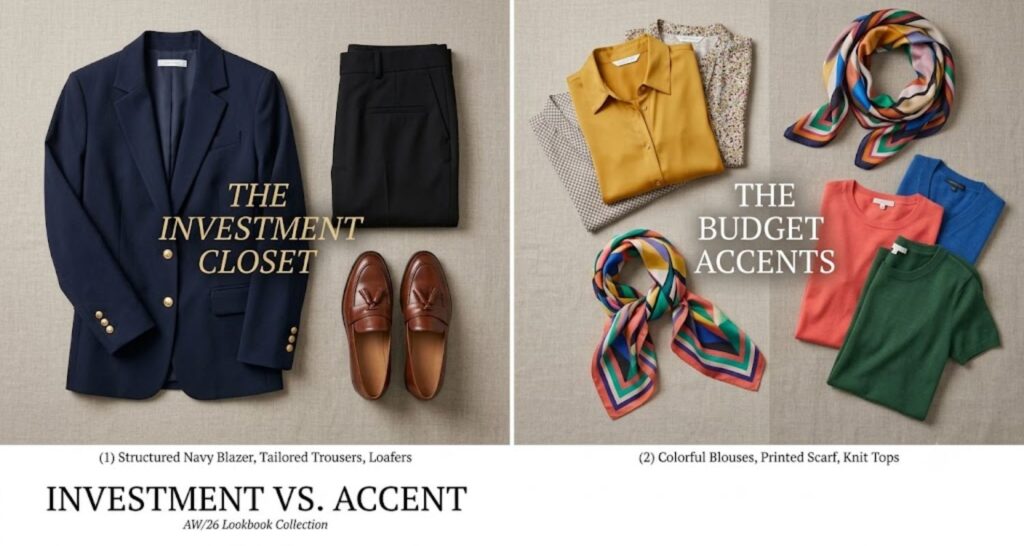
You don’t need a luxury budget to nail business casual. You need strategy.
Spend more on the pieces you wear most and that show quality fastest: tailored pants, a good blazer, and everyday shoes. These get worn dozens of times a season, and cheap versions show it — pilling, bagging knees, worn heels.
Save on trend pieces, accent tops, and anything you’ll wear a handful of times. Retailers like J.Crew Factory, Banana Republic Factory, Quince, Old Navy, and Uniqlo cover the affordable end well, while Ann Taylor, J.Crew, and Madewell hit the mid-range sweet spot for workwear staples.
And before you buy anything new, shop your own closet first. Most women already own a third of a business casual wardrobe — it’s just scattered between “work clothes,” “nice dinner clothes,” and “clothes I forgot about.”
FAQs: Dress Code Business Casual What to Wear Women
Can women wear jeans for business casual?
Sometimes. Dark-wash, non-distressed jeans in a straight or slim cut are accepted in many modern U.S. offices, especially on Fridays. However, traditional industries like finance and law usually exclude them. Watch what managers wear at your specific workplace, and never wear jeans to an interview unless explicitly told they’re fine.
Are sneakers acceptable in a business casual office?
Clean, minimal leather sneakers in white or neutral colors pass in many relaxed business casual offices, particularly in tech and creative fields. Athletic running shoes don’t. If your workplace leans traditional, stick with loafers, flats, or low heels until you’ve observed what senior colleagues wear on regular days.
What should a woman wear to a business casual interview?
Dress one notch above the office standard. Tailored slacks or a knee-length skirt with a blouse, plus a blazer, is the safest formula. Choose closed-toe flats or low heels and neutral colors. Even if employees wear jeans daily, interviewing slightly dressier signals respect and effort.
Is a dress considered business casual?
Yes — dresses are one of the easiest business casual options. Choose sheath, wrap, shirt, or A-line styles that hit at or near the knee, in solid colors or subtle prints. Avoid anything strapless, bodycon, or sheer. Add a cardigan or blazer for layered polish and cold offices.
Are leggings ever okay for business casual?
Generally no, not as standalone pants. Leggings read as athleisure in most professional settings. If you want the comfort, ponte knit pants deliver a nearly identical feel with a structured, tailored look. Leggings under a long tunic or dress may pass in very relaxed offices.
What colors are best for business casual outfits?
Build around neutrals — black, navy, gray, camel, and white — because they mix effortlessly and always read professional. Then add one or two accent colors like burgundy, forest green, or dusty blue. Solid colors and subtle patterns (thin stripes, small checks) look more polished than loud prints.
The Bottom Line on Business Casual for Women

Figuring out a dress code business casual — what to wear, women’s edition — really comes down to three moves: master the core pieces (tailored bottoms, polished tops, simple dresses, clean shoes), decode your specific office by watching what leaders wear, and start slightly dressier whenever you’re unsure.
You don’t need a big budget or a fashion degree. You need about 14 well-chosen pieces that all work together, a steamer, and one week of paying attention to your office’s unwritten rules. After that, getting dressed becomes the easiest part of your workday — which frees you up to focus on the parts that actually get you promoted.
Now go raid your closet. You probably own more of this wardrobe than you think.