A jacket that has been sitting in your wardrobe for months might be exactly what your friend has been looking for. That is the simple idea behind a clothing swap: bring the clothes you no longer wear, and let someone else find something they genuinely like.
The key is to make the swap feel easy from the start. A clear plan, enough space to browse and a few simple rules can keep things organised without taking away from the fun. With a little planning, you can spend less time organising piles of clothes and more time enjoying the afternoon with your friends.
Send an Invitation That Answers the Awkward Questions
Give guests a clear arrival time, a swap starting time and an approximate finish. Allowing some time to settle in before everyone starts looking through the clothes gives people a chance to arrive, grab a drink and get comfortable.
Suggest that guests bring around three to five pieces they are ready to give away. They can bring fewer if they do not have that many clothes to swap. Make sure everything is clean and in good wearable condition, and let others know about any small faults before the swap.
Encourage different styles, sizes and accessories such as scarves. Nobody needs to bring something just because they think someone else might like it. If they are still unsure about giving it away, it can stay at home.
Ask guests to bring their clothes in reusable shopping bags or another carrier they already have. A reusable bag is especially useful because it can pack the clothes to the swap and take new finds home afterwards.
Give Every Garment Room to Be Seen
You do not need a dedicated space or fancy setup. A dining table, sofa back, a few hangers and a clear floor space can be enough.
Group similar pieces together, such as tops, trousers, jackets and accessories. Spread clothes out so people can see their colour, shape and pattern without having to pull apart a large pile.
Keep size labels visible, but remember that sizing can vary between brands. If a garment has been altered, such as a shortened hem or taken-in waist, mention it rather than letting someone guess.
Give guests space to decide for themselves. Avoid directing particular clothes towards particular people based on their size or style. Set aside a separate area for coats, handbags and items people have already chosen. A mirror and a private place to change can also make trying things on much more comfortable.
Let Everyone Look Before Anyone Chooses
Once everything is arranged, explain the swap rules before people start choosing. Give everyone ten or fifteen minutes to browse, check labels and look at different pieces.
For the first round, ask each person to choose one item. If two people want the same piece, use a simple rule such as drawing names from a cup to decide who gets first choice. The other person can then choose something else.
The important part is explaining the rule beforehand. Nobody should have to argue over a favourite jacket once the swap has started. After the first round, open the browsing and try-ons again. Ask guests to take only a few pieces at a time and return anything they do not want so others can see it too.
Turn Try-Ons into Outfit Ideas
Sometimes a piece looks interesting on its own but is harder to imagine wearing. If a friend asks for an opinion, help them think about how it could work with clothes they already own.
For example, a patterned midi skirt might feel easier to picture with a plain T-shirt and trainers they already wear. The point is not to build an entirely new wardrobe around one item, but to see whether it can fit into their everyday style.
Keep suggestions optional and focus comments on the clothes rather than someone’s body. If someone decides an item is not for them, let them move on without needing to explain why.
Make the Last Ten Minutes Easy
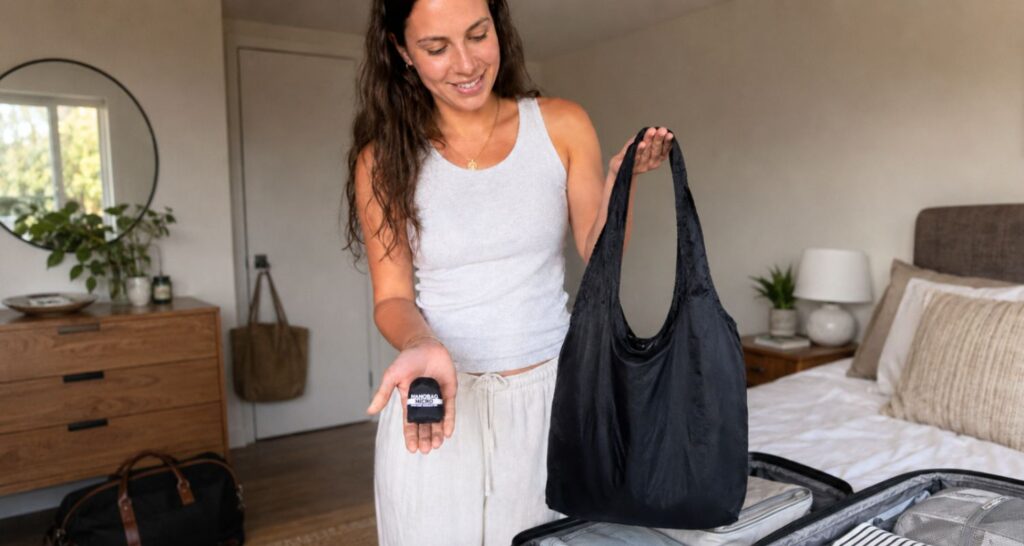
Before people start leaving, give them time to gather their selections and check for belongings in the changing room. The bags they carried with them can pack their clothes home. If someone wants a tiny, easy-to-carry option, Nanobag’s foldable reusable bags can be handy too. Every bag in Nanobag’s collection stuffs into its own attached pouch and is tiny enough to fit in a pocket, so it is easy to keep with you without adding much bulk. It is also useful beyond the swap. Having a reusable bag with you means you are less likely to need a single-use shopping bag when you pick something up on the way home.
Once everyone has collected their clothes, sort the pieces that were not chosen. Ask each contributor whether they want to take their items back or donate them. If several people agree to donate, choose one person to handle the drop-off. They should check what the organisation accepts and arrange a suitable time to deliver the clothes.
A clothing swap does not need to end with everyone taking something home. Someone might find a jacket they wear every weekend, while another person might simply enjoy an afternoon looking through clothes with wonderful conversations.