Here’s the thing nobody tells you about dressing for weddings after 50: you actually have more options than you did at 30. Your sense of what works on your body is sharper. Your confidence is real rather than performed. And you’ve moved past the phase where you dressed for other people’s approval rather than your own comfort and style. Finding the right simple wedding guest dress for over 50 isn’t about hiding anything or following rules designed for a different decade of your life. It’s about choosing pieces that make you feel genuinely pulled-together — elegant without being stiff, comfortable enough to dance if you want to, and appropriate for the occasion without being forgettable.
This guide covers exactly that: the best dress styles, the fabrics that work, the silhouettes that flatter, and the practical decisions that make the difference between an outfit you love and one you spend the evening adjusting.
Why “Simple” Is the Right Instinct After 50
There’s a reason you searched for simple. You’ve probably been to enough weddings to know that the women who look best are rarely the ones in the most complicated outfits. They’re the ones in clean, well-cut dresses in beautiful fabrics with one or two thoughtful accessories — nothing fighting for attention, everything working together.
After 50, simple doesn’t mean boring. It means confident. A beautifully cut midi dress in a rich jewel tone says more than a dress covered in ruching, sequins, and asymmetric hemlines. Quality of fabric, quality of fit, and clarity of color do the heavy lifting — and all three get more powerful with age, not less.
How to Choose a Simple Wedding Guest Dress for Over 50
Before we get into specific styles, three decisions shape every good wedding guest outfit at this stage of life.
1. Prioritize Fit Above Everything
A dress that fits perfectly at 52 will outperform an expensive dress that doesn’t at any age. This means knowing your measurements rather than your size — sizing varies wildly between brands and a size 14 in one label is a size 10 in another.
If you find a dress you love that’s slightly off in one area, budget for a tailor. A hem adjustment or a taken-in waist costs far less than buying a second dress and makes an enormous difference to how the finished look reads.
2. Comfort Is Not a Compromise
A dress you’re tugging at, shifting, or counting down the hours to remove is not the right dress — no matter how good it looks in the dressing room. After 50 you have full permission to make comfort a primary criterion alongside style.
This means choosing fabrics that breathe, avoiding waistbands that dig in over a long evening, and selecting a heel height you can actually wear for six hours without suffering.
3. Occasion and Dress Code First
The wedding’s venue, time of day, and dress code shape what “appropriate” looks like before personal style enters the equation. A garden party afternoon wedding calls for something different than a black tie evening reception, regardless of your age or style preferences.
Best Dress Styles for Women Over 50
The Wrap Dress
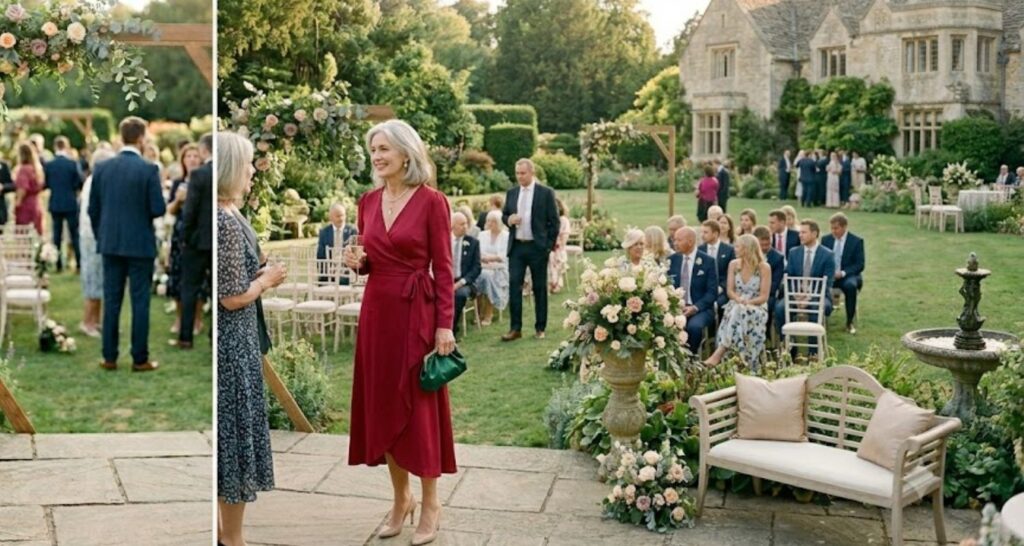
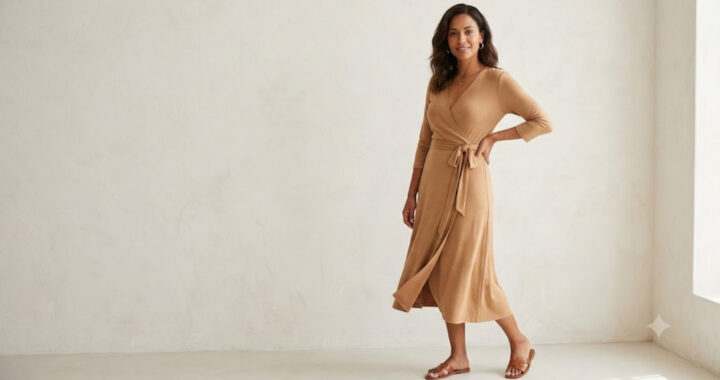
If there’s one dress style that consistently flatters across body types and ages, it’s the wrap dress. The diagonal neckline creates a long, elegant line through the torso. The tie waist is adjustable — you can wear it as snug or as relaxed as feels comfortable. And the fabric moves naturally with your body rather than against it.
For weddings, look for wrap dresses in chiffon, jersey, or a silk-blend rather than heavy cotton or polyester. A deep V-neckline is elegant — if you want more coverage, a simple camisole underneath works beautifully and doesn’t interrupt the silhouette.
Wrap dresses work particularly well for women with an hourglass or pear-shaped figure. For straighter body types, a belted wrap creates the waist definition the style naturally provides.
The Midi A-Line Dress
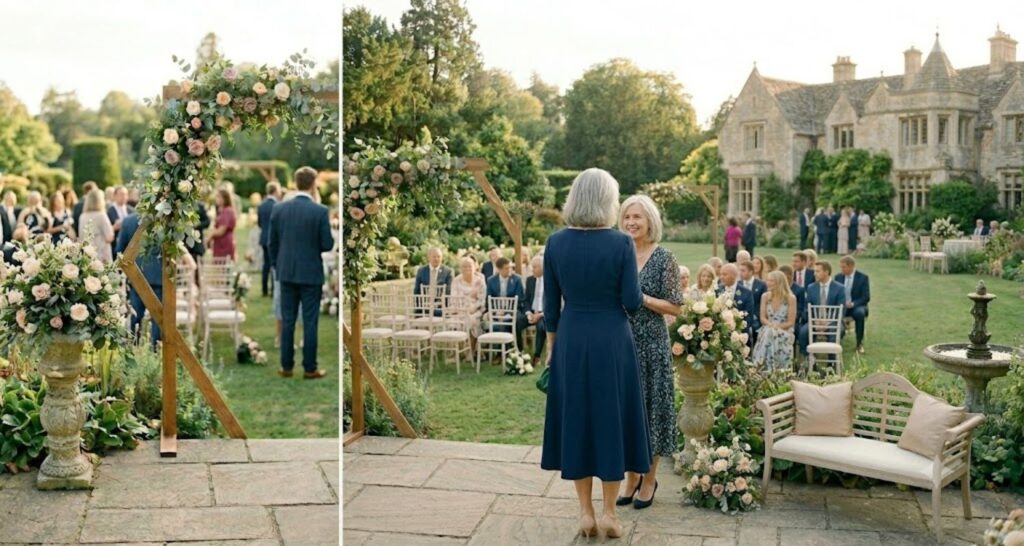
Clean, classic, universally flattering. An A-line skirt — fitted through the waist and hips, flaring gently from the hip to the hem — creates a balanced silhouette that works across all body types.
At midi length (hitting between the knee and ankle), it reads as genuinely elegant rather than trying too hard. This is the style that photographs beautifully at weddings because the line is clean and the proportion is classic.
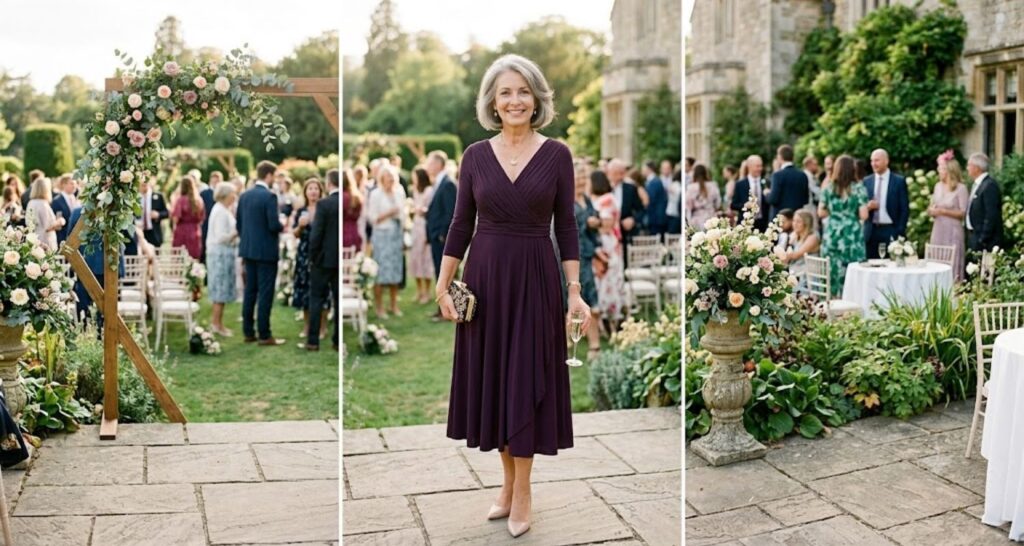
For over-50 guests, an A-line midi in a solid jewel tone — emerald, sapphire, burgundy, deep plum — with a simple neckline and three-quarter sleeves is close to a perfect formula.
The Shift Dress
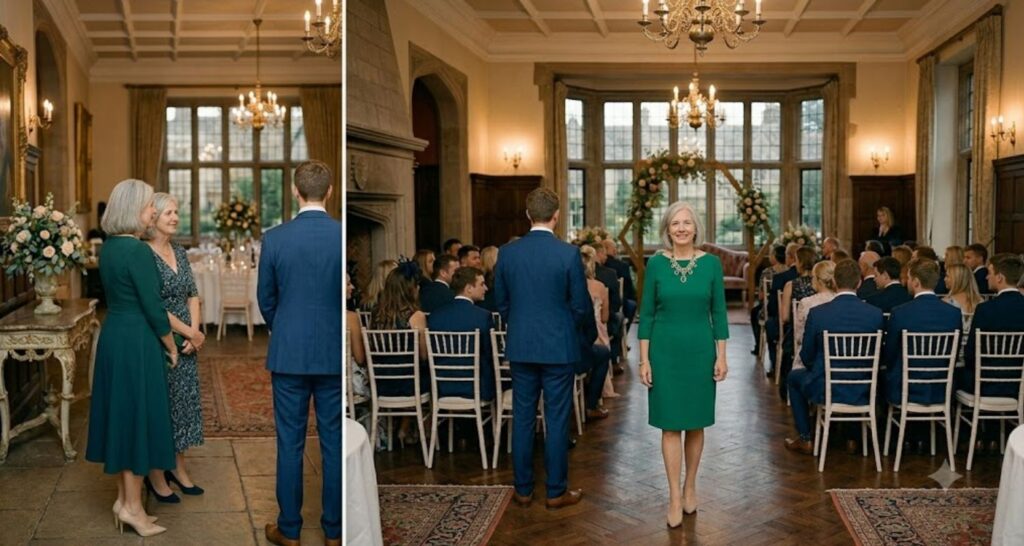
Underestimated and extremely versatile. A well-cut shift dress — straight, clean lines, typically knee to midi length — is the most polished simple option available and one of the easiest to style.
The key to making a shift dress look elegant rather than boxy is fit through the shoulder and the fabric choice. A shift in a quality crepe, a ponte fabric, or a structured linen looks intentional and expensive. The same dress in a thin, limp fabric looks cheap regardless of price.
Add interest with a beautiful necklace or a structured blazer and you have a complete wedding guest look with minimal effort.
The Maxi Dress
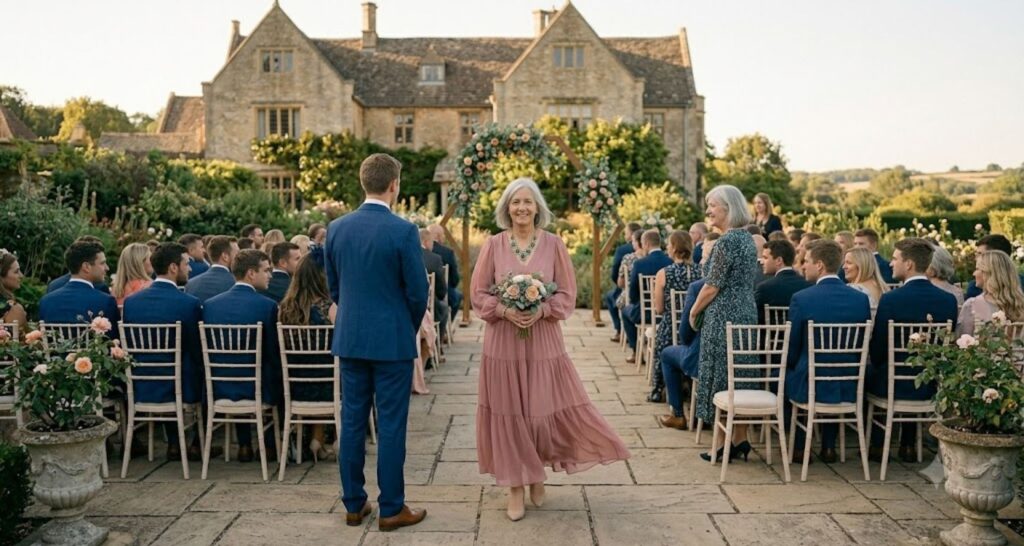
A flowing maxi dress at a wedding after 50 is an absolutely elegant choice — particularly for outdoor, garden, or beach settings. The length creates natural drama without requiring you to think too hard about it, and in the right fabric it moves beautifully.
For formal or indoor weddings, a structured maxi in silk, crepe, or heavy chiffon works well. For outdoor or semi-casual weddings, a softer, more flowy fabric like georgette or lightweight linen feels appropriately relaxed.
One practical note: if you’re wearing a maxi to an outdoor venue, check the terrain. A very long hem on grass or gravel is impractical — a dress that hits an inch or two above the ground gives you the length without the hazard.
The Tailored Midi Skirt and Blouse
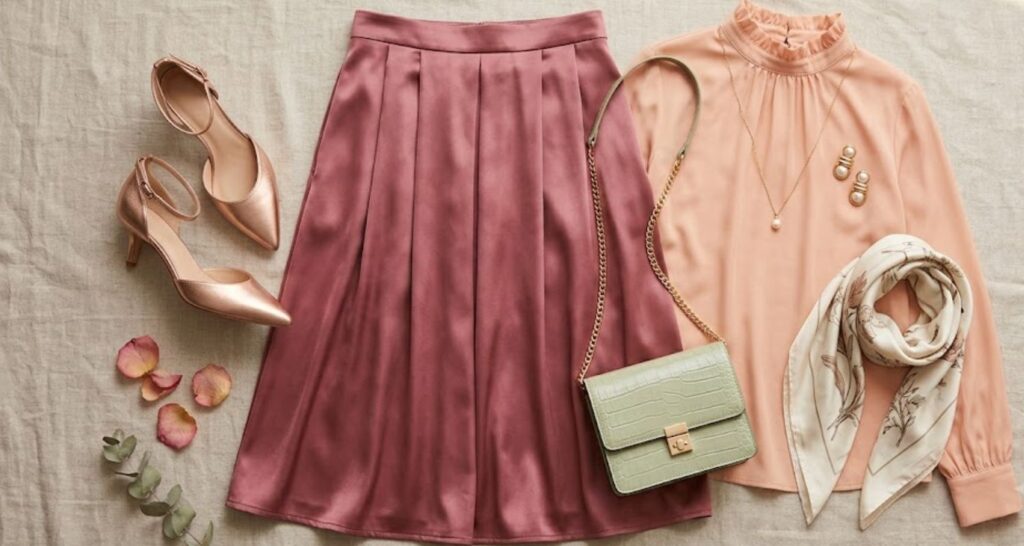
Not technically a dress — but worth including because it’s one of the most elegant and flattering combinations for women over 50. A tailored midi skirt in a quality fabric (silk, crepe, satin) paired with a well-fitted silk or satin blouse gives you proportional control that a dress sometimes doesn’t.
You can tuck the blouse loosely for a relaxed, flowing effect or fully tuck for a more structured look. It also gives you temperature flexibility — the blouse can be removed for the reception if you’re warm. And a great midi skirt, particularly in a plain, quality fabric, can be re-worn with many different tops across different occasions.
The Best Fabrics for Wedding Guest Dresses Over 50
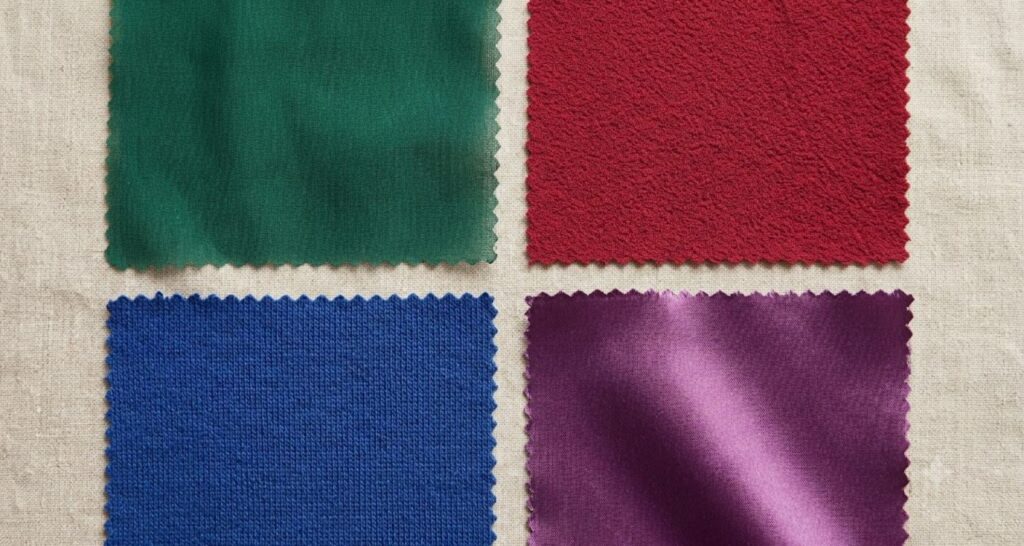
Fabric is where quality shows most clearly — and where comfort is determined.
Chiffon and georgette: Lightweight, flowing, beautiful in motion. Ideal for layered skirts and dresses where you want movement. Can be slightly see-through — check the lining.
Crepe: Has natural drape and structure. Doesn’t cling, doesn’t wrinkle badly, and looks expensive even at moderate price points. One of the best all-around fabrics for wedding guest dresses.
Jersey (matte): Comfortable, forgiving, and stretch-flexible. Best in a medium or heavier weight — thin jersey clings in unflattering ways. The matte finish is more elegant than shiny jersey.
Silk and silk-blend: The gold standard for special occasion dressing. Breathable, beautiful drape, photographs beautifully. Requires more care but for a special occasion it’s worth it.
Linen blend: Ideal for outdoor or summer weddings. Breathable and textured. Wrinkles with wear but at a casual outdoor wedding the relaxed texture works with the environment.
Colors That Work Beautifully After 50
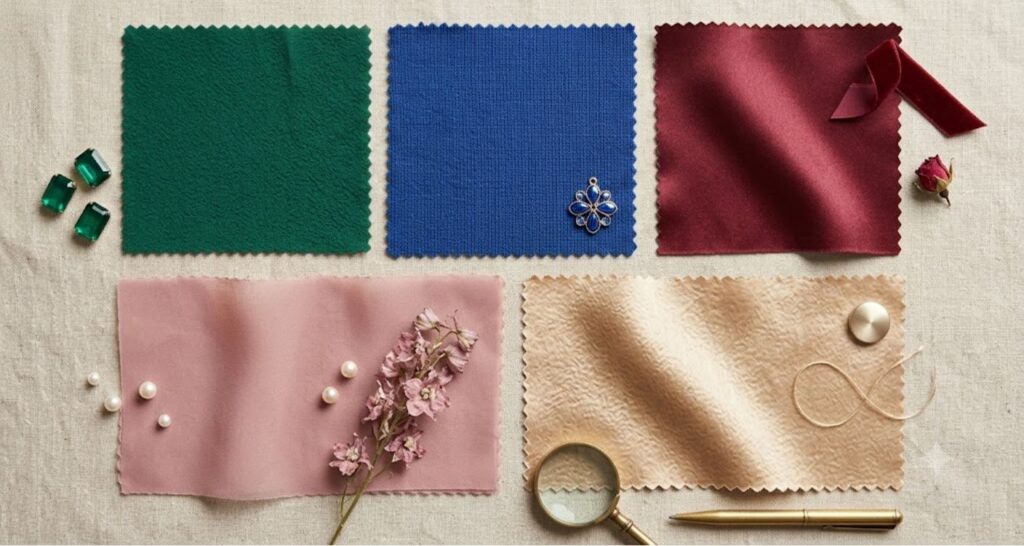
Color confidence tends to increase with age — and that’s genuinely worth leaning into. Here’s a practical framework:
Jewel tones: Emerald, sapphire blue, deep plum, rich burgundy, and forest green are among the most flattering colors for women over 50. The depth of color gives skin tone a warmth and richness that pale or washed-out colors often don’t.
Soft neutrals: Dusty rose, soft champagne, warm taupe, and muted sage work beautifully and are versatile across seasons. These photograph well and complement almost any skin tone.
Rich prints: A bold floral, a geometric print, or a classic paisley in jewel tone colors adds visual interest without requiring accessories. One strong print dress with simple shoes and jewelry is a complete, elegant look.
What to avoid: Solid white and ivory (still the bride’s territory at most weddings), very pale colors that can wash out in photographs, and neon or ultra-bright tones that tend to compete with the wedding party.
Sleeve and Neckline Options
Sleeves
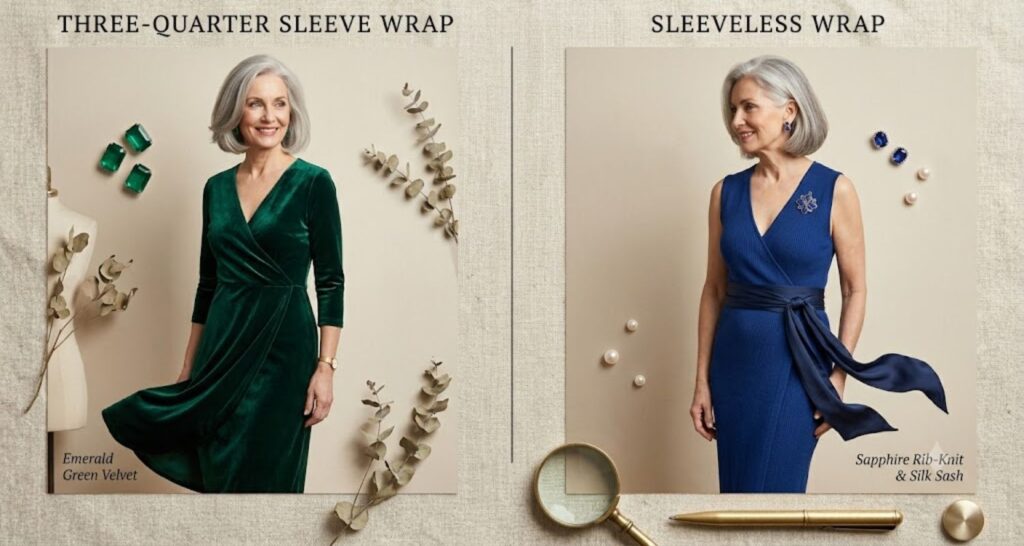
After 50, many women prefer dresses with sleeves — and for good reason. A three-quarter sleeve is the most elegant and versatile choice. It elongates the arm, provides coverage, and works across all weather conditions.
Full-length sleeves look beautiful at formal or autumn/winter weddings. If you prefer sleeveless, a beautiful silk or cashmere wrap gives you coverage when you want it and can be removed when you don’t.
Necklines
V-necks elongate the neck and draw the eye vertically — generally flattering regardless of body type. Scoop necks work well for broader shoulders. Boat necks are classic and elegant. High necklines work beautifully with a statement earring.
What to avoid: very deep plunges that feel uncomfortable in a formal setting, and very tight crew necks that draw attention to the neck and chest area if that’s not your preference.
Shoes and Accessories
Shoes
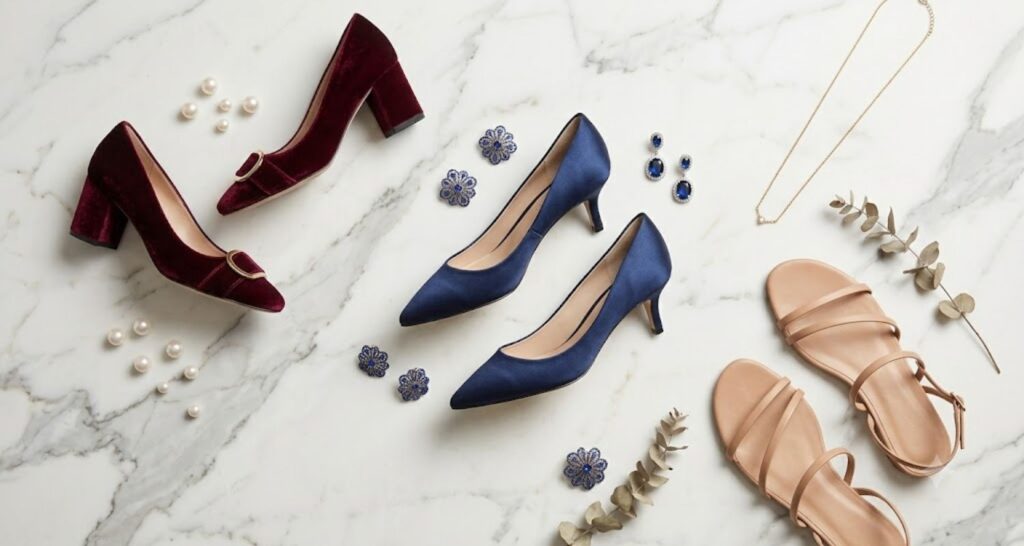
The practical rule after 50: wear a heel height you can sustain comfortably for the entire event. A block heel (5–7 cm) gives you height and elegance without the instability of a stiletto. A kitten heel is classic and comfortable. Flat strappy sandals with a formal dress look intentional and elegant — not like an afterthought.
For outdoor weddings: wedge heels or block heels rather than stilettos, which sink into grass. For formal indoor events: a classic mid-height pump or strappy heeled sandal.
Jewelry
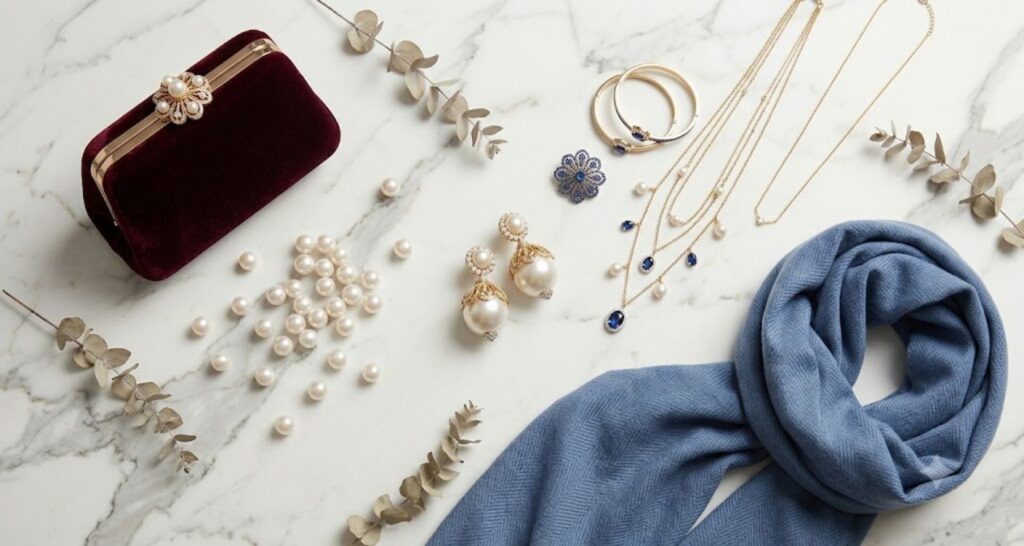
Simple dresses allow jewelry to speak. A pair of good earrings — whether classic pearls, modern geometric gold drops, or a statement stone — with a simple dress is often all you need. If you’re wearing a statement necklace, keep earrings small. If you’re wearing statement earrings, skip the necklace.
After 50, quality matters more than quantity. One piece of genuinely beautiful jewelry reads more elegantly than several pieces of lesser quality worn together.
Bag
A small structured clutch or a compact crossbody bag is the most elegant choice for a wedding. Avoid large totes or oversized bags — they detract from the overall look and are impractical in a wedding setting.
Complete Outfit Formulas by Wedding Type
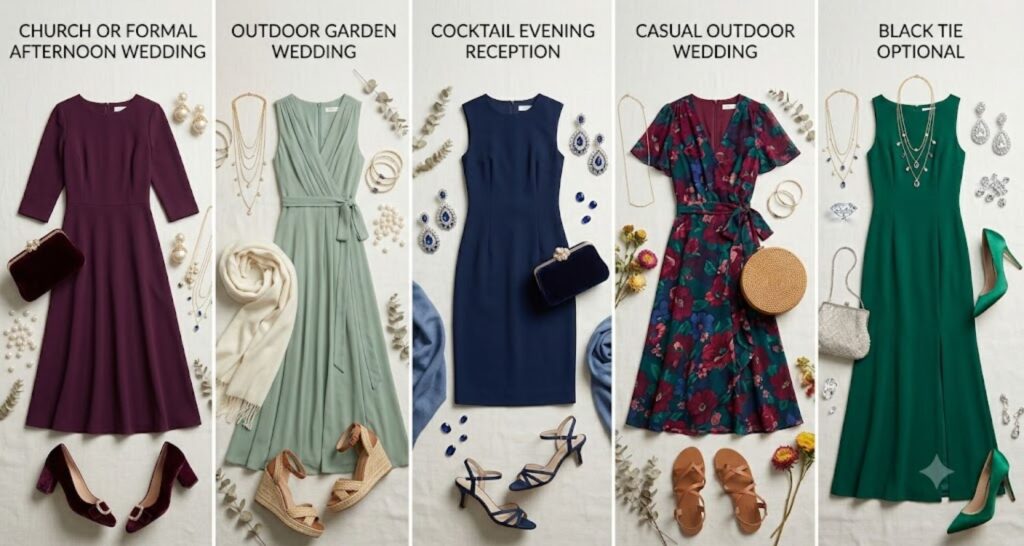
Church or formal afternoon wedding: A-line midi in deep plum crepe + three-quarter sleeves + block heel pumps + pearl earrings + small clutch
Outdoor garden wedding: Wrap maxi dress in sage green georgette + wedge sandals + gold jewelry + light cashmere wrap
Cocktail evening reception: Shift dress in midnight blue crepe + kitten heel strappy sandals + statement earrings + silk clutch
Casual outdoor wedding: Floral midi wrap dress in jewel tones + flat strappy sandals + simple gold jewelry + woven clutch
Black tie optional: Floor-length gown in rich emerald crepe + classic pumps + diamond or crystal earrings + evening bag.
“Looking for outdoor ceremony options instead? Our guide on casual wedding guest dress for outdoor ceremony covers everything by venue type.”
Simple Wedding Guest Dress for Over 50 : FAQ
What is the best dress length for women over 50 at a wedding?
Midi length — hitting between the knee and ankle — is the most universally flattering and appropriate choice for women over 50 at weddings. It reads as polished and occasion-appropriate across all body types, works with heels or flat sandals, and photographs well in both indoor and outdoor settings.
Can women over 50 wear sleeveless dresses to weddings?
Absolutely — sleeveless dresses are completely appropriate at any age. If you prefer coverage, add a silk wrap, a light blazer, or a tailored cardigan rather than changing the dress. Three-quarter sleeves are an elegant built-in alternative if you’d prefer the dress itself to provide arm coverage.
What colors should women over 50 avoid at weddings?
Avoid solid white, ivory, and cream — still considered the bride’s colors at most American weddings. Beyond that, the color restrictions are minimal. Jewel tones, soft neutrals, rich florals, and even well-chosen prints are all excellent choices. All-black is fine for formal evening weddings but can feel heavy at daytime or casual outdoor ceremonies.
Is it appropriate for women over 50 to wear a maxi dress to a wedding?
Yes — a maxi dress is an elegant and sophisticated choice for women over 50 at most wedding settings. Choose a structured fabric like crepe or heavy chiffon for formal events, and softer flowing fabrics for outdoor or casual ceremonies. Ensure the hem length is practical for the venue terrain.
What shoes are most practical for wedding guests over 50?
Block-heeled sandals and pumps, kitten heels, and flat strappy sandals are the most practical choices — comfortable enough for hours of wear while still looking polished. Avoid thin stilettos for outdoor weddings where heels sink into grass or gravel. Choose a heel height you can genuinely wear comfortably for the entire event.
How do you make a simple dress look elegant for a wedding?
The key is three things: quality fabric, perfect fit, and one strong accessory. A well-fitted dress in a beautiful fabric — crepe, chiffon, silk — already reads as elegant without needing embellishment. Add one piece of good jewelry (a statement earring or a beautiful necklace) and a quality shoe, and the result is genuinely more impressive than a complicated outfit.
The Right Dress Is Simpler Than You Think
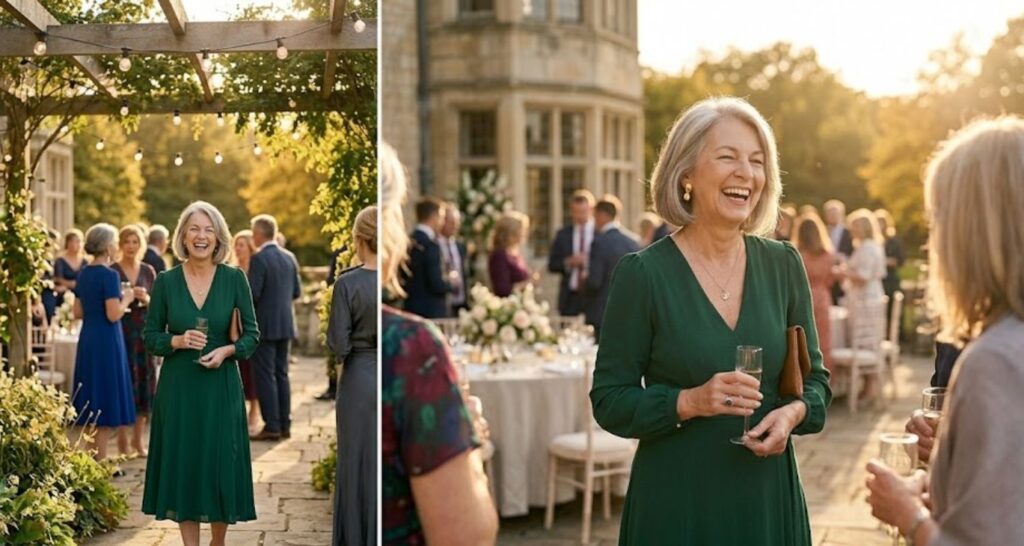
Finding the perfect simple wedding guest dress for over 50 comes down to three choices: a silhouette that fits your body honestly, a fabric that moves and breathes comfortably, and a color that makes your skin look alive rather than washed out. Get those three right and everything else — accessories, shoes, styling — naturally falls into place.
The women who look best at weddings after 50 aren’t following fashion rules. They’re wearing things that genuinely fit, in colors they love, with shoes they can actually dance in. A well-cut midi wrap dress in deep plum crepe with good earrings and block heel sandals will outperform any complicated outfit you’ve been second-guessing for weeks.
Pick your silhouette, choose your color, and dress for the woman you actually are — not the one you were twenty years ago. That’s where the real style lives.