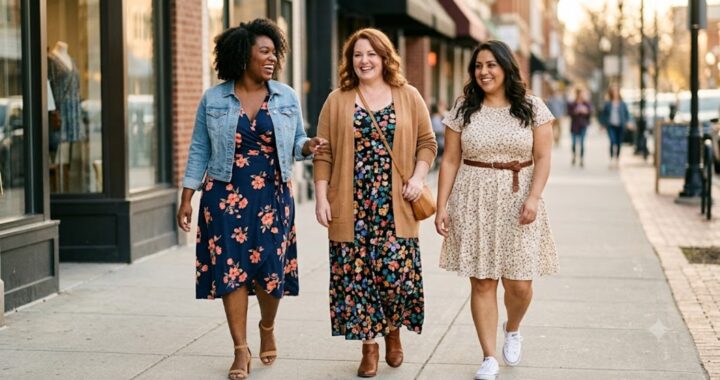
Your classroom is 78 degrees at 8 a.m., 64 degrees by lunch, and the hallway feels like a wind tunnel all day. Sound familiar? That’s exactly why the right teacher outfit dress ideas for fall matter so much — you need clothes that survive temperature swings, dry-erase marker smudges, and six hours on your feet without ever looking sloppy in front of students, parents, or your principal. A well-chosen dress does all of that in a single piece, which is why so many teachers reach for one every autumn morning.
This guide walks you through the best fall dress styles for the classroom, how to layer them, which fabrics actually hold up, and how to build a full week of outfits from just a few pieces. By the end, you’ll have a repeatable formula instead of a daily 6 a.m. panic in front of the closet.
Why Dresses Are a Teacher’s Best Friend in Fall
A dress is one decision. That’s the whole secret. Instead of matching a top, bottom, belt, and shoes before sunrise, you pull on a single piece, add a layer, and you’re done.
Dresses also solve the comfort problem better than most people expect. A knit midi dress moves with you when you’re crouching next to a second grader’s desk or reaching to pin work on a bulletin board. Structured trousers can’t always say the same.
There’s a professionalism bonus, too. Research on workplace attire consistently shows that polished dress signals competence — and teachers know from experience that students, parents, and administrators respond to how put-together you look on conference night. A simple sweater dress with boots reads “in charge” without trying hard.
In short: teacher fall dresses work because they’re one decision, endlessly layerable, comfortable for active teaching, and instantly professional.
10 Teacher Outfit Dress Ideas for Fall
Here are ten classroom-tested combinations. Each one uses pieces you likely already own or can find at teacher-budget stores like Old Navy, Target, Amazon, or Loft.
1. The Sweater Dress + Knee-High Boots

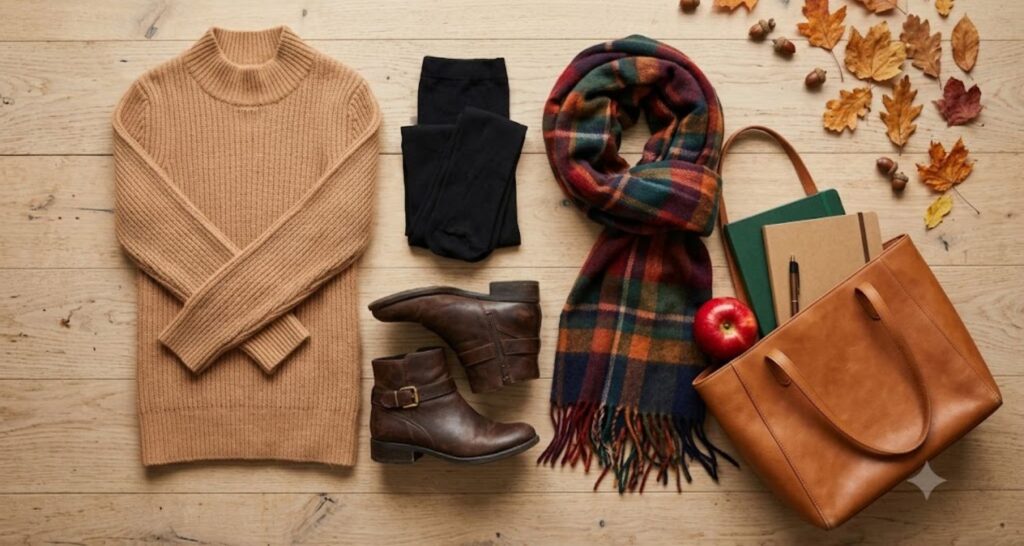
This is the fall uniform for a reason. Choose a mid-weight ribbed knit in camel, rust, or forest green, hitting at or below the knee. Add knee-high boots with a low block heel and you’re warm, covered, and comfortable through a full day of teaching.
One tip from experience: skip ultra-clingy knits. A slight A-line or straight cut looks more professional under fluorescent lights and lets you move freely at the whiteboard.
2. The Shirt Dress + Ankle Boots + Belt
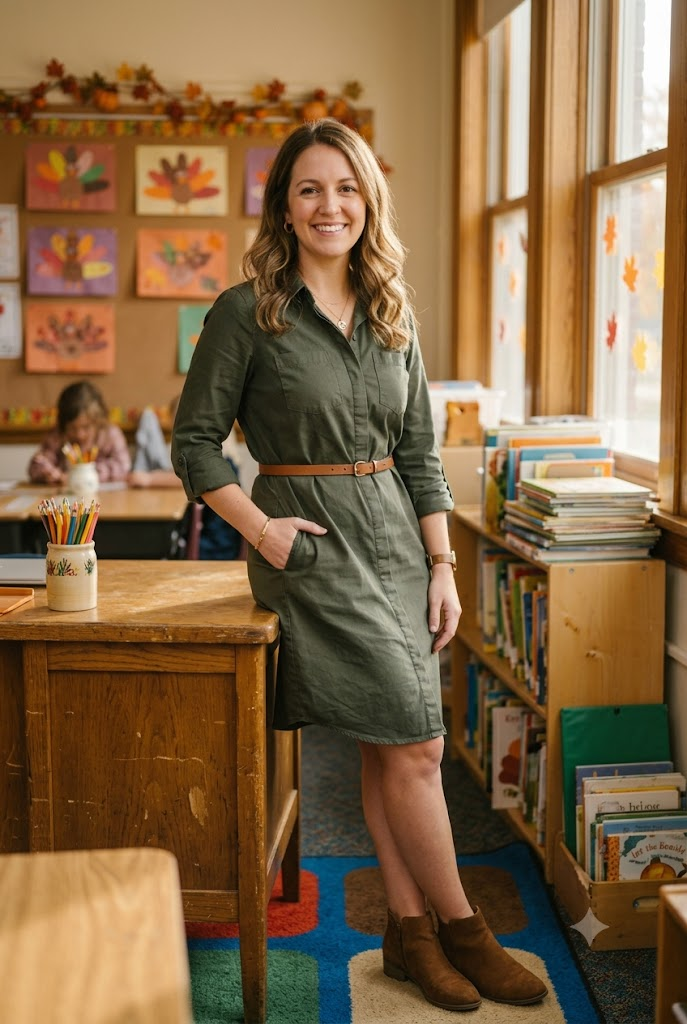
A cotton or twill shirt dress in olive, navy, or plaid is the workhorse of fall teacher wardrobes. Belt it at the waist, roll the sleeves, and add brown ankle boots. It’s structured enough for a parent-teacher conference and relaxed enough for recess duty.
Bonus: shirt dresses usually have pockets. Any teacher will tell you pockets are non-negotiable — where else do the confiscated fidget spinners go?
3. The Wrap Dress + Cardigan + Tights

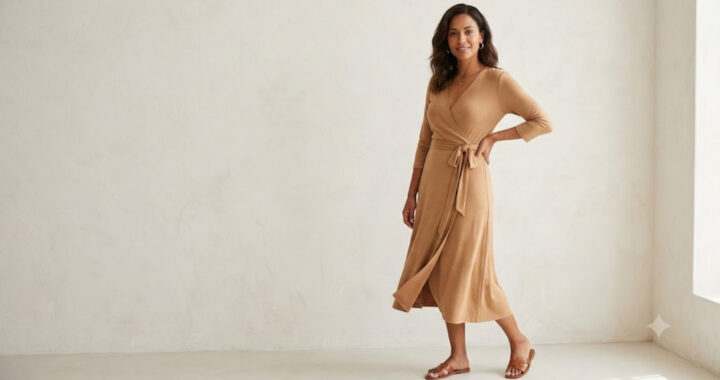
A jersey wrap dress flatters nearly every body type and transitions beautifully from September to November. Pair a burgundy or floral wrap dress with black tights and a longline cardigan. Choose a true wrap with a secure tie or a faux wrap if you’ll be bending over desks all day — no wardrobe surprises during a read-aloud.
4. The T-Shirt Dress + Denim Jacket + Sneakers

Casual Friday, field trip day, or spirit week? A midi t-shirt dress with a denim jacket and clean white sneakers keeps you comfortable without crossing into weekend territory. Add a plaid blanket scarf when the temperature drops and it suddenly looks intentional, not thrown together.
5. The Pinafore or Jumper Dress + Turtleneck

Layer a corduroy or cotton-twill pinafore over a fitted turtleneck for a look that’s cozy, current, and completely classroom-appropriate. Mustard, chocolate brown, and deep green feel especially autumnal. This one’s a favorite among elementary teachers because it photographs well on picture day and hides glue-stick mishaps.
6. The Midi Knit Dress + Blazer

Need to look sharp for an observation or an IEP meeting? A solid-color knit midi under a structured blazer is the fastest route to “administrator-ready.” Black dress, camel blazer, loafers. Done. You’ll look like you planned it a week in advance, even if you grabbed it in ninety seconds.
7. The Long-Sleeve Swing Dress + Leggings

Swing dresses give you full range of motion, which matters when you teach kindergarten or PE-adjacent anything. Wear one over fleece-lined leggings once late October hits. Choose lengths that fall below the knee so the silhouette stays polished even with the extra layer underneath.
8. The Plaid Flannel Dress + Tall Socks + Loafers
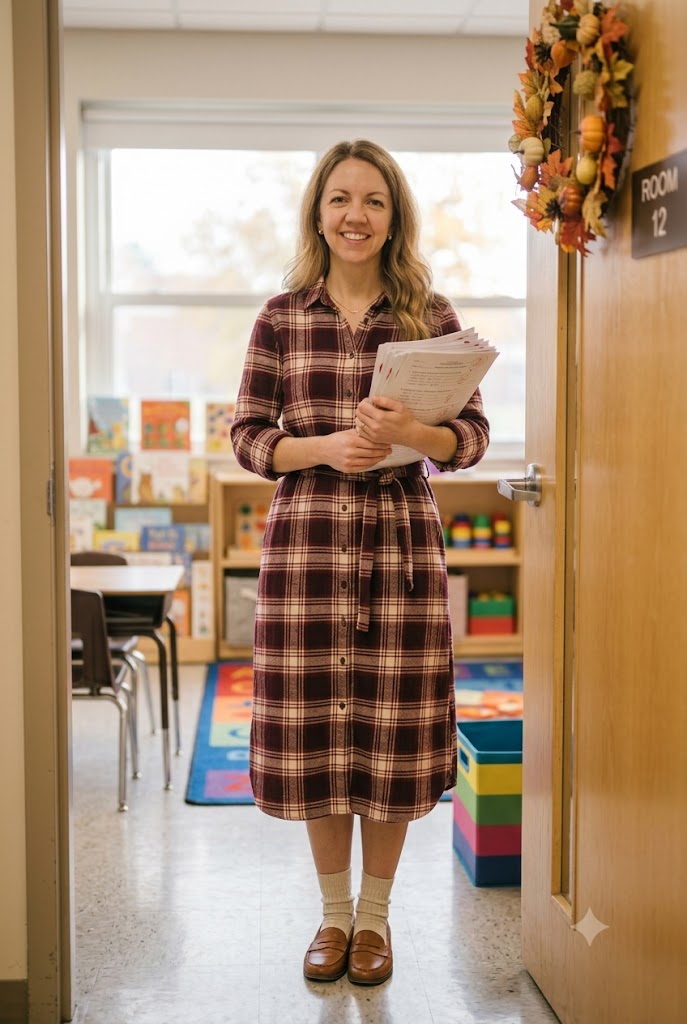
Lean into the season. A plaid flannel shirt dress with visible crew socks and loafers is a look teachers on Instagram have made a fall signature — and it works in real classrooms, too. It reads warm, approachable, and seasonal, which is exactly the vibe you want in October.
9. The Sleeveless Sheath + Layering Turtleneck

Don’t retire your summer sheath dresses yet. Layer a thin turtleneck or fitted long-sleeve tee underneath and a sleeveless sheath becomes a fall outfit instantly. This trick doubles your dress wardrobe for exactly zero dollars, which matters on a teacher’s salary.
10. The Maxi Dress + Cropped Cardigan + Booties

A solid or small-print maxi in rust, plum, or charcoal keeps your legs warm without tights. Add a cropped cardigan to define your waist and heeled booties so the hem doesn’t drag. It’s the coziest option on this list and still looks pulled together for hall duty.
How to Layer a Dress for Unpredictable Fall Weather
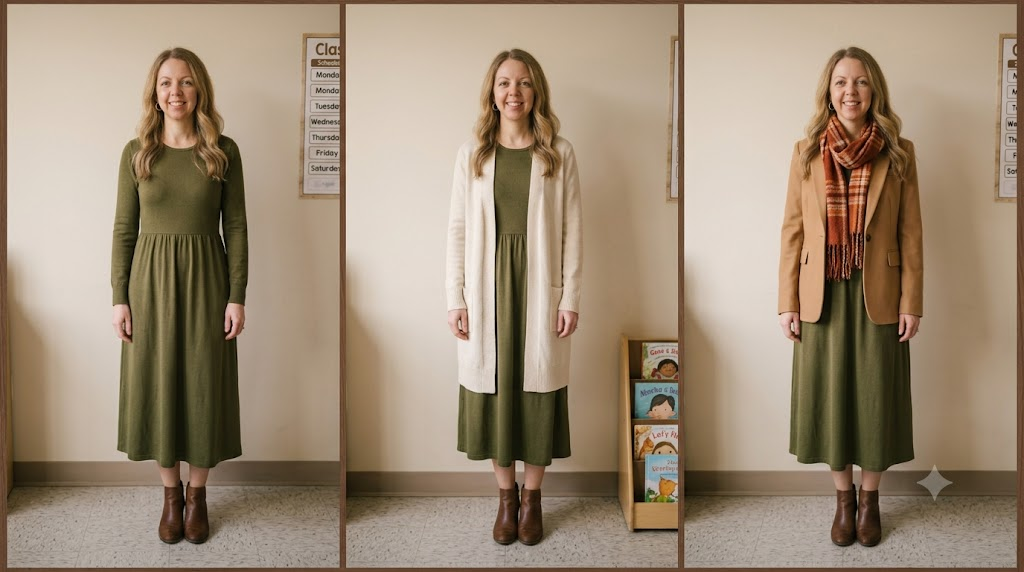
Fall classrooms are a thermostat lottery. Here’s a simple five-step layering method that works with almost any dress:
- Start with a temperature-neutral base. Pick a dress you could wear alone in a 72-degree room.
- Add a removable mid-layer. A cardigan, blazer, or denim jacket you can shed by third period.
- Warm the extremities. Tights, tall socks, or leggings handle cold floors better than a heavier dress does.
- Finish with an accent layer. A scarf or vest adds warmth and makes a repeated dress look brand new.
- Keep a “classroom cardigan” at school. Leave one neutral cardigan on your chair permanently. Future you will be grateful.
Why does this order matter? Because you remove layers from the outside in as the day warms up, and every version of the outfit still looks complete.
Best Fabrics for Fall Teacher Dresses (Comparison)
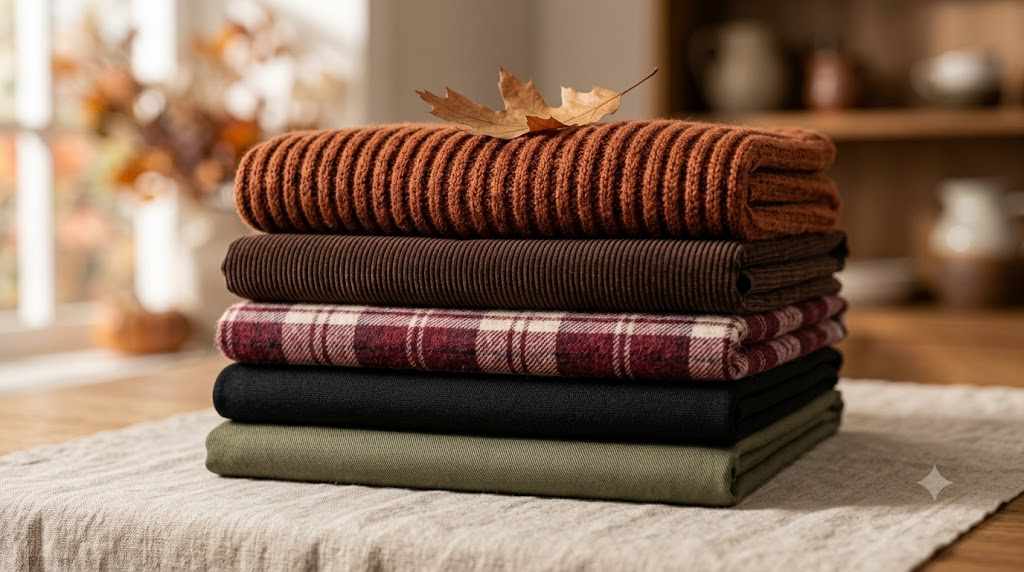
Not all fabrics survive a school day. Here’s how the common options compare:
| Fabric | Warmth | Wrinkle Resistance | Comfort for Teaching | Best For |
|---|---|---|---|---|
| Ponte knit | Medium | Excellent | Excellent | Sheaths, work dresses |
| Ribbed sweater knit | High | Excellent | Very good | Sweater dresses |
| Cotton twill | Medium | Fair | Good | Shirt dresses, pinafores |
| Jersey | Low–medium | Very good | Excellent | Wrap and swing dresses |
| Flannel | High | Good | Very good | Casual plaid dresses |
| Corduroy | High | Good | Good | Jumpers, pinafores |
| Linen blends | Low | Poor | Good | Early September only |
If you buy only one fabric this fall, make it ponte knit. It doesn’t wrinkle in the wash pile, it stretches when you crouch, and it holds its shape through a hundred wears.
Fall Color Palette That Works in Any Classroom
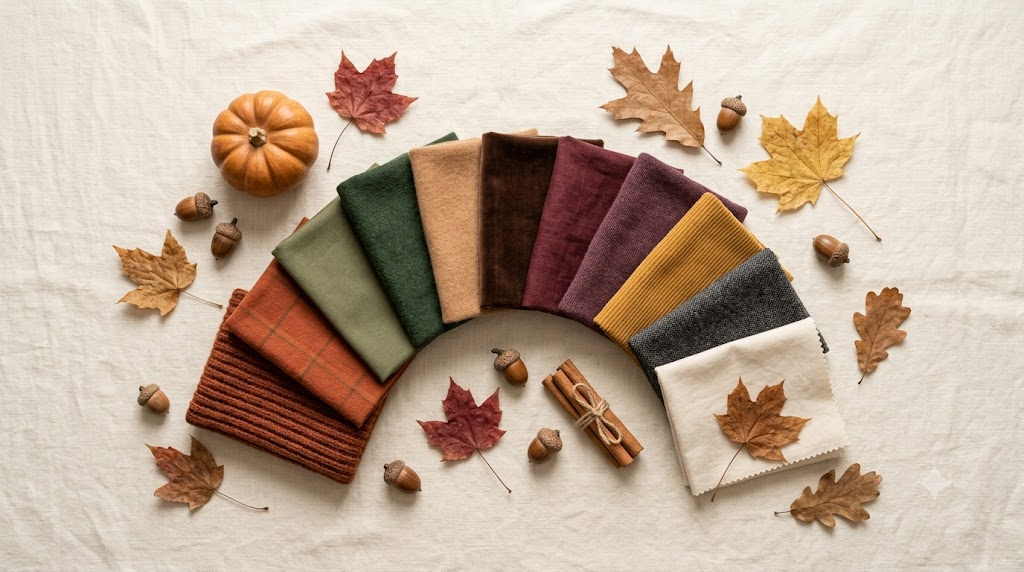
You can’t go wrong building around these tones: rust and burnt orange, olive and forest green, camel and chocolate brown, burgundy and plum, mustard, charcoal, and cream. Notice what’s missing? Neon and pastel. They’re not wrong — they just fight the season instead of working with it.
A practical trick: pick two neutrals (say, camel and black) and two accent colors (rust and forest green). Every dress, layer, and boot you buy should fit that mini palette. Suddenly everything in your closet coordinates, and getting dressed takes two minutes.
Footwear That Survives 8,000 Steps a Day
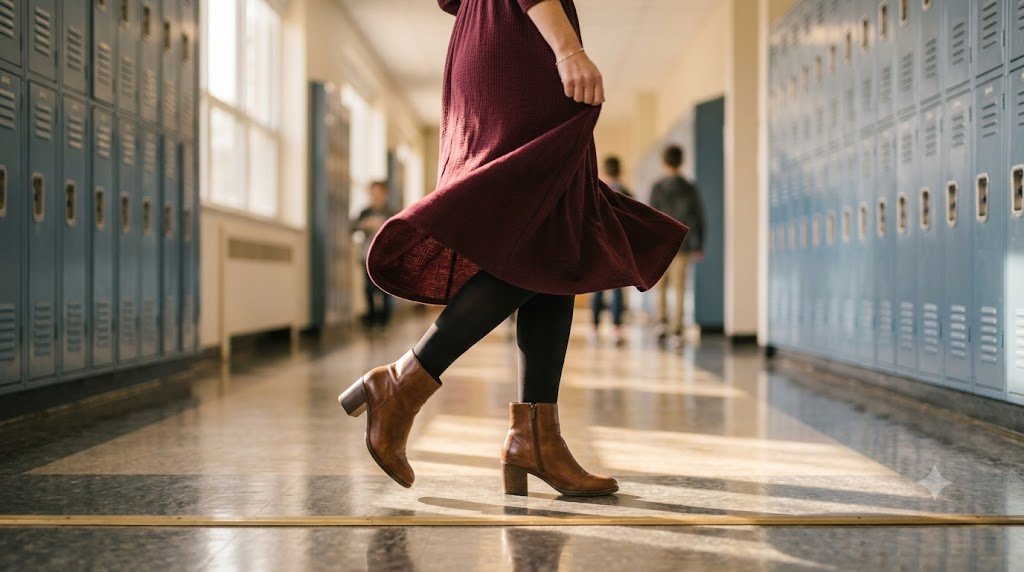
Teachers routinely log four to five miles daily just moving around school. Your shoes matter as much as your dress.
Block-heel ankle boots (under two inches) give you polish without foot pain. Knee-high flat boots pair with sweater dresses and keep your calves warm. Loafers with cushioned insoles work with midi lengths and tall socks. And yes — clean, minimal white sneakers are now widely accepted with dresses in most American schools, especially for elementary teachers.
Whatever you choose, break new shoes in on a weekend first. An observation day is not the time to discover a blister.
Check out complete guide about : Midi Dress for Business Casual Women
Dressing Within Your School’s Dress Code

Most U.S. school dress codes for staff share a few common threads: hems at or near the knee, covered shoulders in some districts, no visible undergarments, and nothing you’d wear to the beach or gym. When in doubt, a knee-length or midi dress with sleeves — or a layer that adds them — clears virtually every district policy.
Have you actually read your staff handbook’s dress section lately? It takes five minutes and removes all the guesswork. If your school leans formal, favor sheaths and blazers. If it leans casual, the t-shirt dress and flannel looks are fair game.
Build a 5-Day Fall Capsule From 4 Dresses
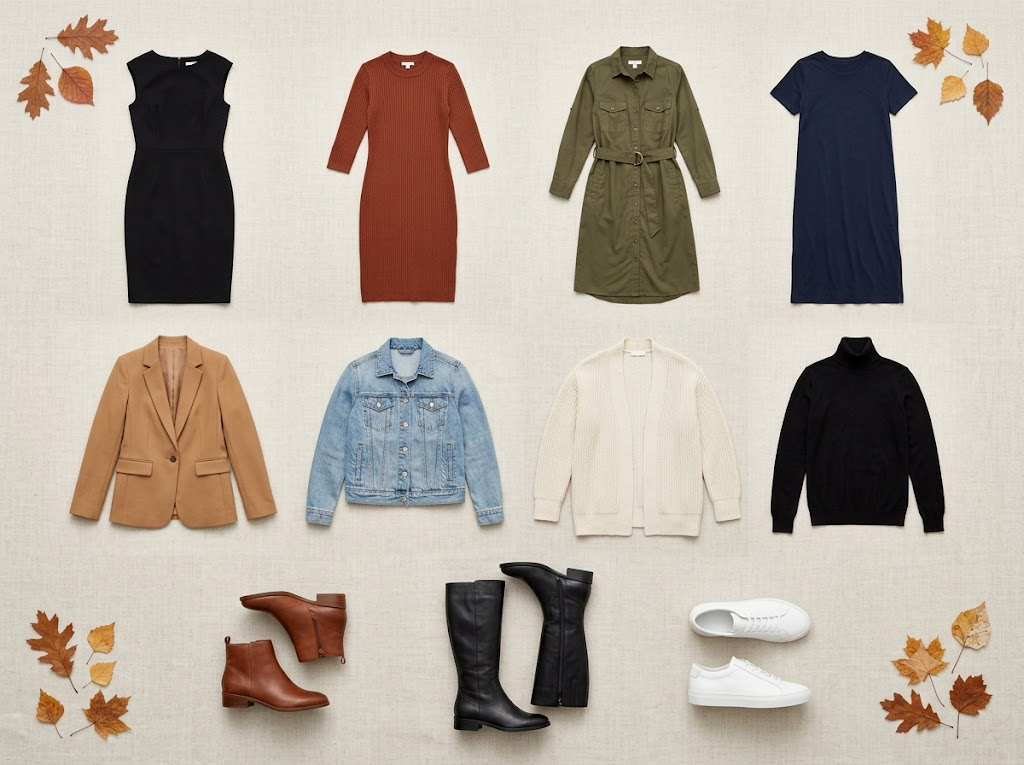
Here’s proof you don’t need a huge wardrobe. With four dresses and three layers, you get a full week:
- Monday: Black ponte sheath + camel blazer + ankle boots (meetings look, minimal effort)
- Tuesday: Rust sweater dress + knee-high boots (no layer needed)
- Wednesday: Olive shirt dress + belt + tights + loafers
- Thursday: Black ponte sheath again + turtleneck underneath + tall boots (nobody will recognize it)
- Friday: Navy t-shirt dress + denim jacket + white sneakers
That’s roughly $150–$250 total at budget-friendly retailers, and every piece re-mixes into dozens of other combinations through winter. Repeating a dress isn’t a fashion failure — restyling it is a skill.
Budget Tips From Real Teachers
Teachers spend an average of hundreds of dollars a year out of pocket on their classrooms, so clothing budgets are tight. A few field-tested strategies help.
Shop end-of-season sales in reverse: buy fall dresses in late winter clearance for next year. Check teacher discount programs — many retailers, including Loft, J.Crew, and Madewell, have offered educator discounts (verify current terms before checkout). Thrift stores are gold mines for blazers and cardigans, which don’t need to be new to look sharp.
And before you buy anything, do the “crouch test” in the fitting room. Squat down like you’re helping a student at their desk. If the dress rides up, gaps, or pinches, it fails — no matter how good it looks standing still.
Common Mistakes to Avoid
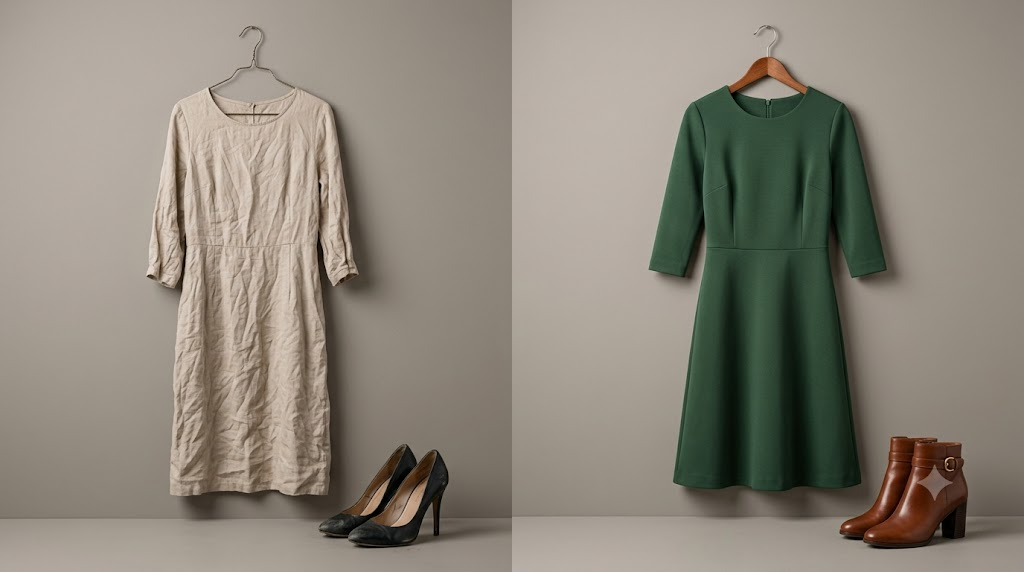
A few missteps show up every fall. Fabrics that wrinkle by second period (looking at you, linen and thin cotton) make even a new dress look tired. Hems more than a couple of inches above the knee become a problem the moment you bend over a desk. Heels above two inches feel fine at 7:30 a.m. and regrettable by noon.
The subtler mistake? Buying dresses that only work one way. Every dress you add should pair with at least two layers and two pairs of shoes you already own. If it can’t, leave it on the rack.
FAQ: Teacher Fall Dress Questions Answered
What dresses are appropriate for teachers in the fall?
Knee-length or midi dresses in sweater knit, ponte, twill, or flannel are appropriate for most U.S. schools. Sweater dresses, shirt dresses, wrap dresses, and pinafores all work well. Pair them with tights, boots, and a cardigan or blazer, and check your district’s staff dress code for specifics.
How do teachers stay warm in dresses during fall?
Layering is the key. Wear fleece-lined tights or leggings under your dress, add a turtleneck or long-sleeve tee beneath sleeveless styles, and top with a cardigan or blazer you can remove. Tall boots and a scarf add warmth, and keeping a spare cardigan at school covers chilly classrooms.
Can teachers wear sneakers with dresses?
In most American schools, yes. Clean, minimal white or neutral sneakers with a midi t-shirt dress or shirt dress are widely accepted, especially for elementary teachers and casual Fridays. Avoid athletic running shoes or worn-out pairs, and confirm your school’s dress code if your campus leans formal.
How long should a teacher’s dress be?
Aim for hems at the knee or longer — knee-length, midi, and maxi all work. The practical test matters more than the ruler: crouch, reach, and bend in the fitting room. If the hem stays modest through all three movements, it’s classroom-safe for a full teaching day.
What colors should teachers wear in the fall?
Build around autumn tones: rust, olive, camel, burgundy, mustard, forest green, chocolate brown, and charcoal. Pick two neutrals and two accent colors so everything coordinates. These shades look seasonal, hide everyday classroom smudges better than pale colors, and pair easily with brown or black boots.
Are sweater dresses professional enough for parent-teacher conferences?
Yes, when styled intentionally. Choose a mid-weight knit that isn’t clingy, in a solid color like camel, black, or forest green. Add structure with a blazer or belt, knee-high boots, and simple jewelry. The overall effect is warm and authoritative — exactly right for conference night.
Final Thoughts: Your Fall Dress Formula
The best teacher outfit dress ideas for fall all come back to one formula: a knee-length-or-longer dress in a forgiving fabric, one removable layer, warm extremities, and shoes you can stand in for eight hours. Master that, and every morning becomes a two-minute decision instead of a closet standoff.
Start small. Pick one sweater dress, one shirt dress, and one blazer in your palette this week, and build from there. Your students may never compliment your ponte knit — but you’ll feel the difference by fourth period, and that comfort shows up in how you teach.