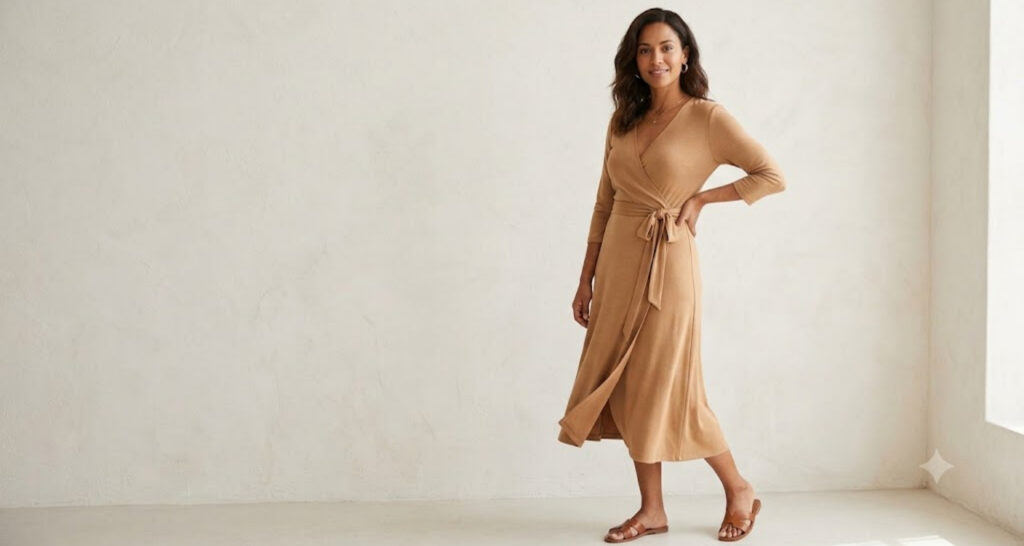
You’ve probably stood in a fitting room holding a dress that looked incredible on the hanger and completely wrong on you. The waist sat in a strange place. The hips pulled. The bust gaped open like it was designed for someone else entirely. That’s not a body problem — that’s a cut problem, and the best dress style for hourglass figure shapes solves it by following your curves instead of fighting them.
Here’s the good news. Once you know what your proportions are asking for, shopping stops being a guessing game. You’ll start spotting the right dress from across the store.
Let’s get into it.
What Is an Hourglass Figure?
An hourglass figure is a body shape where your bust and hips measure roughly the same, and your waist is noticeably smaller — usually by about 8 to 10 inches or more. Your shoulders and hips sit in balance, and your waist creates a clear inward curve between them.
That balance is the whole point. You’re not trying to create curves or hide them. You’re trying to keep the proportions you already have visible.
3 Quick Checks to Confirm Your Shape
Grab a soft measuring tape and take 60 seconds:
- Measure your bust at the fullest point, tape level all the way around.
- Measure your natural waist — the narrowest spot, usually an inch or two above your belly button.
- Measure your hips at the widest part, about 7 to 9 inches below your waist.
If your bust and hip numbers land within a couple of inches of each other, and your waist is significantly smaller than both, you’re an hourglass. Close but not exact? You might be a soft hourglass or a pear — most of the advice below still works, you’ll just lean harder on certain styles.
One more thing worth saying: bodies don’t fit neatly into five categories. Use this as a starting point, not a rulebook.
The One Rule Behind the Best Dress Style for Hourglass Figure Shapes
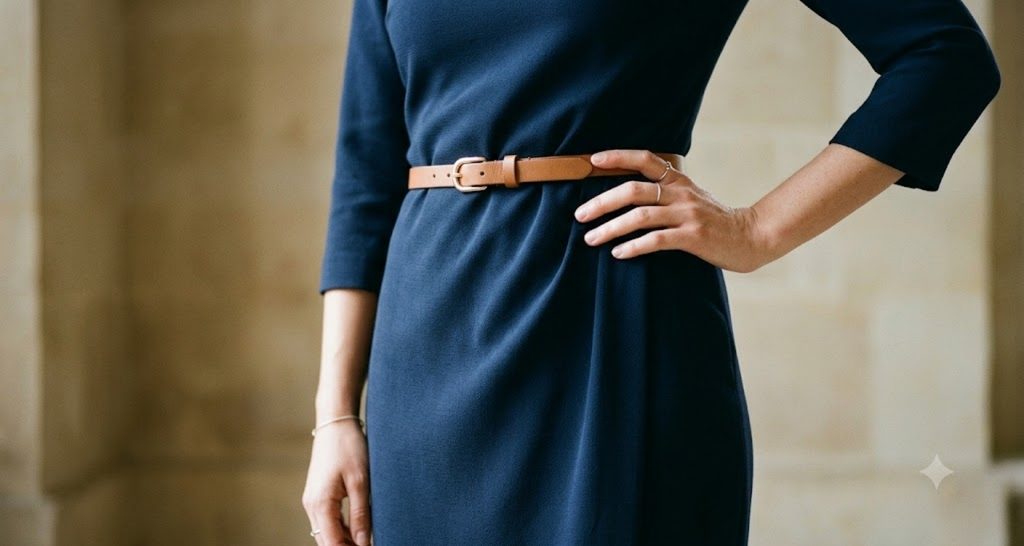
Define the waist. Follow the curve. Don’t add bulk.
That’s it. Every recommendation in this article traces back to those three ideas.
Think about why a shapeless shift dress feels off. It skims straight from bust to hem, which means the widest part of your body — your bust or hips — sets the silhouette. Your waist disappears. Suddenly you look wider than you are, and you can’t figure out why.
Now think about a wrap dress. It cinches exactly where you’re smallest and releases over the hips. Same body, completely different result.
I worked with a client a few years back who was convinced she needed to lose weight before she’d look good in anything. She’d been buying loose dresses for a decade because they felt “safe.” We put her in a belted shirt dress in a size she’d never have picked, and she got quiet for a second. Then she said, “Why did nobody tell me?” Nothing about her had changed. The cut had.
Note : Best tips about What Dresses Look Good on Tall Women.
12 Best Dress Styles for an Hourglass Figure
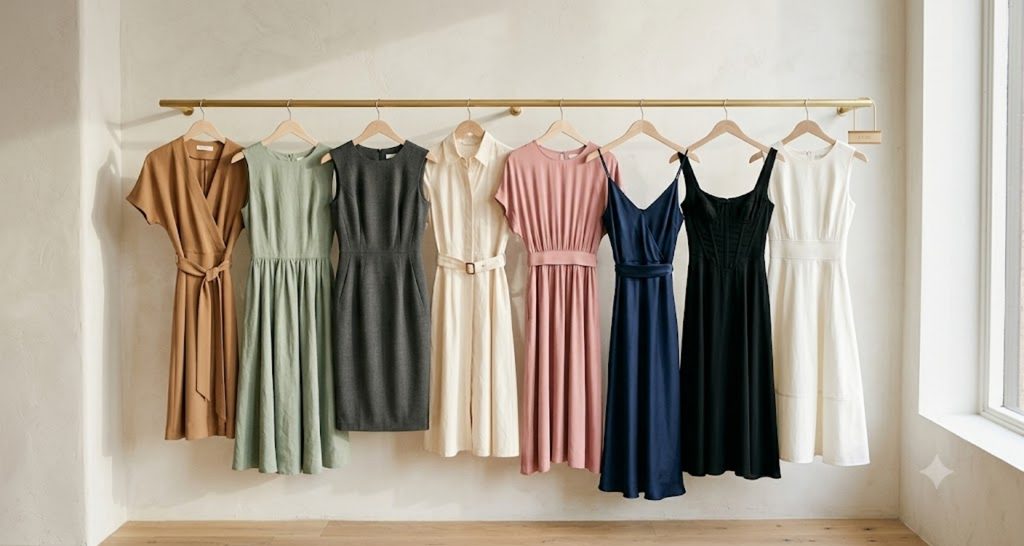
Here’s where the theory turns into actual clothes you can buy.
1. The Wrap Dress
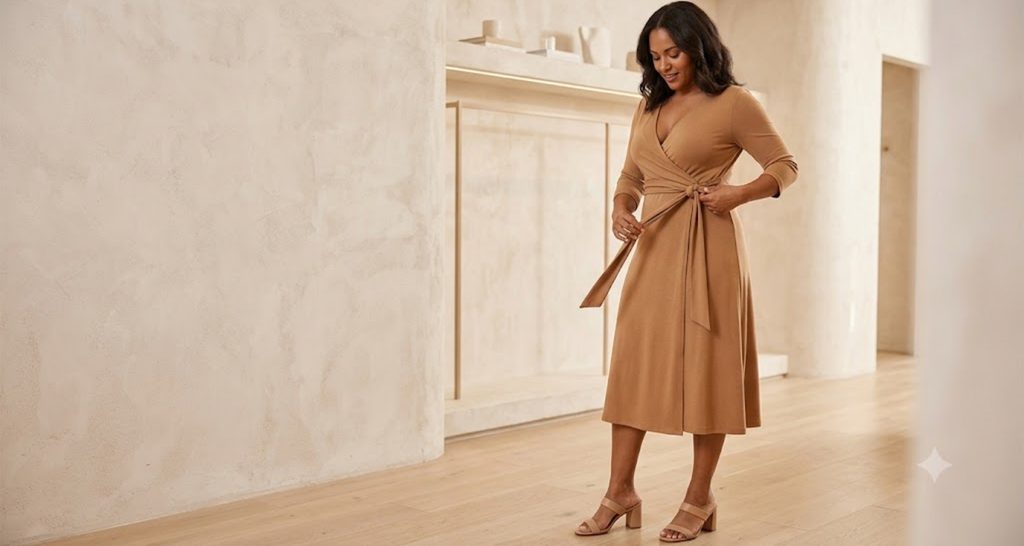
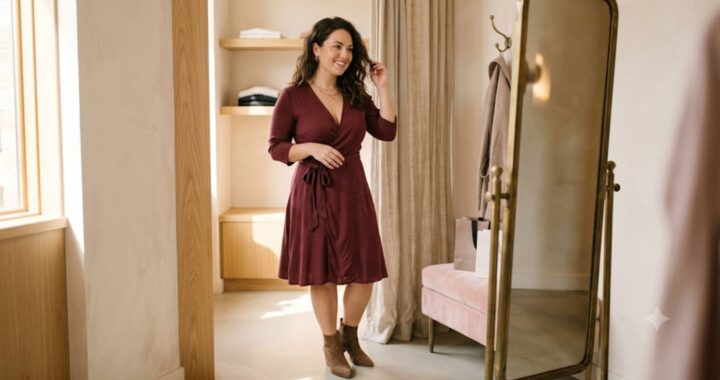
If you own one dress, own this one. A true wrap ties at your natural waist, so it adjusts to your smallest point rather than wherever a factory decided the waist should sit.
The V-neckline elongates your upper body and balances a fuller bust. The skirt falls open over the hips without clinging. It works for the office, a wedding, brunch, and a Tuesday.
Look for a real tie closure rather than a faux-wrap with a hidden zip — the adjustability is the whole advantage. Add a small safety pin at the neckline if you’re worried about gaping.
2. Fit-and-Flare
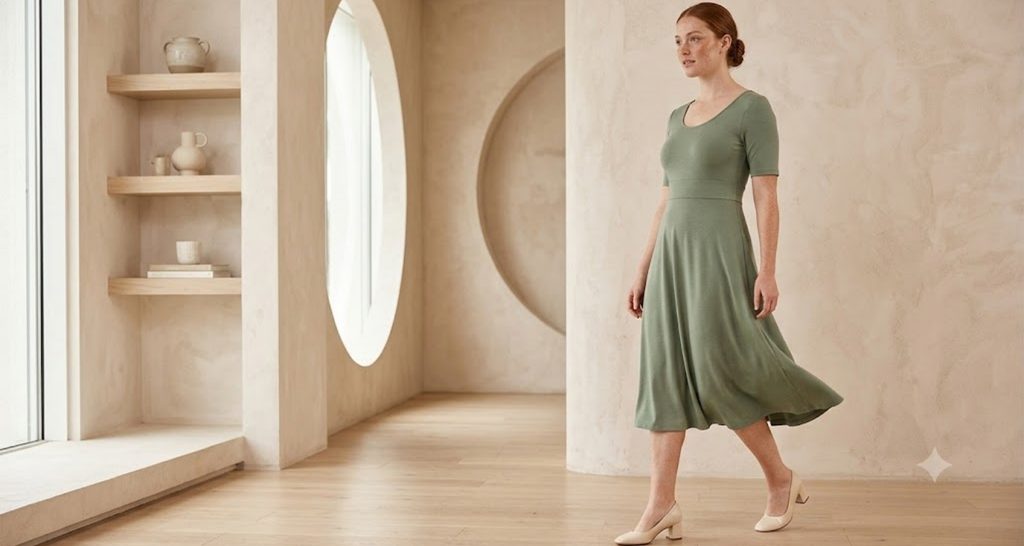
Fitted through the bodice, flared from the waist down. It’s the most forgiving hourglass silhouette because it highlights your waist while giving your hips room to breathe.
Keep the flare moderate. A skirt with too much volume can read costume-y and add visual width at the hip. You want swing, not a bell.
Midi lengths in this cut are especially strong for a workday-to-dinner dress.
3. Bodycon (Done Right)
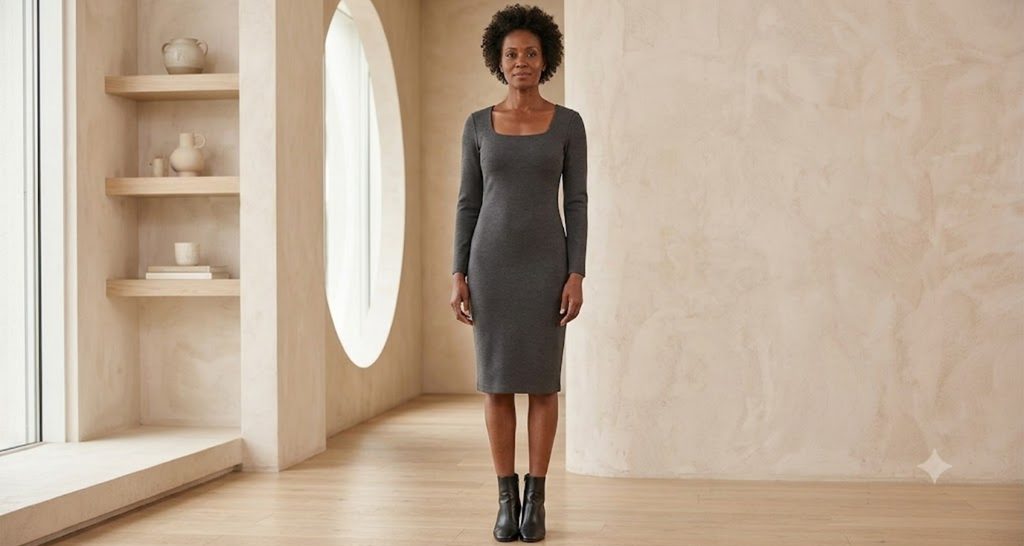
Body-con gets an unfair reputation, mostly because people buy it a size too small. A well-fitted bodycon in a thick, structured knit — think ponte or scuba — smooths and holds instead of clinging to every ripple.
Your curves do the work. The dress just tracks them.
Test it by sitting down in the fitting room. If it rides up or pulls horizontally across the hips, size up.
4. The Belted Shirt Dress
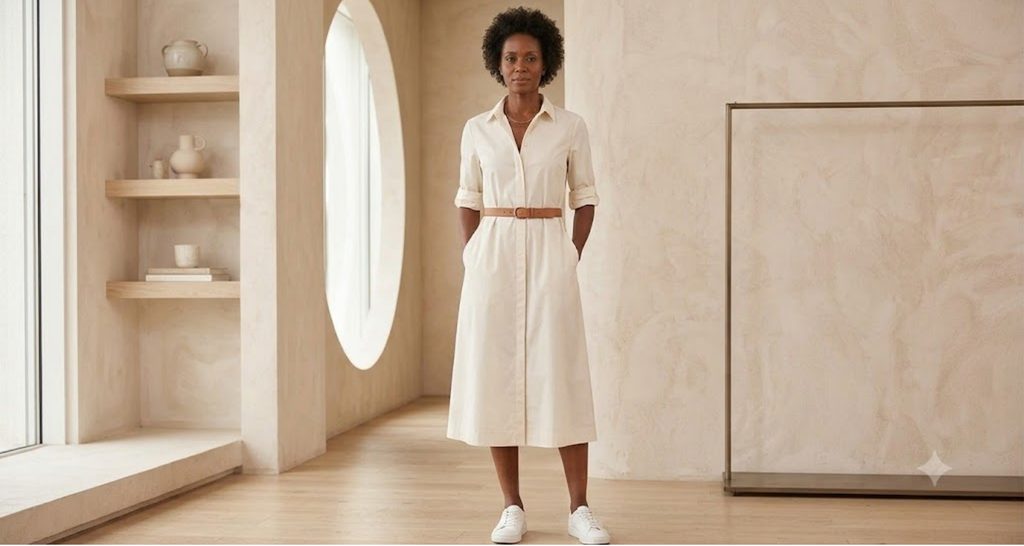
Casual, crisp, and endlessly wearable. On its own, a shirt dress hangs straight and hides your waist. Add a belt and it becomes one of the most flattering things in your closet.
Roll the sleeves. Leave the top two buttons open. Cinch it at the narrowest point.
Cotton poplin, chambray, and linen blends all work. Skip anything stiff enough to stand up on its own.
5. The Sheath Dress
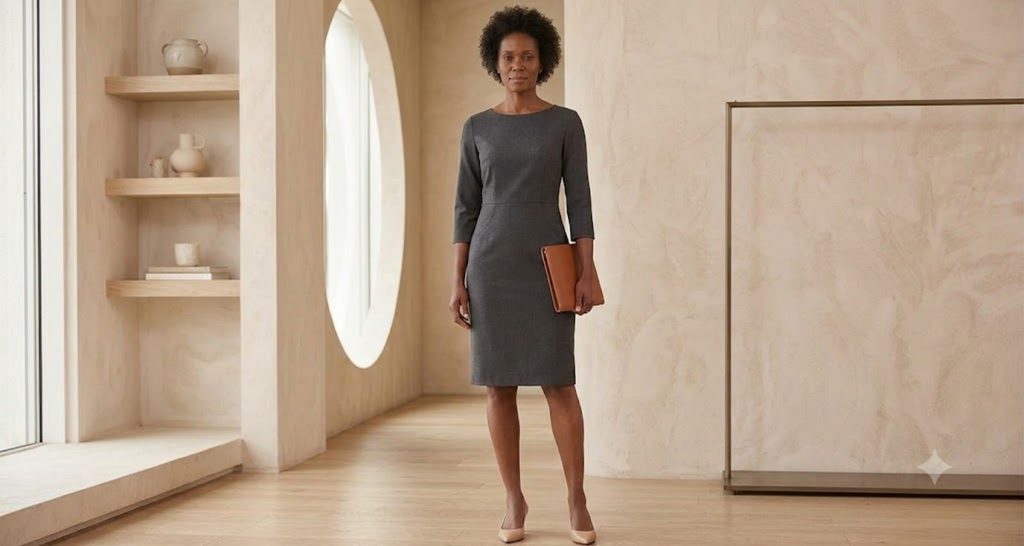
The workwear MVP. A sheath follows the body from shoulder to knee with light shaping through the waist — polished without being tight.
The catch is that off-the-rack sheaths are cut for straighter figures, so you’ll often need to size to your hips and have the waist taken in. That’s a 20-minute alteration and it transforms the dress.
Knee-length in a dark neutral is the safest professional bet.
6. The Peplum Dress
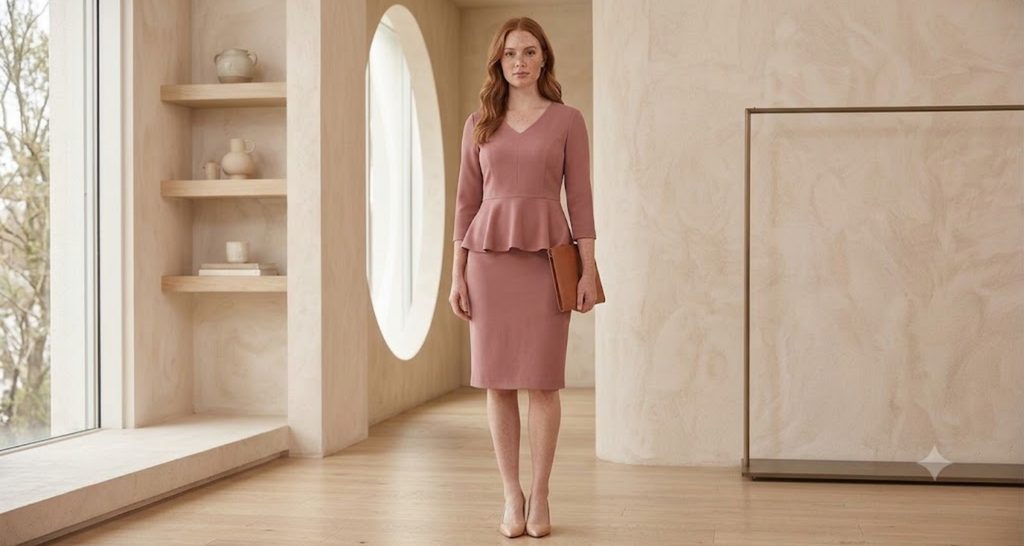
A peplum flares out at the waist, creating a hard visual line right where you’re smallest. On an hourglass, that line does a lot of heavy lifting.
Keep the peplum short and soft — a long or heavily structured one can widen the hips. It should skim, not project.
Pair with a sleek, straight skirt portion for balance.
7. Mermaid and Trumpet Gowns
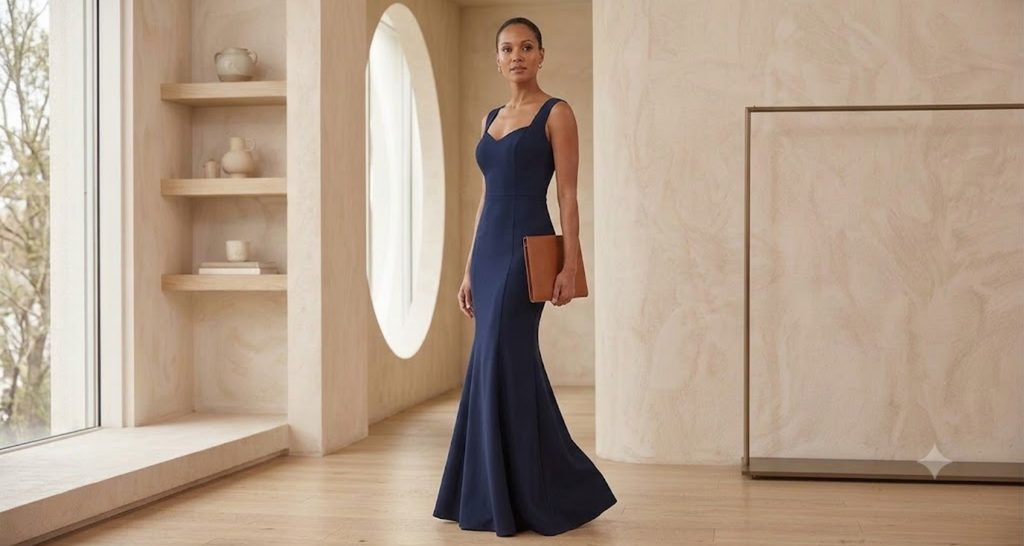
For formal events, nothing beats this shape. It hugs through the bust, waist, and hip, then releases below the knee.
The flare placement matters more than you’d think. A trumpet (flaring from mid-thigh) is easier to walk in than a true mermaid (flaring at the knee). If you’re dancing, choose the trumpet.
Check that the boning sits at your actual waist before you commit.
8. The Bias-Cut Slip Dress
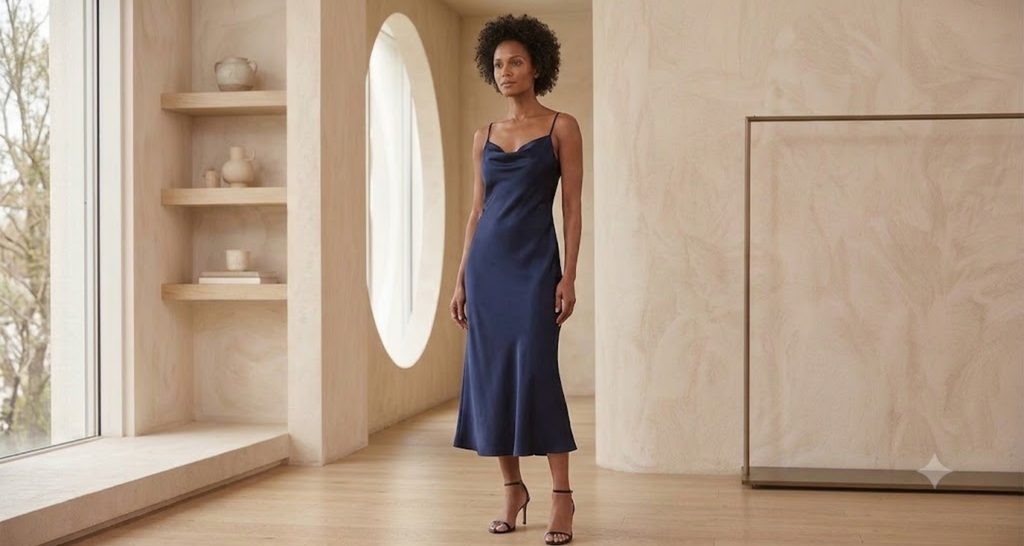
Cut diagonally across the grain, bias fabric stretches and drapes around curves instead of hanging off them. The result is liquid and quietly dramatic.
Silk, satin, and heavier crepe all work. Thin jersey doesn’t — it shows every seam of your underwear.
Wear it with seamless underthings and let the fabric do its thing.
9. The Corset-Bodice Dress
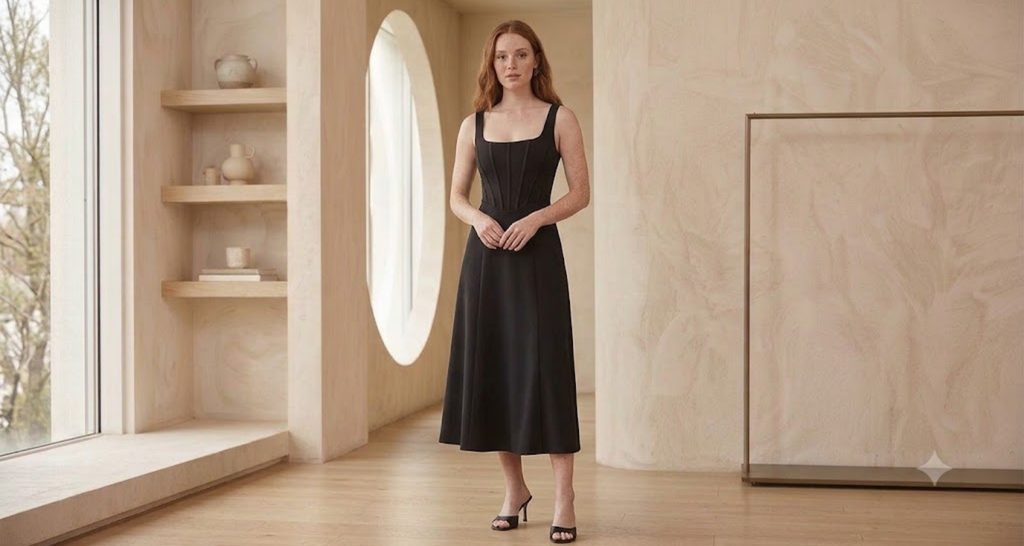
Structured bodices have come back hard, and hourglass figures benefit most. Internal boning holds the waist without you needing a separate belt, and the built-in support means you can often skip a bra.
Look for boning that ends at your natural waist, not below it. Too long and it fights the curve of your hip.
10. The A-Line Midi
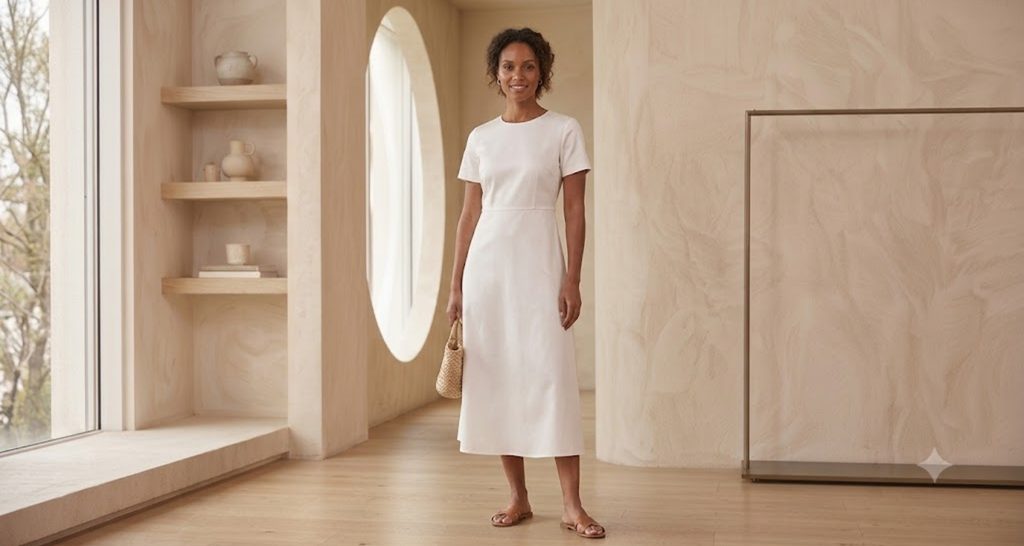
More restrained than a fit-and-flare, an A-line gently widens from the waist to the hem in a straight line. It’s the low-drama option when you want structure without volume.
Choose one with a defined waist seam. A princess-seam A-line that starts flaring at the bust will hide your waist entirely.
11. The Sweetheart-Neckline Dress
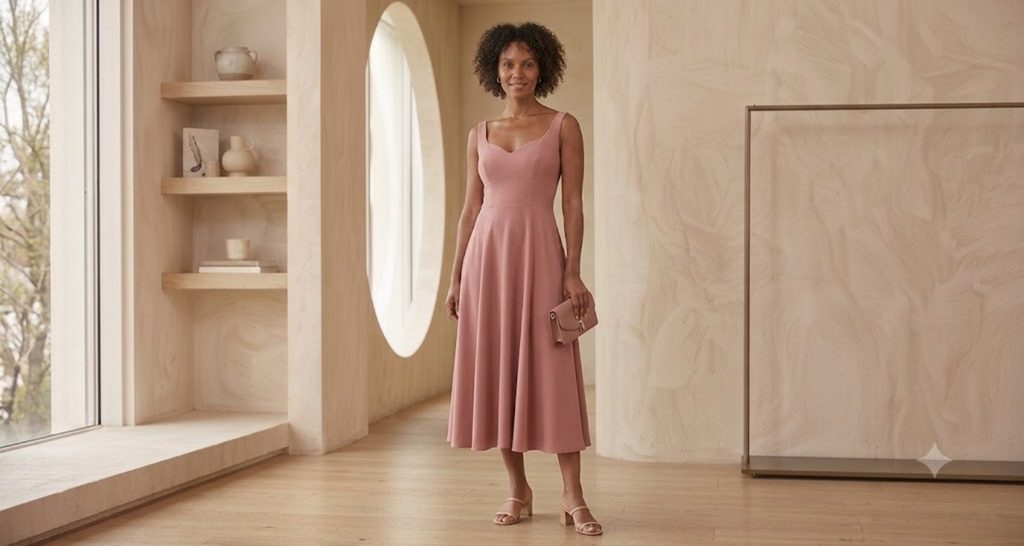
The neckline itself is the star here. A sweetheart curve mirrors the shape of your bust and draws the eye up and inward, which balances hip width and softens broad shoulders.
It pairs beautifully with fitted bodices and full skirts. For a wedding guest look, it’s hard to beat.
12. The Wrap-Effect Knit Dress
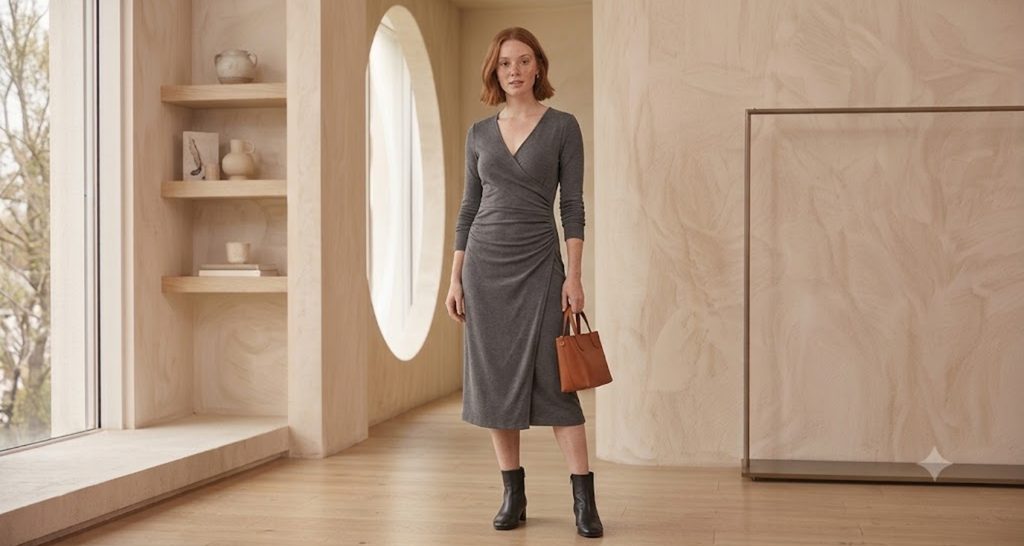
Think of it as the wrap dress’s low-maintenance cousin — a ruched or gathered knit that pulls in at the waist without any tying. The ruching disguises the midsection while still marking the waistline.
It travels well, doesn’t wrinkle, and works from a plane seat straight to dinner.
Note : Get the best style tips for Dress Styles for Petite Women With Curves here.
Hourglass Dress Styles Compared
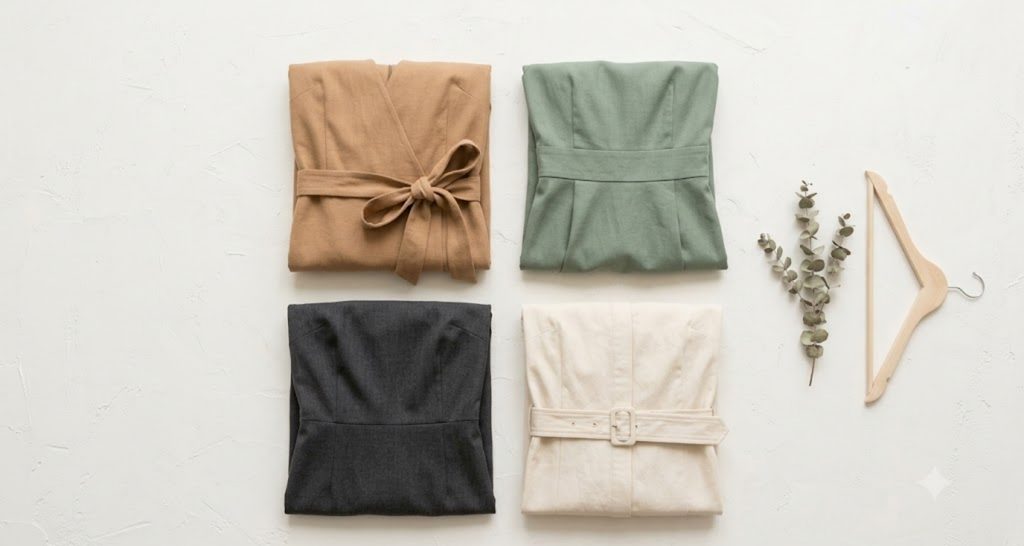
| Dress Style | Best Occasion | Why It Works | Watch Out For |
|---|---|---|---|
| Wrap dress | Work, brunch, weddings | Adjustable waist tie, V-neck balance | Neckline gaping — pin it |
| Fit-and-flare | Date night, daytime events | Marks waist, skims hips | Too much skirt volume |
| Bodycon | Evening, parties | Follows natural curves | Thin fabric, sizing too small |
| Belted shirt dress | Casual, weekend | Belt creates the waistline | Stiff, boxy fabrics |
| Sheath | Office, interviews | Clean, polished line | Usually needs waist tailoring |
| Peplum | Cocktail, semi-formal | Hard visual line at waist | Long or rigid peplums |
| Mermaid / trumpet | Black tie, weddings | Follows the full curve | Limited walking room |
| Bias-cut slip | Evening, dinner | Drapes around curves | Clingy thin jersey |
| Corset bodice | Formal, celebrations | Built-in waist definition | Boning that runs too long |
| A-line midi | Everyday, work | Structure without bulk | Flare starting at the bust |
Note : Best tips about Most Flattering Dress for Pear Shaped Women here.
Necklines, Sleeves, and Hemlines That Work
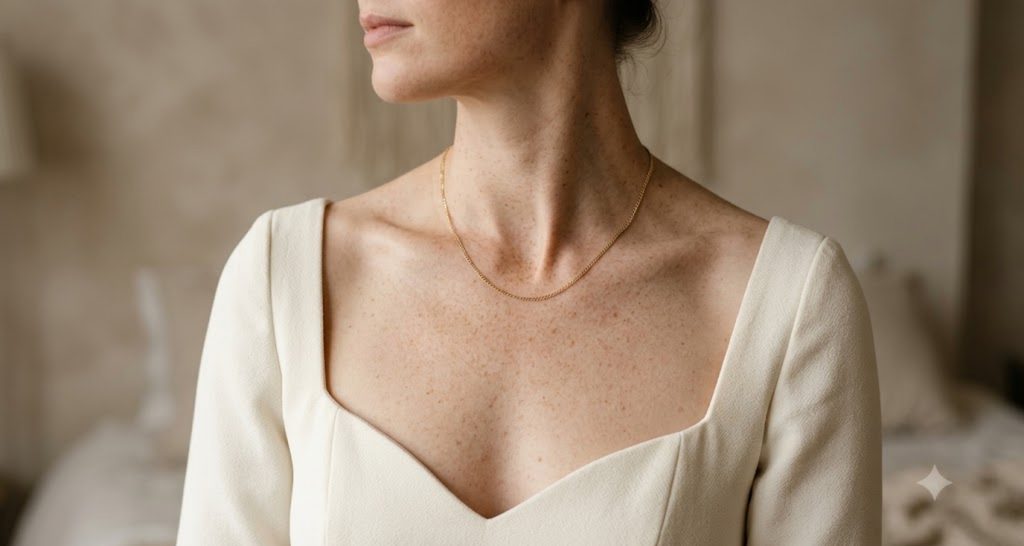
The dress shape gets you 70% of the way there. These details handle the rest.
Necklines
Go for: V-neck, sweetheart, scoop, square, and wrap necklines. Each one opens up the chest and creates vertical or inward lines that keep the upper body from looking heavy.
Be careful with: high crew necks and halters, which can make a full bust look shelf-like and shorten the neck. If you love a mock neck, choose a fitted one in a fine knit.
Square necklines deserve a special mention — they’re having a moment and they flatter a broad chest beautifully.
Sleeves
Fitted and three-quarter sleeves are your friends. They end at the narrowest part of your arm and keep the silhouette clean.
Puff sleeves and dramatic ruffles add width at the shoulder. That’s not automatically bad — it can balance wider hips — but big volume on both top and bottom will bury your waist.
Sleeveless works well when the armhole is cut close. A gaping armhole ruins an otherwise perfect dress.
Hemlines
Knee-length and midi lengths are the most reliably flattering. A hem that hits at the narrowest part of your calf (usually just below the widest point) looks intentional and lengthens the leg.
Midi dresses that end mid-calf at the widest spot can shorten you. Try a slightly higher or lower hem before you give up on the dress.
Maxi lengths work great as long as the waist is defined. A loose maxi with no waist seam is the fastest way to lose your shape.
Note : Check out Best Dress Styles for Apple Shaped Body here.
Fabrics: What Holds Its Shape and What Doesn’t
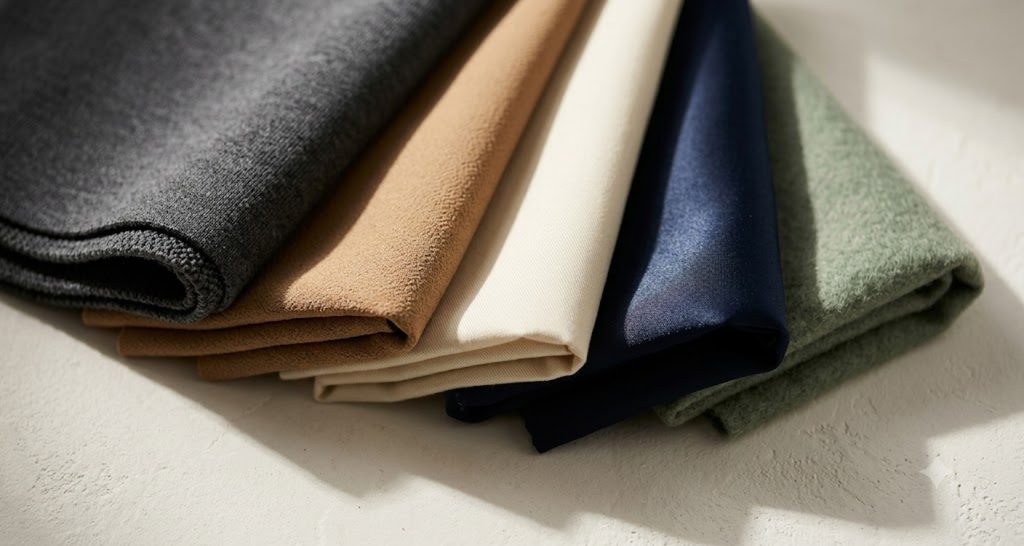
Fabric choice quietly makes or breaks a dress.
These work well:
- Ponte knit — thick, structured, forgiving
- Crepe — matte, drapes cleanly, doesn’t cling
- Stretch cotton sateen — holds shape with a little give
- Heavy silk and satin — drapes without clinging
- Wool blends with 2–4% elastane — the office standard
These need more care:
- Thin jersey — clings to everything, shows every line
- Stiff taffeta and heavy brocade — adds volume where you don’t want it
- Bulky knits — swallow the waist entirely
- Anything with zero stretch — you’ll be sizing up and tailoring down
A quick trick: scrunch a handful of the fabric in your fist and let go. If it springs back smooth, it’ll hold its shape on your body. If it stays wrinkled and limp, it’ll do the same thing over your curves.
Dress Styles to Approach With Caution
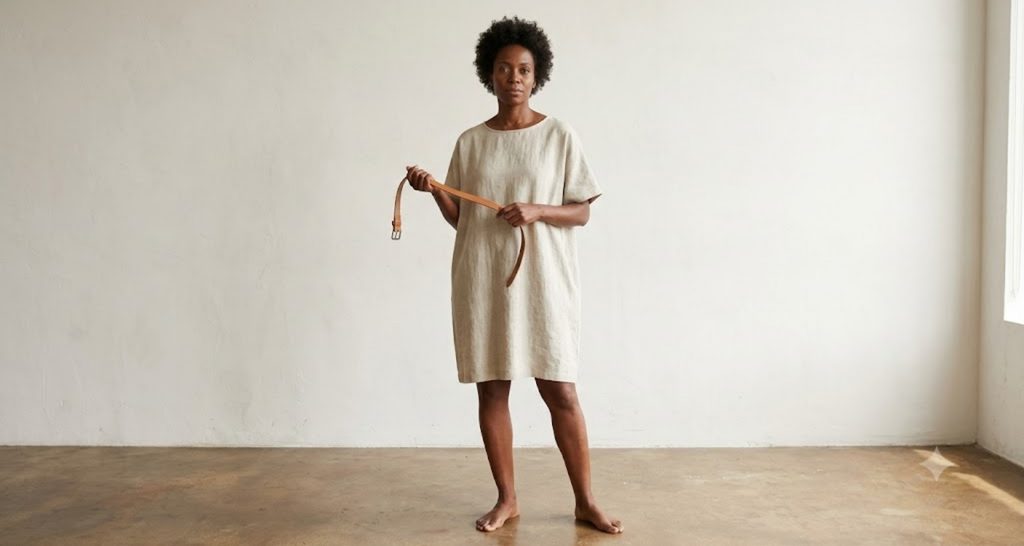
Nothing here is forbidden. But these cuts require more thought.
Shift and tent dresses. They hang from the shoulders and skip the waist entirely. If you love the ease, add a belt or have the side seams taken in slightly.
Drop-waist dresses. They place the seam at your hip, which is exactly where you don’t need extra emphasis. Some flapper-style versions work if the fabric is fluid and the hem is short.
Empire waists. The seam sits under the bust, so everything below flows straight down. It hides your actual waist and can read as maternity. Choose one with a fitted, structured bodice if you want to try it.
Oversized and boyfriend cuts. Big volume plus curves usually equals bulk. If you want the relaxed look, balance it — oversized top half, fitted bottom half, or vice versa.
Heavy pleating at the hip. Pleats that start at the waistband and stack over the hip add inches you don’t need.
How to Choose Your Dress in 6 Steps
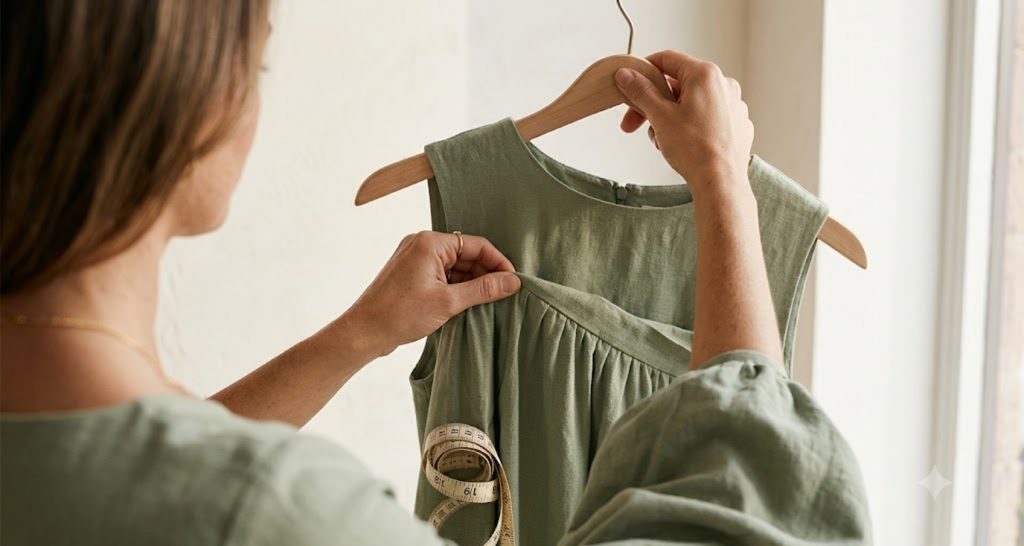
Use this next time you’re shopping, online or in person.
- Find the waist seam. Hold the dress up. Where does the narrowest part of the garment sit? If it’s not at your natural waist, keep looking or plan to alter it.
- Size to your largest measurement. Usually your bust or hips. It’s far easier to take a waist in than to let a hip out.
- Check the fabric’s recovery. Stretch it gently and watch it snap back. No snap, no structure.
- Sit down in it. Ride-up, pulling, and gaping only show up when you move.
- Look at yourself from the side. Front views hide a lot. The side profile tells you whether the dress is skimming or clinging.
- Budget for tailoring. A $60 dress plus a $30 alteration beats a $200 dress that almost fits.
That last one is the tip most people skip and most regret skipping.
Best Dresses by Occasion
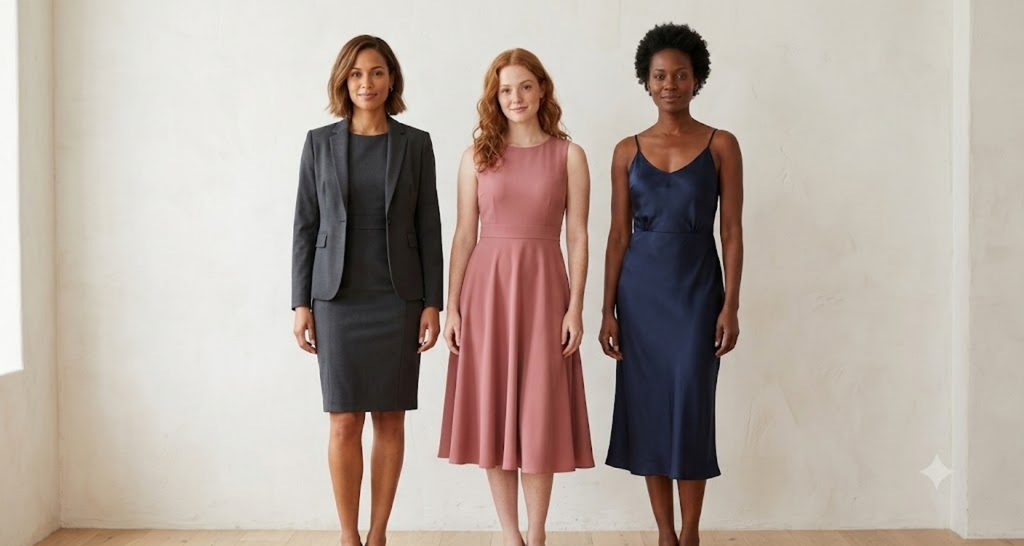
For the Office
A knee-length sheath in navy, charcoal, or black. Add a fitted blazer that ends at your hip bone — not longer, or it’ll cut your leg line.
A belted shirt dress in a crisp cotton also reads professional without feeling stiff.
For a Wedding Guest Look
Fit-and-flare midi, wrap dress, or a sweetheart-neckline A-line. Choose a fabric that moves, because you’ll be sitting through a ceremony and standing through cocktail hour.
Avoid anything strapless you’ll spend the night adjusting. If you go strapless, get it fitted.
For Date Night
Bias-cut slip, well-fitted bodycon, or a wrap in a deeper color. Keep one area the focus — either a lower neckline or a shorter hem, not both.
For Everyday and Weekends
Knit wrap dresses, A-line midis, and belted shirt dresses. Add flat sandals or white sneakers and you’re done.
For Black-Tie Events
Trumpet gown, corset-bodice ball gown, or a column dress in heavy crepe with a defined waist seam. Book a fitting at least three weeks out.
Three Tailoring Tricks Worth the Money
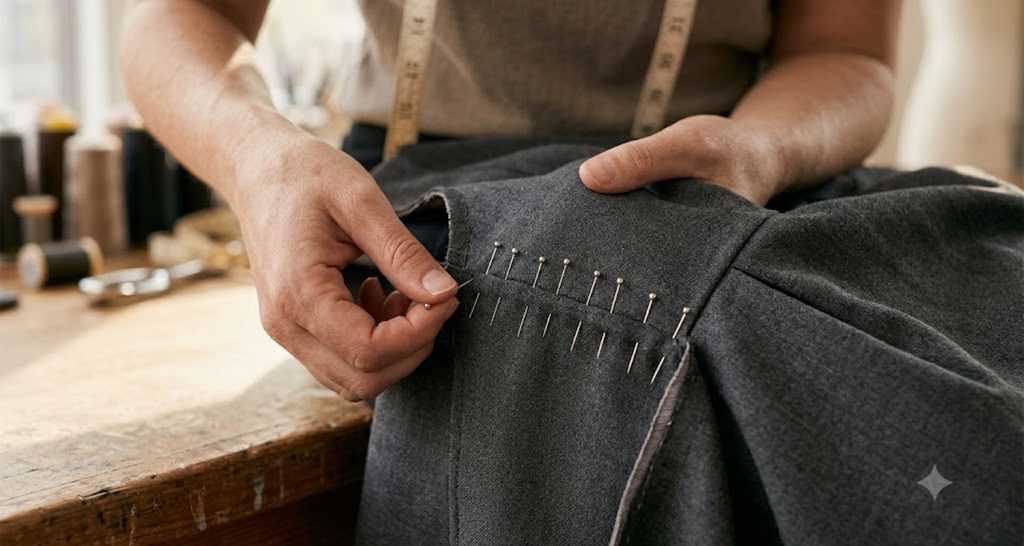
A tailor is the best fashion investment you’ll make. These three alterations are quick, cheap, and transformative:
Taking in the waist. Usually $20 to $40. It turns a dress that fits your hips into a dress that fits you.
Adjusting the hem. Getting the hem to hit the right point on your calf costs very little and changes the entire proportion.
Adding bust darts or a bra cup. Fixes gaping necklines and armholes permanently, so you stop tugging at your dress all evening.
Ask your tailor what they’d change before you tell them your plan. Good ones spot things you’ll miss in the mirror.
Common Mistakes to Stop Making
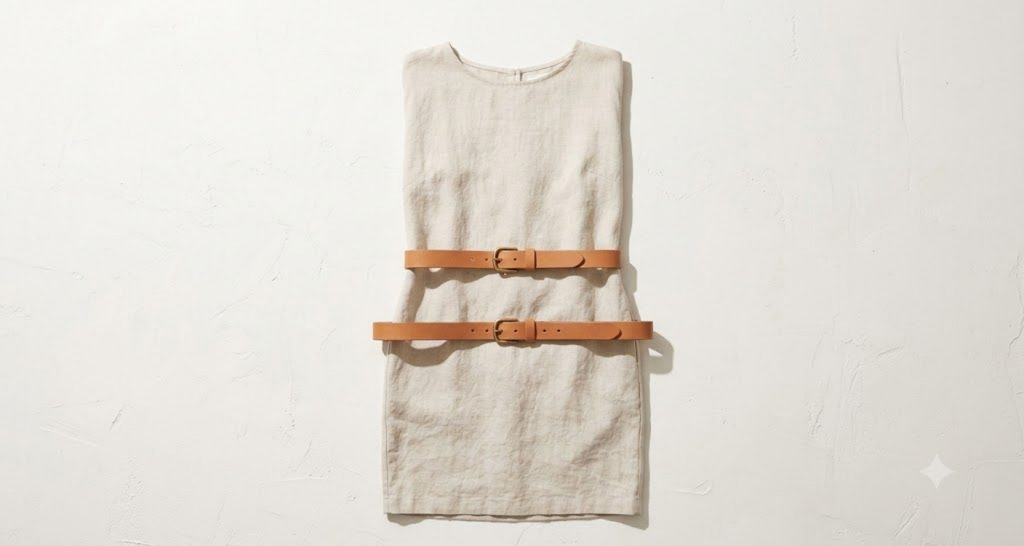
Buying loose to “hide.” Volume doesn’t hide curves. It just moves the widest point of the silhouette out from your body and makes you look bigger.
Ignoring the bra. A properly fitted bra changes where your bust sits, which changes where your waist appears to be. It’s the foundation of every look in this article.
Belting at the wrong height. Your natural waist isn’t where jeans sit. It’s higher. Belt there.
Matching top and bottom volume. Puff sleeves with a full skirt cancels out your waist. Pick one.
Chasing a size number. Sizing is inconsistent across every brand on earth. Buy what fits and cut the tag out if it bothers you.
Frequently Asked Questions
What is the most flattering dress for an hourglass figure?
The wrap dress is the most consistently flattering option. It ties at your natural waist, so it adjusts to your exact proportions, while the V-neckline balances the bust and the skirt drapes over the hips without clinging. It works across nearly every occasion and body size.
Should hourglass figures wear tight or loose dresses?
Neither extreme. Aim for fitted through the waist with room to move at the bust and hips. Too tight pulls and creates horizontal lines; too loose erases your waist and adds visual width. Structured fabrics with a little stretch give you the best of both.
What dress styles should hourglass figures avoid?
Approach shift dresses, tent dresses, drop-waist cuts, and empire waists with caution — they all skip or misplace the waistline. Boxy oversized styles and stiff, bulky fabrics also add width without shape. If you love these cuts, add a belt or have the waist taken in.
Do hourglass figures look good in maxi dresses?
Yes, as long as the waist is defined. Choose a maxi with a waist seam, a wrap tie, or a belt so the fabric breaks at your narrowest point. A straight, unstructured maxi with no waist detail will hide your shape and can shorten your frame.
What neckline is best for an hourglass shape?
V-necks, sweetheart, square, and scoop necklines all work beautifully. They open the chest, create length through the upper body, and balance a fuller bust. High crew necks and halters can make the chest look broader, so choose those in fine, fitted fabrics if you love them.
How do I know if I have an hourglass figure?
Measure your bust, natural waist, and hips. If your bust and hip measurements are within a couple of inches of each other and your waist is roughly 8 to 10 inches smaller than both, you have an hourglass figure. Your shoulders and hips will look visually balanced in the mirror.
Your Next Step
The best dress style for hourglass figure shapes always comes back to the same thing: mark your waist, let the fabric follow your curves, and don’t add bulk anywhere. Wrap dresses, fit-and-flare cuts, belted shirt dresses, and well-fitted sheaths do that work for you before you’ve even accessorised.
So here’s what to do this week. Go through your closet and pull every dress that has a real waist seam or a tie. Try them on. The ones that fit everywhere but the waist go straight into a bag for the tailor — that’s usually two or three dresses you already own and stopped wearing.
You’ll spend less than you would on one new dress, and you’ll walk out with a wardrobe that actually fits the body you have.

[…] : Check out complete guide about Best Dress Style for Hourglass Figure […]
[…] : Best dress tips about Best Dress Style for Hourglass Figure […]