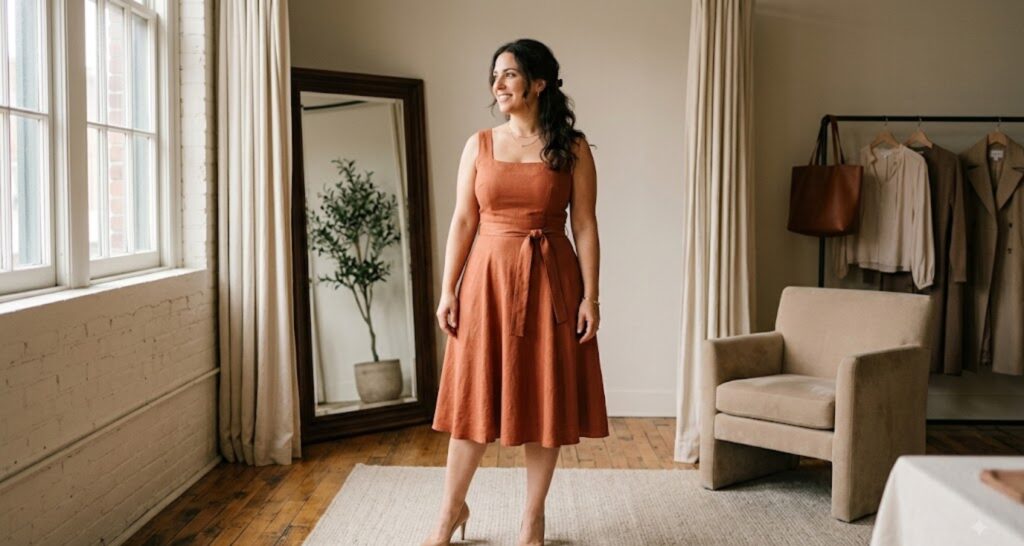
Standing in a fitting room, staring at a dress that looked perfect on the hanger and somehow wrong on your body — you know that feeling, right? If you’re pear shaped, you’ve probably blamed yourself for it more than once. You shouldn’t. The dress was the problem, not you. Finding the most flattering dress for pear shaped women isn’t about hiding your hips or apologizing for your shape. It’s about choosing silhouettes that work with your proportions instead of fighting them. Once you know what to look for, shopping stops being a guessing game and starts being kind of fun.
This guide breaks down exactly which dress styles, necklines, fabrics, and details balance a pear silhouette — plus what to skip, what to try, and how to shop with confidence instead of dread.
What Does “Pear Shaped” Actually Mean?
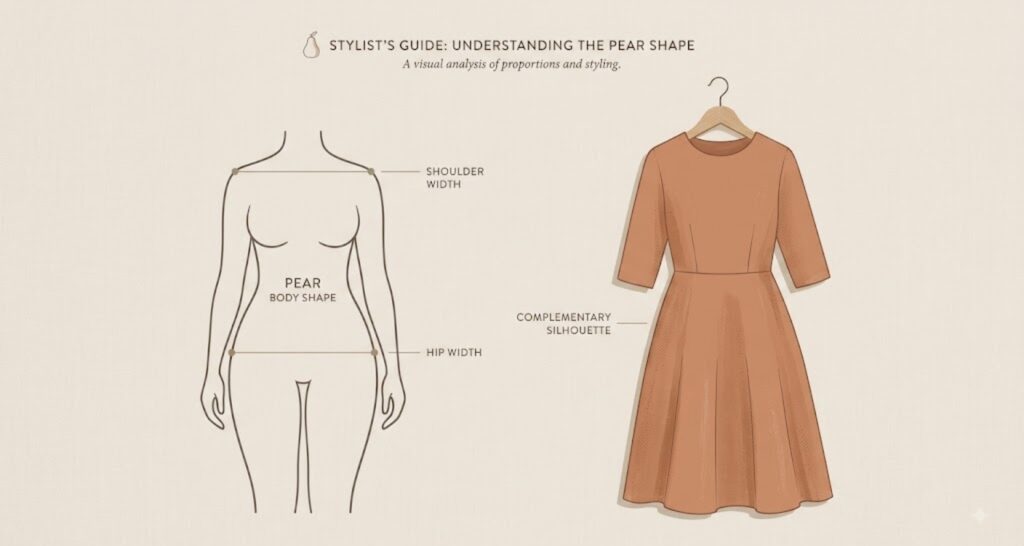
A pear shape (sometimes called a triangle shape) describes a body where your hips, thighs, and bottom are noticeably wider than your shoulders and bust. Your waist is usually defined, which is a gift most other body types would kill for. The goal with dressing a pear shape isn’t to change it — it’s to create visual balance between your upper and lower body.
Think of it this way: if your body were a letter, it would lean toward an “A” rather than a straight line or an inverted triangle. Fashion rules exist to soften that lean, not erase it.
Here’s a quick way to check if you’re pear shaped:
- Your hips measure noticeably larger than your bust (typically by 3+ inches)
- Your shoulders are narrower than your hips
- You have a defined, smaller waist
- Weight tends to settle in your lower body — hips, thighs, and rear — before anywhere else
Sound familiar? Then everything below was written for you.
Note : Check out complete guide about Best Dress Styles for Apple Shaped Body here.
Why the Right Dress Makes Such a Big Difference
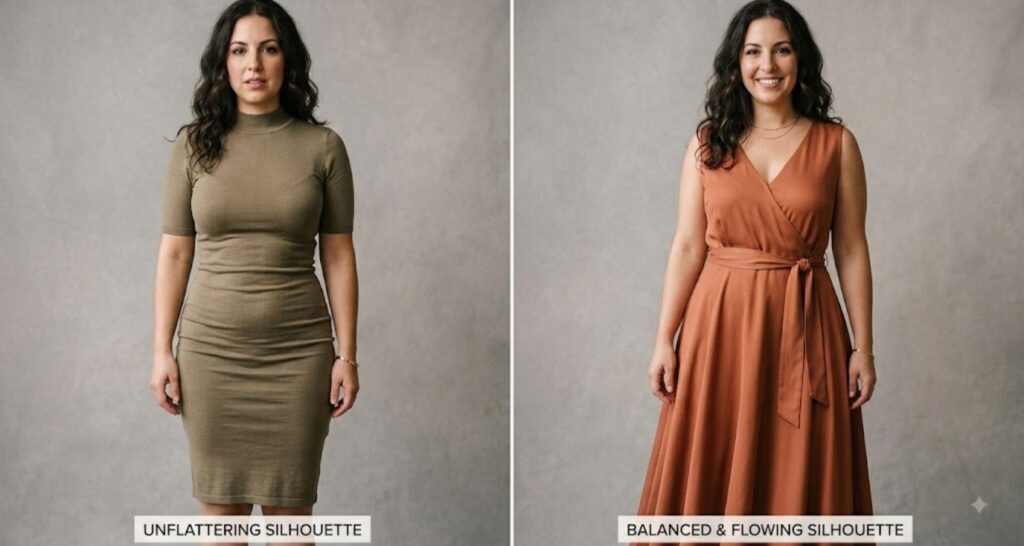
You’ve probably heard the phrase “dress for your body type” so many times it’s lost meaning. But here’s the actual mechanism behind it: clothing creates optical illusions through line, proportion, and fabric weight. A dress can widen shoulders visually, define a waist, or skim over hips — all without a single stitch of spandex doing the heavy lifting.
For pear shapes specifically, the goal is drawing the eye upward and outward at the top half, while letting the bottom half fall in a way that doesn’t cling or add bulk. Do that well, and your whole silhouette reads as balanced instead of bottom-heavy.
This isn’t about tricking anyone. It’s about dressing smart, the same way a tall person avoids horizontal stripes that make them look shorter, or a petite person avoids overwhelming prints. Every body benefits from a little strategy.
The Most Flattering Dress for Pear Shaped Women: Top Silhouettes
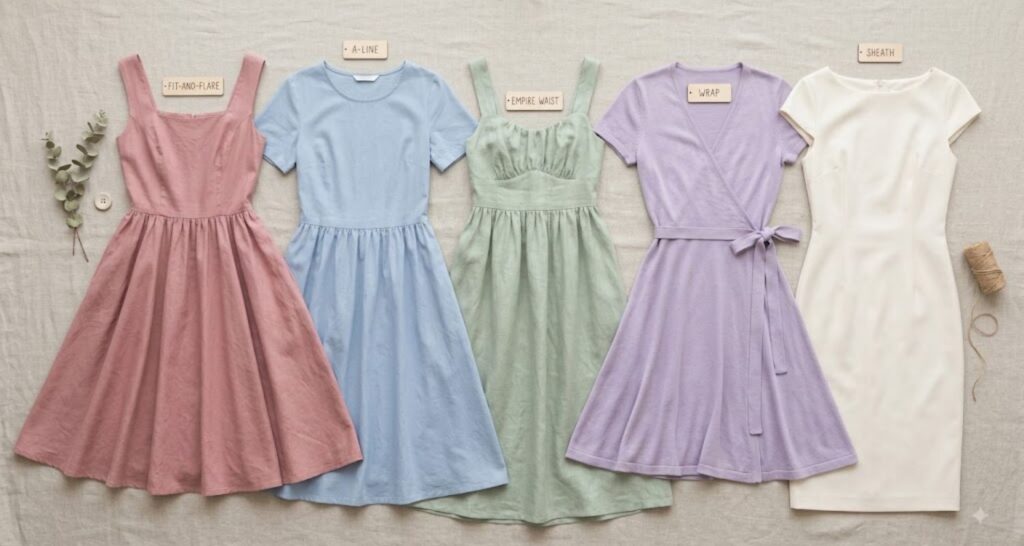
Let’s get into the styles that consistently work. If you remember nothing else from this article, remember this section.
1. The Fit-and-Flare Dress
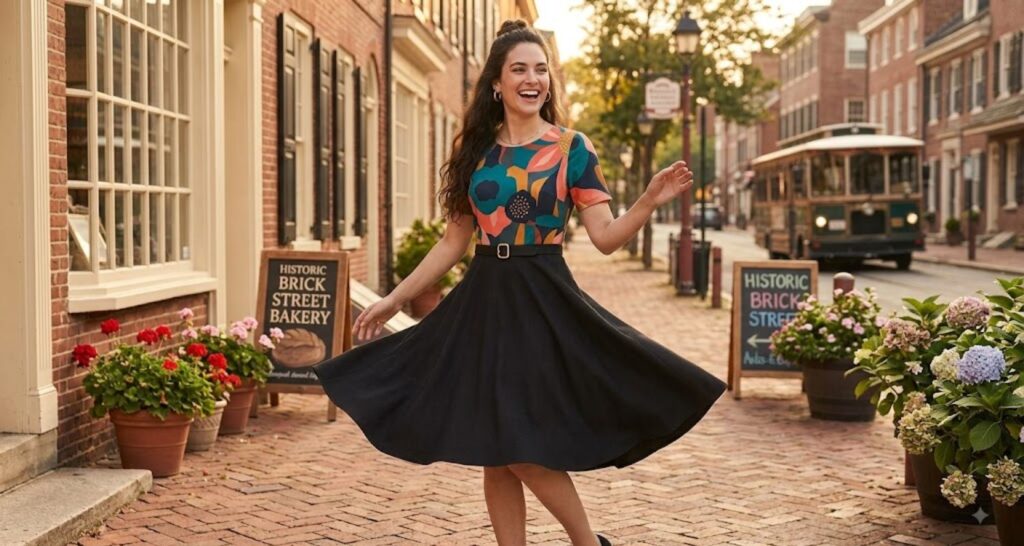
This is the gold standard, and for good reason. A fit-and-flare dress hugs your waist and upper body, then flares out gently from the hip — which means it skims over your widest point instead of clinging to it.
The trick is where the flare starts. You want it beginning right at or just below your natural waist, not sitting low on the hip where it can add width. A fit-and-flare in a structured cotton or ponte knit holds its shape beautifully and moves with you all day.
2. The A-Line Dress
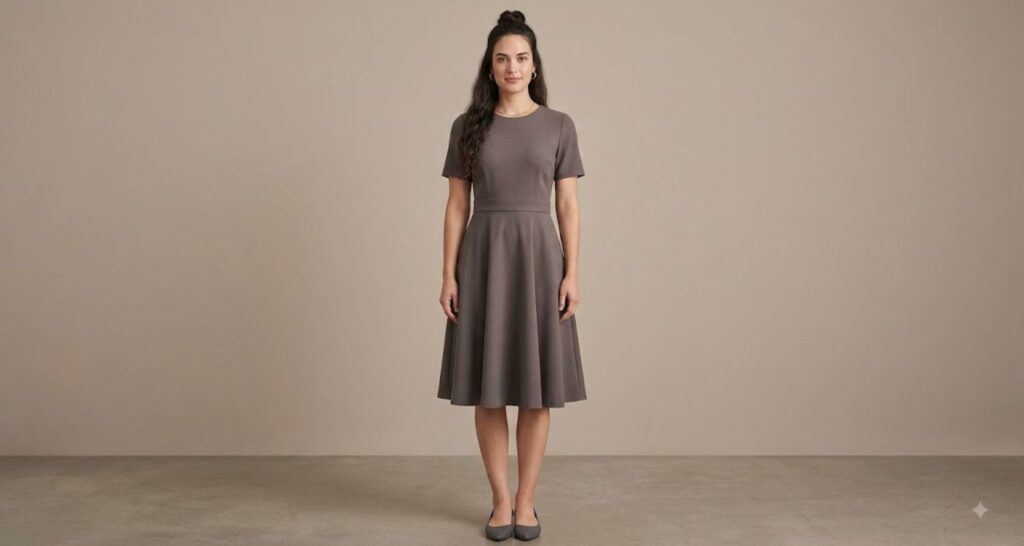
A-line dresses are basically the pear shape’s best friend. They nip in at the waist and flow outward in a straight, clean line down to the hem, creating a smooth transition instead of a sudden jump in width.
Unlike a fit-and-flare, an A-line doesn’t cling through the hip at all — it just glides. That makes it forgiving for warmer weather or days when you want comfort without sacrificing shape.
3. Fit-and-Flare vs. A-Line: Quick Comparison
Not sure which one to reach for? Here’s how they stack up.
| Feature | Fit-and-Flare | A-Line |
|---|---|---|
| Waist definition | Very fitted | Fitted, slightly softer |
| Hip coverage | Skims close, then flares | Glides away smoothly |
| Best fabric | Ponte, structured cotton | Lightweight cotton, chiffon |
| Best for | Date nights, structured events | Work, warm weather, all-day comfort |
| Movement | Fitted through hip, then flares | Loose from waist down |
Both belong in your closet. Rotate between them depending on the occasion.
4. The Empire Waist Dress
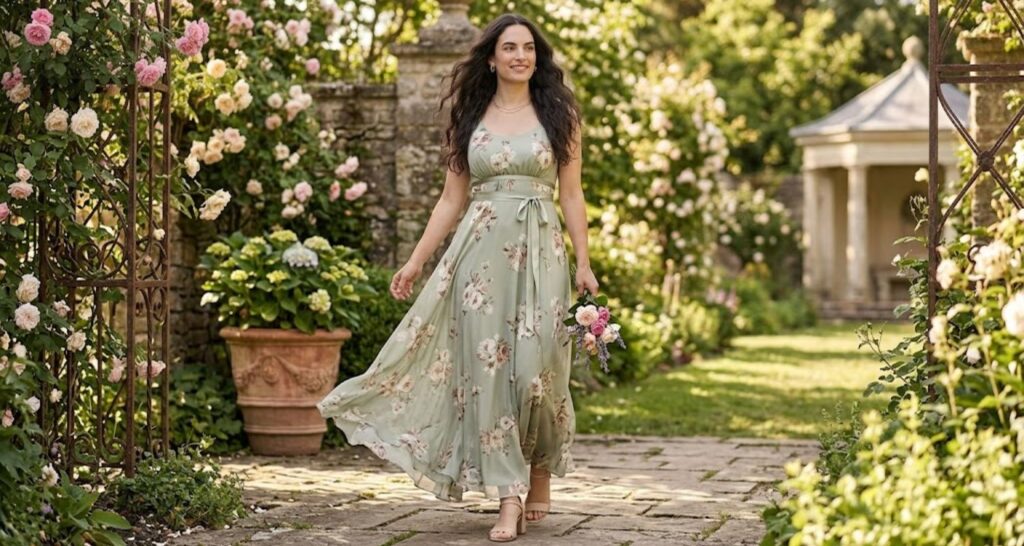
An empire waist sits just below the bust, then falls loosely from there — completely bypassing your hips and waist. This is a fantastic option when you want zero cling through your midsection and lower body.
The key is picking one with enough structure up top (a defined bust seam, a bit of a wrap, or a fitted bodice) so it doesn’t read as a tent. A well-cut empire waist dress in a flowy fabric can look effortlessly elegant, not shapeless.
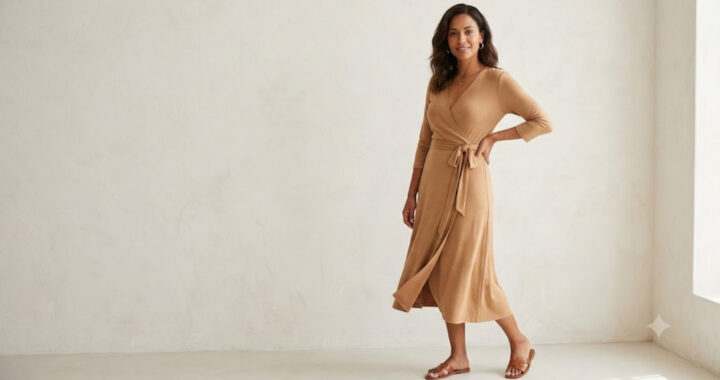
5. Wrap Dresses
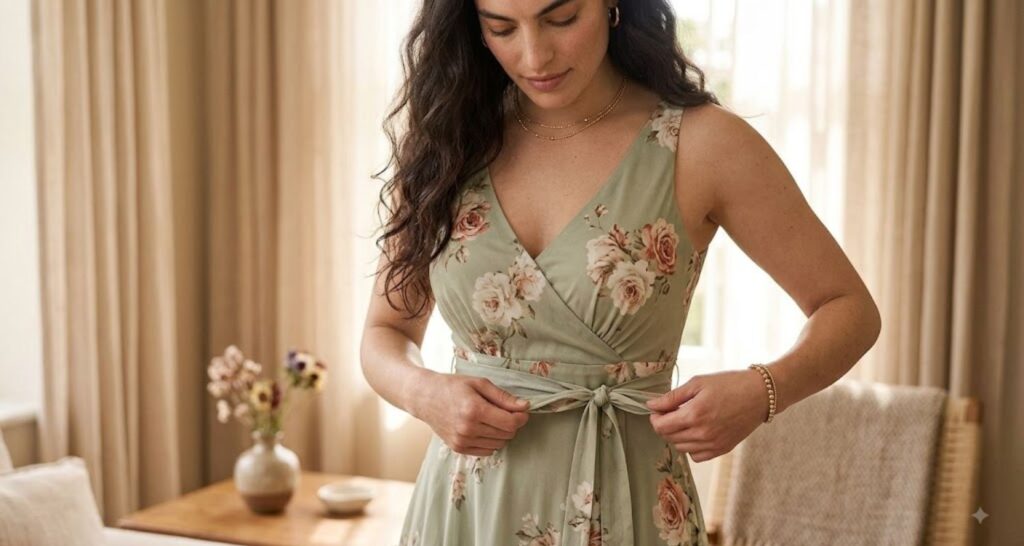
Wrap dresses do double duty: the crossover top adds visual width to your upper body and bust, while the tie cinches your waist, and the skirt typically falls in an A-line. It’s practically engineered for pear shapes.
Look for a wrap dress with a V-neck and three-quarter or short sleeves for maximum balance. If the wrap skirt has a slight flare, even better.
6. Structured Sheath Dresses (With Caveats)
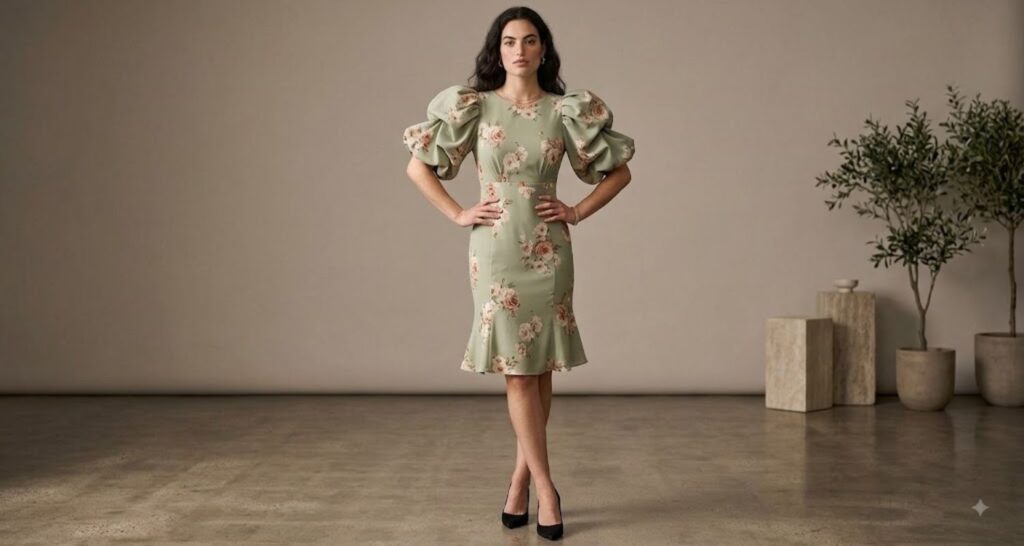
Sheath dresses can work, but they need the right details to flatter a pear shape. Look for versions with a fitted bodice and a slight A-line or flare starting at the hip, rather than a completely straight column that clings from bust to hem.
A sheath with a bold neckline, statement sleeves, or a contrasting top panel draws attention upward, which balances things out nicely.
Note : Get best ideas about Mob Wife Dress Style Outfit Ideas That Actually Work here.
Necklines That Widen Your Upper Body
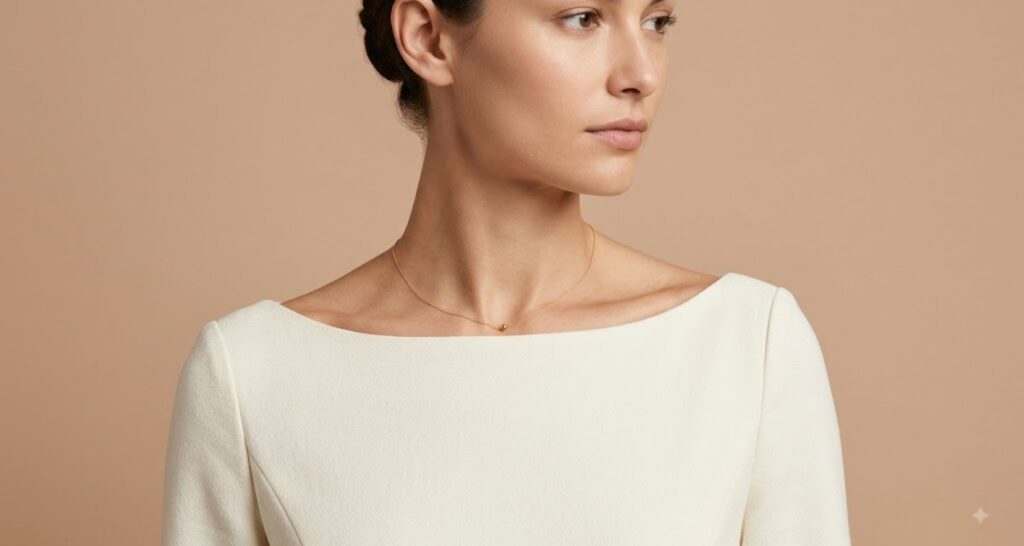
Since the goal is balancing proportions, your neckline does more work than you’d think. Certain necklines visually broaden your shoulders and chest, which counters a fuller hip and thigh area.
Boat necks sit wide across the collarbone, creating horizontal width exactly where you want it. Off-the-shoulder necklines do something similar by exposing more of your shoulder line. Sweetheart necklines add curve and interest to the bust area, drawing the eye up before it travels anywhere else.
Halter necklines are also worth trying, especially if you want to show off toned shoulders and arms while adding visual width up top.
Sleeves, Straps, and Details That Add Balance
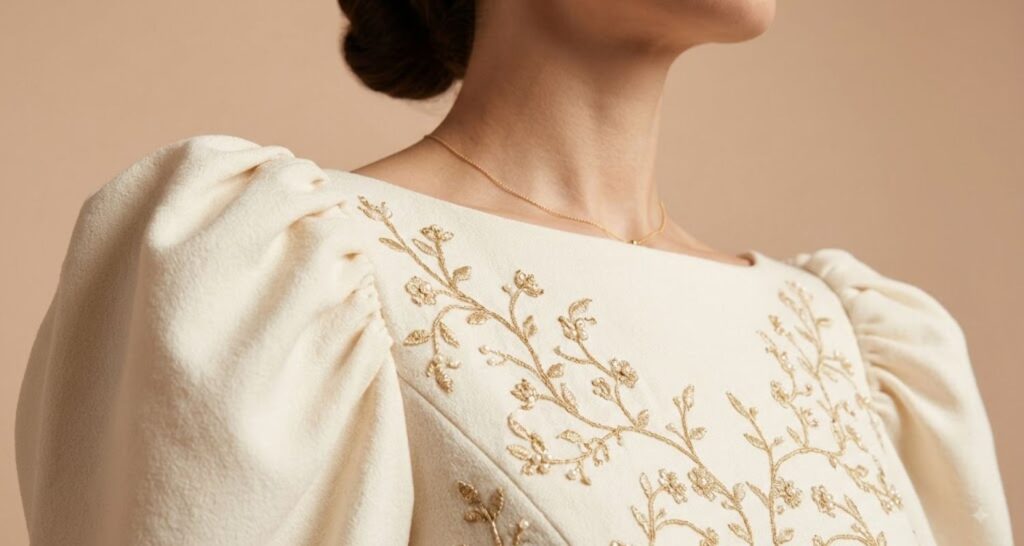
Beyond the neckline, sleeve style matters more than most people realize. Puff sleeves, cap sleeves, and statement sleeves all add volume to your shoulders and upper arms, which creates a more proportional silhouette next to fuller hips.
Embellishments matter too. A dress with sequins, embroidery, ruffles, or a bold print concentrated on the bodice pulls focus upward. Meanwhile, keeping the skirt simple and solid-colored prevents the lower half from competing for attention.
Here’s a simple checklist for the top half of any dress you’re considering:
- Structured or padded shoulders
- Wide or statement sleeves
- Detailing (beading, embroidery, texture) above the waist
- A defined, fitted bodice
- A neckline that runs horizontal rather than narrow and vertical
If a dress checks three or more of these boxes, it’s probably going to work for you.
Get complete guide about Quiet Luxury Dress Outfit Ideas Women Actually Wear here.
Fabrics That Flatter (and Ones to Avoid)
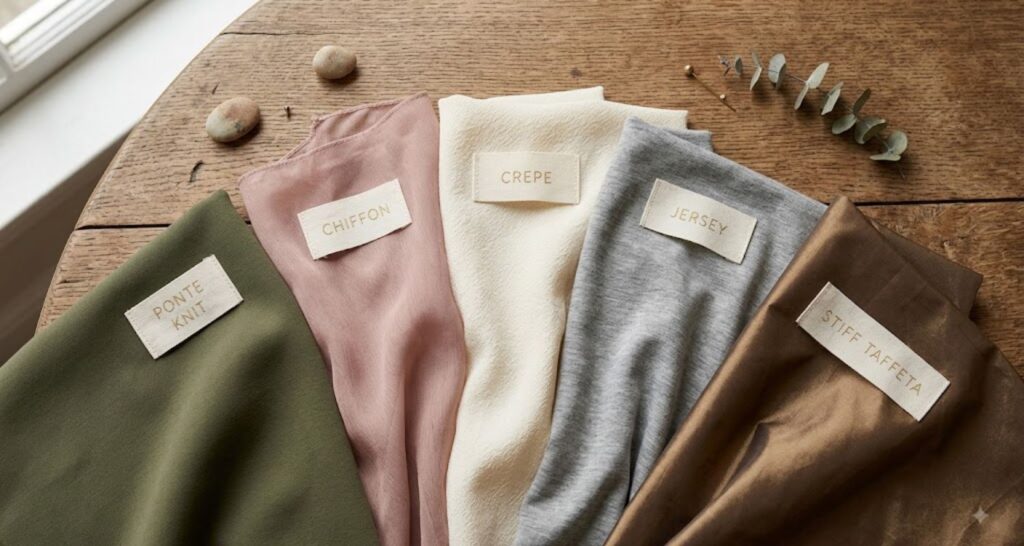
Fabric choice can make or break how a dress falls on a pear shape. Stiff, heavy fabrics tend to hold their shape at the hip and can add visual bulk. Soft, drapey fabrics skim the body instead of clinging to every curve.
Reach for: ponte knit, matte jersey, crepe, lightweight cotton, and chiffon. These fabrics move well and don’t cling stubbornly to the hip and thigh area.
Be cautious with: stiff taffeta, thick brocade, and heavily structured fabrics below the waist. They can add unwanted width right where you’re trying to minimize it. That said, a structured fabric up top — think a fitted bodice — is totally fine, since structure there actually helps.
Prints and Patterns: What Actually Works
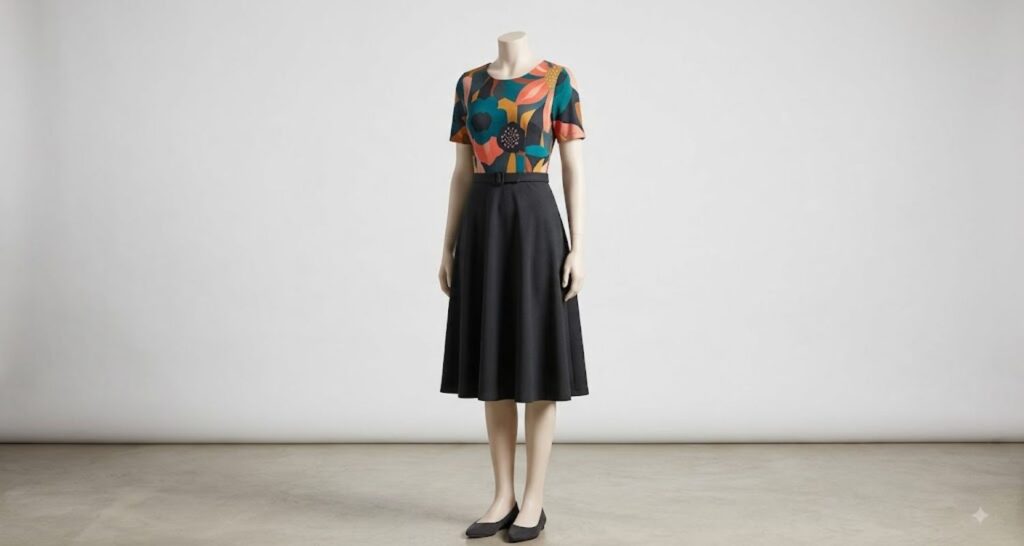
Prints aren’t off-limits for pear shapes — they just need placement. A dress with a bold print or bright color concentrated on the bodice, paired with a solid darker skirt, naturally draws the eye upward.
Vertical stripes running through the skirt can also help elongate your lower half. What you’ll want to be more careful with is an all-over large-scale print that covers the entire dress evenly, since it treats your upper and lower body the same way instead of creating any visual balance.
Color-blocking is another underrated trick. A darker skirt paired with a lighter or brighter top half creates a similar slimming, balancing effect — it’s a classic styling move for a reason.
Dress Lengths That Work Best
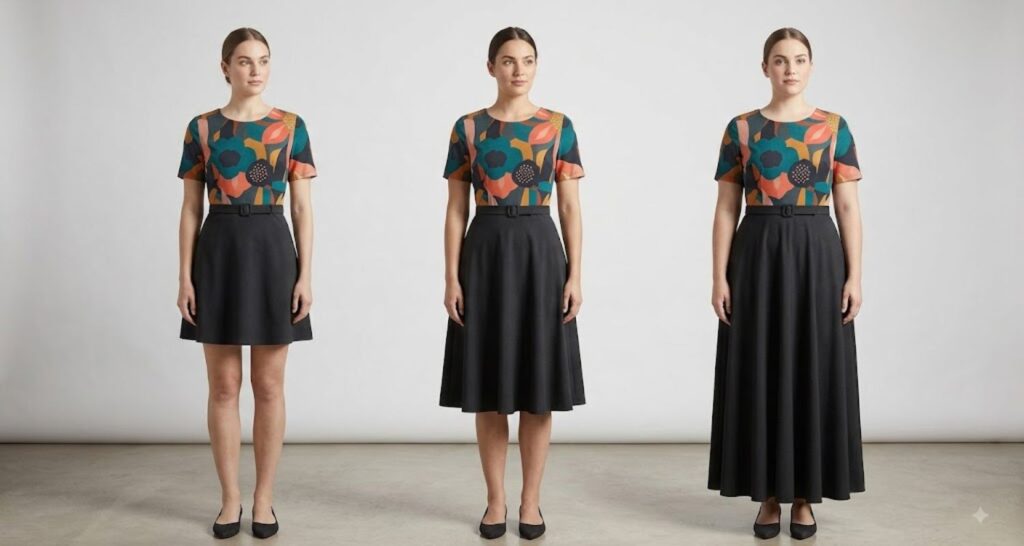
Length matters more than people expect. A hemline that hits at the widest part of your thigh or calf can visually widen that area, while one that hits above the knee or mid-calf tends to be more flattering.
Midi dresses that flare from the waist and end around the narrowest part of your calf are particularly good. Mini dresses work too, as long as they’re not clinging through the hip — a flared mini avoids that problem entirely.
For maxi dresses, look for ones with some movement or a slight A-line built into the skirt rather than a straight, clingy column all the way down.
What to Avoid When Shopping for a Pear Shape
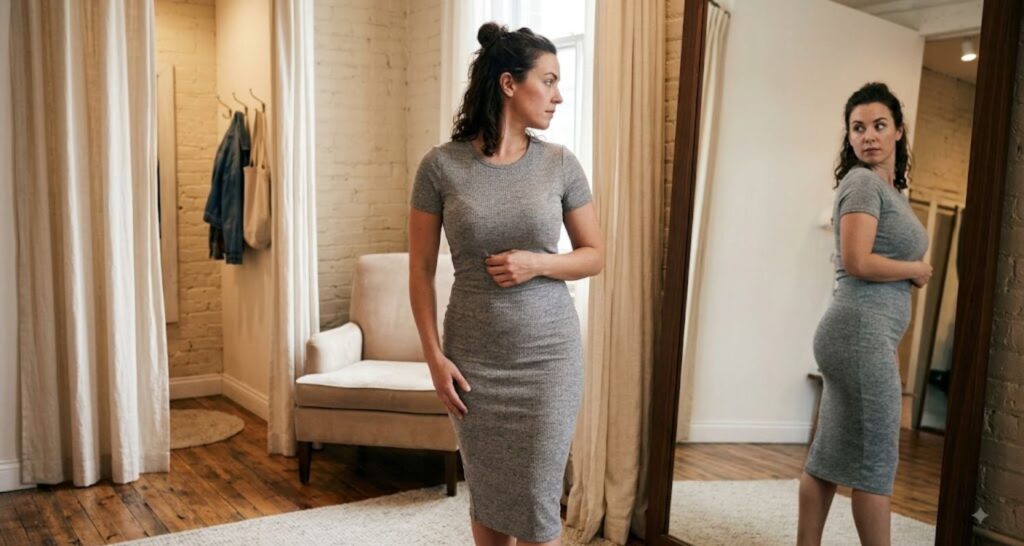
Knowing what doesn’t work saves you time (and returns). A few patterns tend to cause the most trouble.
Skip dresses that:
- Cling tightly through the hip and thigh with no ease or flare
- Have a lot of detail, pockets, or embellishment concentrated at the hip
- Feature a narrow, halter-free neckline with no shoulder width
- Are made of stiff fabric that holds shape at the widest part of your body
- Have a hemline that cuts right across your widest thigh point
None of these are “bad” dresses in general — they just don’t do your proportions any favors. Someone with a different body type might look incredible in the exact same piece.
How to Shop Smarter: A Quick Action Plan

Ready to actually put this into practice? Here’s a simple approach for your next shopping trip, online or in person.
- Start with the bodice. Look for structure, a defined waist, and some kind of interest above the waistline before you even glance at the skirt.
- Check where the flare begins. The closer to your natural waist, the more balanced the silhouette will read.
- Feel the fabric. Soft and drapey below the waist, structured above — that combination almost always works.
- Try it sitting down. A dress that flatters standing but rides up or pulls when seated isn’t doing its job.
- Take a photo from the side. Front-view mirrors lie. A side profile shows you exactly how the silhouette balances (or doesn’t).
Small habits like these save you from the “looked great on the hanger” trap every single time.
Real-World Example: Building Two Outfits Around This Formula
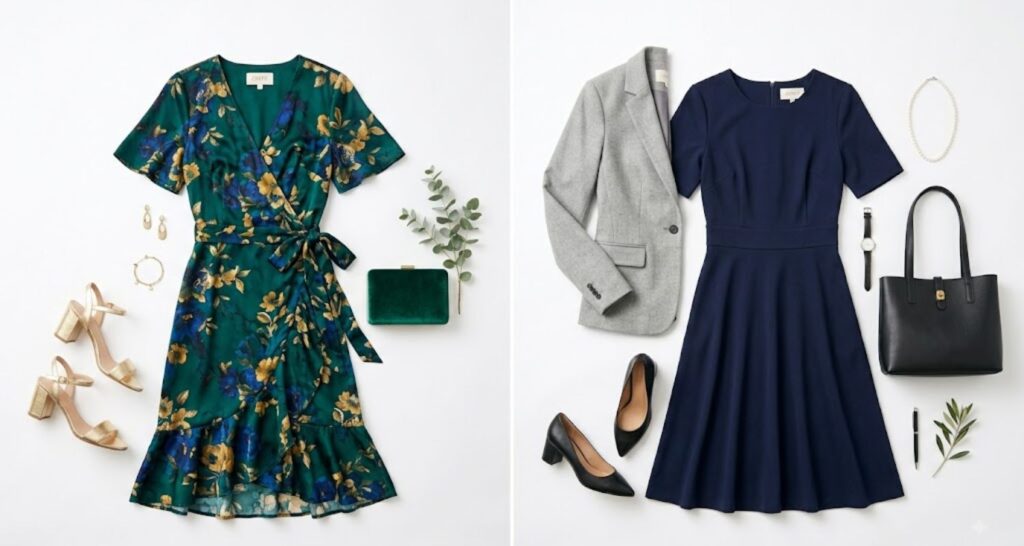
Say you’ve got a summer wedding coming up. A wrap dress in a lightweight crepe, with a V-neck and flutter sleeves, checks every box — structured top, flowing A-line skirt, waist definition built right in. Pair it with strappy sandals and you’re done.
Now say it’s a work presentation instead. A fit-and-flare dress in ponte knit, with a boat neck and three-quarter sleeves, reads polished and professional while still balancing your proportions. Swap in a blazer if the office runs cold, and the silhouette barely changes.
Same body, same principles, two completely different occasions. That’s the beauty of understanding your shape instead of chasing trends blindly.
Frequently Asked Questions
What is the most flattering dress for pear shaped women?
The most flattering dress for pear shaped women is typically a fit-and-flare or A-line style with a fitted, detailed bodice and a skirt that flares from the natural waist. This balances narrower shoulders with fuller hips, creating a proportional, hourglass-adjacent silhouette without clinging to your widest points.
Should pear shaped women avoid tight dresses?
Not entirely — but tight dresses that cling through the hip and thigh with no ease tend to emphasize width there. A dress fitted at the waist and bodice, then flaring or loosening below the hip, gives you shape without the clinginess working against your proportions.
What necklines are best for a pear shaped body?
Boat necks, off-the-shoulder styles, sweetheart necklines, and halters all add visual width across your shoulders and chest. This balances fuller hips by drawing attention upward, creating a more proportional look overall without changing anything about your lower body.
Are maxi dresses good for pear shapes?
Yes, as long as they have movement. Look for maxi dresses with a slight A-line cut or a defined waist rather than a straight, clingy column. Fabrics like jersey or crepe that skim rather than hug tend to work best for a flattering, comfortable drape.
Can pear shaped women wear bodycon dresses?
They can, but fit matters enormously. A bodycon dress with strategic paneling, a wider strap or sleeve detail, and enough stretch to avoid pulling at the hip can work well. Look for versions marketed with “curve-friendly” cuts or added structure through the bust and shoulder.
What colors are most flattering for pear shaped women?
There’s no single “best” color, but pairing a brighter or lighter shade on top with a darker shade on the bottom creates a naturally balancing, color-blocked effect. This technique draws the eye upward while allowing the skirt to visually recede.
The Bottom Line
Dressing a pear shape isn’t about hiding anything — it’s about understanding proportion and using it to your advantage. The most flattering dress for pear shaped women almost always shares the same DNA: a defined waist, a detailed or structured bodice, and a skirt that flares or flows rather than clings.
Once you internalize that formula, you’ll start spotting flattering dresses from across the store before you even try them on. Your shape isn’t the obstacle here — it’s just information, and now you know exactly what to do with it.


[…] Note : Best tips about Most Flattering Dress for Pear Shaped Women. […]