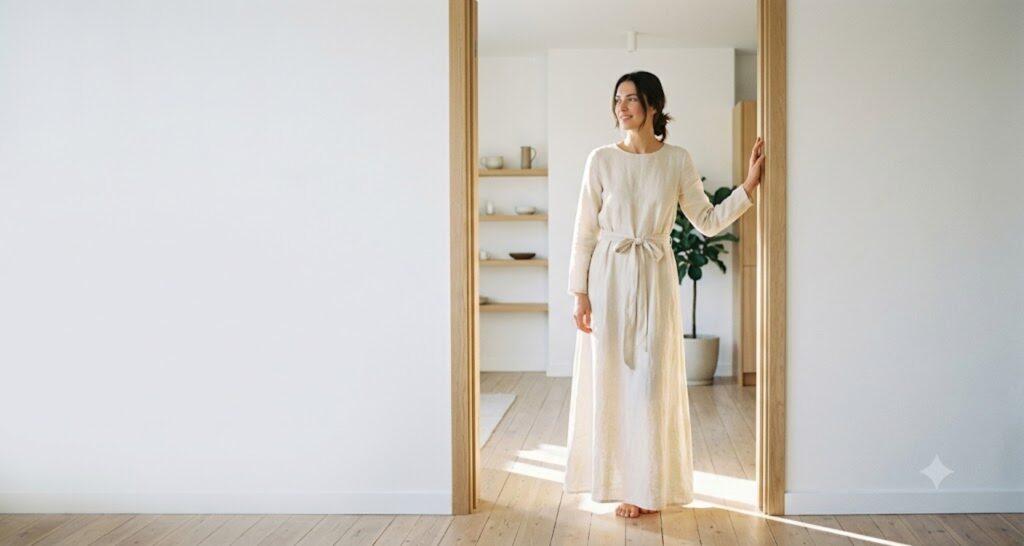
You’ve been there. The dress looks incredible on the hanger, incredible on the model, and then you pull it over your head and it lands somewhere between “cocktail” and “tunic.” The waist seam sits under your ribs. The midi is now a mini. And you’re standing in a fitting room wondering whether the problem is the dress or you. Figuring out what dresses look good on tall women isn’t about hiding your height or “balancing it out.” It’s about proportion — where seams land, how much fabric moves, and whether the design was cut for a 5’4″ frame and then stretched an inch. Once you learn to read those details on a rack, shopping stops feeling like a gamble.
This guide walks through the silhouettes that consistently work at 5’9″ and up, the ones that need a small fix, the fit details worth checking before you swipe your card, and where to actually find dresses long enough. No vague advice about “embracing your frame.” Real specifics.
What Dresses Look Good on Tall Women? The Short Answer
If you want the quick version before the deep dive, here it is.
The dresses that look best on tall women are maxi dresses, wrap dresses, column and sheath dresses, bias-cut slip dresses, tiered dresses, shirt dresses, drop-waist styles, and true midi lengths. These silhouettes either use your vertical line intentionally or break it at a spot that flatters, instead of landing at a random point on your body.
Here’s the underlying rule: you have more vertical space to work with, so you can wear both dramatic length and bold horizontal breaks — the two things petite frames usually have to ration.
Everything below explains how to make that work in practice.
Why Height Changes the Dress Equation

Standard sizing is built around a fit model who’s usually between 5’5″ and 5’8″. Every seam, dart, and hemline gets drafted to her measurements. When a brand makes a “tall” version, plenty of them just add length at the hem and call it done.
That’s why a dress can technically be long enough and still look off. The hem reaches your ankle, sure — but the waist seam is riding two inches above your natural waist, the armhole is cutting into your shoulder, and the knee-length skirt is hitting mid-thigh.
Length is only one of four measurements that matter. The others are torso rise (shoulder to natural waist), armhole depth, and knee position. When a dress gets all four roughly right, it looks custom. When it gets one wrong, you feel it immediately even if you can’t name why.
Long Legs or Long Torso? Find Out First

Two women can both be 5’11” and need completely different dresses. Here’s a 30-second test.
Sit down on a firm chair with your back straight. If your head sits noticeably higher than most people’s when you’re all seated, you carry your height in your torso. If you’re roughly eye-level with everyone but tower when you stand, your height is in your legs.
If you’re long-legged: empire waists, high-waisted styles, and drop-waist dresses all work beautifully. You can afford to raise the waistline because you’ve got leg to spare below it.
If you’re long-torsoed: look for drop-waist, low-waist, and no-waist styles — column dresses, slips, shifts. Anything that raises the waist will make your legs look shorter than they are and your torso longer than it needs to look.
If you’re evenly proportioned: genuinely almost anything works, provided the length is right. Enjoy it.
Knowing which camp you’re in cuts your shopping time roughly in half, because you can skip whole categories on sight.
Note : Check out best tips about Dress Styles for Petite Women With Curves here.
8 Dress Styles That Flatter Tall Women
1. The Maxi Dress — Your Unfair Advantage
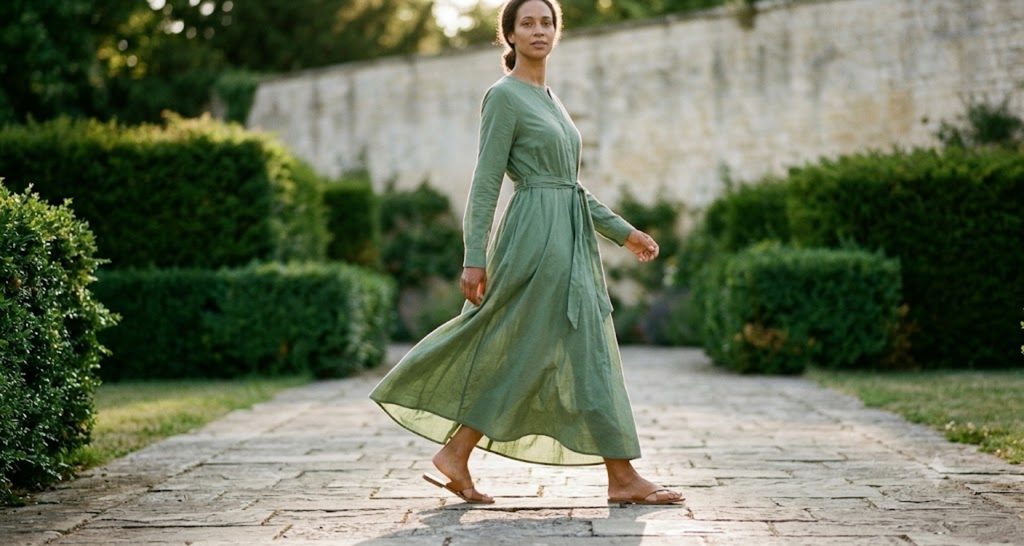
Maxi dresses were basically designed for you, even if the industry didn’t know it. On a shorter frame, a maxi risks swallowing the wearer; on a tall one, it finally has room to do what it’s supposed to do — fall, sweep, move.
Look for maxis with a defined waist or a tie, especially if the fabric is full. A shapeless column of fabric from shoulder to floor can read like a costume. One clear point of definition fixes it instantly.
The other reason maxis work: you’re one of the few people who can wear them with flats and still have them clear the ground. That’s a genuine advantage, not a consolation prize.
Watch out for maxis labeled “tall” that only add two inches. If you’re 6 feet or above, look for brands publishing an actual inseam or hem-to-shoulder length in the product description.
2. The Wrap Dress — The Reliable One
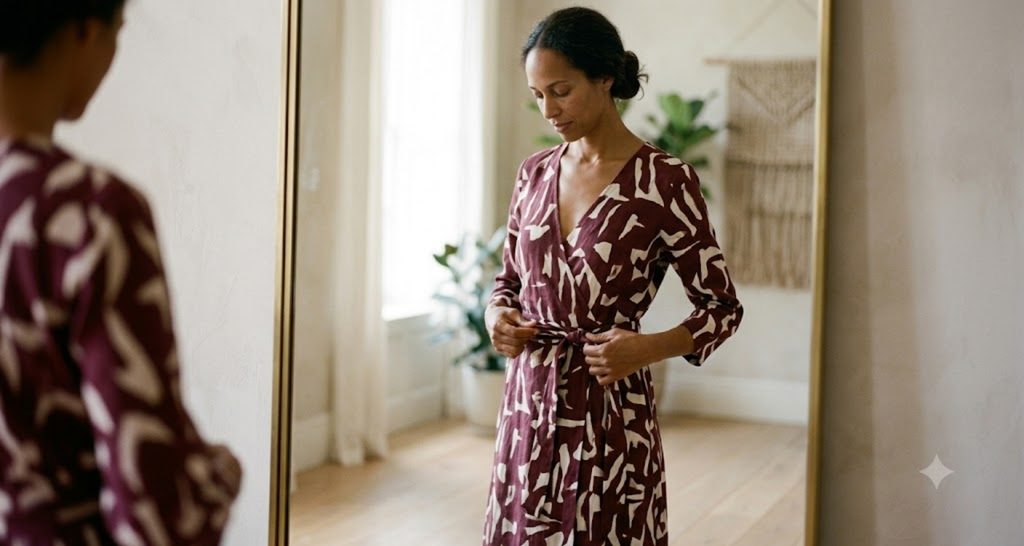
A wrap dress adjusts to your torso instead of demanding your torso adjust to it. That’s the whole appeal. The tie hits your natural waist because you place it there, not because a factory guessed.
Diane von Furstenberg built an empire on this for a reason, and the copies at every price point still work on the same principle. For tall women, the V-neck also lengthens the neckline in a way that keeps a long torso from looking uninterrupted.
One catch: the skirt wrap can flash more leg than you bargained for when your legs are longer. Check the front opening while sitting, walking, and climbing stairs before you commit. A single hidden snap solves it if you love the dress otherwise.
3. The Column or Sheath Dress — Sharp and Simple
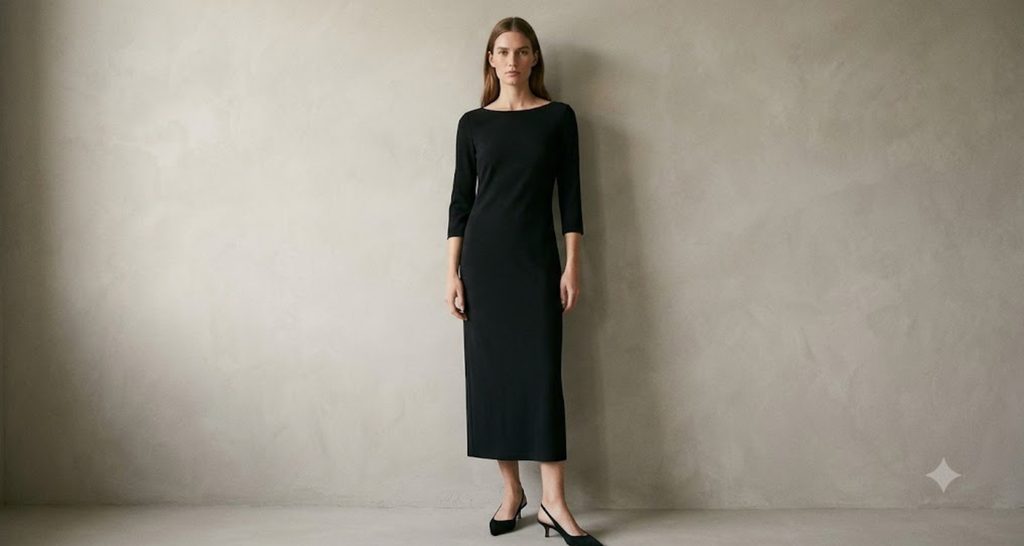
A column dress runs straight from shoulder to hem with minimal shaping. A sheath nips slightly at the waist. Both lean into a long vertical line rather than fighting it, and both look expensive when the fabric is good.
These are the workhorses for offices, dinners, and anything where you want to look pulled together without thinking hard. The trick is fabric weight — a thin knit column will cling and reveal every seam, while a ponte, crepe, or heavier woven will skim.
Sheath dresses have one specific tall-woman problem: the waist dart. If it sits above your natural waist, the dress will pull horizontally in a way tailoring can’t fully undo. Check that seam in the mirror before anything else.
4. The Bias-Cut Slip Dress — Quiet Drama
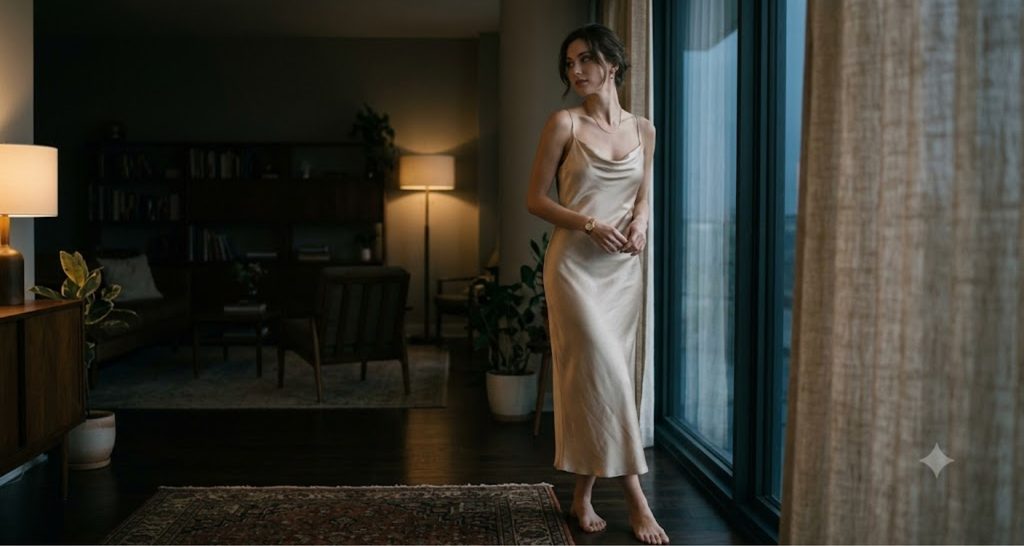
Bias-cut means the fabric is cut diagonally against the grain, which lets it drape and stretch with your body instead of hanging flat. On a tall frame the effect is genuinely striking — the fabric travels a longer distance, so the drape has more room to show off.
A satin or silk slip in a solid color is one of the easiest ways to look polished with almost no effort. Add a blazer for work, sandals for a wedding, boots and a knit for fall.
Be honest about the cling factor. Bias-cut silk shows everything, so if that’s not your comfort zone, look for a bias cut in a slightly heavier crepe or a version with a built-in lining.
5. The Tiered Dress — Horizontal Breaks You Can Afford
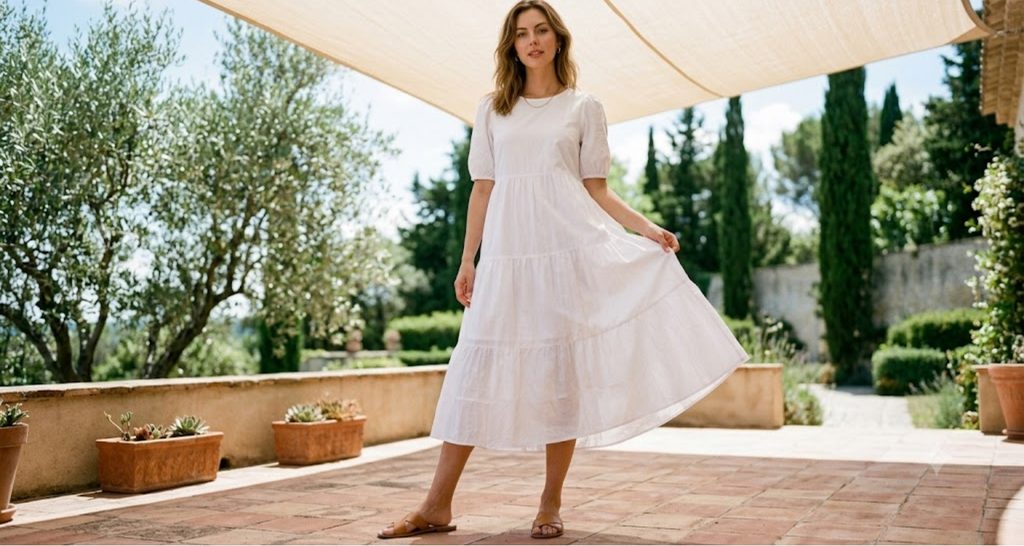
Most style advice warns against horizontal lines. That advice is written for shorter frames. You have vertical real estate to spend, which means tiers, ruffles, and panel seams add interest without chopping you into segments.
Tiered midi and maxi dresses in cotton, linen, or gauze are a summer staple for a reason. The tiers create movement and shape while the length keeps everything proportional.
Two or three generous tiers beat five skinny ones. Narrow tiers can read fussy on a long frame and start to look like a lampshade.
6. The Shirt Dress — Effortless, With One Caveat
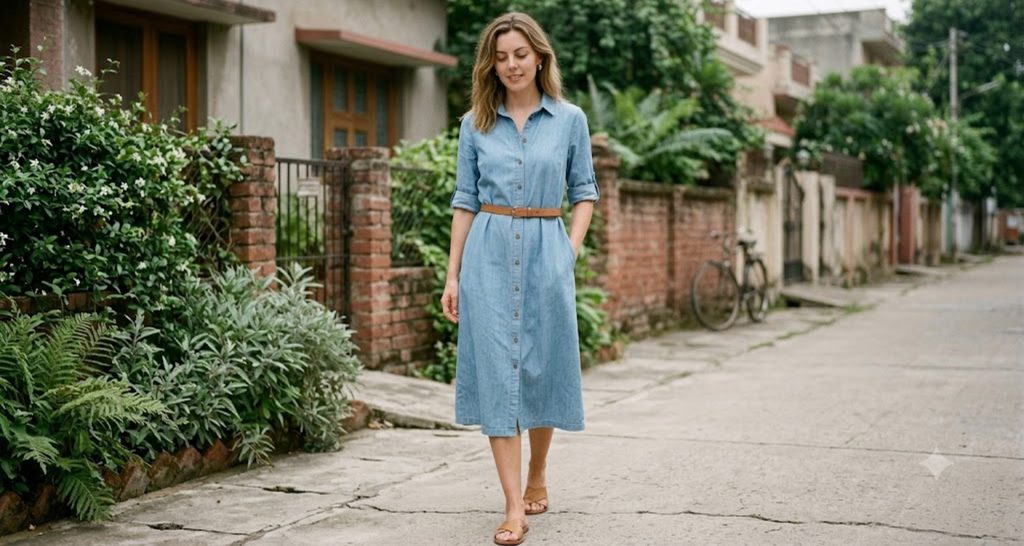
A shirt dress carries a strong vertical line right down the button placket, which is quietly flattering on almost everyone. It also gives you a built-in way to adjust proportion — belt it, leave it loose, tie it, layer it open over jeans.
The caveat is the button spacing. On a longer torso, a placket drafted for a shorter body can leave awkward gaps or place a button right at your bust line. Try it buttoned and moving before you decide.
Look for shirt dresses with a back yoke that sits at your actual shoulder blade. When that yoke rides high, the whole dress pulls forward and the hem swings oddly.
7. The Drop-Waist Dress — Underrated
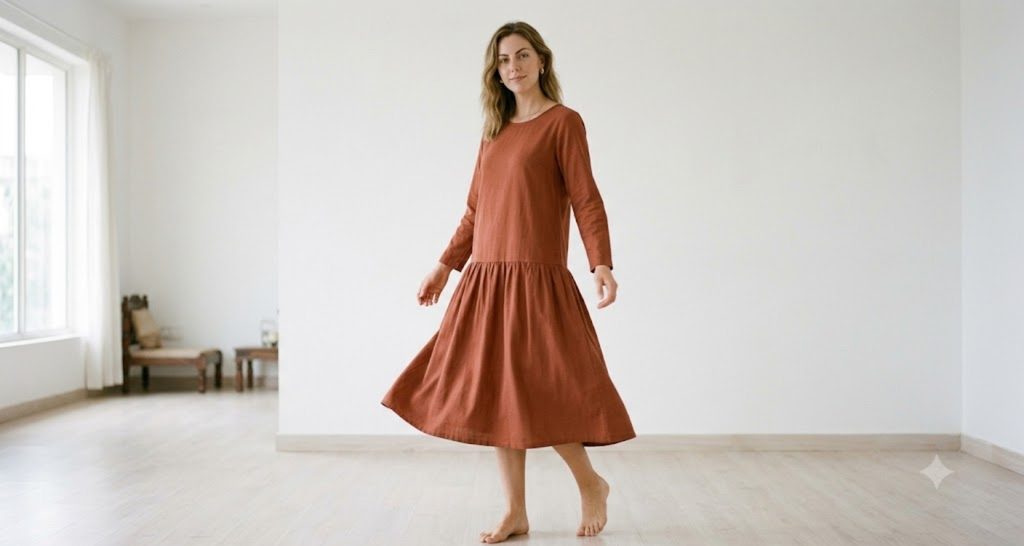
Drop-waist dresses have been unfairly filed under “flapper costume” for decades. In practice, they’re one of the best options for tall women with long torsos, because the waist seam sits where your body actually narrows and flares.
They’re also genuinely comfortable. There’s no seam pressing into your ribs, and the skirt has room to move.
Look for a drop waist that hits at or slightly below your hip bone, with a skirt that has some volume. A drop waist with a narrow skirt can look like it’s sliding off.
8. The True Midi — When It’s Actually Midi
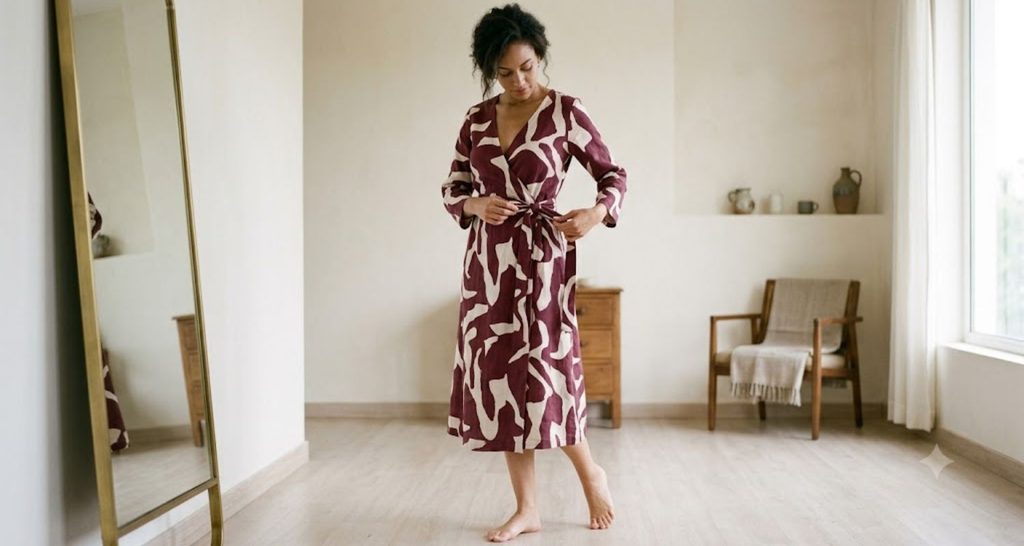
A midi should hit between mid-calf and just above the ankle. On tall women, most “midi” dresses hit below the knee, which is a different and much trickier length — it tends to cut the leg at its widest point.
This is where a tall-specific brand earns its keep. A true midi on a 6’0″ frame needs roughly four to six extra inches over the standard cut.
If a midi lands short on you, don’t fight it. Wear it as a below-knee dress with tall boots, which closes the visual gap between hem and shoe and makes the whole thing look deliberate.
Note : Best tips about Most Flattering Dress for Pear Shaped Women.
Dress Styles That Need a Second Look
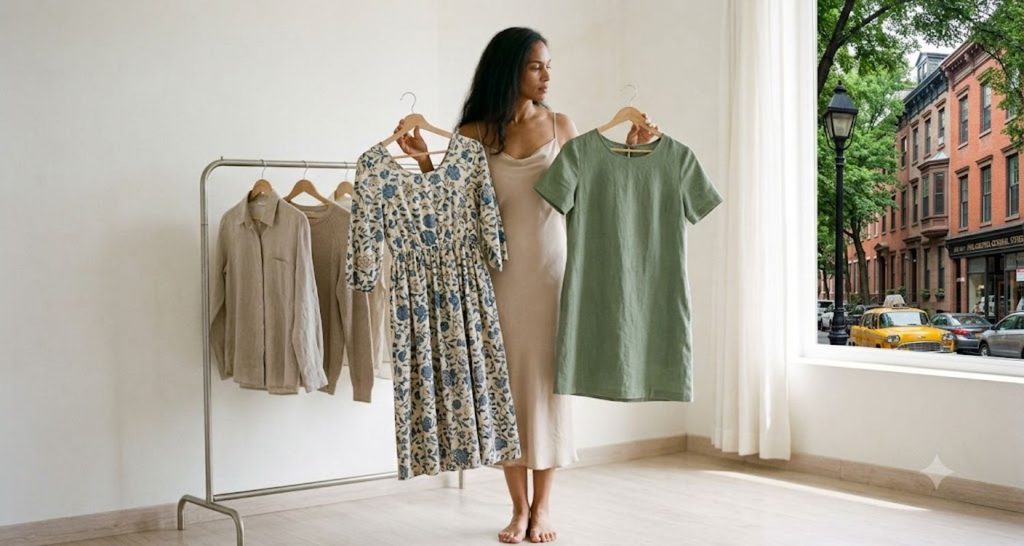
None of these are forbidden. They just need more scrutiny.
Empire waists, if you’re long-torsoed. The seam lands under your bust on a fit model and somewhere near your ribs on you. On a long-legged tall woman, though, an empire waist can be spectacular.
Standard-cut minis. A mini drafted for 5’6″ becomes something considerably shorter on 5’11”. Buy minis from tall-specific lines or size up in length, not width.
Cropped or high-low hems. These land unpredictably. Try before you buy, always.
Boxy shifts with no shaping. They can read as oversized rather than intentional on a long frame. A shift works when it has some structure or a defined shoulder.
Dresses with a heavy bottom border print. Border prints are placed for standard heights. On you, that band of print can land at a strange spot on your calf.
Note : Best Dress Styles for Apple Shaped Body tips to apply in daily use.
Fabric, Print, and Proportion: Quick Reference
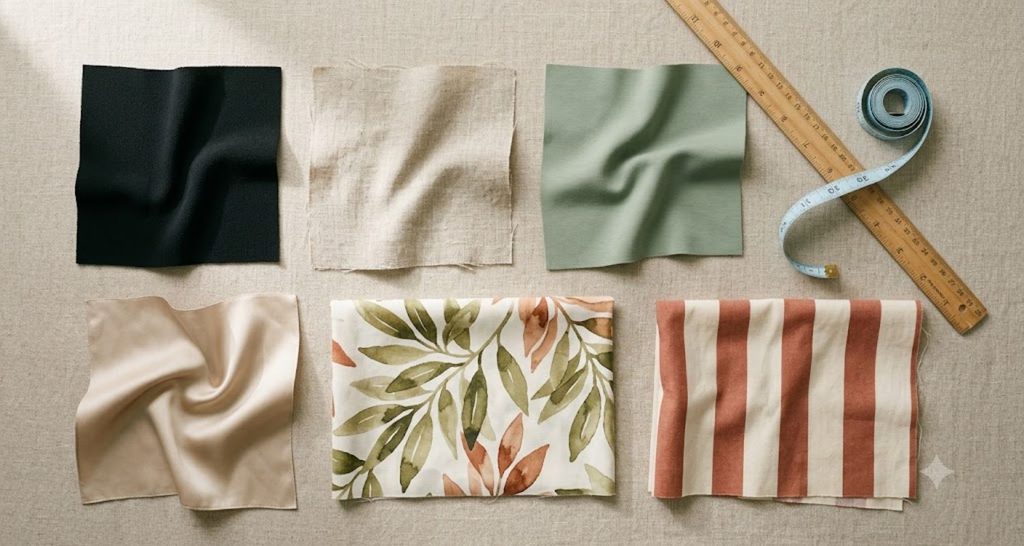
| Element | Works well on tall frames | Approach with care |
|---|---|---|
| Fabric weight | Crepe, ponte, linen, heavy silk, structured cotton | Thin jersey, clingy rayon, flimsy polyester |
| Print scale | Medium to large prints, bold florals, wide stripes | Tiny ditsy prints that read as texture from a distance |
| Stripes | Horizontal stripes, color blocking, contrast panels | Narrow vertical pinstripes that exaggerate length |
| Hem length | True maxi, true midi, tall-cut mini | Standard-cut “midi” that lands at the widest calf point |
| Waist placement | At your measured natural waist, or clearly dropped | Anything within two inches of your ribcage |
| Volume | Full skirts, generous tiers, wide sleeves | Skimpy volume that looks accidentally short on fabric |
The recurring theme: scale up. Small details tend to disappear on a long frame, while larger ones look intentional and considered.
6 Fit Checks Before You Buy
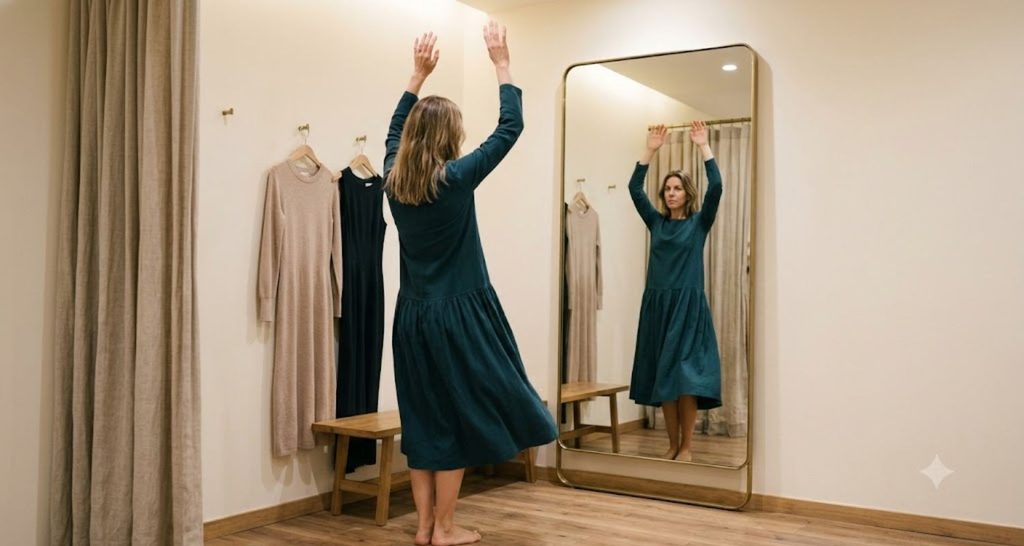
Run through these in the fitting room, in this order. It takes about two minutes and saves a lot of returns.
- Check the waist seam. Put your hands on the narrowest part of your midsection. If the seam sits above your thumbs, the dress will pull. This is the hardest thing to alter, so it’s the first thing to check.
- Raise both arms overhead. If the whole dress lifts with you and doesn’t come back down, the armholes are too shallow and the bodice is too short.
- Sit down. Then cross your legs. This is where wrap dresses and side slits reveal their true intentions.
- Look at the knee. On knee-length styles, the hem should hit within an inch of your kneecap, above or below. Mid-thigh means the dress isn’t long enough, no matter what the label says.
- Check the shoulder seam. It should sit at the edge of your shoulder bone. Riding inward means the whole bodice is undersized and the fit will fight you all day.
- Walk ten steps. Fast. A dress that rides up in the fitting room will ride up worse on a sidewalk.
Dressing by Occasion
Work and Business Casual

Sheath and column dresses in crepe or ponte are the reliable core. Add a blazer that hits at your hip bone rather than your natural waist — standard blazers often stop short on tall frames and look accidentally cropped.
A midi shirt dress with a belt reads polished and doesn’t require ironing your way through the week. Wrap dresses in a matte fabric work too, with a camisole underneath if the neckline is deeper than you’d like at a conference table.
Consider a longer hem than you might otherwise choose. A knee-length work dress on a tall woman often ends up shorter than intended once you’re seated in a meeting.
Weddings and Formal Events
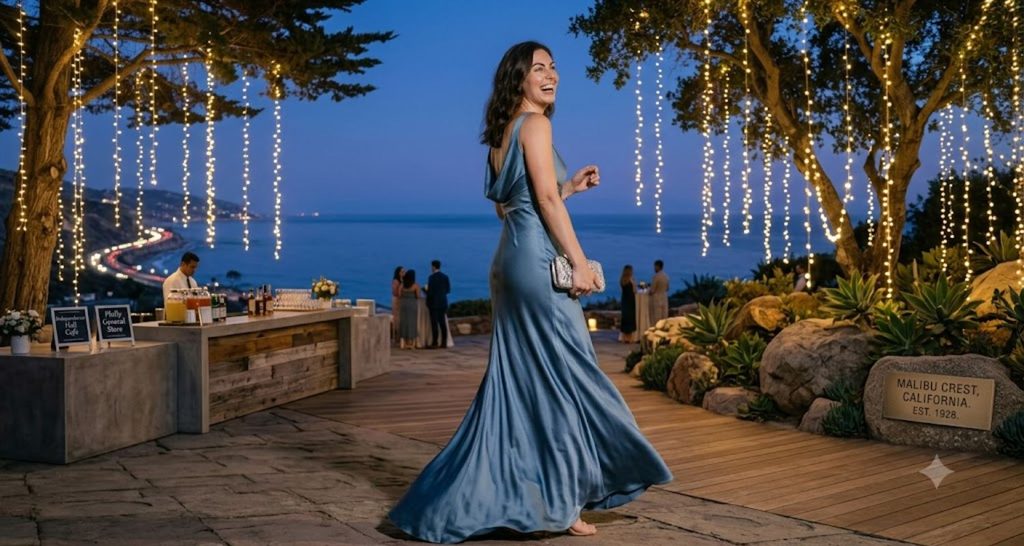
This is where you get to enjoy your height. Floor-length gowns, bias-cut satin, dramatic sleeves — the pieces that overwhelm shorter frames tend to look purpose-built on you.
Buy formal dresses with tailoring in mind and give yourself three weeks of lead time. Most bridesmaid and gown lines cut long specifically so they can be hemmed, which works in your favor for once.
One practical note: if you’re taller than most of the wedding party, a lower heel or an elegant flat is a legitimate choice, not a compromise. A great pointed flat under a floor-length gown looks intentional.
Everyday and Weekend

Tiered cotton maxis, knit column dresses, and shirt dresses handle most of real life. Layer with a long cardigan or a duster that hits below your knee, since standard cardigans often stop at an awkward spot.
For colder months, a sweater dress plus tall boots is the tall woman’s cheat code. The boot closes any gap where the hem falls a little short, and the whole outfit takes ninety seconds to assemble.
Where to Actually Find Dresses Long Enough

Tall sizing has improved a lot in the last decade, though it’s still uneven. A few places worth knowing:
Mainstream with real tall lines: Old Navy, Gap, Banana Republic, J.Crew, Loft, and Athleta all run tall categories with genuinely redrafted patterns rather than just extra hem.
Tall-specific brands: ASOS Tall, Long Tall Sally, Alloy Apparel, and Amalli Talli build everything around longer proportions from the start. If you’re 6’0″ and up, start here rather than filtering a standard site.
Size-inclusive labels: Universal Standard and a handful of similar brands publish detailed garment measurements, which lets you check hem-to-shoulder length before ordering.
The measurement trick: Whatever site you’re on, look for the “model is X tall and wearing size Y” note, then find the flat garment measurements. If a brand publishes shoulder-to-hem in inches, you can compare it to a dress you already own that fits. That single habit removes most of the guesswork from online shopping.
When to Tailor (and What It Costs)

Buying big and tailoring down is the oldest trick in the book, and it works especially well for tall women — because adding length is nearly impossible while removing width is routine.
Easy and cheap ($15–$40): taking in side seams, shortening a hem, adjusting straps, adding a snap at a wrap opening.
Worth it for a special piece ($50–$150): reshaping a bodice, moving a waist seam slightly, taking in a lined dress.
Usually not worth it: raising a waist seam more than an inch, lengthening anything, or altering a dress with intricate beading or a printed border.
A good rule: if the shoulders and waist placement are right, everything else is fixable. If they’re wrong, put it back on the rack.
Frequently Asked Questions
What dress length is most flattering on tall women?
Maxi and true midi lengths are the most flattering because they use your height rather than cutting it short. The length to watch is anything that lands just below the knee on a standard cut, since it often hits your widest calf point and shortens your leg line visually.
Should tall women avoid horizontal stripes?
No. That advice comes from styling rules written for shorter frames. Horizontal stripes, color blocking, and tiered panels all break up a long vertical line in a way that adds interest and shape. Bold, wide stripes work better on you than narrow ones, which can look busy from a distance.
Can tall women wear short dresses?
Absolutely — you just need one cut for your height. A mini drafted for a 5’6″ frame will sit several inches shorter on you, which is a fit problem, not a style problem. Buy from tall-specific lines, or wear a standard mini over tights, trousers, or tall boots.
What’s the best dress style for tall, slim women?
Wrap dresses, tiered maxis, and bias-cut slips work especially well because they create curve and movement along a lean frame. Look for defined waists, fuller skirts, and fabrics with drape. Structured column dresses also look sharp, particularly in heavier crepe that skims instead of clinging.
What dresses look good on tall women with a bigger bust?
Wrap and surplice necklines give you adjustable coverage and support your natural waist placement. V-necks lengthen the upper body without adding bulk. Avoid empire waists that land right at the fullest point of your bust, and prioritize dresses with darts or princess seams for real shaping.
How do I know if a dress will be long enough before ordering online?
Measure a dress you already own from shoulder seam to hem, then compare that number to the garment measurements listed on the product page. Most tall-friendly brands publish it. If a site doesn’t list measurements, check whether it notes the model’s height and her size.
Putting It All Together
The honest answer to what dresses look good on tall women is: the ones cut for your actual proportions. Maxis, wraps, columns, bias-cut slips, tiered styles, shirt dresses, drop waists, and true midis all earn their place — not because tall women are supposed to wear them, but because their seams and hems land where your body actually is.
Start with the one thing you can do today. Measure yourself shoulder to natural waist, and shoulder to hem on the best-fitting dress you own. Write both numbers in your phone. Then use them every time you shop, online or in a store.
That’s it. Two numbers, and the fitting-room guessing game mostly goes away — leaving you free to buy dresses because you love them, not because they were the only ones that happened to fit.


[…] Note : Best tips about What Dresses Look Good on Tall Women. […]