
Ever bought a dress that looked amazing on the hanger and on the model, then looked strange on you? That doesn’t mean something’s wrong with your body. Usually the cut just wasn’t made for your shape. Learning how to find your body shape as a woman takes about ten minutes and a tape measure, and it can change how you shop for good.
This guide covers how to take your measurements, how to read the numbers, and what each body shape means for the clothes you pick. You’ll also find a comparison chart and answers to the questions women ask most.
What Is a Body Shape?
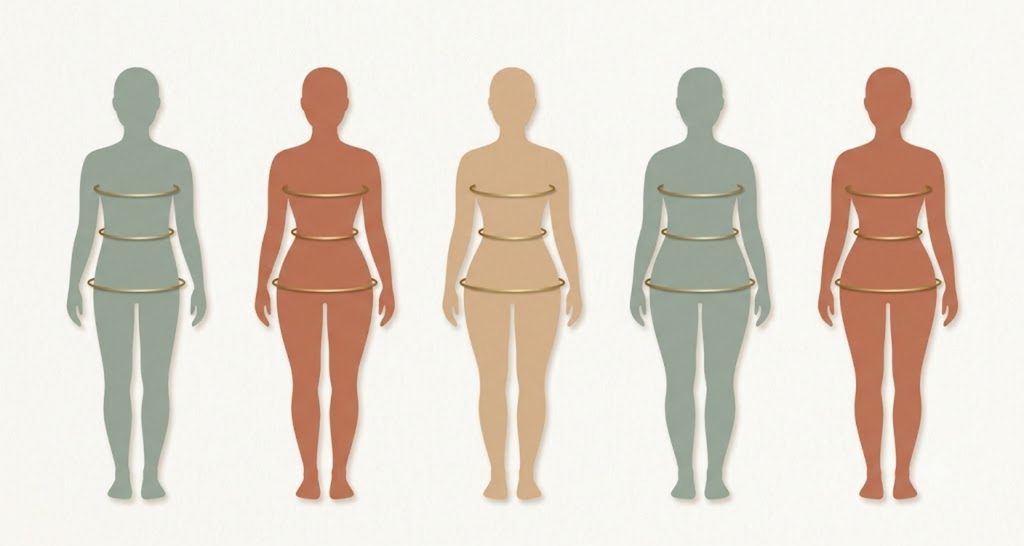
Your body shape is the overall outline of your figure, set by how your bust, waist, and hips compare to each other. It isn’t about your weight or your size. Two women who both wear a size 8 can have completely different shapes.
Most stylists use five main categories:
- Hourglass
- Pear (also called triangle or spoon)
- Apple (also called round or oval)
- Rectangle (also called straight or banana)
- Inverted triangle
Your shape comes mostly from your bone structure and where your body tends to store fat, and genetics drive both. So your shape usually stays fairly steady even when your weight goes up or down. A pear-shaped woman who loses 20 pounds is usually still a pear, just a smaller one.
Why Your Body Shape Matters More Than Your Dress Size
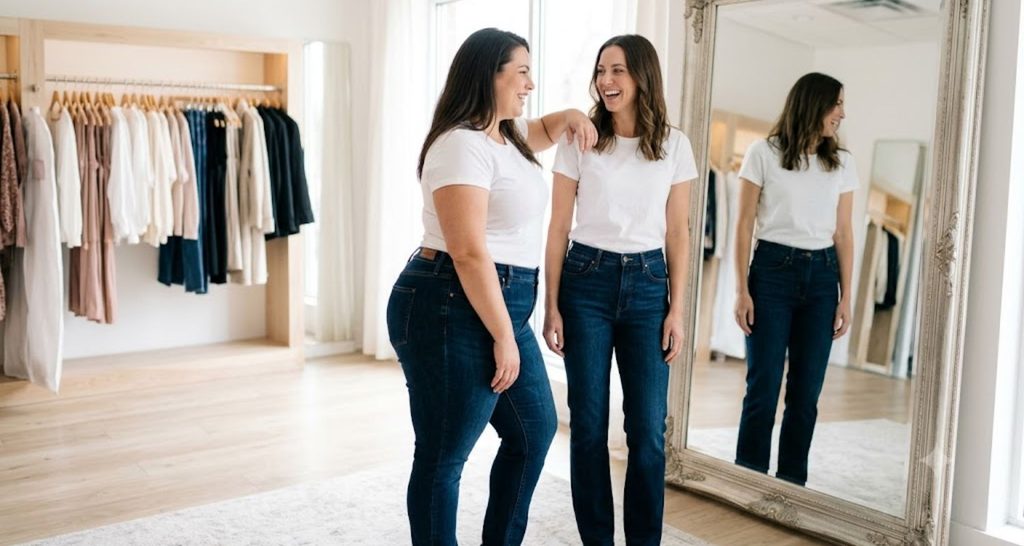
Here’s something the fashion industry doesn’t say out loud: most clothes are cut for one “standard” body. If your proportions don’t match that pattern, and most women’s don’t, things will pull, gap, or bunch in places that frustrate you.
Knowing your shape helps in a few practical ways:
- You’ll shop faster. You can skip whole categories of clothing that were never going to work.
- You’ll waste less money. There are fewer returns and fewer “maybe I’ll wear it someday” pieces taking up closet space.
- You’ll feel better in what you wear. Clothes that fit your proportions look like they were made for you.
Think about jeans shopping. If you have curvy hips and a small waist, you’ve probably found jeans that fit your hips but gap at the back. That’s a shape problem, not a sizing problem, and once you know it, you can look for “curvy fit” cuts and stop blaming yourself.
What You Need to Measure Your Body Shape

You don’t need anything fancy. Gather:
- A soft, flexible tape measure (the kind used for sewing, not a metal one from the toolbox)
- A full-length mirror
- Fitted clothing or just your underwear, plus the bra you wear most often
- Something to write with, or the notes app on your phone
A friend can help, especially with measuring around your shoulders. That part is tricky to do alone. If you don’t have a tape measure, a piece of string and a ruler will work in a pinch.
How to Find Your Body Shape as a Woman: 5 Simple Steps
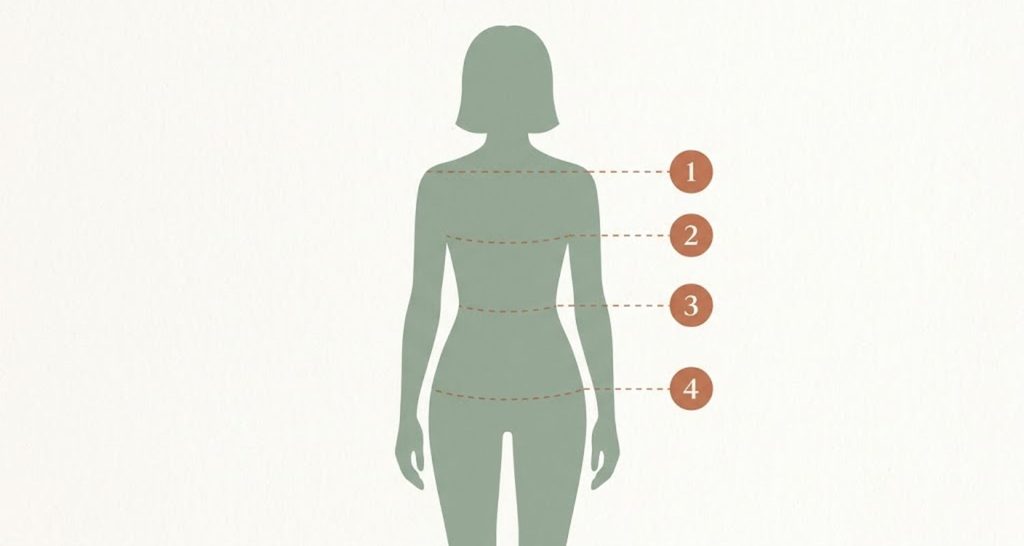
This is the core of the process. Stand up straight, relax your shoulders, and breathe normally. Don’t suck in your stomach. You want real numbers, not wishful ones.
Step 1: How to Measure Your Bust
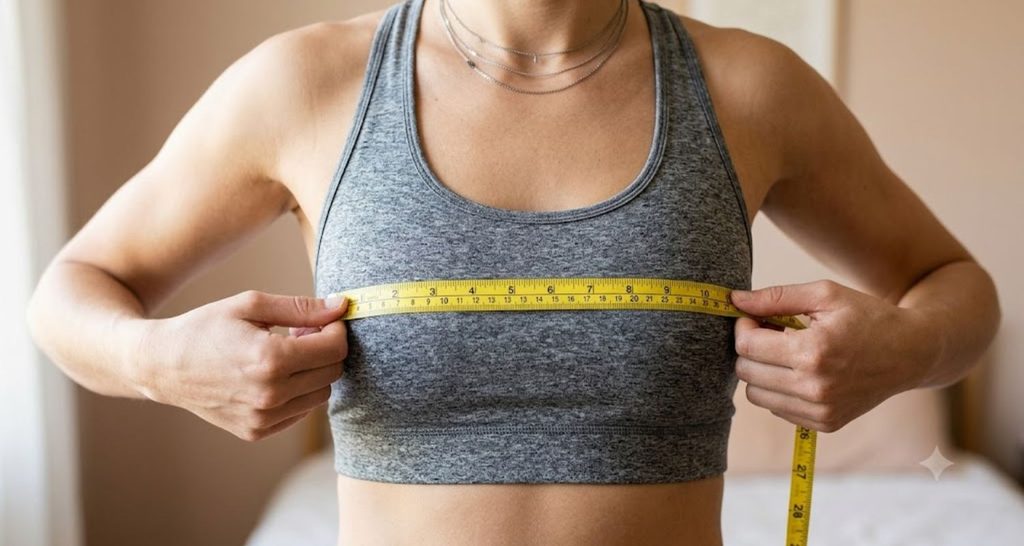
Wrap the tape around the fullest part of your chest, usually straight across your nipples. Keep the tape level across your back, since it tends to ride up.
The tape should feel snug but shouldn’t squeeze. Write down the number in inches.
Step 2: How to Measure Your Natural Waist
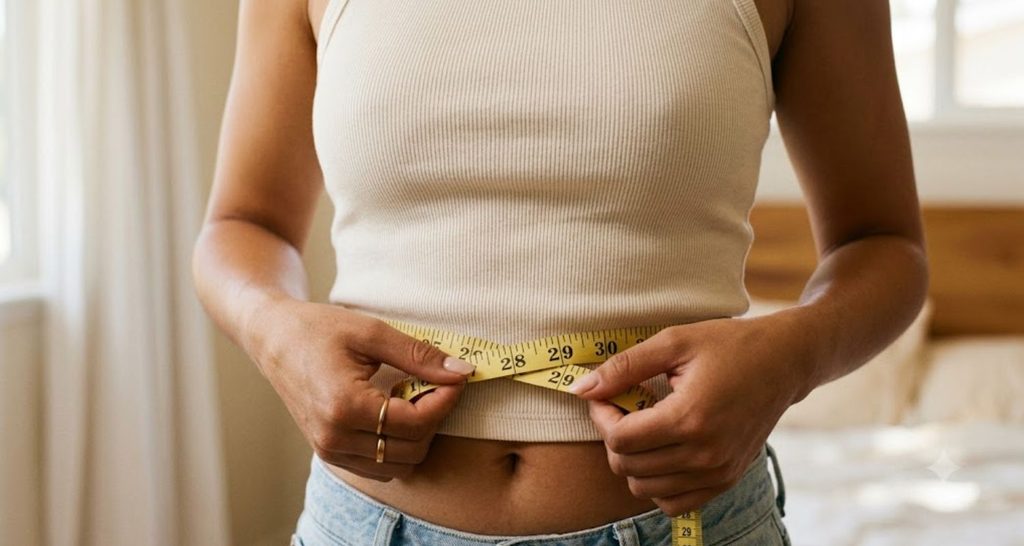
Find your natural waist, the narrowest part of your torso. For most women it sits about an inch above the belly button. Bend to one side and the crease that forms is your waistline.
Measure around it with the tape flat and level. Breathe out normally before you read the number.
Step 3: How to Measure Your Hips
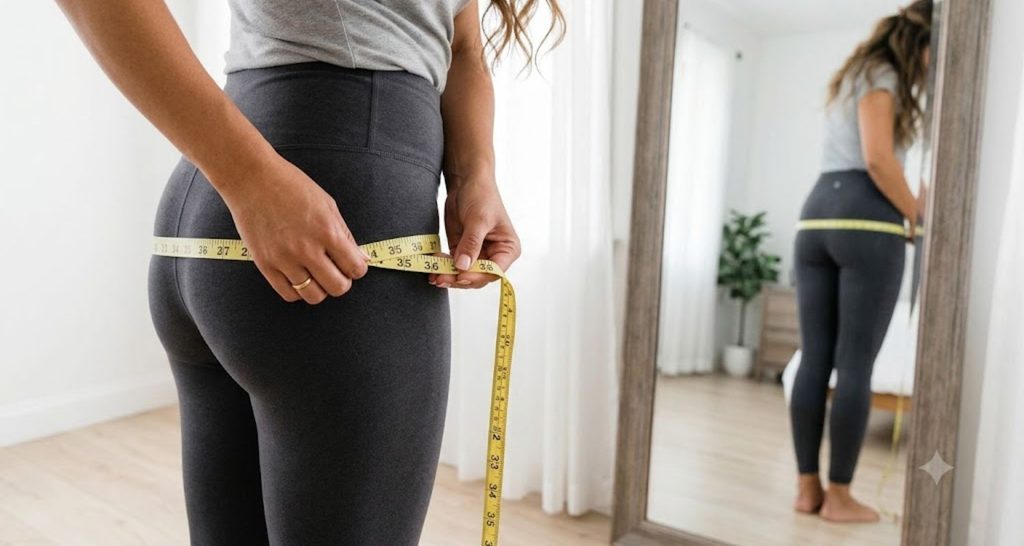
Stand with your feet together. Wrap the tape around the widest part of your hips and backside, usually 7 to 9 inches below your natural waist.
Check yourself in the mirror to make sure the tape is level all the way around. A tape that dips in the back can throw the number off by an inch or two.
Step 4: How to Measure Your Shoulders

This is the step most guides skip, and it matters. Measure around the widest part of your shoulders, going over the top of both arms. It’s much easier with a helper.
Your shoulder measurement helps you tell an inverted triangle apart from an hourglass, since both can have a large bust.
Step 5: Compare Your Measurements to Find Your Shape

Now you’ll look at how your measurements relate to each other. You don’t need to do anything complicated. You’re looking for three things:
- Is your bust bigger, smaller, or about the same as your hips?
- How much smaller is your waist than your bust and hips?
- Are your shoulders wider than your hips?
The next section shows what each pattern means.
Female Body Shape Chart: Match Your Measurements
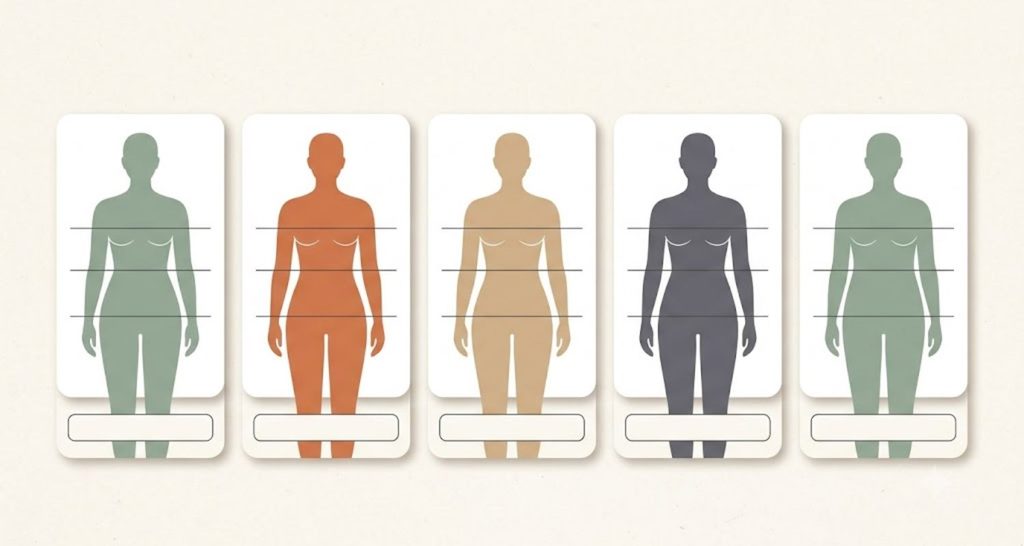
Use this table to match your measurements to a shape. The numbers are guidelines, not strict rules, so go with the closest fit.
| Body Shape | Bust vs. Hips | Waist | Shoulders | Common Signs |
|---|---|---|---|---|
| Hourglass | About equal (within 1–2 inches) | Clearly defined, 9+ inches smaller than bust and hips | Balanced with hips | Curvy top and bottom, small waist |
| Pear | Hips noticeably larger than bust | Defined | Narrower than hips | Fuller thighs and hips, slimmer upper body |
| Apple | Bust often larger than hips | Wider or close to bust size | Average to broad | Weight sits around the middle, slimmer legs |
| Rectangle | About equal | Less than 9 inches smaller than bust and hips | Balanced with hips | Straight up-and-down frame, little waist curve |
| Inverted Triangle | Bust or shoulders larger than hips | Moderately defined | Wider than hips | Athletic upper body, narrow hips |
Example: How to Read Your Body Shape Measurements
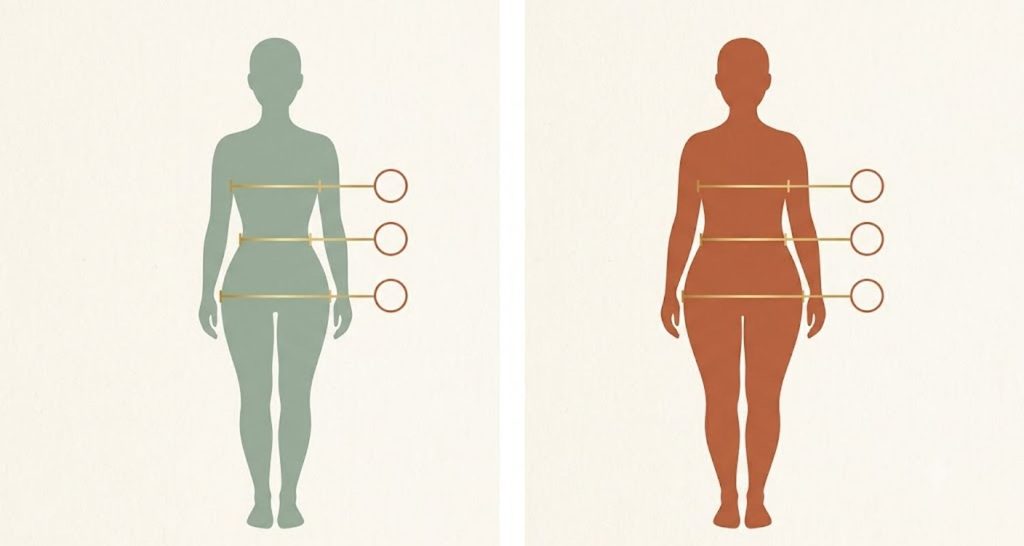
Say your measurements are bust 36″, waist 27″, hips 37″. Your bust and hips are only an inch apart, and your waist is about 9 to 10 inches smaller than both. That’s a classic hourglass.
Now change the numbers: bust 34″, waist 29″, hips 40″. Your hips are 6 inches wider than your bust, which points to a pear shape.
The 5 Types of Female Body Shapes (With Styling Tips)

Knowing the name of your shape is only the start. What matters is what it means for your closet. Here’s a closer look at each one, with styling tips that work.
Hourglass Body Shape
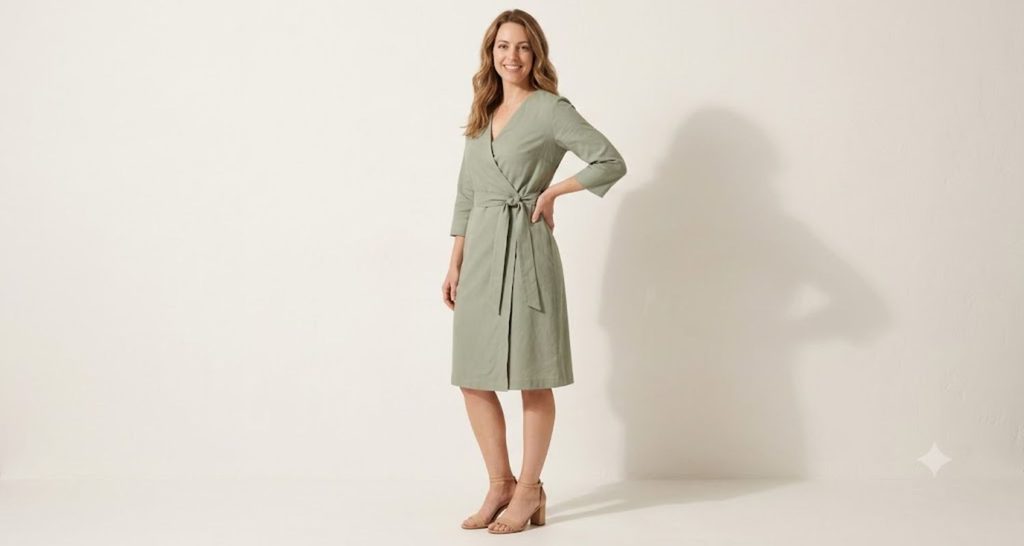
The hourglass is the shape everyone talks about, but it’s less common than magazines suggest. A widely cited North Carolina State University study on body shapes found that only a small share of women fell into this category. Rectangle shapes were by far the most common.
If you’re an hourglass, your bust and hips are balanced and your waist curves in clearly. Your goal is simple: show off your waist.
What works for you:
- Wrap dresses and wrap tops
- High-waisted pants and skirts
- Belted coats and dresses
- Fitted knits and bodycon styles
- Pencil skirts
What to be careful with: Boxy, shapeless pieces like oversized shift dresses can hide your waist and make you look bigger than you are.
Pear Body Shape
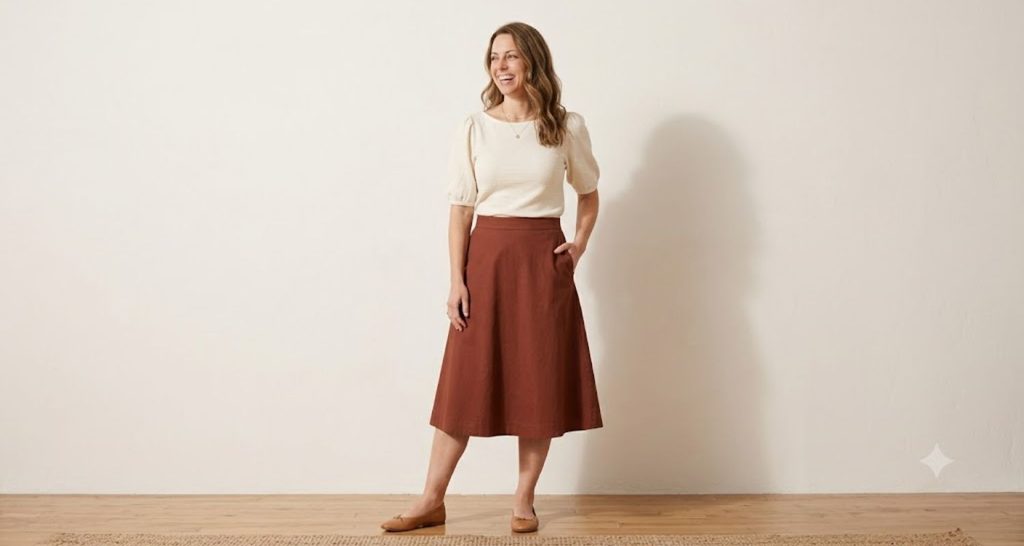
Pear shapes are very common, especially among American women. Your hips and thighs are wider than your bust and shoulders, and you probably have a defined waist.
Does it feel like pants always fit your hips but gap at the waist? That’s the classic pear problem. Styling a pear is mostly about balancing a smaller top half with a fuller bottom half.
What works for you:
- Tops with interesting details: ruffles, patterns, boat necks, puff sleeves
- A-line skirts and dresses that skim over the hips
- Bootcut and wide-leg jeans
- Structured jackets that end at the waist
- Darker colors on the bottom, brighter colors on top
What to be careful with: Skinny jeans paired with a long, tight top can draw attention straight to your hips. Pleated or heavily pocketed pants add bulk where you might not want it.
Apple Body Shape
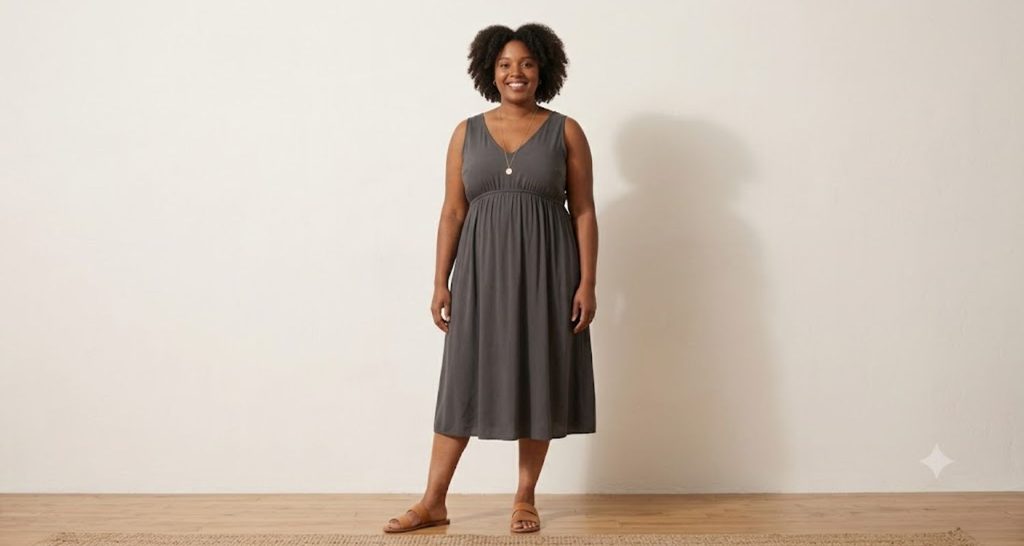
If you’re an apple, you tend to carry weight around your midsection. Your bust is often full, your waist is less defined, and your legs and arms are usually slimmer. Plenty of women with this shape have great legs and don’t realize it.
The styling strategy is to create a waist and draw the eye up or down, toward your face or your legs.
What works for you:
- V-necks and scoop necks, which lengthen your torso
- Empire-waist tops and dresses that flow from just below the bust
- Flowy tunics over leggings or slim pants
- Dresses and skirts that show off your legs
- Straight-leg or slightly flared jeans with a mid-rise
What to be careful with: Tight belts right at the middle and clingy fabrics around the stomach tend to work against you. Very high-waisted pants can also dig in and feel uncomfortable.
Rectangle Body Shape
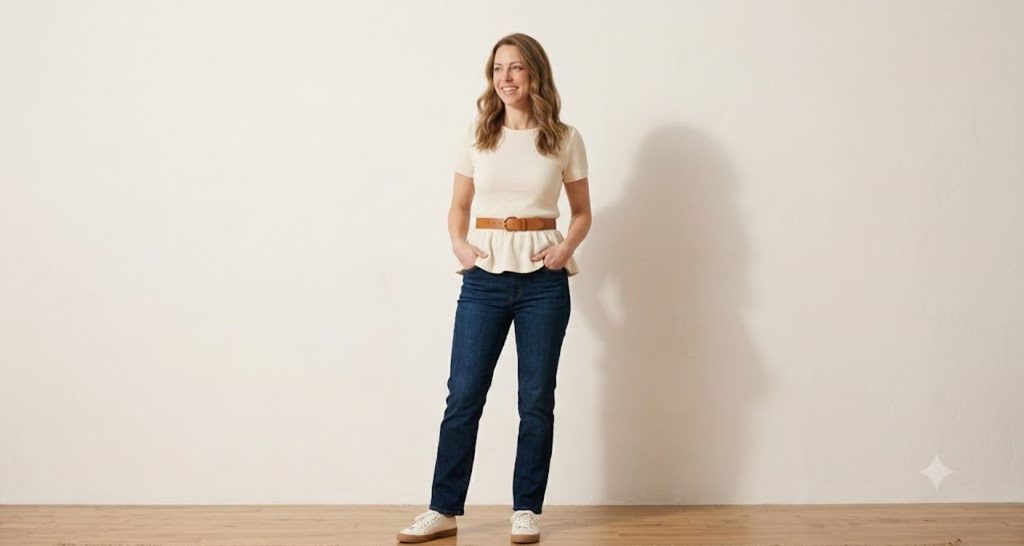
Rectangle, or straight, is the most common body shape by many estimates. Your bust, waist, and hips are all fairly similar, and your waist doesn’t curve in much. Many athletes and runway models have this frame.
Here’s the fun part: rectangles can pull off a huge range of rectangle shape styles. You can play it straight and sleek, or add curves with clever cuts.
What works for you:
- Peplum tops that add shape at the waist
- Belts worn over dresses and cardigans
- Ruffles, wrap styles, and layered pieces
- Straight-leg and boyfriend jeans
- Sheath dresses and jumpsuits
What to be careful with: Nothing is off limits. If you want more curve, though, super-boxy pieces from top to bottom can make your frame look flat.
Inverted Triangle Body Shape
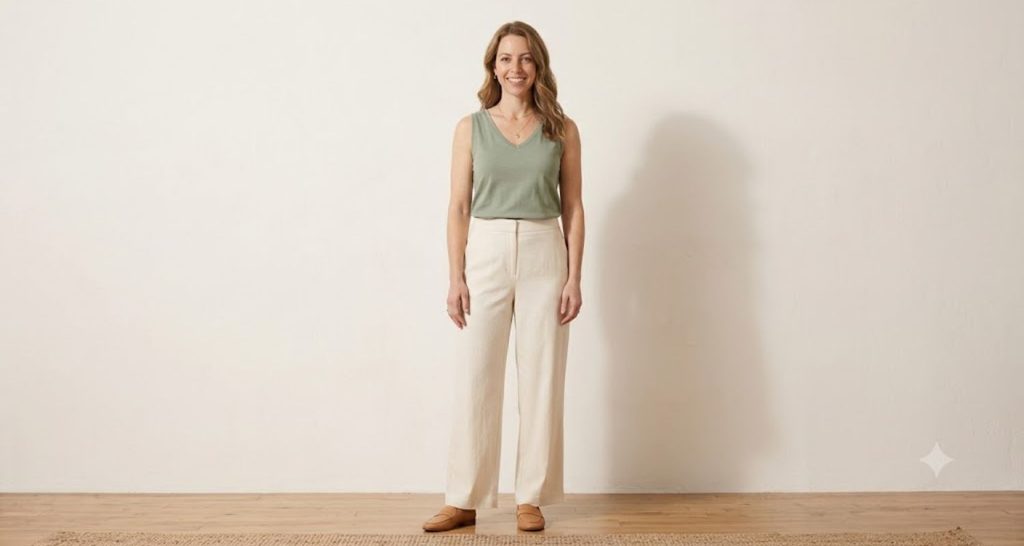
With an inverted triangle, your shoulders and bust are broader than your hips. Swimmers, volleyball players, and women with naturally strong upper bodies often have this shape.
Your styling goal is the opposite of a pear’s: soften the shoulders and add volume below the waist.
What works for you:
- V-necks and deep scoop necks that break up the shoulder line
- Full skirts, A-line skirts, and wide-leg pants
- Bold prints and bright colors on your bottom half
- Simple, sleeveless, or raglan-sleeve tops
- Flared jeans and cargo pants
What to be careful with: Shoulder pads, puff sleeves, and wide boat necks all add width where you already have it.
5 Common Mistakes When Measuring Your Body Shape
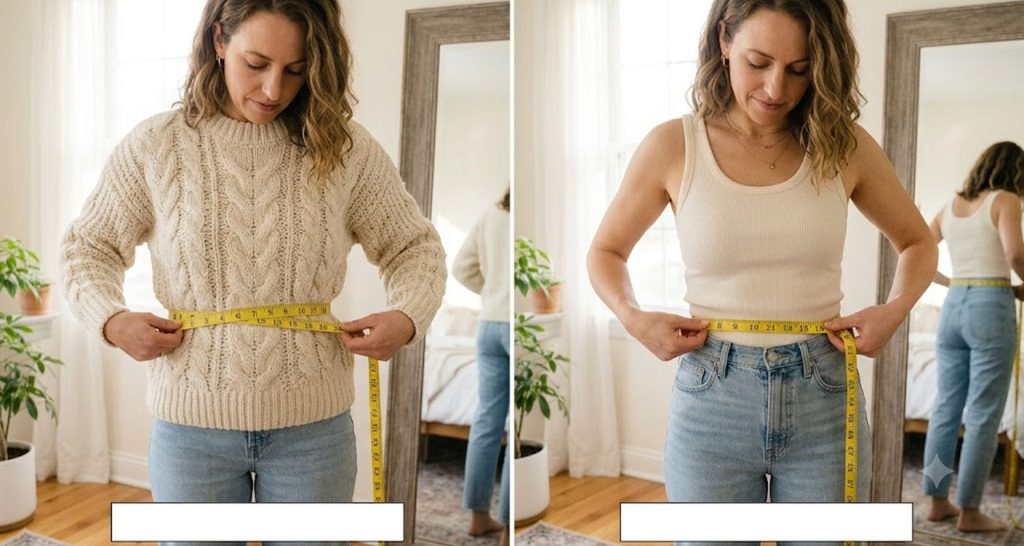
Getting accurate measurements is easy, but a few small slip-ups can send you in the wrong direction.
Measuring Over Bulky Clothes
A thick sweater or padded bra can add 1 to 3 inches, which is enough to put you in the wrong category. Measure in fitted clothing or your underwear.
Pulling the Tape Too Tight
It’s tempting to cinch the tape for a “better” number. Don’t. Your clothes will fit the real you, not the squeezed version.
Confusing Your Waist With Your Pants Line
Your natural waist and the spot where your jeans sit are usually two different places. Low-rise and mid-rise pants sit on your hips. Always measure at the narrowest part of your torso.
Relying Only on the Mirror
Mirrors are useful, but your eyes can play tricks on you. Many women are hard on themselves and see their hips or stomach as bigger than they are. The tape measure is neutral, so trust it.
Thinking You Must Fit Just One Box
Real bodies are messy. You might be mostly pear with some rectangle traits, or an hourglass who leans toward inverted triangle. That’s completely normal. Take tips from both shapes and keep what works.
Can Your Body Shape Change With Age or Weight?

Yes and no. Your bone structure, meaning your shoulder width, rib cage, and pelvis, stays the same through adulthood. That’s why your basic shape tends to hold steady.
Some things can shift your proportions, though:
- Pregnancy and childbirth can widen the hips and change where your body stores fat.
- Menopause often moves fat storage toward the midsection. That’s why some women who were pears in their 30s find they’re closer to an apple in their 50s.
- Strength training can build muscle in your shoulders, back, or glutes and change your outline.
- Big weight changes can make your waist more or less defined.
If it’s been a few years, or you’ve been through a major life change, measure again. It only takes a few minutes, and your old results might not match your body anymore.
Using Your Body Shape to Build a Better Wardrobe

Once you know your shape, put it to work. Here’s a simple approach that doesn’t mean throwing out your whole closet.
- Audit what you already love. Pull out the three pieces you get the most compliments on. You’ll probably find they already follow the tips for your shape.
- Spot the misfits. Look for items you never wear. Often they work against your proportions.
- Shop with a short list. Before you buy something, ask whether it highlights your best features or hides them.
- Find a good tailor. A $15 hem or waist adjustment can turn “almost right” into “made for me.”
- Break the rules sometimes. Style guidelines are tools, not laws. If you love a piece and feel great in it, wear it.
That last point matters. Body shape advice should give you more options, not fewer. The goal is confidence, not following a formula.
Frequently Asked Questions
What is the most common body shape for women?
The rectangle is widely considered the most common female body shape. Research from North Carolina State University found that the largest group of women had bust, waist, and hip measurements that were fairly close together. Pear shapes also rank high, while the “ideal” hourglass is much less common than advertising suggests.
How do I know if I’m an hourglass or a pear?
Compare your bust and hip measurements. If they’re within about 1 to 2 inches of each other and your waist is clearly smaller, you’re likely an hourglass. If your hips are noticeably larger than your bust, usually by 3 inches or more, you’re probably a pear. Your shoulder width can help confirm it.
Can I find my body shape without a tape measure?
You can get a rough idea with a mirror. Stand in fitted clothes and look at the outline of your shoulders, waist, and hips. Holding a string across each area and comparing lengths also helps. For an accurate result, though, a soft tape measure is worth the few dollars it costs.
Does weight loss change your body shape?
Weight loss usually makes you a smaller version of the same shape, because your bone structure doesn’t change. Some women notice a more defined waist after losing weight, which can shift a rectangle closer to an hourglass. Hormones, age, and muscle gain can also change your proportions over time.
What’s the difference between body shape and body type?
People often use the terms interchangeably, but they’re different. Body shape describes your proportions, like hourglass or pear. Body type usually refers to your build and how easily you gain muscle or fat, often described as ectomorph, mesomorph, or endomorph. For fashion and fit, body shape is the more useful term.
Can I be more than one body shape?
Absolutely. Many women fall between two categories, like a pear with a less defined waist or an hourglass with broad shoulders. If your measurements don’t fit neatly into one shape, borrow styling tips from both and keep the ones that make you look and feel your best.
Your Shape, Your Rules
Now you know how to find your body shape as a woman: measure your bust, waist, hips, and shoulders, compare the numbers, and match them to one of the five main shapes. It takes less time than a coffee run and saves you from years of frustrating fitting rooms.
Every shape can look great. An hourglass isn’t “better” than a rectangle, and a pear isn’t a problem to fix. Your body shape is just information, like your shoe size, that helps you choose clothes that fit.
So grab that tape measure today. Write down your numbers, find your shape in the chart, and try one of the style tips on your next shopping trip. You’ll probably notice the difference the first time you get dressed.