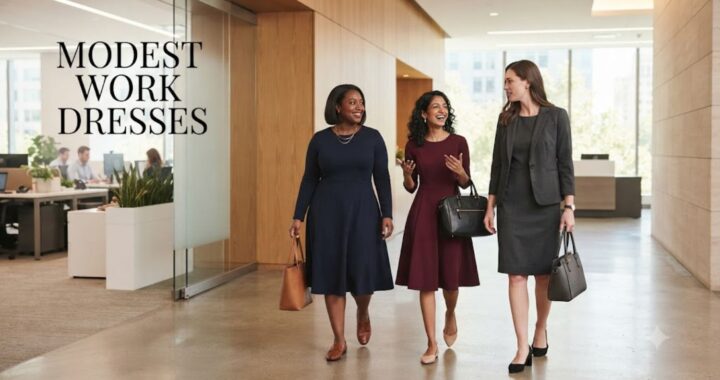
Your outfit shouldn’t be the reason you skip a networking conversation or spend the afternoon counting the minutes until you can take off your shoes. If you’re searching for “What to wear to a conference female business casual,” you probably want a clear answer: something polished enough to meet potential clients, comfortable enough for a full day, and easy enough to put together without buying a new wardrobe.
Start with tailored pants, a blouse or polished knit top, a removable layer, and comfortable shoes. Then adjust that formula to the event’s dress code, your role, and the weather.
You don’t need heels or a matching suit to look professional. You need clothes that fit the setting—and let you focus on why you’re there.
What Does Business Casual Mean at a Conference?
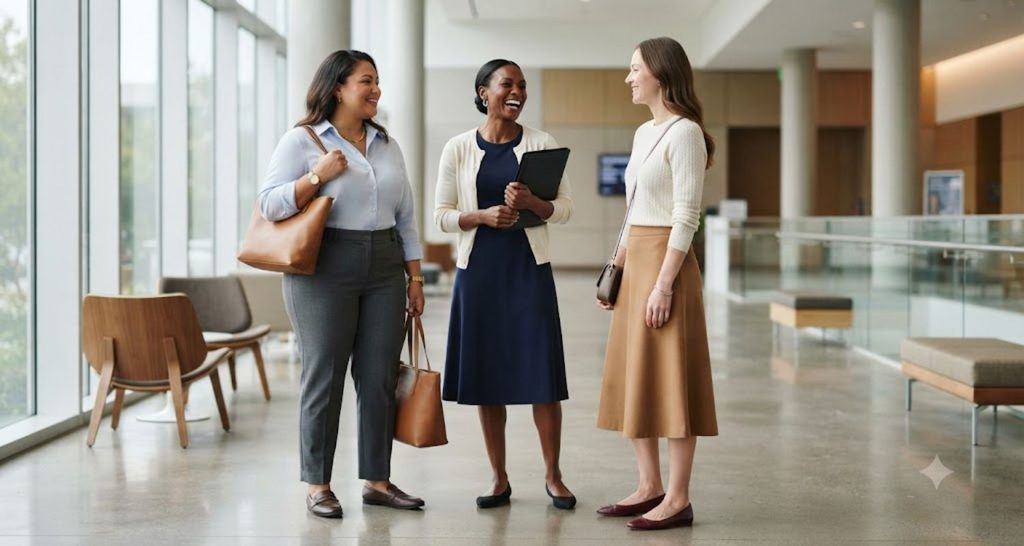
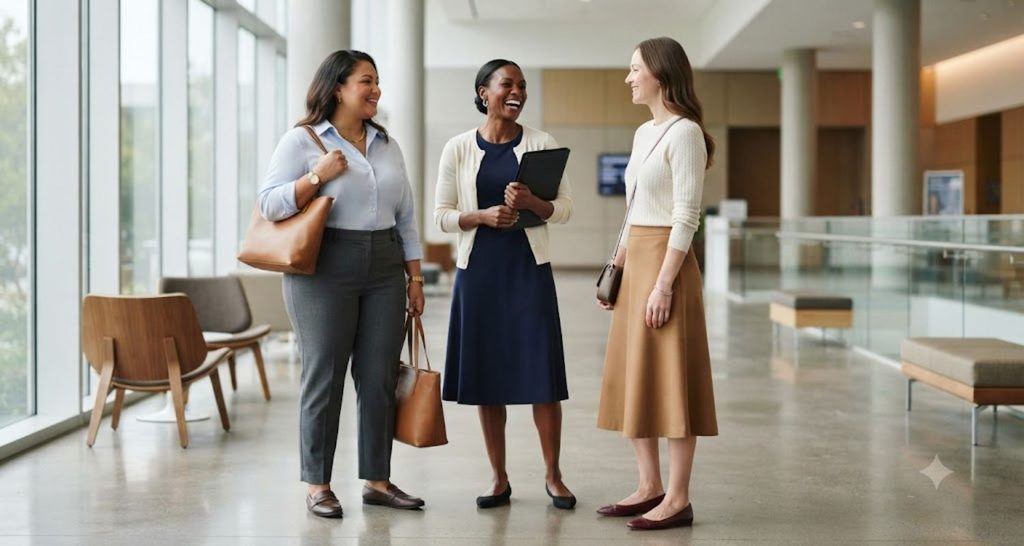
Business casual conference attire combines professional separates with comfortable, less formal styling. For women, that can mean dress pants with a blouse, a skirt with a fine-knit sweater, or a simple dress with a blazer and flats.
As a useful reference, Harvard’s career services guidance lists dress pants, skirts, blouses, and sweater sets as business casual options, with a blazer handy. That provides a starting point, although your conference organizer’s instructions should guide your final choice.
The tricky part? Different events interpret the same label differently. An outfit that feels right at a creative industry gathering might look relaxed at a corporate leadership conference.
Use this comparison to understand the general range:
| Dress code | Typical outfit | What to check |
|---|---|---|
| Casual | Neat jeans, a simple top, clean sneakers | Whether casual attire applies to every session |
| Business casual | Tailored pants, blouse, cardigan or blazer, loafers | Rules about denim, sneakers, and sleeveless tops |
| Business professional | Coordinated suit or structured dress with a jacket | Expectations for speakers, interviews, or formal meetings |
| Evening event attire | Dressy separates, a jumpsuit, or a dress | Whether the invitation specifies cocktail or formal attire |
Treat these as outfit examples, not universal rules. A conference can also have different dress codes for daytime sessions and evening events.
What to wear to a conference female business casual: The Easy Formula
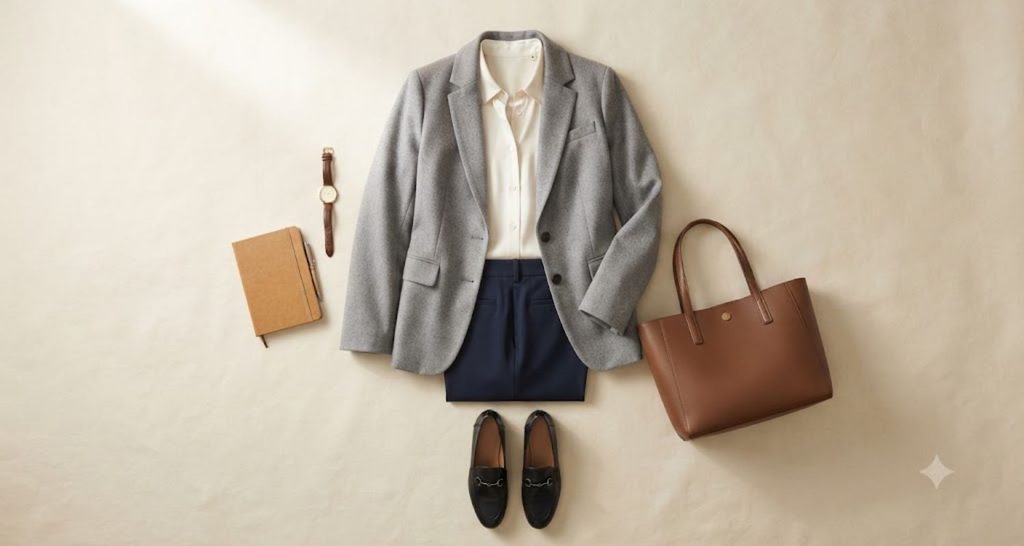
When you’re unsure, build your outfit around four pieces: a polished base, a professional top, a light layer, and supportive shoes.
For example, navy ankle pants, an ivory blouse, a gray blazer, and loafers create a straightforward conference outfit. You can remove the blazer for a relaxed workshop or put it back on before meeting a prospective client.
Here’s how to make that formula work:
- Choose your bottom half first. Pick tailored trousers, comfortable ankle pants, or a skirt that stays comfortable while seated.
- Add a top that behaves well. Look for a blouse, button-down, or knit that doesn’t gape, slip, or need constant adjusting.
- Bring a removable layer. A blazer, cardigan, or lightweight jacket gives you flexibility.
- Finish with shoes you’ve already tested. Walk, stand, and climb stairs in them before packing.
- Check the complete outfit. Include your bag, outerwear, and any accessories you plan to wear.
That final step saves surprises. A top might look perfect alone but bunch awkwardly under your jacket.
Check These Details Before You Choose an Outfit
Read the Dress Code and Review Event Photos

Start with the conference website, registration email, or attendee guide. Look for specific wording such as “business casual,” “comfortable walking shoes,” or “business professional.”
If the instructions are vague, browse photos from the previous year. Focus on attendees at similar sessions rather than assuming a keynote speaker’s outfit represents everyone.
Still unsure? Ask the organizer whether jeans or clean sneakers are appropriate. A short question can save a lot of unnecessary packing.
Match Your Outfit to Your Role
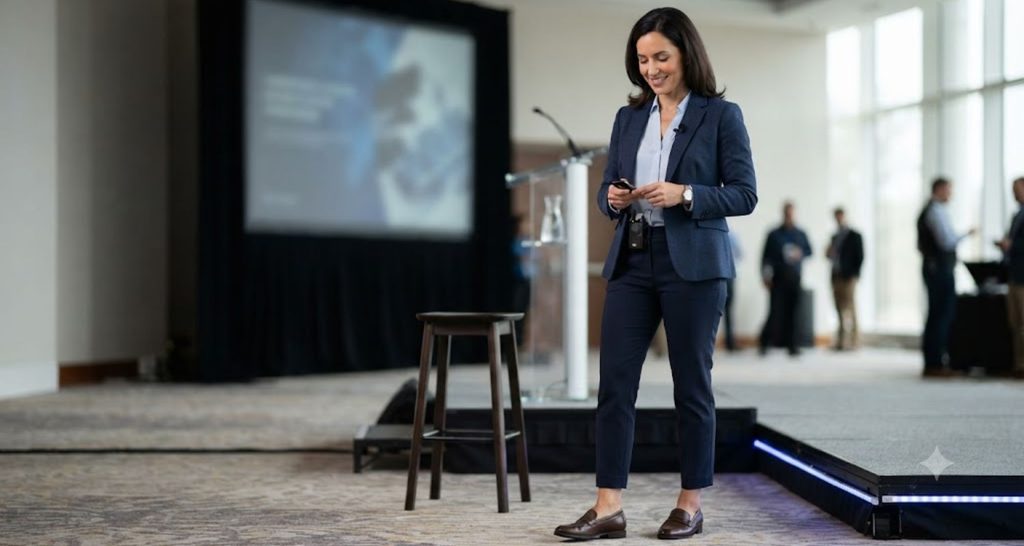
Will you attend workshops, staff an exhibitor booth, present research, or lead a panel? Your schedule affects what you’ll need from your clothes.
If you’re presenting, consider a structured layer and somewhere to attach a microphone pack if the venue uses one. If you’ll spend hours at a booth, prioritize supportive footwear and clothes that allow easy movement.
For a seated panel, check how your outfit looks and feels in a chair. Test it at home instead of discovering a problem onstage.
Plan for Your Entire Day

Picture your schedule from the hotel elevator to the final networking event. You might walk several blocks, sit through presentations, carry a laptop, and stand during a reception.
Imagine wearing a lovely jacket that feels fine for ten minutes but pulls across your shoulders whenever you reach for your bag. By lunch, you’d probably wish you’d chosen something else.
Dress for the day you’ll actually have.
Five Business Casual Conference Outfit Ideas
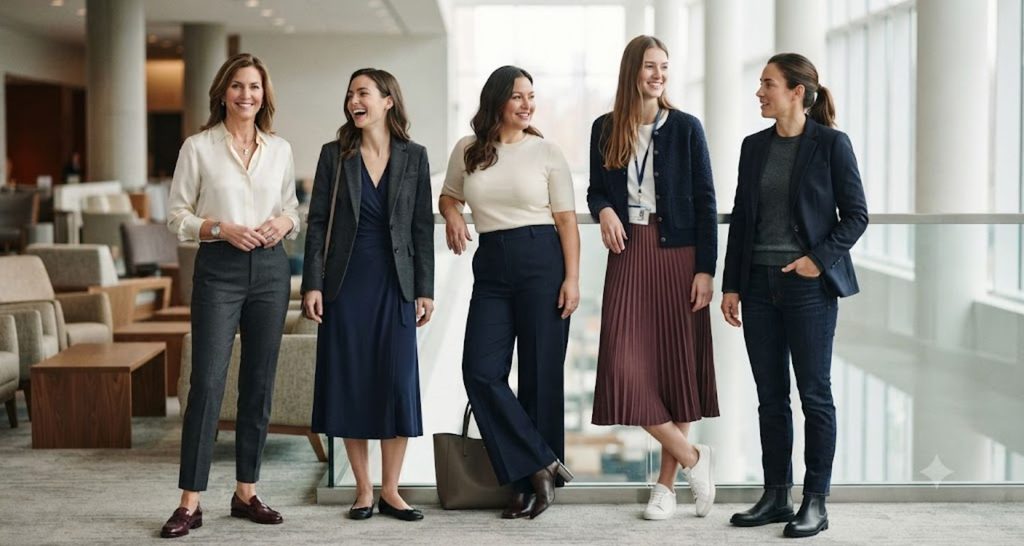
1. Tailored Pants, a Blouse, and Loafers
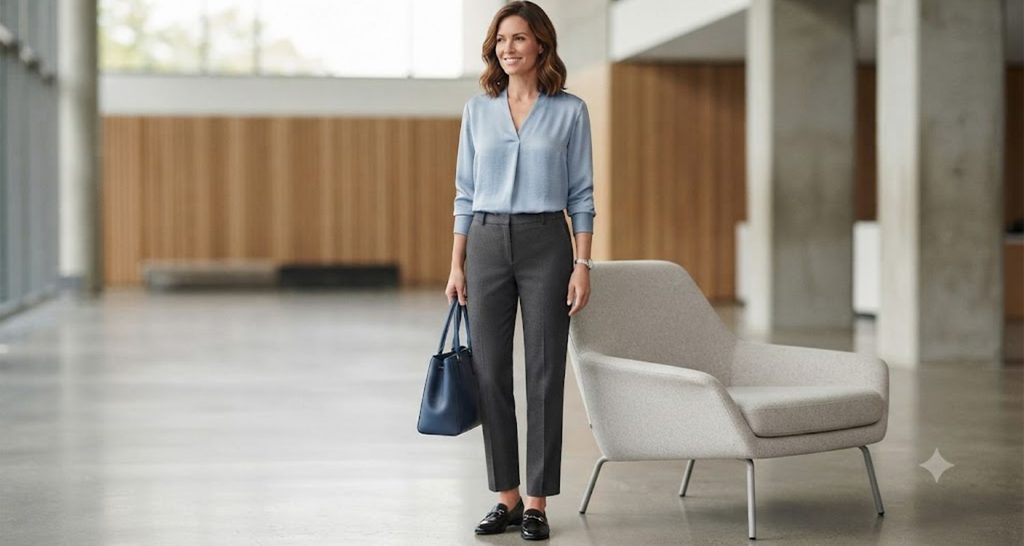
This combination works well as a starting point when you have limited information about the event. Straight-leg, tapered, or wide-leg pants can all look polished when the fit and length suit you.
Try charcoal trousers with a blue blouse and black loafers. Add a cardigan for softer styling or a blazer for more structure.
Check the waistband while sitting. If it feels restrictive at home, it’s unlikely to improve during a long presentation.
2. A Midi Dress, a Blazer, and Flats
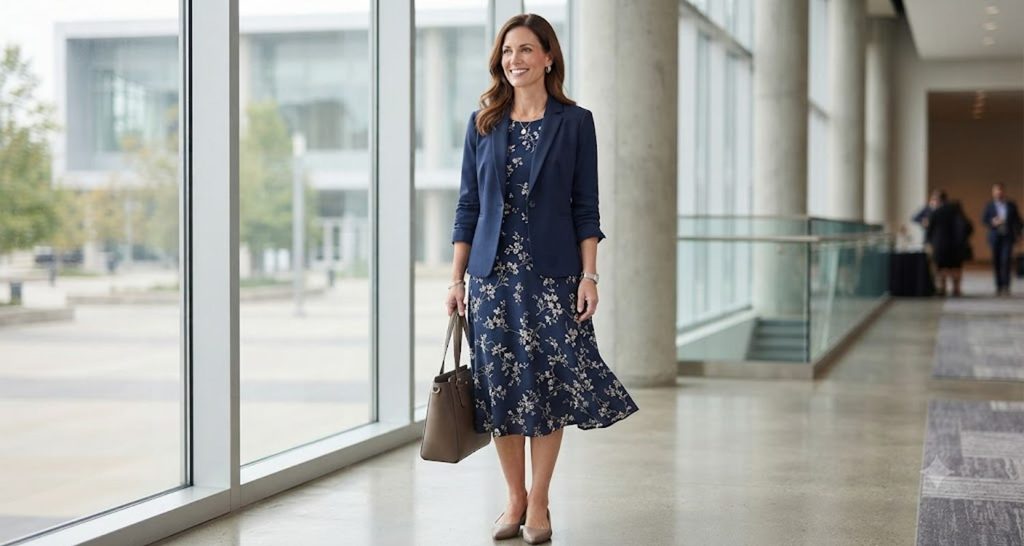
A simple dress reduces the number of pieces you need to coordinate. Choose a shape that lets you sit, walk, and reach comfortably, whether that’s an A-line, shift, or relaxed tailored style.
A printed midi dress with a solid blazer can bring personality to your outfit without complicating it. Add supportive flats and a bag large enough for your essentials.
If you choose a wrap dress, test how securely it closes when you move. A discreet fastening can help prevent constant adjustments.
3. Wide-Leg Trousers and a Fine-Knit Top
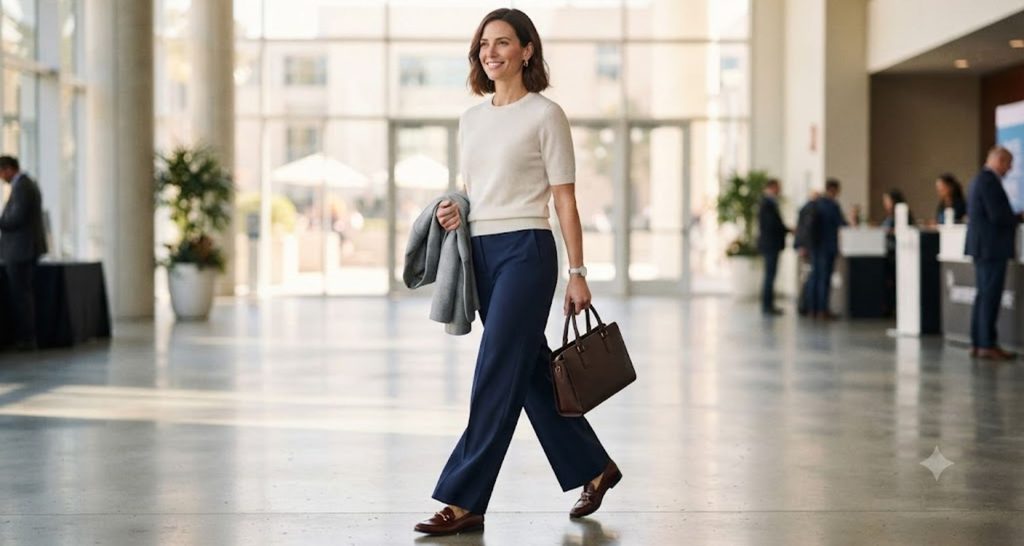
Prefer something less traditional than a blouse? A smooth knit top can look professional with tailored trousers.
For example, pair navy wide-leg pants with a cream short-sleeve knit and burgundy loafers. Add a jacket if the event calls for a more structured finish.
Pay attention to the hem. It should clear the floor when you wear your chosen shoes, including when you walk quickly between sessions.
4. A Skirt, a Simple Top, and a Cardigan
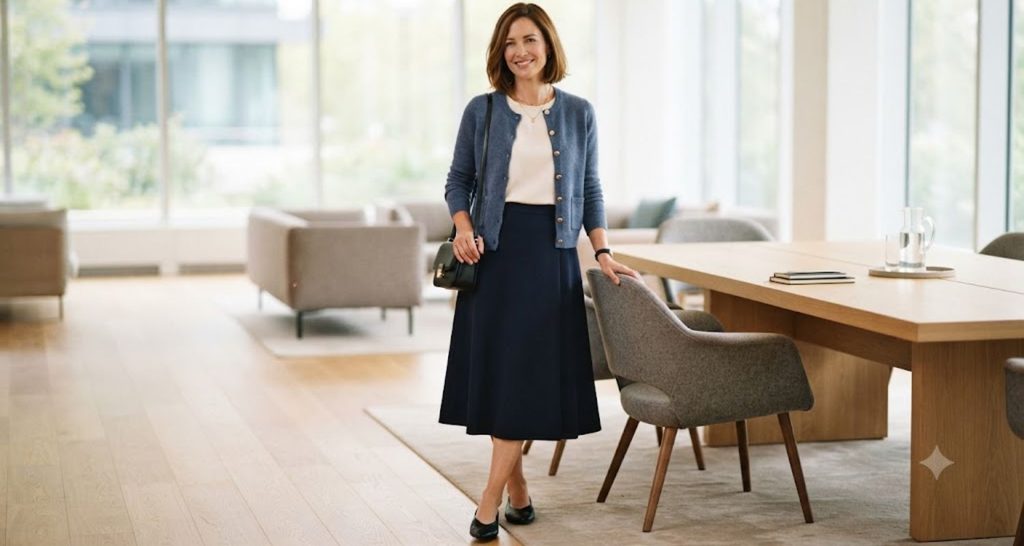
An A-line or straight skirt offers another practical option, especially if you already wear skirts regularly. Choose a length and fit that feel comfortable while seated.
Try a navy skirt, a light-colored top, and a cardigan in a complementary shade. Flats, loafers, or low block heels can complete the outfit.
Look for a cardigan that holds its shape. If it needs frequent tugging or keeps sliding off your shoulders, choose a different layer.
5. Dark Jeans and a Blazer—When the Event Allows Them\
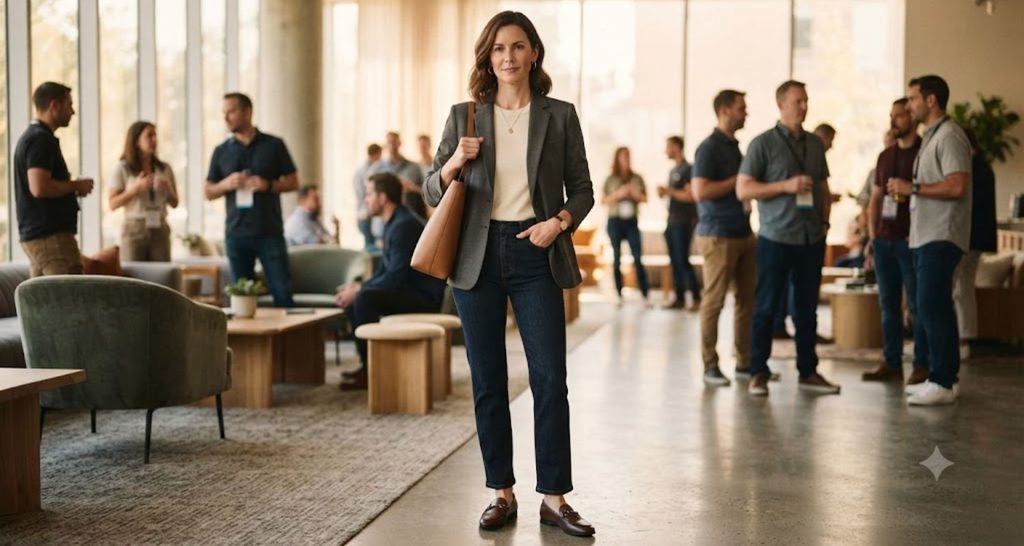
Jeans can work at some conferences, but don’t assume that every business casual dress code includes denim. Check the event guidance first.
Where jeans are welcome, choose a dark, even wash without distressed patches. Pair them with a polished blouse or knit, a structured jacket, and neat shoes.
If you’re undecided, swap the jeans for trousers. You’ll keep the same easy outfit formula with fewer questions about the dress code.
Choose Shoes for Walking, Standing, and Networking
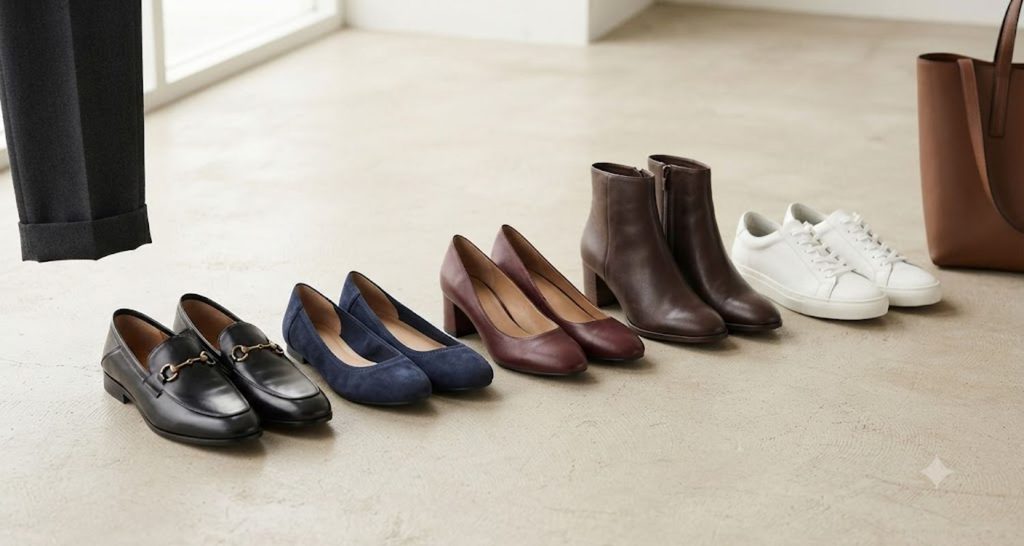
Your shoes need to do more than look good under the hotel room mirror. They need to carry you through the event.
Choose based on your comfort, mobility needs, and the surfaces you’ll encounter. No single shoe style works for everyone.
| Shoe style | Why you might choose it | What to test |
|---|---|---|
| Loafers | Easy to pair with pants, skirts, and dresses | Heel rubbing and toe space |
| Supportive flats | A polished option without a heel | Cushioning and whether they stay securely on |
| Low block heels | A dressier finish if you enjoy heels | Stability and comfort while standing |
| Ankle boots | Useful with cool-weather outfits | Weight, flexibility, and indoor comfort |
| Clean, minimal sneakers | Practical at events that allow casual footwear | Dress-code suitability and support |
Avoid making conference day your first full day in new shoes. Give them a proper trial with the socks or hosiery you intend to wear.
If you need orthopedic shoes or another specific style for comfort or accessibility, build the outfit around them. Tailored clothing and coordinated colors can create a polished overall look.
Heels are optional. Being able to move comfortably matters.
Adapt Your Conference Outfit to the Season
Spring and Summer
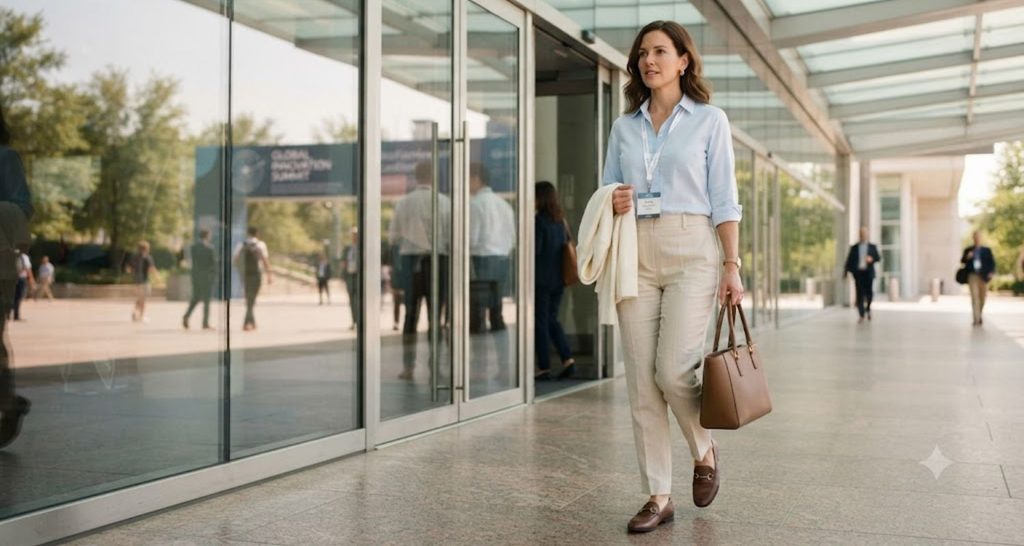
For warmer weather, look for breathable fabrics and lighter layers. Cotton blends, lightweight wool, and some linen blends can work, depending on the garment’s construction and how easily it wrinkles.
A sleeveless blouse under a light jacket gives you options, provided it fits the event’s expectations. Check pale fabrics in daylight to make sure you’re comfortable with their coverage.
Even when it’s hot outside (work dress ideas for hot weather), bring a layer for indoor sessions. Carrying a cardigan is easier than spending a presentation wishing you had one.
Fall and Winter

Build around layers you can remove. A fine-knit sweater, tailored trousers, and a blazer often give you more flexibility than one very heavy top.
Choose a coat that fits comfortably over your outfit. If snow or rain requires practical outdoor footwear, consider changing into your conference shoes at the venue.
Check whether the event offers a coat check. Carrying a winter coat, laptop bag, and coffee can get awkward quickly.
Warm Destinations and Resort Venues

A resort address doesn’t automatically mean vacation clothing. The conference may still expect business casual during sessions.
Lightweight trousers, a breathable blouse, and a simple dress can help you manage warm weather while looking prepared for meetings. Save poolside clothing for appropriate activities.
For outdoor receptions, check the forecast and the ground surface. Grass, gravel, and narrow heels don’t make an easy combination.
Make Fit and Comfort Part of Your Outfit Plan
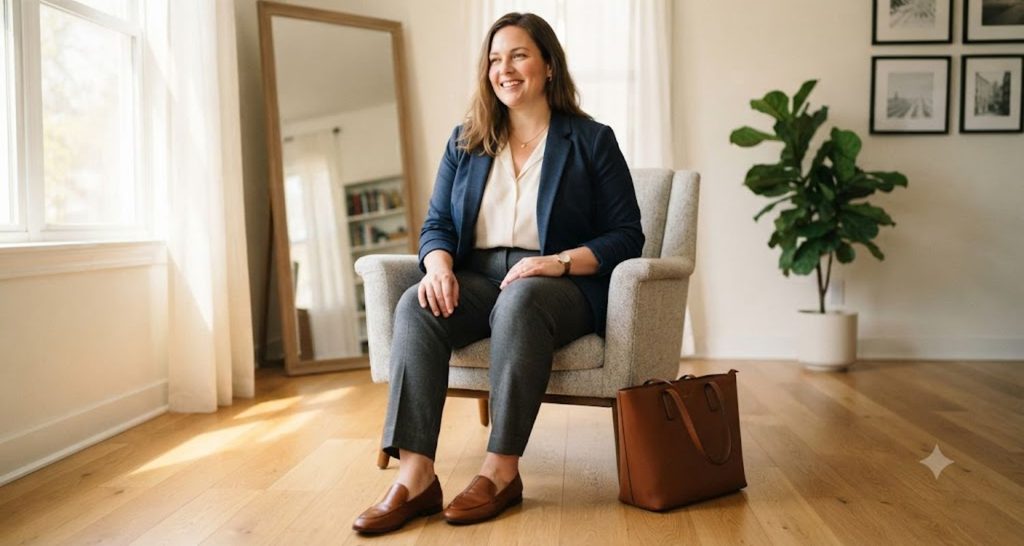
Good fit doesn’t require a particular body shape, clothing size, or silhouette. Your clothes should let you move naturally and feel at ease.
Check shoulder seams, waistbands, closures, and trouser lengths. Small alterations may make something you already own more useful than a new purchase.
Before the event, give your outfit a short movement test:
- Sit in a chair for several minutes.
- Reach forward as though you’re typing.
- Lift your arms and bend to pick up your bag.
- Walk briskly and climb a few stairs.
- Put on your jacket and carry your packed bag.
Notice anything that pinches, shifts, or demands attention. Fix it now.
You can adapt these outfit formulas to your coverage preferences, cultural dress, or mobility needs. Longer skirts, tunics, head coverings, and loose tailoring can all work within a polished conference wardrobe.
Choose Accessories That Make the Day Easier
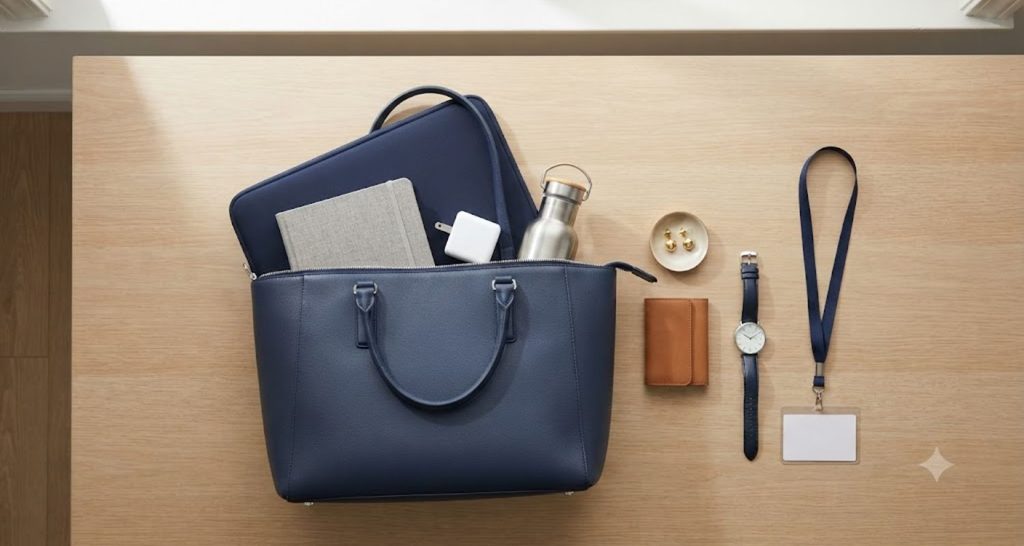
A conference bag should hold what you actually need without becoming a burden. A structured tote, comfortable backpack, or roomy crossbody may work, depending on whether you’re carrying a laptop.
Test the bag when it’s packed. Thin straps can feel very different once you add a charger, notebook, and water bottle.
Keep jewelry comfortable, especially if you’ll type, take notes, or use a microphone. Bracelets that tap against the table or earrings that catch on your lanyard can become distracting.
You don’t need makeup, elaborate hair styling, or expensive accessories to look prepared. Choose grooming and finishing touches that feel like you, and check whether the event has a fragrance policy.
Pack a Small Wardrobe for a Multi-Day Conference
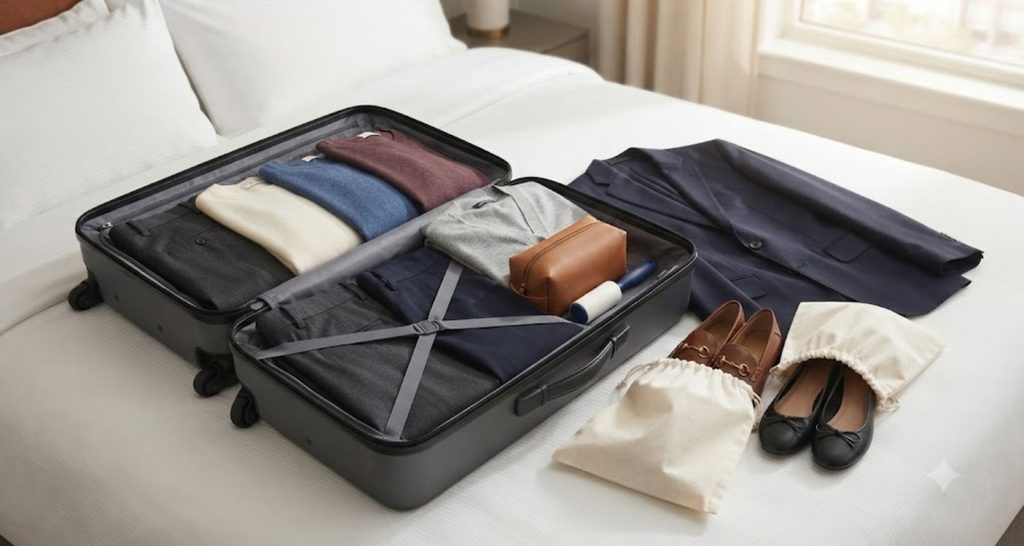
You can create several outfits from a small group of coordinated pieces. Start with two neutral colors, then add a color or pattern you enjoy.
For a three-day event, your packing list might include:
- Two pairs of pants, or one pair of pants and a skirt.
- Three tops that work with both bottoms.
- One blazer or structured jacket.
- One cardigan or light sweater.
- One optional dress for sessions or dinner.
- One main pair of shoes and a practical backup.
- Appropriate undergarments, socks, and weather layers.
Plan the combinations before you pack. For example, wear navy trousers with an ivory blouse on day one, then use the same trousers with a blue knit on day three.
Repeating a jacket or pair of pants is fine. Allow for spills, weather, and how fresh each item will stay between wears.
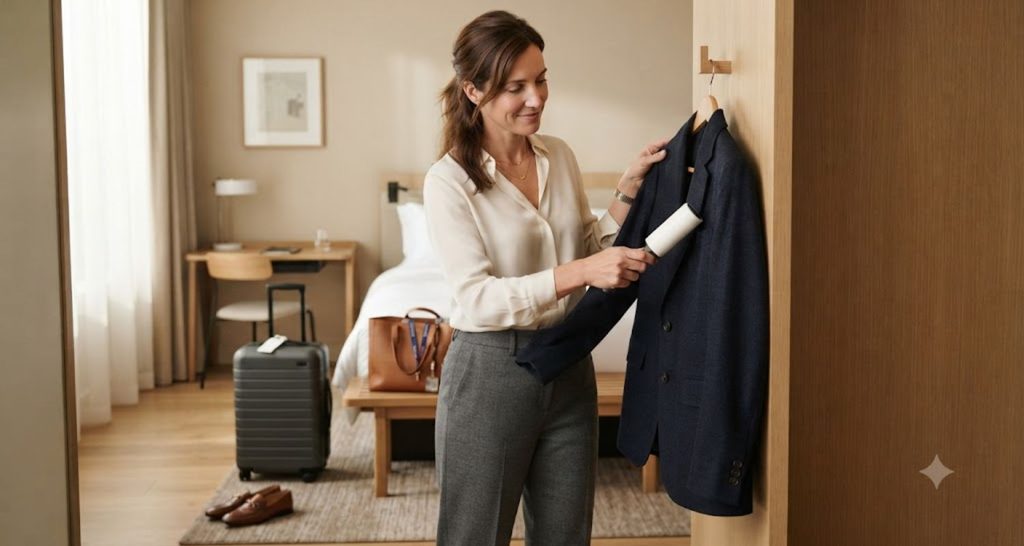
A small lint roller, stain-removal wipe suitable for your fabrics, and a few blister bandages can also earn their place in your bag. Keep the extras compact.
Move from Conference Sessions to an Evening Event
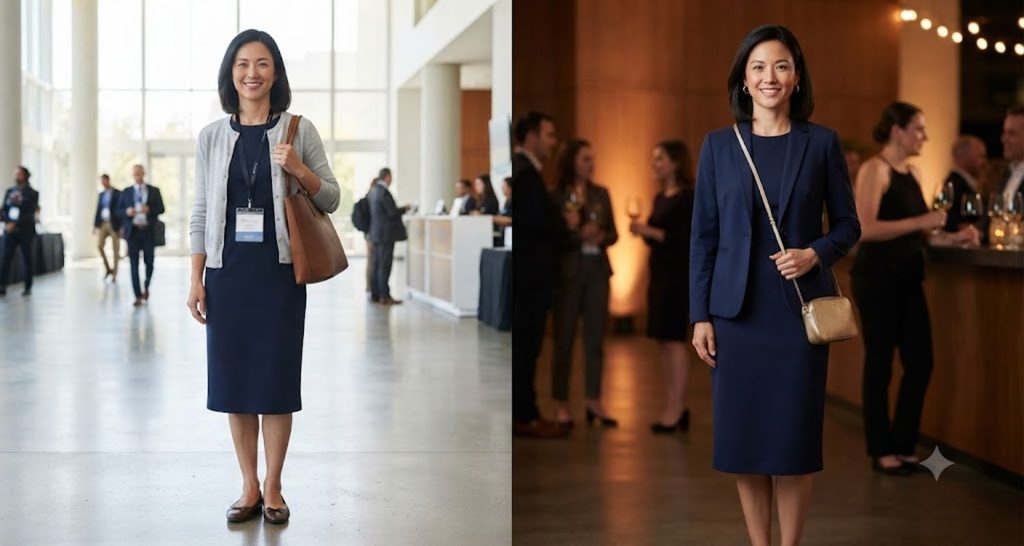
Read the evening invitation before assuming you need another outfit. A casual networking reception may work perfectly with your daytime clothes.
You could swap your cardigan for a blazer, add earrings, or carry a smaller bag. A simple dress can also work across both settings with a change of accessories.
A formal awards dinner is different. Follow its stated dress code and pack separately if needed.
You don’t have to change just because the schedule moves past 5 p.m. Make the decision based on the event.
Avoid These Common Conference Outfit Mistakes
Buying an entirely new wardrobe: Start with your closet and identify specific gaps. One versatile layer or a trouser alteration may solve the problem.
Choosing appearance over function: If your shoes hurt or your blouse needs constant adjusting, your outfit will take attention away from the event.
Forgetting fabric care: Check for wrinkles, lint, loose buttons, and stains before packing. Don’t count on having time or equipment to fix everything at the hotel.
Dressing for only one part of the schedule: An outfit that works for a seated session may feel different during a standing reception. Consider both.
Copying someone else’s style completely: Use examples for direction, then adapt them. You’ll feel more comfortable in an outfit that reflects how you normally dress.
Frequently Asked Questions
Can women wear jeans to a business casual conference?
Yes, if the organizer’s dress code or event culture allows them. Choose dark, undistressed jeans and pair them with a polished top, blazer, and neat shoes. If you can’t confirm whether denim is appropriate, tailored pants offer a straightforward alternative, especially for presentations or client meetings.
Do you need to wear a blazer to a conference?
You don’t always need a blazer when the dress code is business casual. A structured cardigan, neat sweater, or simple dress may work well. Bringing a blazer gives you an extra option for meetings, presentations, or cooler rooms, but follow the organizer’s guidance before treating it as essential.
Are sneakers appropriate for a women’s conference outfit?
Sneakers can be appropriate at conferences that welcome more relaxed business casual clothing. Choose a clean pair that complements your outfit, and check the event guidance first. If you need sneakers for support or mobility, prioritize that need and build a polished outfit around them.
What should you wear if you’re presenting at a conference?
Choose an outfit that suits the event and lets you move comfortably. Tailored pants with a blouse and jacket, or a simple dress, can work well. Rehearse in the complete outfit, test it while seated, and ask about microphone attachment requirements if you’ll use a wireless microphone.
How can you dress for a conference on a budget?
Start with clothes you already own and build two or three combinations around a pair of tailored pants or a simple dress. Borrow, thrift, or buy only what fills a clear gap. Clean shoes, pressed fabric, and comfortable fit can make an outfit look thoughtfully put together.
Your Conference Outfit Should Help You Focus
The answer to “What to wear to a conference female business casual” starts with the event’s expectations and ends with your comfort. Choose a polished outfit that lets you sit, walk, present, and introduce yourself without distraction.
Tonight, check the dress code, lay out one complete outfit, and walk around in your chosen shoes. Add a removable layer and a practical bag. Once those details are handled, you can focus on the conversations and opportunities you came for.