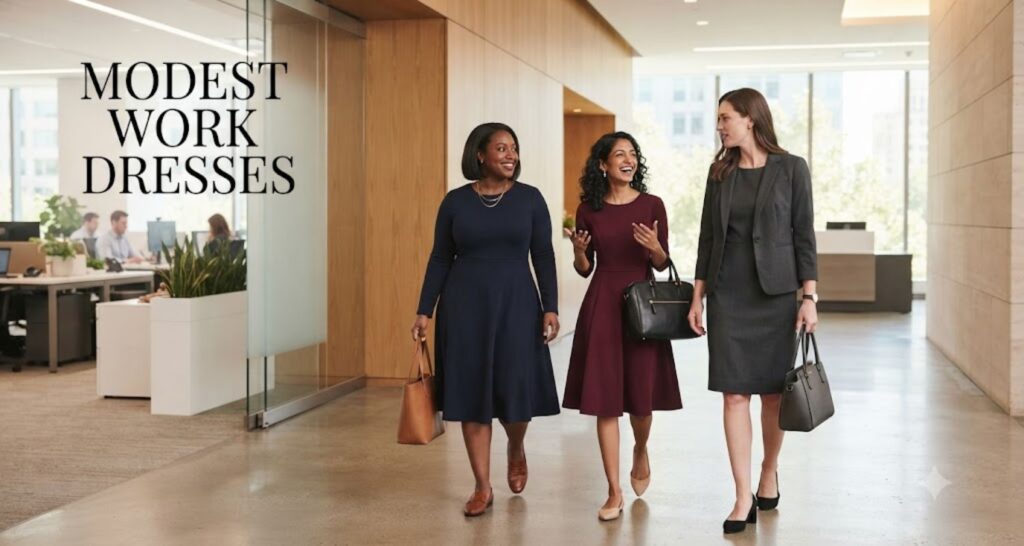
A dress can look perfect in the mirror—and feel completely wrong when you sit down for your first meeting. The neckline shifts, the hem rides up, or the fabric turns surprisingly sheer near a window. Finding modest work dresses for the office means looking beyond the hanger and choosing pieces that work through your entire day.
You deserve clothes that let you concentrate on your work without constantly adjusting what you’re wearing. That doesn’t mean settling for shapeless cuts, heavy layers, or a wardrobe full of black.
Whether you prefer covered shoulders, longer hemlines, relaxed silhouettes, or all three, this guide will help you choose comfortable dresses and turn them into polished office outfits.
What Makes a Work Dress Modest?
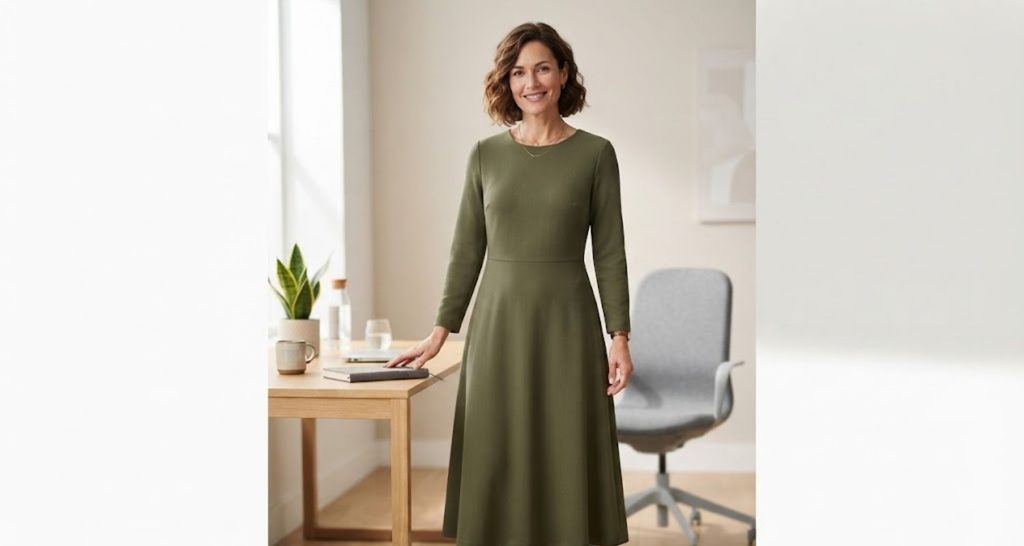
A modest work dress provides the coverage you prefer through its neckline, sleeves, hemline, opacity, and fit. For office wear, it should also suit your workplace’s dress code and allow you to sit, walk, bend, and reach comfortably.
Modesty is personal. You might feel comfortable in a knee-length dress with short sleeves, while someone else prefers ankle-length styles with full sleeves and a high neckline. Neither preference creates a universal rule for everyone.
Start with your own requirements, then consider your working environment. A creative studio, corporate headquarters, and school office may have very different expectations.
Think about these five features when evaluating a dress:
- Neckline: Does it provide your preferred coverage when you lean forward?
- Sleeves: Do they cover as much of your arms as you want?
- Hemline: Does the length feel comfortable while seated?
- Fabric: Is it opaque in different lighting and when stretched?
- Fit: Can you move without pulling, gaping, or constant adjustments?
A dress that passes these checks gives you a useful starting point.
How to Choose Modest Work Dresses for the Office
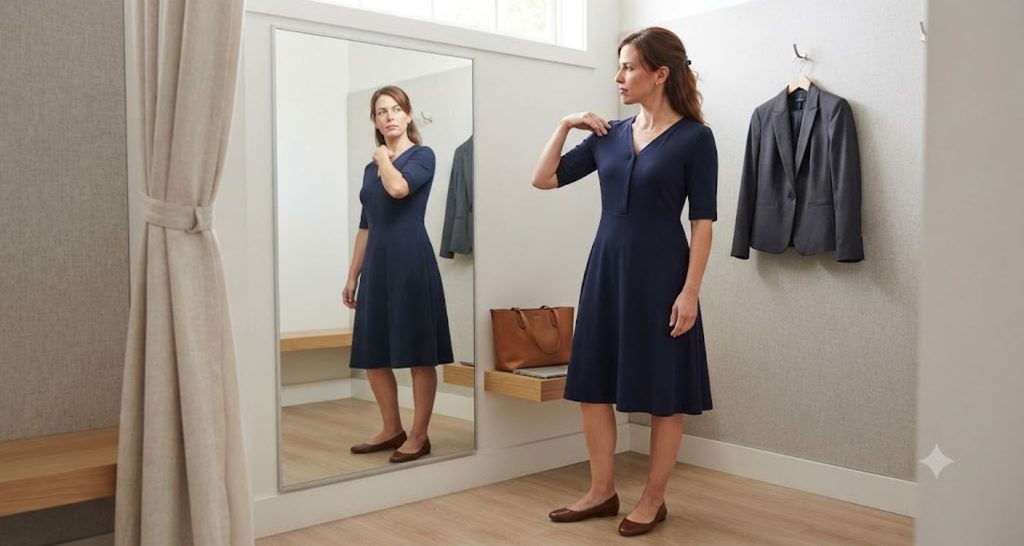
Before choosing a color or print, consider how the dress needs to function. Will you spend most of the day sitting, walk between buildings, or frequently reach for supplies?
Your answers matter more than a product description that simply says “office appropriate.”
Start With Your Workplace Dress Code
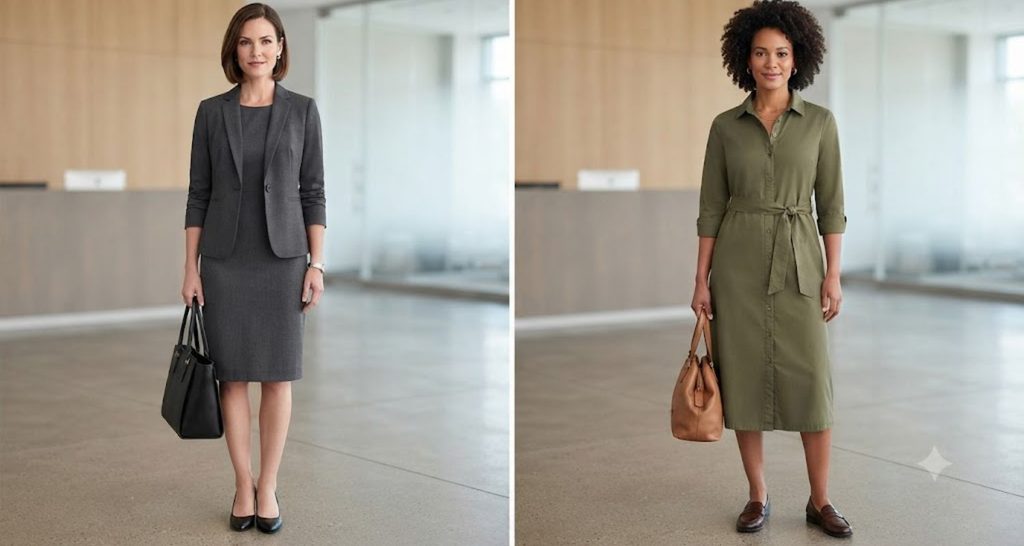
Check your employee handbook or ask for examples if the dress code feels unclear. “Business casual” can mean different things across employers.
The University of Kansas distinguishes between business professional, business casual, and smart casual attire, which provides a useful framework for understanding those differences. Your employer’s expectations should guide the final choice.
For a formal environment, consider a structured dress paired with a tailored jacket. In a business casual attire for office, a shirt dress, simple A-line dress, or substantial knit style may fit comfortably into the setting.
Choose Your Coverage Before You Shop
Make a short mental checklist: preferred sleeve length, minimum hem length, neckline shape, and acceptable fit.
This saves you from buying a beautiful dress that needs three extra pieces before you feel comfortable wearing it. If you want full arm coverage every day, built-in long sleeves may be easier than relying on a cardigan.
Your preferences can also change with the occasion. A presentation outfit might need more structure than something you wear on a quiet administrative day.
Do a Movement Test
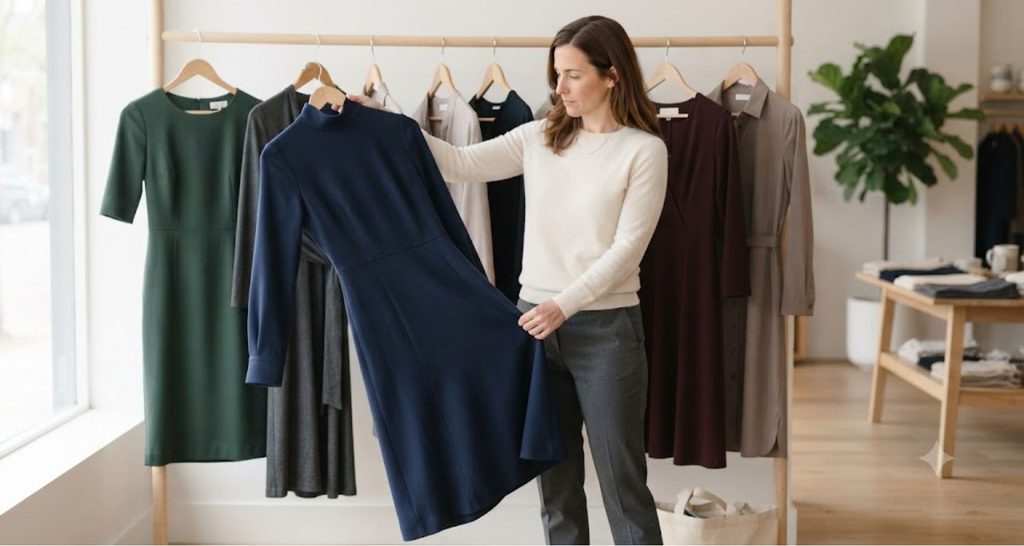
Try the dress with the undergarments and shoes you expect to wear. Then spend a few minutes moving naturally.
- Sit in a chair: Check the hemline and any front opening.
- Reach forward: Notice pulling across the shoulders and back.
- Raise your arms: See how far the entire dress lifts.
- Lean forward: Check whether the neckline stays comfortable.
- Walk and climb a step: Make sure the skirt allows a normal stride.
- Check bright light: Look for transparency, including around stretched areas.
Picture yourself reaching across a conference table for a charger. If that simple movement requires an outfit adjustment, the dress may need a different size, an alteration, or a different cut.
6 Modest Office Dress Styles to Consider
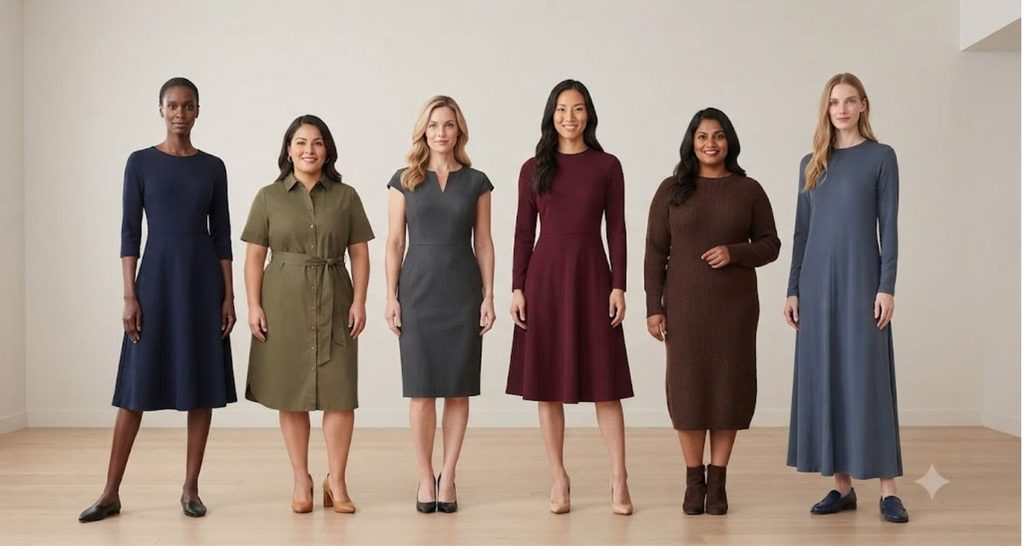
No single silhouette works for every body or office. These six styles offer different combinations of structure, room, and coverage.
| Dress style | Why it can work | What to check |
|---|---|---|
| A-line dress | Offers room through the hips and skirt | Hem movement and lining |
| Shirt dress | Adds structure through a collar and button front | Gaping between buttons |
| Sheath dress | Creates a tailored, streamlined outfit | Seated fit and slit height |
| Fit-and-flare dress | Defines the waist with a fuller skirt | Bodice comfort and skirt volume |
| Knit midi dress | Offers stretch and easy movement | Cling, opacity, and stretching |
| Maxi dress | Provides longer coverage | Hem clearance and office suitability |
A-Line Dresses: Easy Movement Without Excess Volume

An A-line dress gradually widens toward the hem, giving you space to sit and walk. It’s a useful option when you want a defined shape without a close-fitting skirt.
Look for a shoulder seam that sits correctly and a skirt that falls smoothly. A navy A-line dress with loafers and a short jacket makes a simple outfit you can repeat with different accessories.
If you commute on windy streets, consider fabric weight and skirt fullness before choosing an especially light version.
Shirt Dresses: Practical Structure
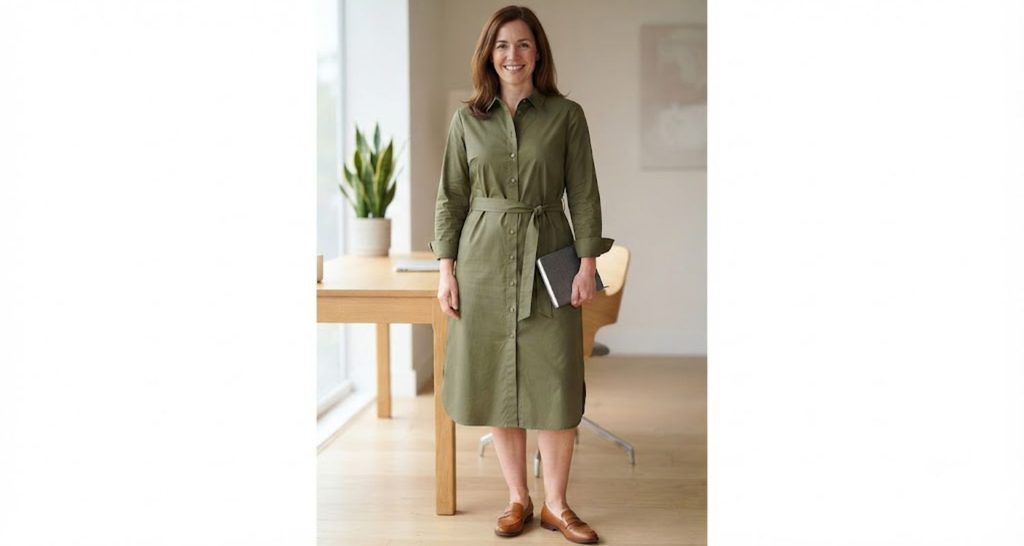
A shirt dress combines the familiar details of a button-up shirt with the convenience of a dress. A collar, sleeves, and an adjustable belt can make getting dressed straightforward.
However, the button front deserves attention. Sit down and reach forward to check for gaps at the bust, waist, and upper thighs.
If the dress pulls across several areas, try another cut. A hidden snap can help a small opening, but it won’t fix an overall fit problem.
Sheath Dresses: A Tailored Option
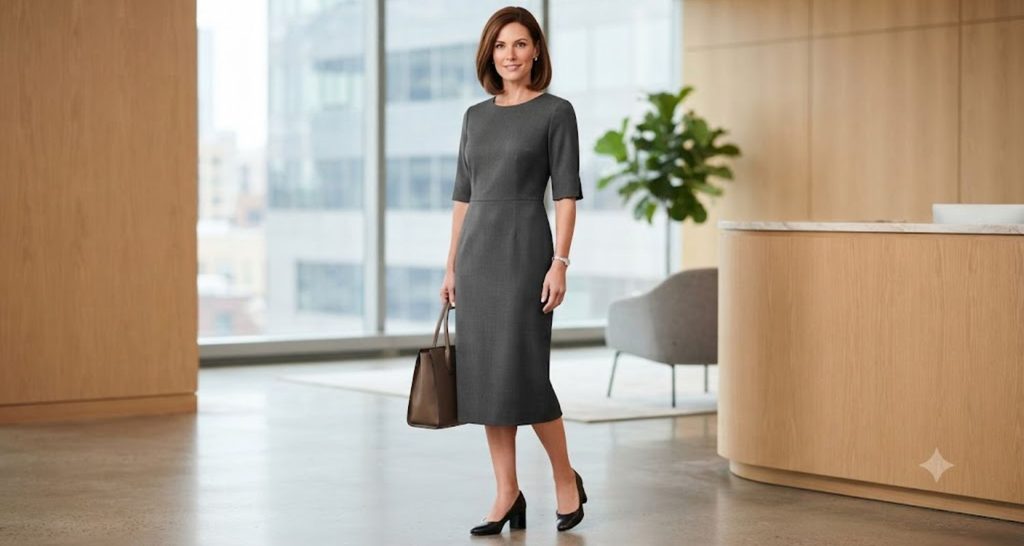
A sheath dress follows the body more closely, but it doesn’t need to feel tight. Choose enough room through the bust, waist, and hips to sit without strain.
Check any back or side slit while walking and sitting. Its position matters as much as the overall hem length.
For a polished outfit, pair a sleeved sheath with comfortable closed-toe shoes and a jacket that lets you move your arms freely.
Fit-and-Flare Dresses: Shape With Breathing Room
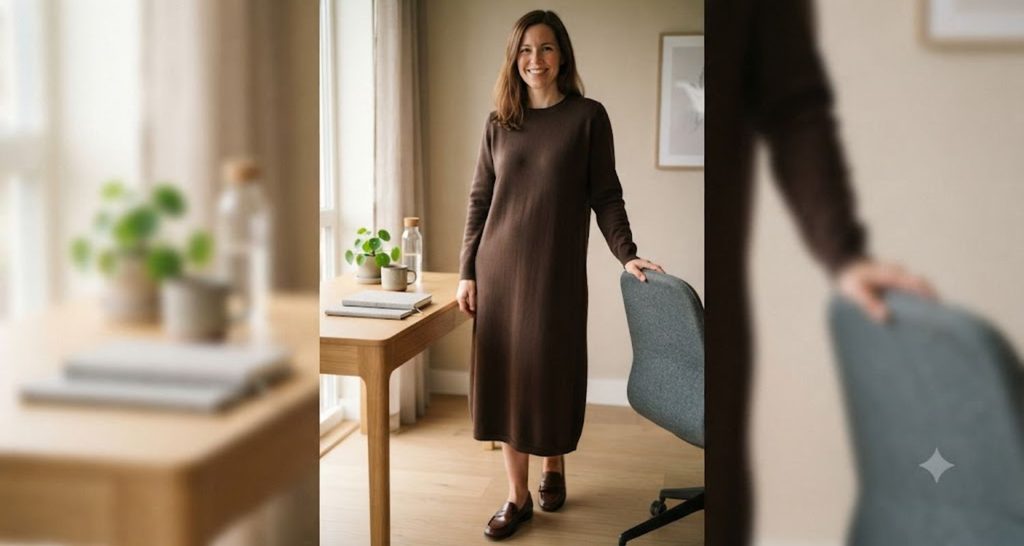
A fit-and-flare dress has a more defined bodice and a skirt that opens below the waist. It can be comfortable if you like waist definition but prefer space around your hips and legs.
For office wear, start with restrained volume and simple details. A small print, solid color, or subtle texture is easy to combine with existing layers.
The waist seam should feel comfortable when seated. You shouldn’t spend the afternoon wishing you could loosen it.
Knit Midi Dresses: Comfortable With the Right Fabric
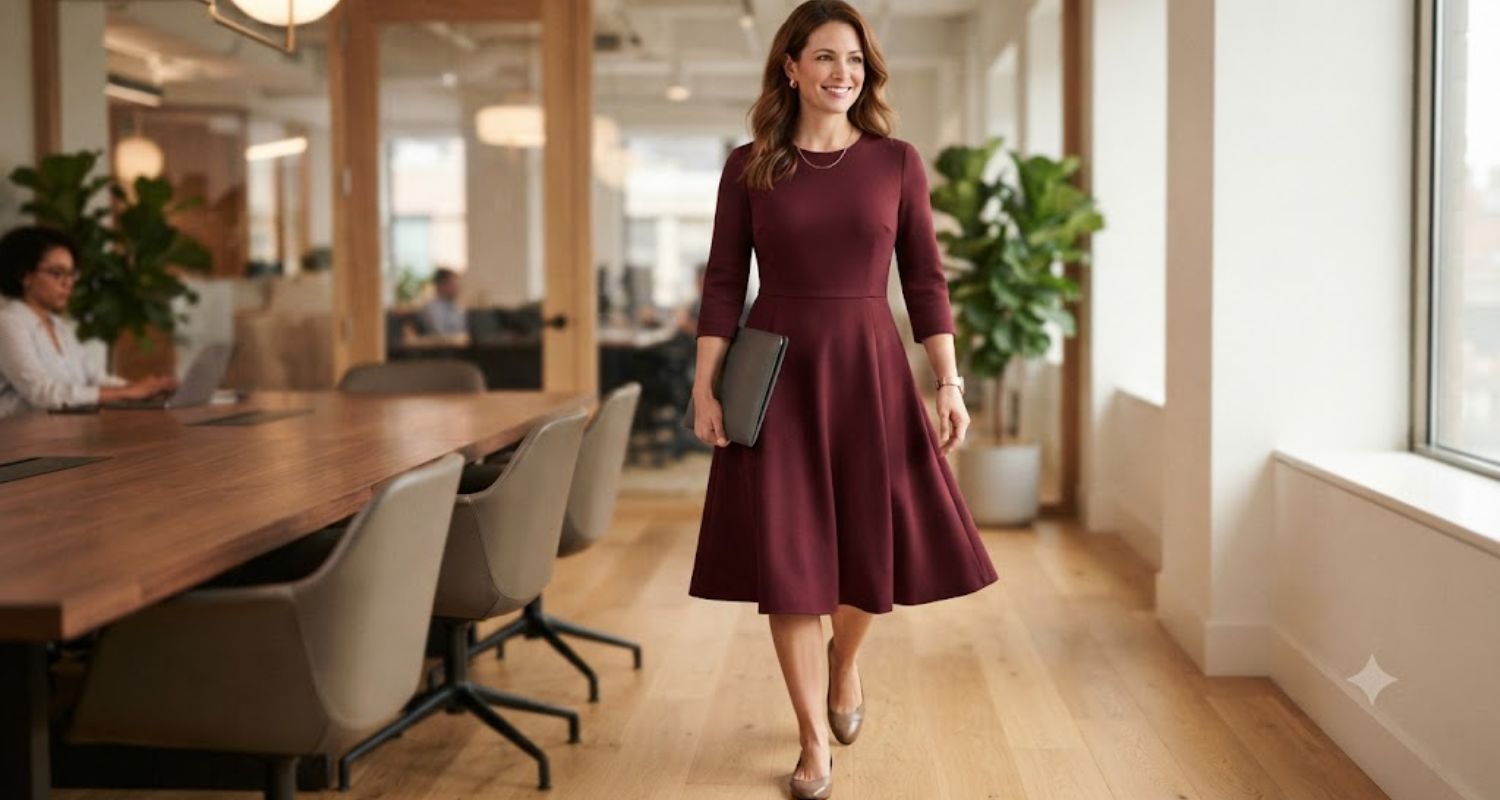
A knit midi dress can feel wonderfully easy on a long day. The challenge is finding a fabric that offers stretch without becoming overly clingy or transparent.
Try sitting for a few minutes, then stand and check how the fabric falls. Some knits catch on underlayers or stretch noticeably around the seat and knees.
A smooth, substantial knit with a relaxed cut often needs less adjustment than a thin, closely fitted ribbed dress.
Maxi Dresses: Longer Coverage With Clean Lines
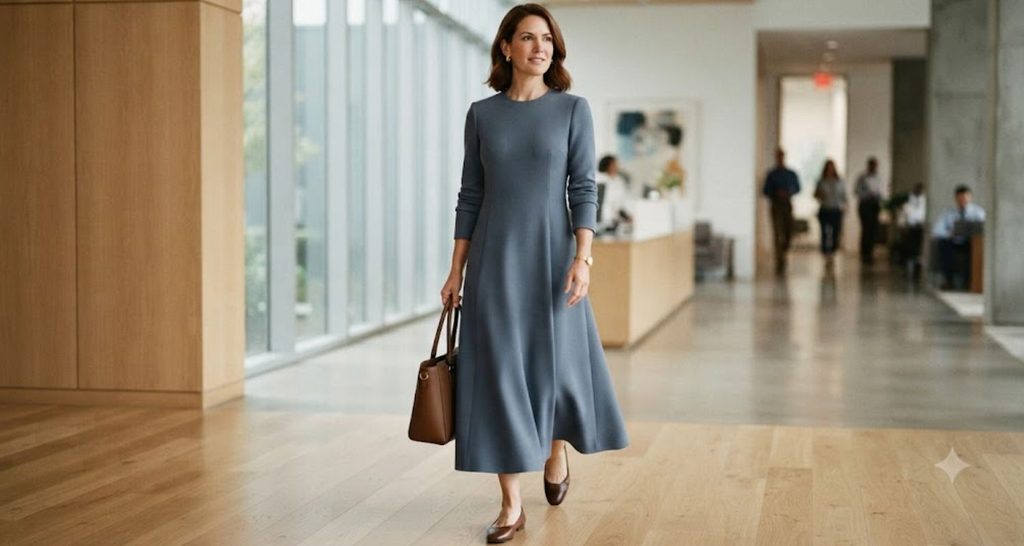
A maxi dress can suit an office when its fabric, shape, and styling fit the setting. Look for a hem that clears the floor and a skirt that allows you to walk safely.
Simple sleeves, a defined shoulder line, and minimal embellishment make longer dresses easier to style for work.
If you prefer full-length coverage, choose the length with your everyday shoes on. A dress that works with heels may drag when you switch to flats.
How to Choose Fabrics for Office Dresses
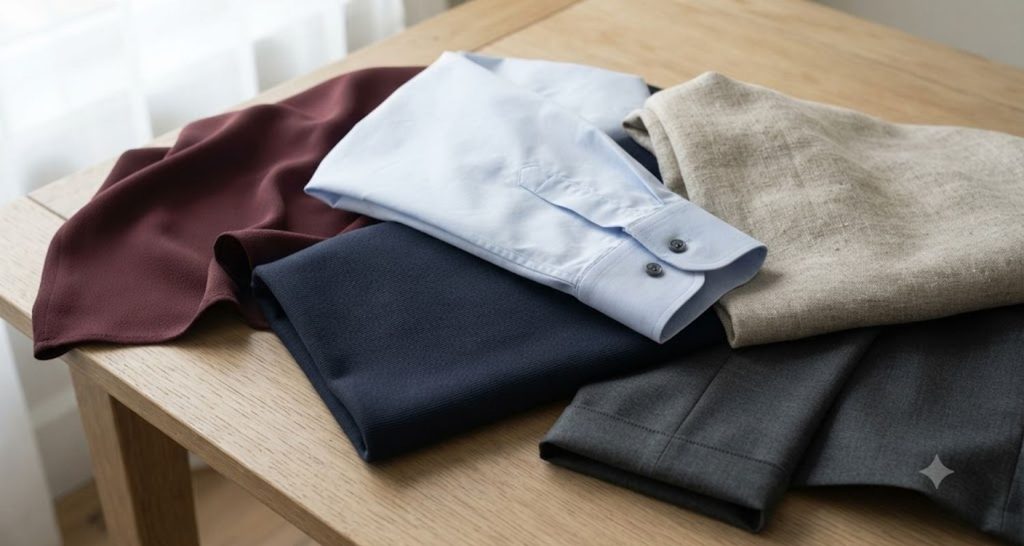
Fabric affects how a dress hangs, feels, and responds to movement. Fiber content helps, but thickness, weave, lining, and garment construction matter too.
Cotton and Cotton Blends
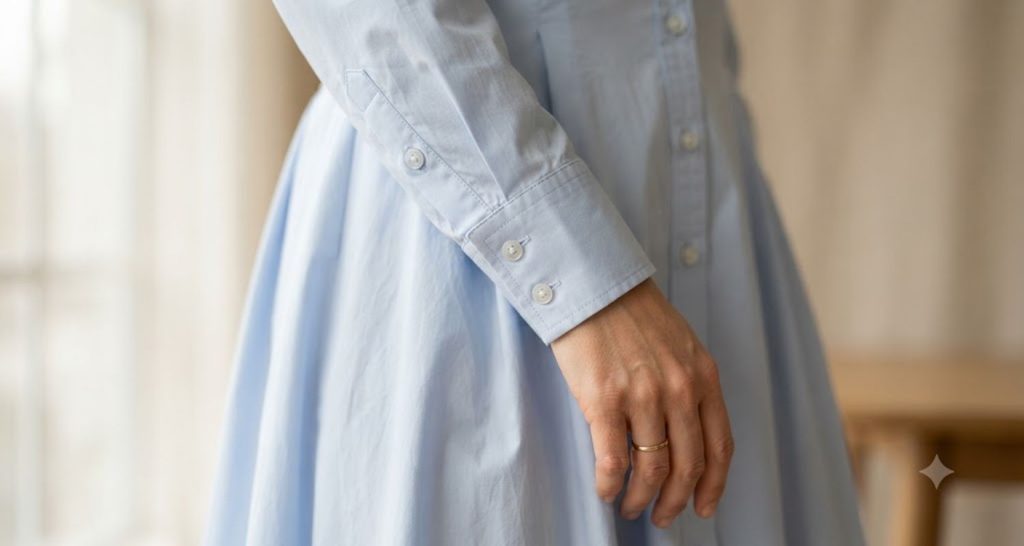
Cotton dresses can feel comfortable in warm weather, particularly in looser cuts. Cotton poplin gives shirt dresses a crisp appearance, although wrinkles may become noticeable after sitting.
Check pale colors carefully in daylight. A white or cream dress may need a lining even when the fabric feels substantial between your fingers.
Ponte and Other Substantial Knits
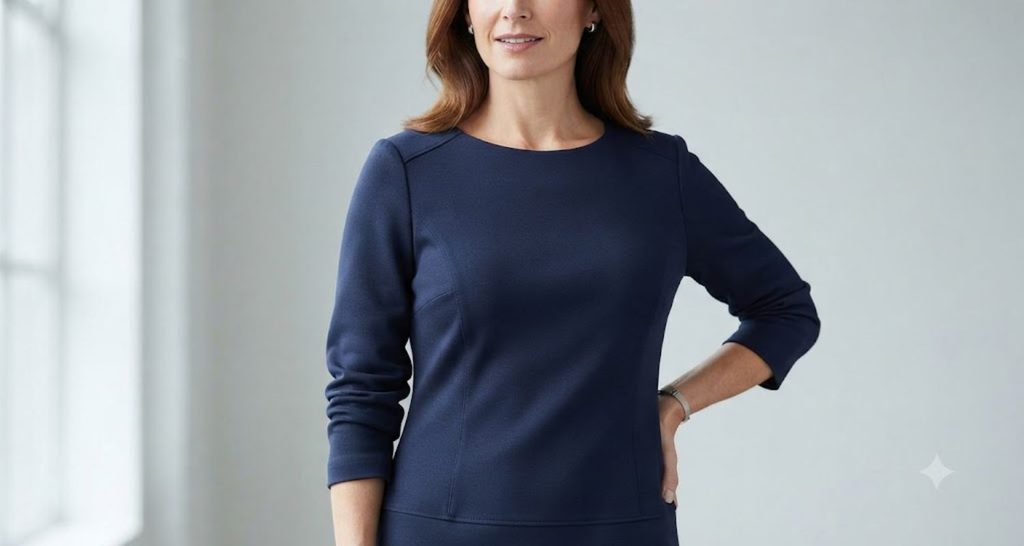
Ponte is often used for structured stretch garments. It can be useful when you want some flexibility with a smoother outline than a lightweight jersey dress offers.
Quality and thickness vary, so test the actual garment. Look for recovery after stretching and check whether seams lie flat.
A heavier knit may also feel too warm for your commute, even if it’s comfortable inside an air-conditioned office.
Crepe and Draping Woven Fabrics
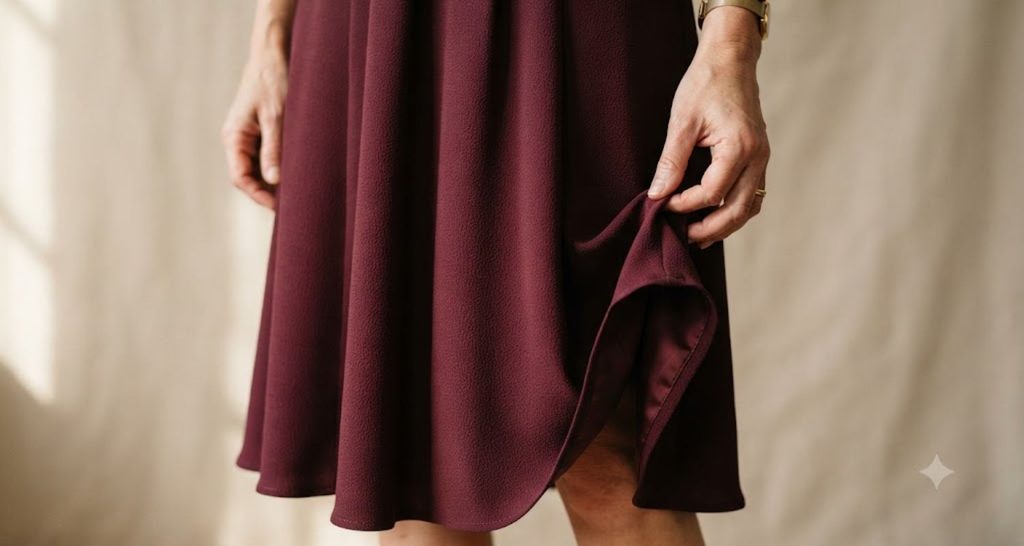
Crepe describes a textured fabric and can come in different fibers and weights. Some versions drape softly; others provide more structure.
Check for static, transparency, and whether the fabric catches on tights or underlayers. A good lining can improve how the skirt moves, but inspect whether it covers the areas where you need opacity.
Linen Blends and Cool-Weather Fabrics
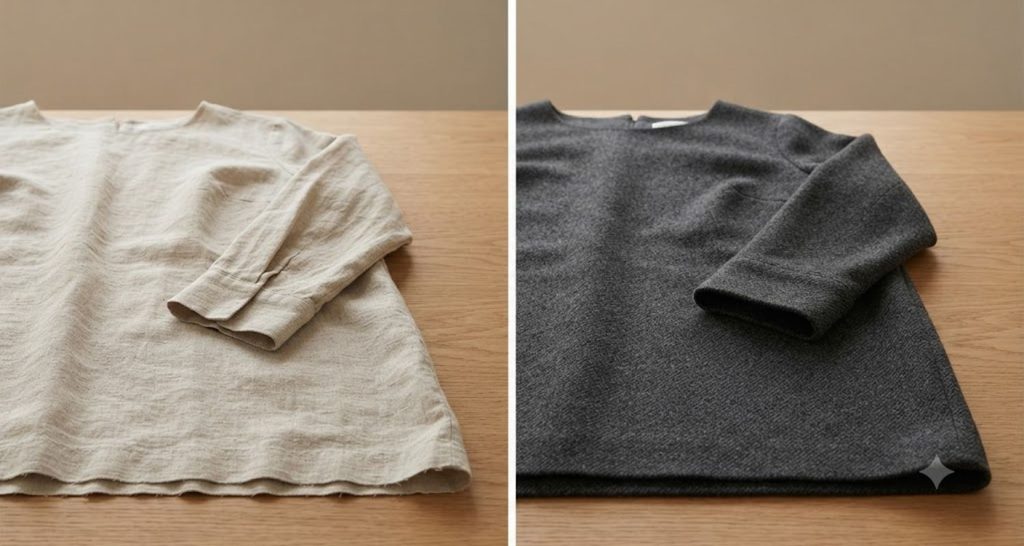
Linen blends can offer an airy option for warmer days, provided you’re comfortable with some creasing. Choose a cut that gives the fabric room to move.
For cooler weather, consider wool blends or substantial sweater dresses. Check softness, care requirements, and how warm the complete outfit feels indoors.
The best fabric is one you’ll enjoy wearing and realistically maintain.
How to Find a Comfortable Work Dress Fit
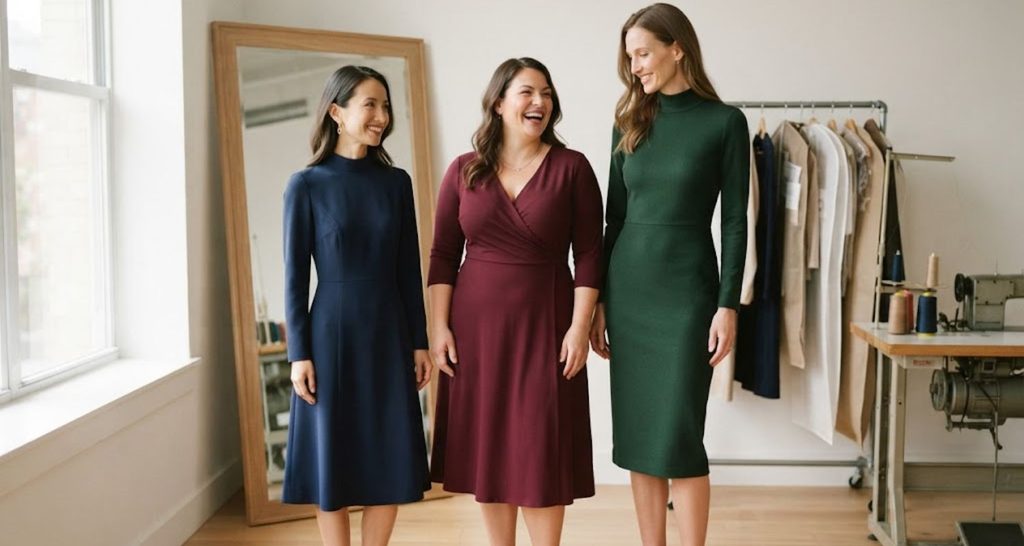
Size labels are only a starting point. Two dresses in the same size can fit very differently because their shoulder width, waist placement, and torso length differ.
If You’re Petite or Tall
If you’re petite, check whether the waist seam sits too low and whether the sleeves overwhelm your hands. Shortening the hem alone won’t correct those proportions.
If you’re tall, check torso length, sleeve reach, and where a slit begins. A dress described as “midi” may land at your knees.
Use garment measurements when available instead of relying entirely on the model’s photograph.
paragraph about tall proportions For more guidance on sleeve length, waist placement, and hemlines, see our guide to choosing dresses for tall women.
If You Need More Room Through the Bust or Hips
Look for a cut that accommodates the fullest area comfortably. Pulling lines, twisted seams, and gaping closures often suggest that the shape or size needs adjusting.
Stretch can help with movement, but it shouldn’t have to compensate for a dress that’s too small.
If one area fits well and another feels loose, a tailor may be able to refine it. Ask about the alteration before buying, especially when the garment has complex seams or a lining.
How to Style Modest Work Dresses
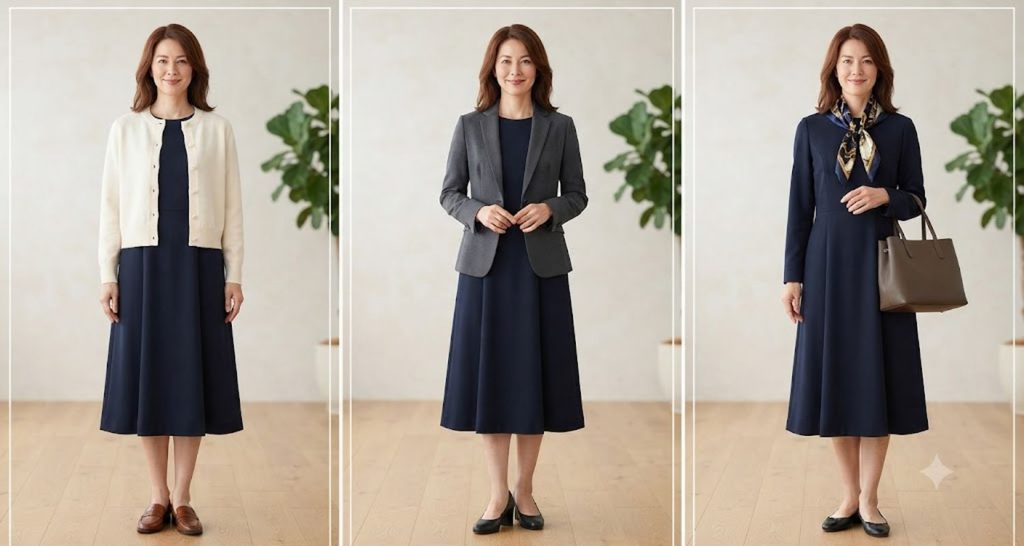
A complete work outfit doesn’t need many pieces. Often, one useful layer, comfortable shoes, and a practical bag are enough.
Match the Layer to the Dress
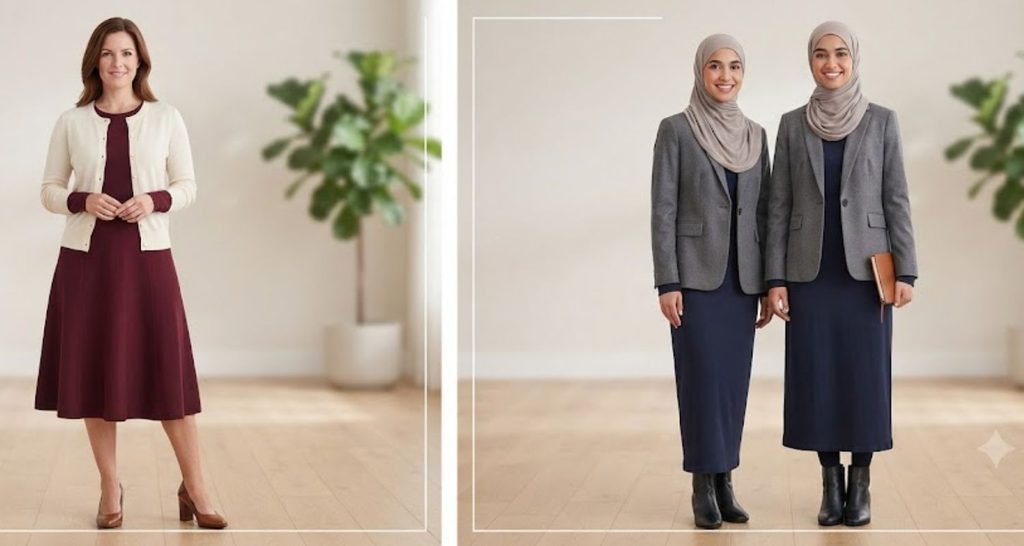
A shorter cardigan can work neatly with a dress that has a defined waist. A tailored blazer adds structure to a simple sheath or straight-cut dress.
Check the combination from the side and back. Thick sleeves can bunch beneath a fitted jacket, while a long cardigan may catch on a fuller skirt.
If you wear a hijab, consider how the neckline, scarf, and outer layer feel together. Smooth fabrics and manageable layers can make the outfit easier to wear throughout the day.
Choose Shoes for Your Actual Schedule
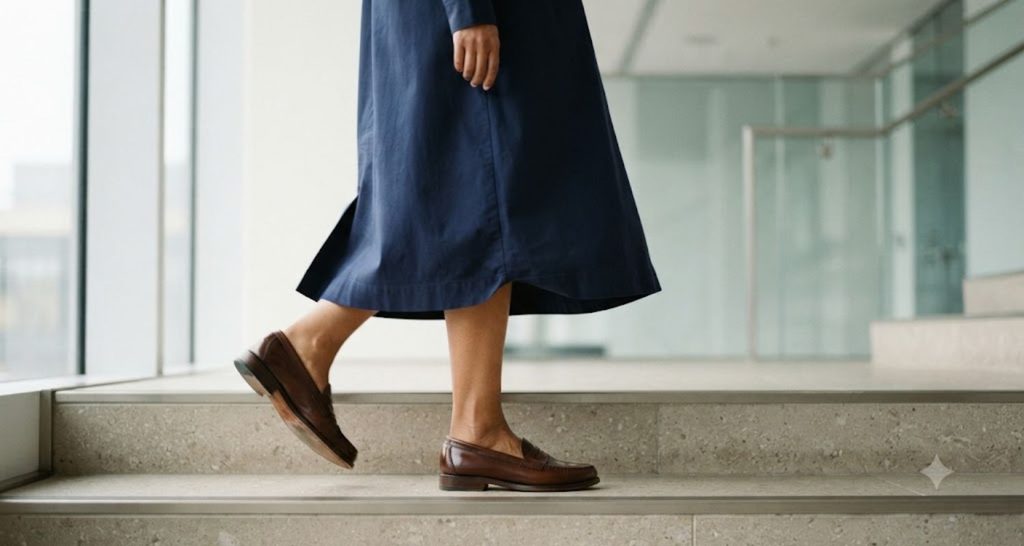
Loafers, flats, low block heels, and suitable boots can all work, depending on your office. You don’t need heels to make a dress look professional.
Think about stairs, public transportation, and the distance between your desk and meeting rooms. Shoes should support that routine.
Try the entire outfit together. Hem length and shoe shape can change how the dress looks—and whether you can walk comfortably.
Use Color and Accessories Intentionally
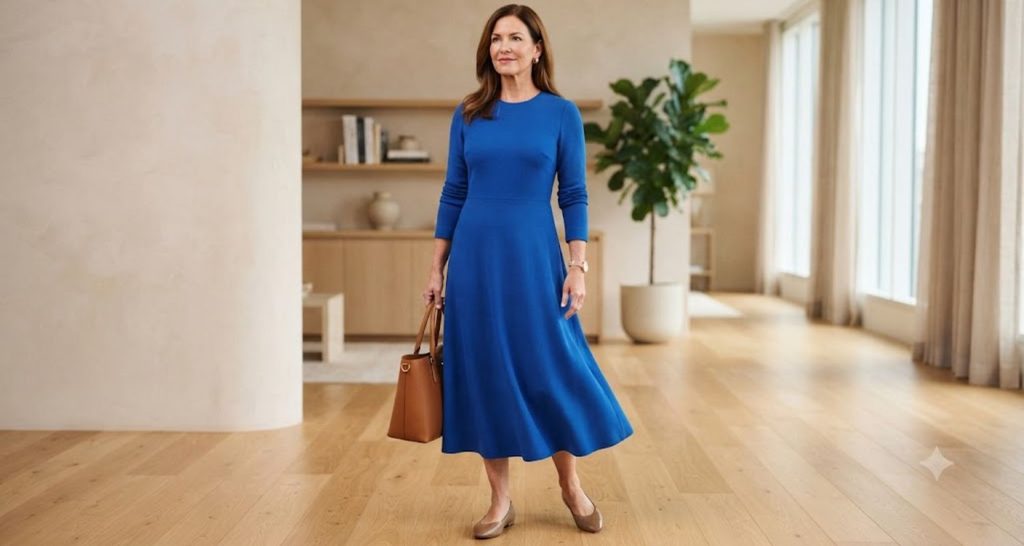
Navy, charcoal, olive, burgundy, and brown are easy starting points, but modest workwear doesn’t require a muted wardrobe. A bright blue dress or small floral print can look polished in the right setting.
Keep accessories practical. A watch, simple earrings, or a scarf may provide all the detail you want.
Pockets are useful, but test them with your phone. Deep pockets can still pull a dress out of shape when loaded.
If a black dress is already part of your work wardrobe, explore these ways to style a simple black dress and choose the accessories that suit your office.
Modest Office Dresses for Summer and Winter
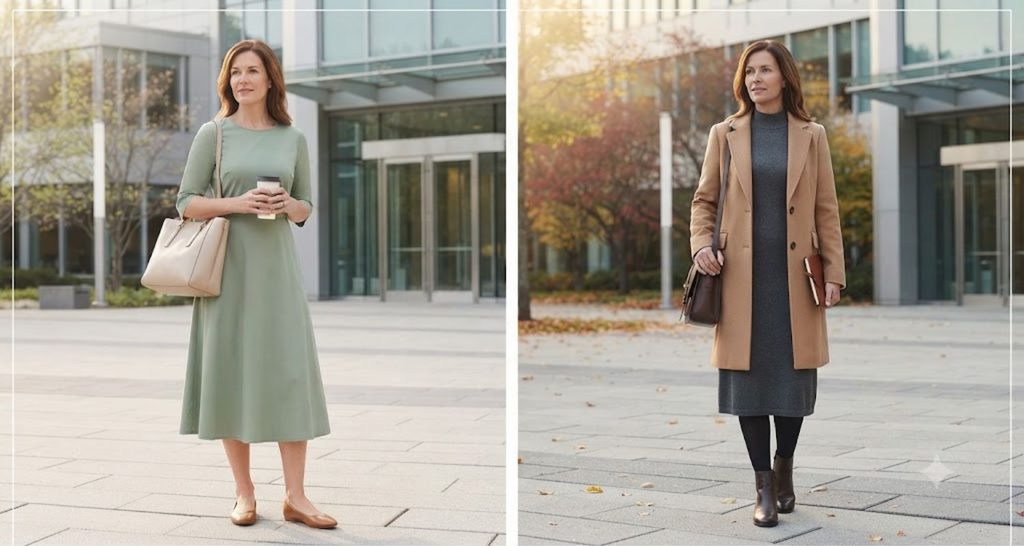
Your wardrobe should respond to both the weather outside and the temperature at your desk.
Spring and Summer
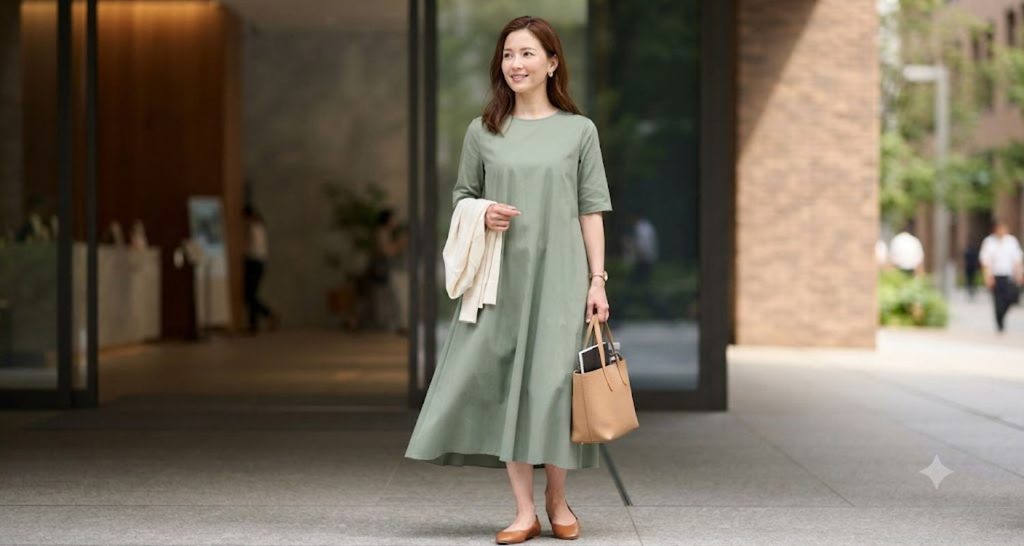
Start with an opaque dress that doesn’t require several layers for coverage. A loose-fitting, sleeved style may feel more comfortable than a sleeveless dress worn beneath a heavy cardigan.
Lightweight fabrics and room around the body can help on warm days. If you need an extra layer indoors, keep one at your desk.
Check the lining, too. An airy outer fabric won’t necessarily make the whole dress feel cool.
If your workplace stays warm throughout the day, explore these dress ideas for working in a hot office and adapt them to your preferred coverage.
Fall and Winter
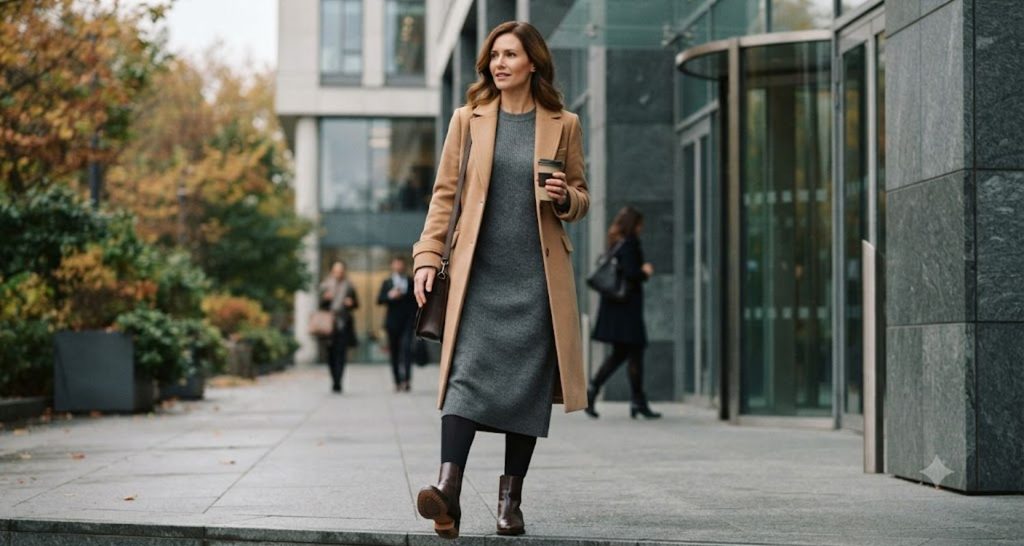
A long-sleeve dress with tights and boots offers a straightforward cold-weather combination. Add a coat that accommodates the dress without compressing the sleeves.
If you wear a base layer, make sure it doesn’t cause bunching or change the fit. Test tights with the skirt to see whether the fabrics cling.
Choose removable warmth when your office heating runs high. You want to feel comfortable after the commute ends.
For help choosing the right warmth, thickness, and finish, explore our guide to the best tights to wear with dresses in winter.
Five Easy Office Outfit Formulas
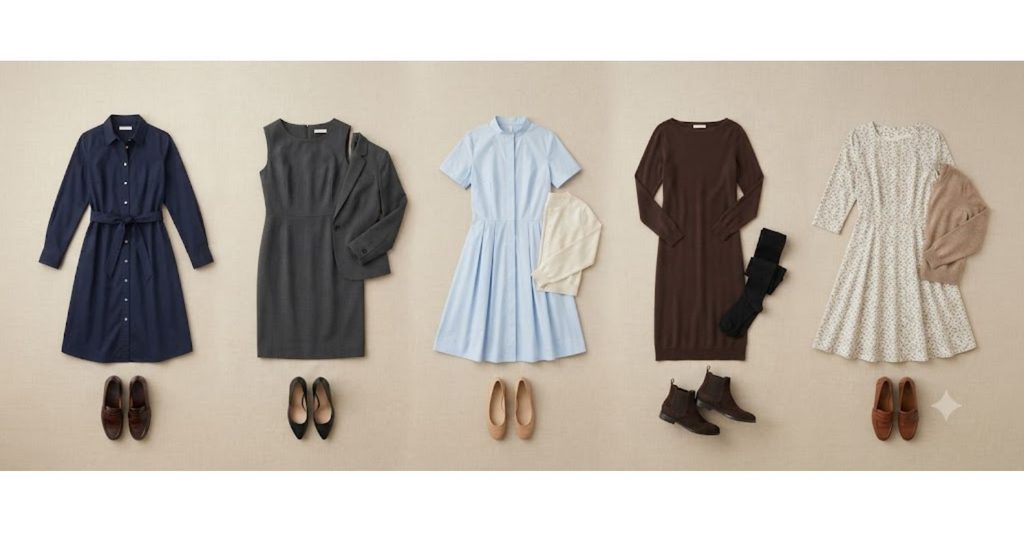
You can build variety through small changes instead of buying an entirely new outfit for each day.
- Everyday business casual: A navy shirt dress, brown loafers, and a structured tote.
- Presentation day: A charcoal sheath dress, coordinating blazer, and comfortable closed-toe shoes.
- Warm-weather workday: An opaque cotton-blend A-line dress, simple flats, and a light indoor layer.
- Cool-weather office day: A substantial knit midi dress, tights, ankle boots, and a tailored coat.
- Relaxed office Friday: A small-print fit-and-flare dress, cardigan, and loafers.
Treat these as starting points. Adjust the sleeve length, neckline, colors, and footwear to your preferences and workplace.
Imagine a burgundy midi dress worn with a blazer for a client meeting, then with a cardigan on an ordinary Tuesday. The dress hasn’t changed, but its role in your wardrobe has expanded.
Build a Small Work Dress Capsule Wardrobe
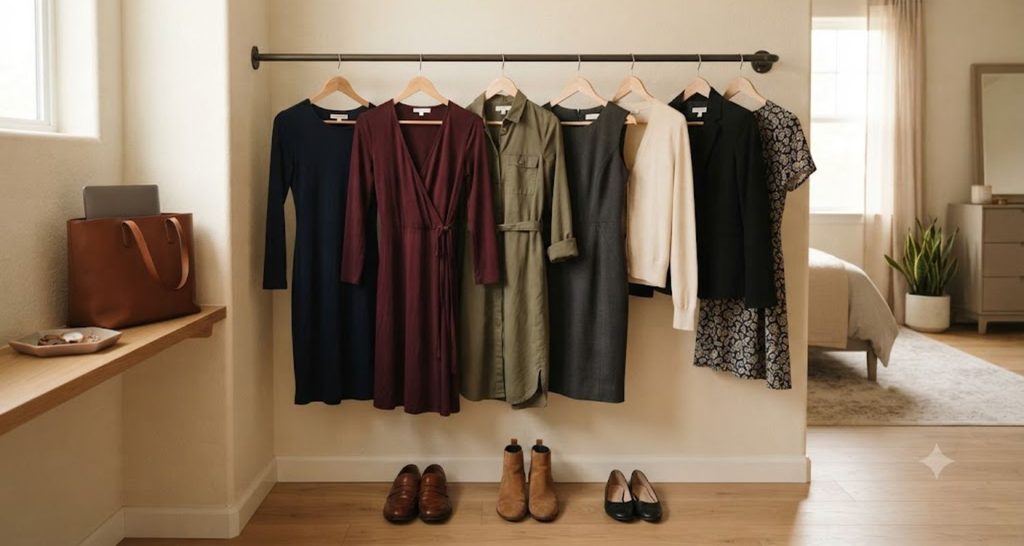
Start by reviewing what already works. Which dress do you reach for when you’re running late? Identify why: the sleeves, forgiving fit, easy care, or reliable pockets.
Use that information to guide your next purchase.
A practical starting collection might include one structured dress, one easy everyday style, and one seasonal option. Choose colors that work with shoes and layers you already own.
Before buying, ask yourself whether you can create two complete outfits with the dress. Also check washing instructions and return terms, especially when shopping online.
A lower price won’t help much if the dress needs expensive cleaning or stays unworn because it feels uncomfortable. Buy for your real working week.
Frequently Asked Questions
What length should a modest office dress be?
Choose a length that meets your coverage preferences and workplace expectations. Knee-covering and midi styles are useful starting points, but the seated hem matters as much as the standing length. Try the dress in a chair, check any slits, and make sure you can walk comfortably without the skirt restricting your stride.
Can you wear a maxi dress to the office?
Yes, a maxi dress can work when it suits your employer’s dress code. Look for opaque fabric, a manageable hem, and a simple shape that pairs well with office shoes or a jacket. Floor-dragging lengths and details that feel very beach-oriented may be less practical for your working environment.
How can you make a sleeveless dress more modest?
Add a cardigan, blazer, or lightweight jacket that provides your preferred arm coverage. You can also try a thin top underneath if the dress has enough room and the fabrics sit smoothly together. Check the armholes and neckline afterward, since adding a layer can change how the dress fits.
Are fitted dresses suitable for a modest work wardrobe?
They can be, depending on your preferences. A dress can follow your shape while still allowing comfortable movement and providing the coverage you want. Check for pulling, transparency, and rising hemlines when you sit. If you prefer less definition, choose a straighter cut or an A-line silhouette instead.
How do you check whether a work dress is see-through?
Try it in daylight with the undergarments you intend to wear. Check the front and back, then bend and sit to see whether stretched fabric becomes more transparent. For online purchases, look for lining information and customer photos, but inspect the dress yourself before removing tags or wearing it to work.
Choose Dresses That Let You Focus on Your Day
The best modest work dresses for the office give you reliable coverage, comfortable movement, and an outfit that feels like you. Start with your preferred neckline, sleeves, and hem, then evaluate fit, fabric, and workplace suitability.
Before your next purchase, try the sitting-and-reaching test and build two outfits using pieces you already own. If the dress passes both checks, you’re closer to a wardrobe that makes busy mornings easier—and stays comfortable long after your first meeting.